
The Short Answer: In villa projects, bathtub material selection is often driven less by technical performance and more by how the space is perceived and experienced by end users. The best material is not simply about technical performance—it is about how it aligns with the way the property is experienced and positioned in the market.
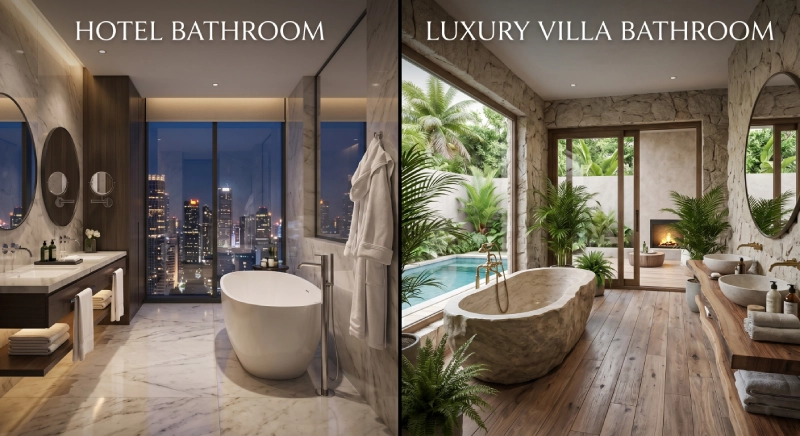
Hi, I’m Helen. Over my 10 years in the bathroom industry, I’ve collaborated with hundreds of developers and project managers. I’ve seen high-end residential projects succeed brilliantly. I’ve also witnessed material mistakes that quietly hurt property valuations.
Today, we are looking at a very specific question: what is the best bathtub material for villa projects?
If you manage luxury real estate developments, you know every detail matters. Yet, there is a common pattern I see developers fall into time and time again. They apply “hotel-grade” standards to their luxury villa builds.
Applying hotel standards to villa projects is a common error in material selection. It often sacrifices the project’s premium feel.
Let’s dive into this villa bathroom bathtub material guide from a practical perspective, so you can help align design decisions with actual market expectations.
Table of Contents
What Is the Difference Between Hotel and Villa Bathrooms?
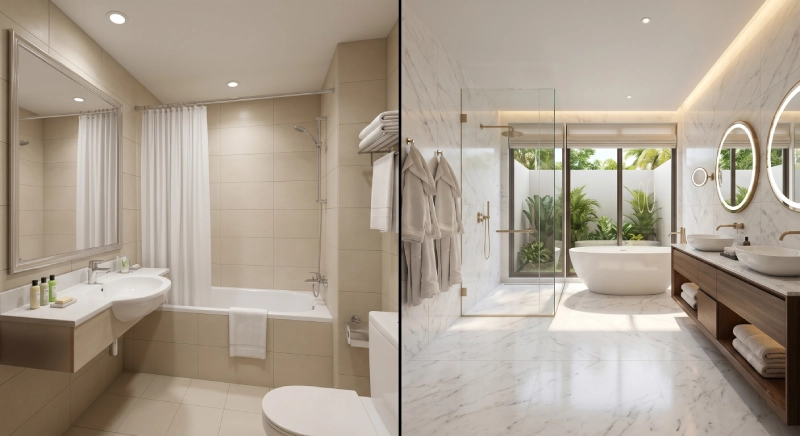
When exploring a bathtub material for real estate development, context is everything. Why do hotel standards fail in villas? It comes down to the core logic of the space.
Hotel Projects = Operational Efficiency In a hotel environment, the goal is smooth, low-cost operations. The focus is on:
Standardization: Every single room needs to look identical.
High Traffic: Materials must withstand aggressive, daily chemical cleaning.
Maintenance Priority: Housekeeping needs to turn over a hotel bathtub in mere minutes.
Cost Per Unit: Keeping bulk purchase costs as low as possible.
The essence of hotel design is lowering operational costs.
Villa Projects = Perceived Luxury & Sales Value Villas are a different environment entirely. You are selling an aspirational lifestyle. The focus shifts to:
Design-Led Choices: The bathroom design must be visually stunning.
Emotional Appeal: The buyer needs to feel a sense of wealth, relaxation, and exclusivity.
The Showroom Effect: The master bathroom is often the deal-maker during property tours.
Property Premium: High-end finishes directly justify a higher property value.
This difference in project logic often results in mismatched material decisions in villa developments.
The Core Conflict Developers Must Face
Here is an observation after a decade in this business: The material that performs best in hotels is not always the material that sells best in villa projects.
Hotels want extreme durability. They want a tub that won’t scratch when scrubbed in a hurry.
Villa buyers, however, look for “perceived value.” Residential bathrooms are also used differently. Unlike hotels, usage is longer, more personal, and more experience-driven. This places different expectations on thermal comfort, tactile quality, and material consistency.
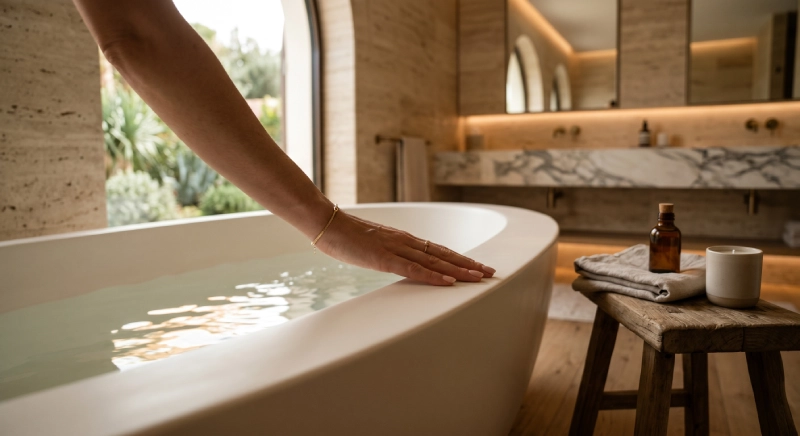
When a potential buyer walks into your showroom for their master bathroom bathtub selection, they interact with the space. They touch the tub. They tap the rim. If it feels lightweight or sounds hollow, they notice.
Developers are often balancing budget constraints with expectations of perceived luxury. Finding the best bathtub material for developers means navigating this exact balance.
What Bathtub Material Is Best for Villas?
If you are evaluating a freestanding bathtub material luxury buyers will appreciate, you generally see two main choices in the market.
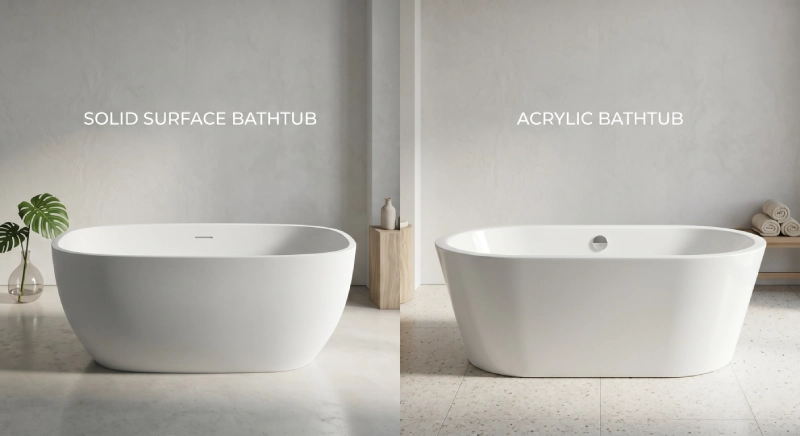
1. Solid Surface / Stone Resin
A solid surface bathtub (often called stone resin) is a prominent choice for high-end, single-family homes.
Observations:
-
Premium Weight: It has a heavy, substantial feel.
-
Seamless Look: The matte finish absorbs light beautifully, creating a high-end architectural vibe.
-
Natural Touch: It feels like natural stone and holds heat exceptionally well.
Project Fit: This material is commonly used in high-end residential developments, especially single-family villas and master suites.
2. Premium Customized Acrylic
While standard acrylic is often viewed as a budget option, premium customized acrylic is widely adopted in large-scale villa developments.
Is acrylic bathtub good for high-end homes? It depends heavily on the grade. An acrylic bathtub is formed by heating a thick sheet of acrylic and molding it. When reinforced heavily, it bridges the gap between cost and visual appeal.
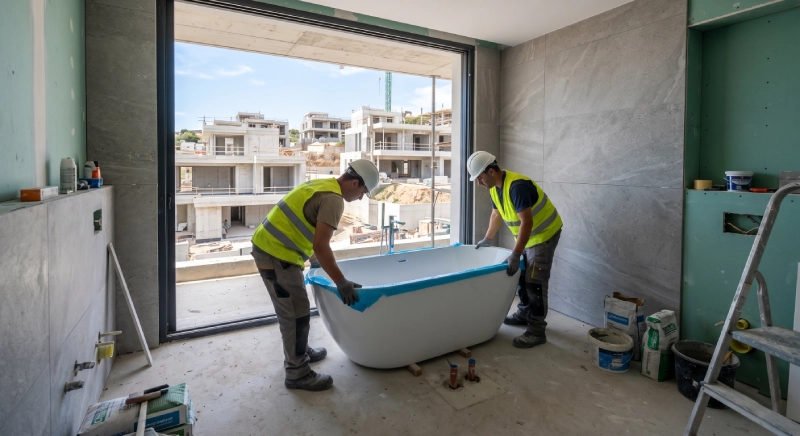
George Group Case Study: The Ethiopia Villa Complex Project Let me share a real-world example of project bathtub solutions. We recently partnered with a developer on the Ethiopia Villa Complex Project, an 11,300 sqm development featuring 55 luxury villas.
Rather than specifying heavy stone resin, we supplied Premium Acrylic Freestanding Tubs. Why?
-
Visual Balance: We utilized seamless edge technology to maintain a luxury aesthetic without the stone weight.
-
Logistics & Installation: Shipping 55 heavy stone tubs internationally is difficult. Acrylic is lightweight, reducing cross-border shipping risks and making on-site installation much smoother.
-
Durability: The non-porous acrylic surface adapts well to the local climate.
When looking at a solid surface bathtub vs acrylic, this project is a great example. In this project, the decision was influenced more by logistics and installation requirements than material prestige considerations.
If you are comparing materials at a deeper level, you can also explore our complete guide on What is the Best Bathtub Material for Luxury Villa Real Estate Projects in 2026, where we break down all major options including acrylic, stone resin, and more for real estate developments.
Should Villas Use Acrylic Bathtubs? (Understanding the Risks)
What happens if you choose the wrong material?
The Risk of Standard/Budget Acrylic in Villas
The space might feel like a standard apartment, not a luxury estate.
The showroom experience can fall flat. When buyers tap a thin tub, it echoes with a hollow sound.
It can fail to support your property’s asking price.
The Risk of Over-Specifying Premium Materials
If you mandate heavy stone resin for every single bathroom across a large complex, budgets can inflate quickly.
Installation becomes complex and labor-intensive.
Heavy stone tubs often require reinforced flooring, adding hidden construction costs.
The real risk often comes from misalignment between cost structure, perceived value, and project positioning.
Material Comparison for Villa Projects
Developers often compare materials across a few key factors to determine the best fit for their real estate bathroom specification:
Solid Surface / Stone Resin
Premium Acrylic
A quick bathtub material comparison for projects like this helps clarify where funds are best allocated. (As an aside: If you are looking into an acrylic or porcelain bathtub, keep in mind that porcelain-enameled steel is highly prone to chipping during construction.)
Deep Dive: Why Do Luxury Homes Use Stone Resin Bathtubs?
In premium villa developments, material expectations are often higher and more specific. Let’s look closer at stone resin.
Stone resin bathtub pros and cons:
Pros: They are renewable. If a surface is accidentally scratched during construction, it can be sanded and buffed out on-site. They offer incredible design flexibility with ultra-thin edges. For many, they are the best bathtub for luxury homes purely based on tactile feel.
Cons: They require two or three workers to carry upstairs, and the initial material cost is significantly higher.
(For a more detailed look at budget options, check out our earlier post where we compare acrylic vs fiberglass bathtub materials. )
Conclusion
In villa projects, bathtub material selection directly shapes how buyers interpret overall property quality and positioning in villa developments. Whether you choose the heavy, matte luxury of a luxury villa bathtub material like solid surface, or the logistical efficiency of premium acrylic, the choice shapes the end-user’s experience of the home.
For developers comparing bathtub options across different villa projects, these differences are often critical during specification planning.
When evaluating a bathtub supplier for real estate developments, seeking an OEM bathtub manufacturer, or sourcing a bulk bathtub for villa projects, understanding these subtle material nuances makes the entire process smoother.
Whether you need custom bathtub solutions for villa projects, reliable custom bathtub for developers, or simply want to discuss the best bathtub supplier for real estate projects, at George Group, we support project teams working on villa and residential developments with practical insights on material selection and specification planning.
References
1. Case Study & Project Reference
-
George Group: Ethiopia Villa Complex Project (55 Luxury Villas)
(Cited for real-world application of premium customized acrylic in large-scale luxury developments to overcome logistics and installation challenges.)
2. Material Comparison & Market Positioning
-
Salvere Bath: Acrylic vs Solid Surface Bathtubs: Which Is Better for Your Brand?
(Supports the core conflict: Acrylic is highly favored for cost-efficiency, lighter weight, and ease of installation in bulk projects, whereas solid surface/stone resin is optimal for luxury showrooms and high-end, bespoke designs.)
3. Durability & User Experience (Heat Retention/Tactile Feel)
-
Badeloft USA: Common Bathtub Materials: Pros, Cons, and Costs
(Confirms that denser materials like stone resin offer superior heat retention for longer soaking times and provide a modern, matte finish highly sought after in minimalist luxury spaces.)
-
KingKonree: What Is Better, Solid Surface Tub Or Acrylic Tub?
(Validates the tactile difference: Solid surface bathtubs provide a dense, sturdy, and perpetual bathing experience, while standard acrylic is much lighter but can feel hollow or be more prone to scratching over time without proper reinforcement.)
We provide integrated one-stop bathroom solutions covering tubs, sanitaryware, fittings, and system coordination for hotel and commercial projects.
▼ Submit the form below to connect with our team and explore project-based collaboration. ▼