
Short Answer: In luxury residential projects, ADA compliance is a system-level design decision that prevents rework, inspection failure, and design compromise.
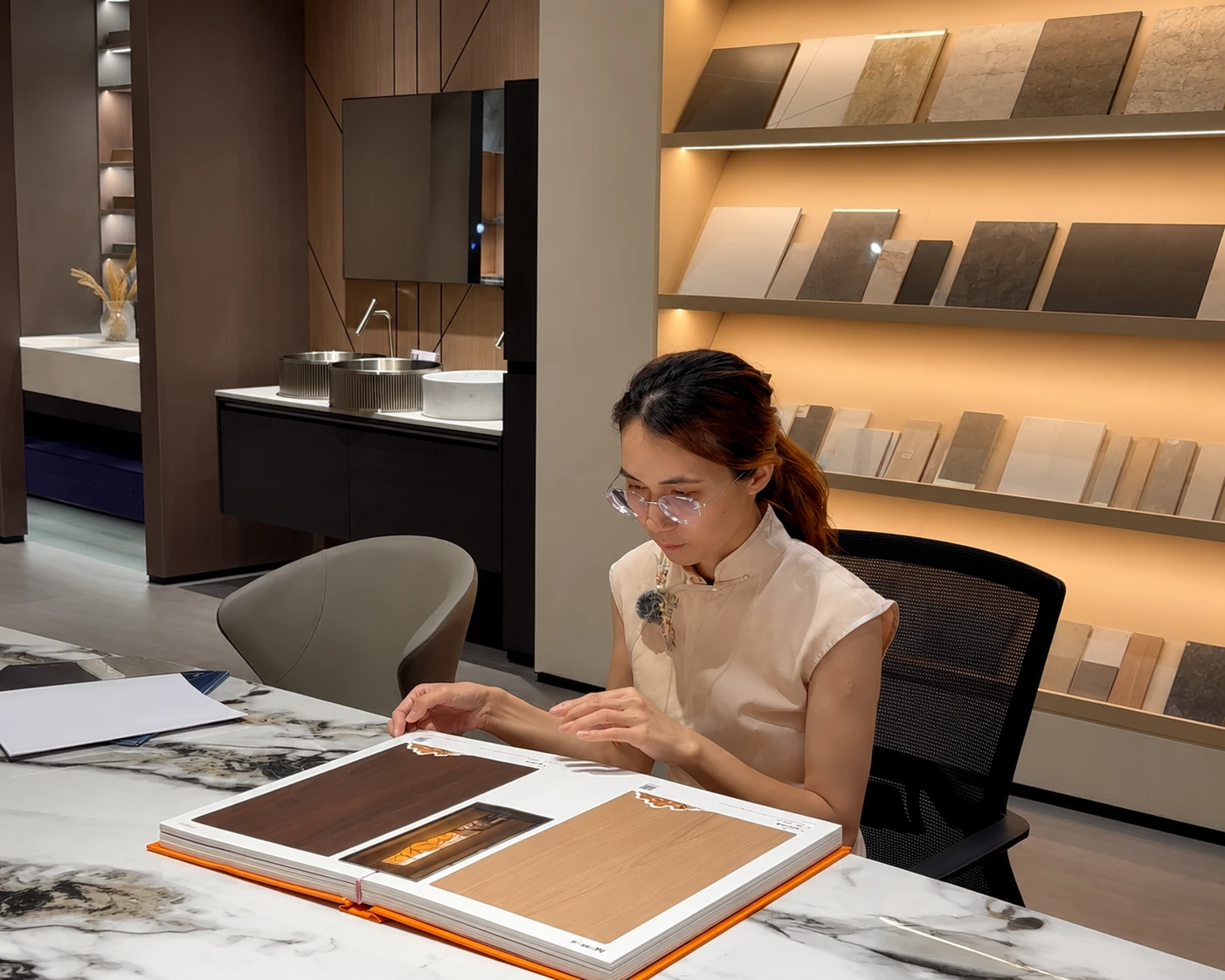
Hi there! I’m Helen. I have spent over 10 years in the sanitary ware industry, consulting directly for B2B developers and project directors globally.
If you manage luxury villa developments, you know the stakes are high. Too often, the complexities of ada grab bar installation only hit project managers during the final construction phase. This is when walls are already closed, imported tiles are set, and the inspector is waiting. Managing this as an afterthought leads to cost overruns, project delays, and inspection failure.
In this guide, I will show you how to shift your project planning approach. We will turn compliance from a site-level crisis into a seamless, design-level strategy.
Before diving into installation strategy, you should first understand the full framework of ADA Grab Bar Requirements for Residential Bathroom Projects, including placement, dimensions, and compliance logic that define every successful project.
Table of Contents
Why Does ADA Grab Bar Installation Become a Challenge in Luxury Projects?
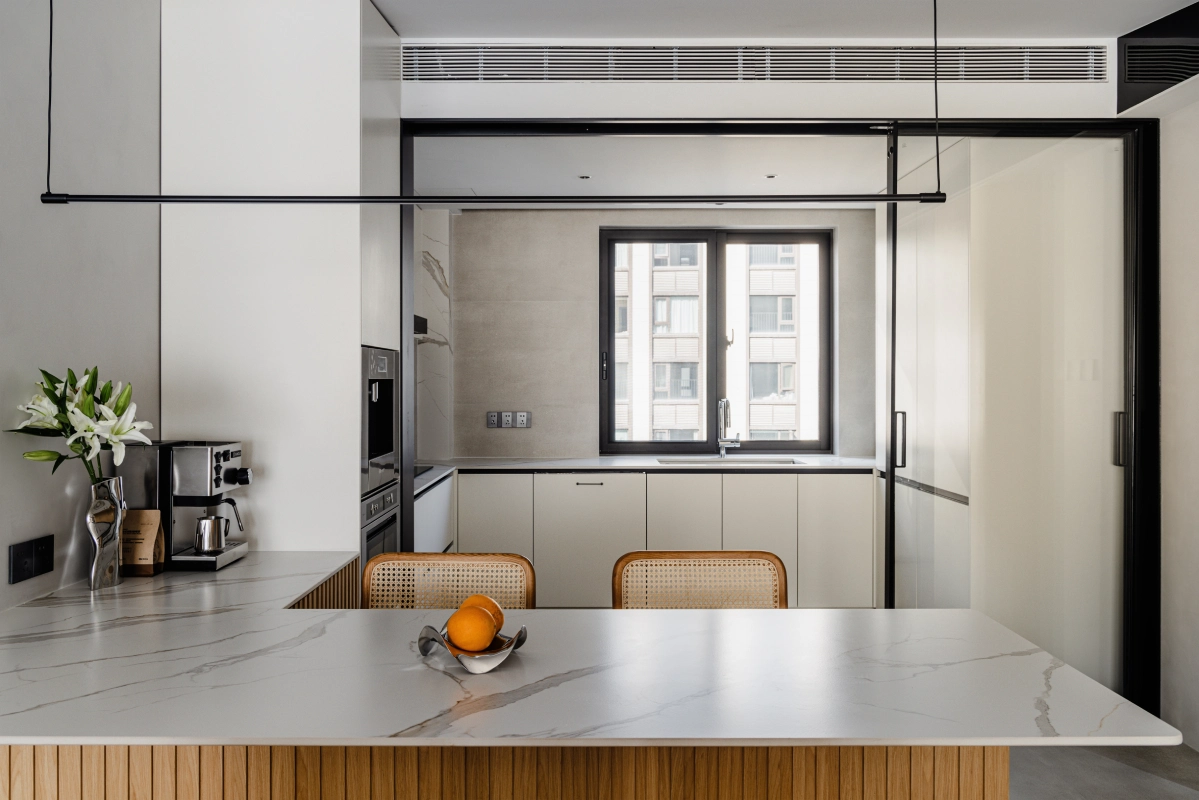
Let’s be honest. Nobody in the luxury sector wants to talk about grab bars. The focus is always on custom vanities and imported marble. ADA compliance is frequently treated as an annoying visual burden.
But the real problem is almost always a timing and sequencing issue, not a product issue. When ada grab bar installation is left to the construction team instead of the design team, three major conflicts arise:
Compliance vs. Aesthetics: ADA standards are mandatory, but standard hospital-style bars ruin a luxury vibe.
Project Consequence: Inspection risk or forced design downgrade.
Design vs. Execution: Beautiful architectural blueprints mean nothing if the contractor has nothing solid to drill into.
Project Consequence: Designs cannot be built as drawn.
Theoretical Specs vs. Site Reality: Paper measurements rarely match the physical room after waterproofing and mortar are applied.
Project Consequence: Finish deviations cause compliance failure.
This is why ADA failures are rarely product-related—they are almost always planning and sequencing failures.
Why ADA Numbers Fail on Real Construction Sites
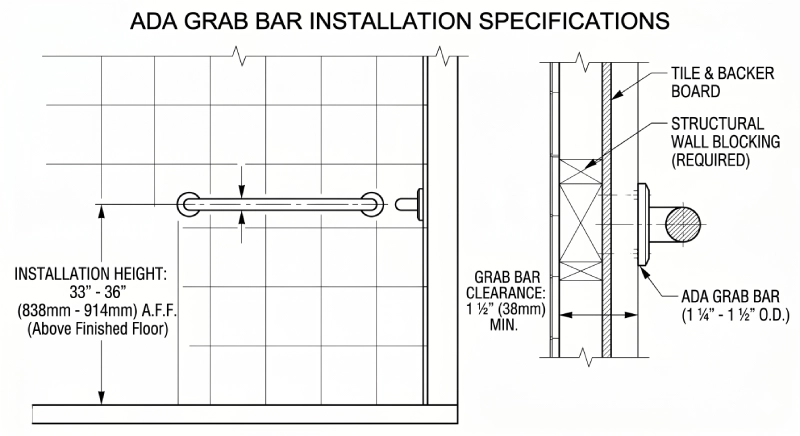
Before we talk about luxury design, we must master the rules. A failed inspection over a fraction of an inch is a project manager’s nightmare.
Many developers know the basic numbers. Yet, they still fail inspections because they do not account for actual site variables. Here are the core ada grab bar installation requirements commonly applied in luxury residential projects, and exactly why they fail on site:
ADA Grab Bar Height
Clearance Space
Load Capacity
Grip Diameter
Compliance is measured from finished conditions, not design drawings.
The Construction Reality: How ADA Grab Bar Installation Works in Real Projects (Without Rework)
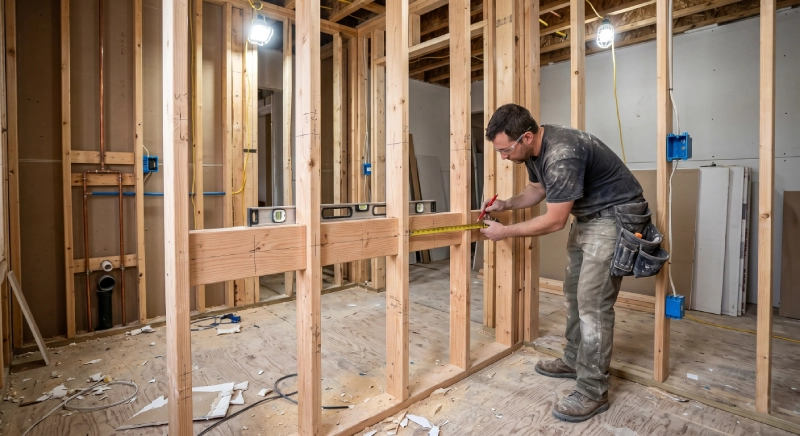
So, how to install ada grab bars without bleeding money? It is entirely about the construction sequence.
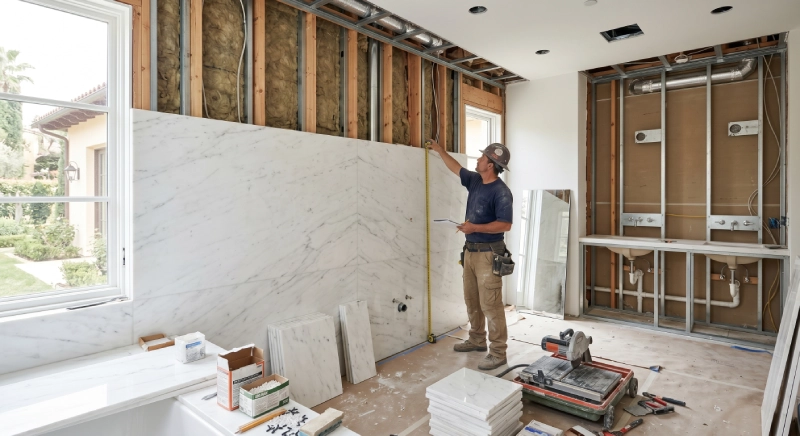
1. Structural Preparation: A Design Decision Before Wall Closure
Proper ada grab bar blocking must be finalized during the framing stage. Once walls are closed, compliance becomes irreversible without demolition. You cannot secure a 250-lb safety device to floating tile.
2. Finishes Change Everything
Always wait for the final material selections before finalizing the drill points. Once the luxury tile is installed, any correction turns into demolition-level rework in luxury finishes.
3. Installation Timing: The Most Common Cause of Failure
Installing too early leads to damage. Installing too late causes delays. Poor sequencing is the primary cause of inspection delays in multi-unit developments. Provide a unified ada grab bar installation instruction sheet to your site teams early.
4. Load Compliance Depends on Structure
A grab bar is a life-safety tool. Real safety depends on the wall structure, not the product rating on the box. Product certification alone does not guarantee compliance. At the George Group, our hardware easily exceeds the limits, but only if your team has executed the blocking perfectly.
How Can We Preserve Luxury Design While Meeting ADA Standards?
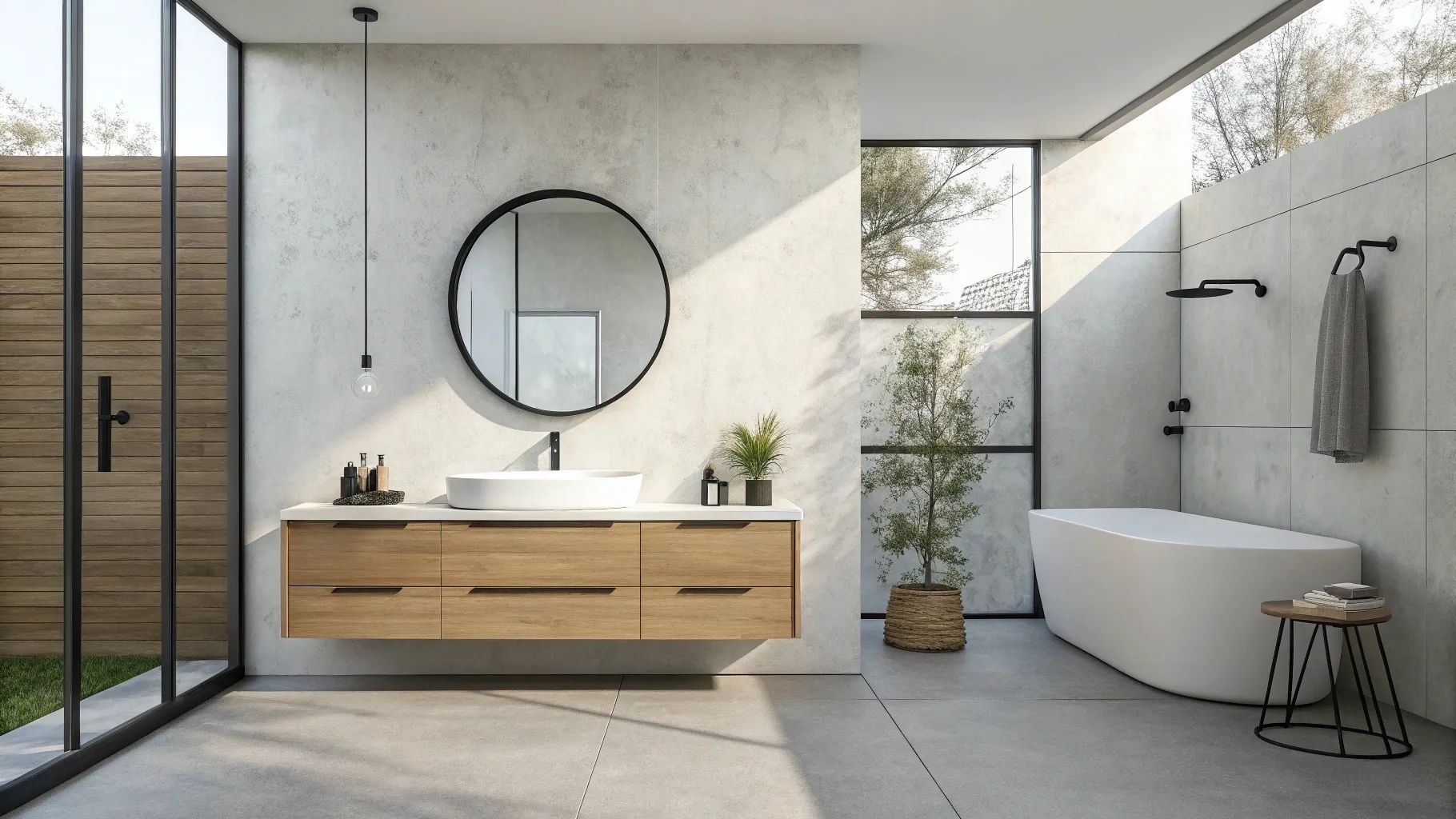
You absolutely do not have to settle for an institutional look. Let’s look at the engineering logic we use to maintain high-end aesthetics.
Finish Matching
Problem: Industrial stainless steel clashes with high-end brass or matte black fixtures.
Constraint: There are limited luxury finishes available in certified safety hardware.
Solution: Applying custom PVD finishes and electroplating to heavy-duty bars.
Outcome: Resolves visual inconsistency and turns the grab bar into a deliberate design element.
Integration with Existing Fixtures
Problem: Standalone safety bars clutter a minimalist bathroom wall.
Constraint: Space is limited, and the aesthetic flow of the room must be maintained.
Solution: Using “2-in-1” fixtures, like an ada bathroom grab bar installation that also functions as a designer towel shelf or soap dish mount.
Outcome: Disguises safety features as everyday luxury amenities.
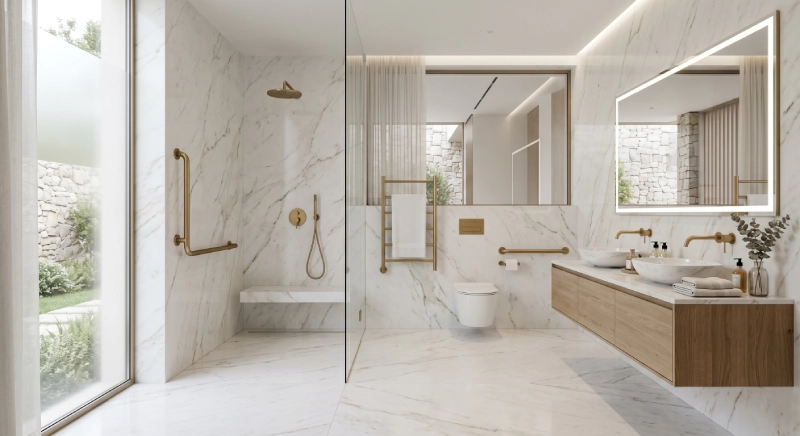
The George Group Case Study: Côte d’Ivoire Luxury Villas
In a recent luxury villa project in Côte d’Ivoire, we provided a B2B developer with our Côte d’Ivoire Luxury Villa Bathroom Solution. By applying custom finishes, concealed mounting hardware, and integrated fixture design, we achieved first-pass inspection approval without sacrificing their opulent, minimalist vision. This approach eliminated late-stage redesign and inspection conflicts.
What Common Mistakes Fail the ADA Bathroom Grab Bar Installation Inspection?
Want to protect your profit margins? Stop your contractors from making these specific errors.
Leading cause of structural rework: No Blocking Behind the Wall. Relying on drywall anchors instead of solid wood or metal ada grab bar blocking.
Direct Impact: Tearing down finished walls, full rework, and delayed occupancy approvals.
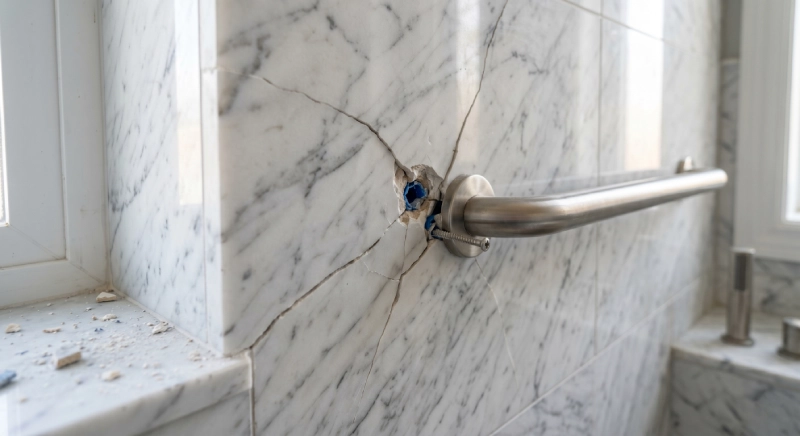
Leading cause of material damage: Installed on Tile Only. Drilling straight into ceramic without hitting studs.
Direct Impact: Tile cracking, severe liability risks, and guaranteed inspection failure.
Leading cause of failed walkthroughs: Wrong Height Due to Finish Miscalculation. Forgetting to account for the 3/4-inch marble floor when setting the ada grab bar height.
Direct Impact: Immediate inspection failure, requiring new hardware or re-drilling luxury stone.
Leading cause of multi-unit risk: Inconsistent Installation Across Units. Letting different subcontractors eyeball the placement in different villas.
Direct Impact: Multi-unit compliance risk. It looks unprofessional and triggers wider inspector scrutiny across your whole development.
Frequently Asked Questions
Let’s address some common questions from a project developer’s point of view.
1. Are ADA grab bars legally required in private luxury villas?
From a strict federal standpoint, private single-family homes are often exempt. However, why do top developers still install them? To future-proof the asset. In practice, most compliance adoption is driven by developer risk strategy, not legal obligation. They increase the property’s universal market value for high-net-worth aging-in-place buyers.
2. Can we use alternative mounting systems (like heavy-duty suction) to avoid drilling luxury tile?
No. From a developer’s perspective, this is purely about risk mitigation. Suction cup bars do not meet ada grab bar installation requirements. The liability of a failed suction bar causing an injury falls entirely on the developer. You must anchor into structural blocking. This is a liability issue, not a product decision.
3. Why do we still fail inspections when we buy certified ADA-compliant bars?
Procurement does not equal execution. Buying the right product means nothing if project coordination fails on site. If the tile contractor changes the floor depth, or the framer forgets the blocking, the certified bar will still fail the physical inspection. Compliance is a system outcome, not a procurement outcome.
A Smarter Approach for Developers: Stop Rework Before It Starts
Ultimately, the success of your ada bathroom grab bar installation is determined at the design stage, not resolved at the construction stage. When you treat safety hardware as a late-stage accessory, you invite chaos.
At this stage, every delay or misalignment directly translates into cost escalation and inspection risk. At that point, correction is no longer adjustment—it is reconstruction. You cannot afford to rip out custom Italian marble because a subcontractor missed an inch on the height requirement. You need early project coordination and a system-level approach. Do not wait until the walls are closed to provide your teams with clear ada grab bar installation instruction protocols.
At the George Group, we partner with B2B developers to engineer complete, compliant, and beautiful bathroom systems. We solve the compliance and design conflicts before construction even begins.
If you are planning a luxury residential project, define ADA grab bar installation at the design stage—or accept it as a construction risk later.
References & Sources
1. U.S. Department of Justice 2010 ADA Standards for Accessible Design
Details the exact federal specifications for grab bar height, clearance, and the 250 lbs structural load requirement.
URL: https://www.ada.gov/law-and-regs/design-standards/2010-stds/
2. U.S. Access Board Chapter 6: Plumbing Elements and Facilities
Comprehensive technical guidance on the positioning, structural strength, and safety compliance of accessible grab bars.
URL: https://www.access-board.gov/ada/chapter/ch06/
3. ADA National Network Does the ADA Cover Private Apartments and Private Homes?
Clarifies the legal nuances between commercial compliance and private single-family exemptions for residential developers.
URL: https://adata.org/faq/does-ada-cover-private-apartments-and-private-homes
4. George Group Côte d’Ivoire Luxury Villa Bathroom Solution
A real-world B2B case study demonstrating how to seamlessly integrate ADA compliance into a high-end, minimalist architectural design.
URL: https://georgebuildshop.com/cote-divoire-luxury-villa-bathroom-solution/
We provide integrated one-stop bathroom solutions covering tubs, sanitaryware, fittings, and system coordination for hotel and commercial projects.
▼ Submit the form below to connect with our team and explore project-based collaboration. ▼