
Short Answer: There is no single best bathtub material for luxury villa or real estate projects. The right choice depends on budget, installation conditions, and project risk strategy. In most developments, acrylic is used for standard units, solid surface for premium spaces, and stone or copper for showcase areas where visual impact is required.
Over the past ten years in the sanitary ware industry, I have helped developers, architects, and project managers solve complex bathtub material selection challenges in large-scale real estate projects across different markets.
I understand that in real estate projects, the question is not just “what is the best bathtub material,” but how to select the right material for different unit types while balancing cost, installation efficiency, and long-term risk. You aren’t just buying one tub; you are managing bulk procurement for hundreds of units.
If you are managing a development in 2026, relying on guesswork or showroom aesthetics is dangerous. Let’s dive into a comprehensive, engineering-focused bathtub material selection guide to help you make the smartest choice for your timeline and bottom line.
Table of Contents
Why Is Bathtub Material a Critical Decision in Real Estate Projects?
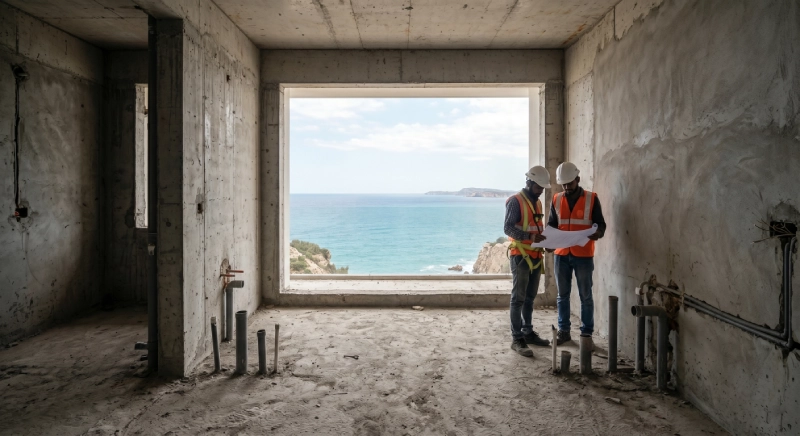
Many developers look at a bathtub and only see the design. In B2B bulk procurement, that is a costly mistake.
The material you choose affects every phase of your project. It impacts your logistics and how efficiently goods survive overseas transit. It dictates how fast your team can handle bathtub installation on-site. It determines the volume of post-handover maintenance requests.
I have seen projects stall entirely because heavy tubs could not fit into a service elevator. I have seen developer profits vanish due to high damage rates during container shipping. This isn’t just about aesthetics; it is about protecting your project delivery.
Choosing the wrong bathtub material can delay installation, increase defect rates, disrupt project delivery timelines, and significantly raise lifecycle maintenance costs in large-scale developments.
What Factors Should Developers Consider Before Choosing a Bathtub Material?
Before jumping straight into material types, you must assess your project’s unique constraints.
How Do Weight and Installation Constraints Affect Material Choice?
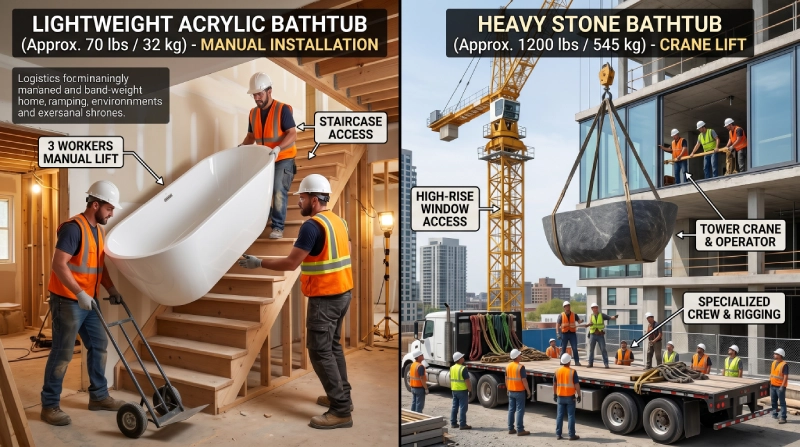
Think about your construction site and labor force. Can the floor structure bear the load of a heavy tub filled with water?
Load-bearing limits: Older buildings or high-rises often have strict weight restrictions.
Hoisting and transport: Heavy tubs require cranes, specialized rigging, and extra time.
Installation difficulty: Lightweight tubs are easily moved by two workers. Heavy tubs require a full, specialized team.
In real estate projects, installation feasibility often outweighs aesthetic considerations.
How Does Project Positioning Influence Material Selection?
Are you building suburban townhouses, a high-density apartment block, or ultra-luxury beachfront villas?
Villas vs. Apartments: Villas can accommodate heavy, freestanding statement pieces. High-density apartments require standardized, highly practical solutions.
Luxury vs. Cost: You must balance the perceived value to the final buyer with your strict procurement budget.
Material selection should always align with project positioning rather than individual unit design preferences.
What Supply Chain Risks Should Developers Consider?
As a project manager, you hate surprises.
Color variations: Natural materials can have huge, unpredictable color differences between batches.
Batch stability: You need tub #1 to look exactly like tub #500.
Packaging and transport: Fragile materials break on ships. You need durable goods that can withstand standard export packaging.
Consistency across hundreds of units is critical to maintaining perceived quality in large developments.
Why Does Lifecycle Cost Matter More Than Purchase Price?
The cheapest tub upfront can easily become the most expensive tub over a ten-year span.
Repairability: Can a scratch or chip be buffed out on-site before handover?
Replacement: If a tub cracks after five years, how difficult and costly is it to pull out and replace?
Complaint risks: High-maintenance materials lead to angry homeowners and a damaged brand reputation.
Long-term maintenance costs are often more important than initial procurement price in real estate projects.
It is also important to note that material selection varies significantly between project types. For example, villa developments and hotel projects follow very different logic in terms of user experience and cost structure.
For a detailed comparison, see our guide on Villa vs Hotel Bathtub Materials what Developers Need to Know.
What Are the Main Types of Bathtub Materials for Projects?
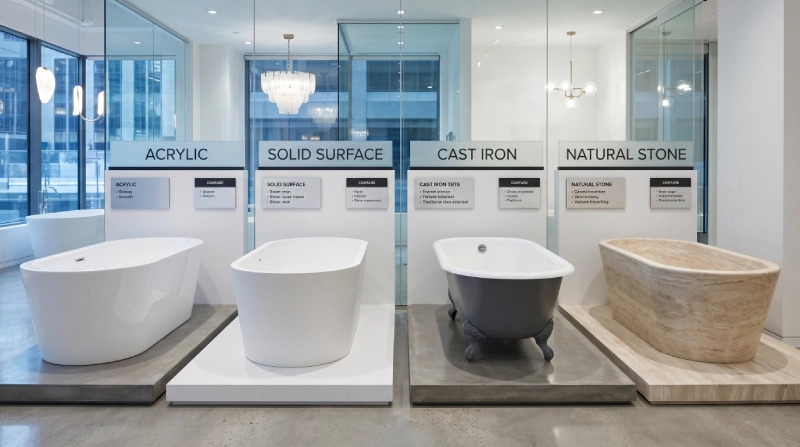
Let’s look at your options for bulk procurement using an engineering classification approach. Every material has a specific role in a project.
Are Acrylic and Fiberglass Bathtubs Suitable for Bulk Projects?
(Lightweight Materials)
Why developers use it: They are highly cost-effective, easy to mold into various shapes, and retain water heat well.
Best for: Standard apartments, high-rises, and budget-conscious bulk residential projects.
Key risks: Fiberglass can feel flimsy and echo. Cheaper acrylic can scratch easily if not treated carefully during construction.
Project implication: This makes it the default choice for high-volume residential developments focused on cost efficiency and fast installation.
When developers move from theory to procurement, the real question becomes not just which bathtub material is best, but how acrylic and fiberglass actually perform in luxury villa environments.
If you want a deeper, side-by-side breakdown of these two commonly compared materials, see our detailed analysis: Which is Better for Luxury Villas: Acrylic or Fiberglass Bathtubs?
This comparison will help you evaluate durability, lifecycle cost, and perceived luxury value in real estate projects.
Why Are Solid Surface Bathtubs Popular in Luxury Developments?
(Engineered Mid-to-High-End Materials)
Why developers use it: They offer a matte, stone-like texture that feels incredibly luxurious without the unpredictability of natural stone.
Best for: High-end villas, premium master suites, and boutique hotels.
Key risks: They are heavier than acrylic (requiring slightly more labor) and sit at a higher price point.
Project implication: This positions it as the preferred option for premium developments requiring both luxury perception and manufacturing consistency.
Are Cast Iron and Porcelain Bathtubs Still Practical Today?
(Heavy-Duty Traditional Materials)
Why developers use it: Exceptional durability. They can last a lifetime and resist scratching and chipping extremely well.
Best for: Ground-floor master suites in traditional luxury homes.
Key risks: They are incredibly heavy. Moving them up stairs or through tight corridors is a logistical nightmare.
Project implication: However, its heavy weight and installation complexity limit its suitability in modern high-rise or large-scale residential projects.
Are Stone and Copper Bathtubs Worth the Risk in Large Projects?
(Luxury Showcase Materials)
Why developers use it: Unmatched visual value. Nothing says “bespoke luxury” quite like a hand-carved natural stone tub.
Best for: Model homes, marketing showcases, or ultra-custom single builds.
Key risks: Extremely high transit damage rates. They require special floor reinforcement, and they are highly porous, needing constant maintenance.
Project implication: Therefore, it is typically reserved for low-volume showcase units in luxury developments.
How Do Different Bathtub Materials Compare for Real Estate Projects?
The table below compares the most common bathtub materials based on factors that directly impact real estate project performance.
Lightweight (Acrylic)
Cost: Low
Installation: Easy
Weight: Light
Bulk Suitability: Excellent
Maintenance: Easy
Engineered (Solid Surface)
Cost: Medium–High
Installation: Moderate
Weight: Medium
Bulk Suitability: Good
Maintenance: Easy
Heavy-Duty (Cast Iron)
Cost: High
Installation: Difficult
Weight: Heavy
Bulk Suitability: Limited
Maintenance: Medium
Luxury (Stone / Copper)
Cost: Very High
Installation: Very Difficult
Weight: Very Heavy
Bulk Suitability: Poor
Maintenance: Complex
In real estate projects, installation complexity and bulk consistency are often more important than raw material cost alone.
What Mistakes Do Developers Make When Choosing Bathtub Materials?
In my experience, developers often make the same costly errors. Avoid these pitfalls:
Choosing based solely on showroom samples: A tub looks great under a spotlight, but how does it perform when you handle bulk procurement for 300 units?
👉 This often leads to delays in procurement and massive batch inconsistencies.
Ignoring installation and weight constraints: Forgetting to check service elevator dimensions or floor load capacities.
👉 This often leads to unexpected crane costs, increased installation cost, and project rework.
Using one material for all units: Putting a basic acrylic tub in a penthouse, or an expensive solid surface tub in a secondary bathroom.
👉 This often leads to misallocated funds, lost ROI, and mismatched buyer expectations.
Underestimating logistics and packaging: Buying fragile stone or cheap acrylic from a supplier with poor export packaging.
👉 This often leads to delivery delays and high logistics costs upon container arrival.
What Is the Best Bathtub Material Strategy for Villa and Residential Projects?
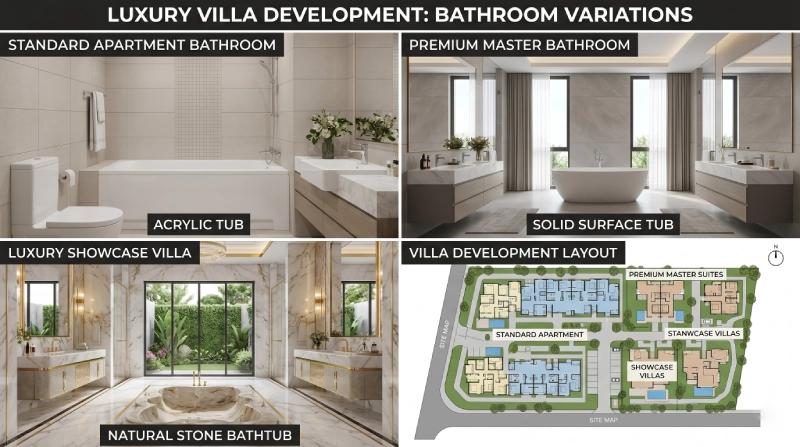
Do not look for one magic material. Use a mixed strategy. We often see large villa compounds successfully use this exact framework:
✔ Standard Units → Acrylic: Keeps baseline costs low and keeps installation moving fast.
✔ Premium Units → Solid Surface: Elevates the master bathrooms, increasing the property’s market value.
✔ Showcase Units → Stone / Copper: Creates a “wow” factor for the model homes used in your marketing materials.
A mixed-material strategy has become the standard approach in large-scale real estate developments to balance cost efficiency, installation feasibility, and perceived luxury.
How Can You Choose a Reliable Bathtub Supplier for Your Project?
Your material is only as good as your supplier. When sourcing for B2B projects, look for these core capabilities:
A qualified supplier in large-scale projects is not just a manufacturer, but a project execution partner responsible for consistency, logistics, and delivery reliability. You need a partner who understands the difference between a residential remodel and a multi-unit construction schedule.
At George Group, we focus on providing consistent, project-ready bathtub solutions for large-scale residential and hospitality developments, supporting developers in managing procurement risk and ensuring stable project delivery. We do not just sell products; we engineer supply chain solutions that ensure your materials arrive safely and perform perfectly throughout the building’s lifecycle.
Frequently Asked Questions About Bathtub Materials for Real Estate Projects
Q1: Which bathtub material is best for large projects?
Answer: For most large-scale developments, a combination strategy works best. Acrylic is ideal for standard units due to cost and ease of installation. Solid surface is perfect for premium units to increase perceived value, while stone or copper should be reserved for showcase units. This makes it the most practical choice for large-scale real estate projects.
Q2: What bathtubs are easiest to install in high-rises?
Answer: Lightweight materials like acrylic and fiberglass are the most practical for high-rise and international projects. They are easier to transport, require lower structural loads, and drastically reduce installation time. Heavy materials require special handling that can delay construction. Choosing lightweight options ensures smoother logistics and protects your timeline for large-scale real estate projects.
Q3: Which material has the lowest long-term maintenance cost?
Answer: Solid surface and acrylic bathtubs generally offer the best long-term maintenance performance. Scratches on solid surface can often be buffed out on-site, and both materials are highly resistant to common stains, resulting in a lower replacement frequency. This translates directly to fewer post-handover complaints and lower lifecycle costs for large-scale real estate projects.
Q4: Is natural stone suitable for bulk procurement?
Answer: In most cases, no. While natural stone provides strong visual impact, it presents severe challenges for bulk orders, including high breakage risks during shipping, inconsistent colors across batches, and incredibly difficult installation due to weight. Because of these factors, natural stone is strictly recommended for low-volume feature units rather than full-scale deployment in large-scale real estate projects.
Q5: How does material choice affect delivery timelines?
Answer: Material choice directly impacts installation speed and site logistics. Lightweight materials allow for faster installation and fewer labor delays. Heavy materials slow down handling and increase the risk of bottlenecks. Minimizing these material-handling delays is essential to keeping construction schedules on track for large-scale real estate projects.
Q6: What are the biggest risks in choosing bathtub materials?
Answer: The most common risks include choosing materials based solely on showroom samples, ignoring weight and installation constraints, and underestimating export shipping challenges. Selecting materials that are difficult to maintain also creates long-term issues. Actively managing these specific material risks is critical to avoiding cost overruns in large-scale real estate projects.
Q7: How can developers ensure consistent bulk quality?
Answer: Consistency depends on both the material chosen and the supplier’s capability. Developers should choose materials with highly stable manufacturing processes (like acrylic or solid surface) and work with suppliers experienced in large-scale B2B exports. Partnering with a supplier who enforces strict quality control is the only way to guarantee uniformity across hundreds of units for large-scale real estate projects.
Conclusion: Your Next Steps for Flawless Project Delivery
In real estate projects, the best bathtub material is not defined by appearance alone, but by its ability to balance cost, installation efficiency, and long-term performance at scale.
After a decade in this industry, I can promise you one thing: the best bathtub material is the one that minimizes project risk.
To recap our core strategy: use cost-efficient acrylic for standard units, premium solid surface for master suites, and luxury stone exclusively for showcase villas. This mixed-material approach protects your budget, speeds up installation, and delivers the luxury your buyers expect.
But a great strategy requires flawless execution. At George Group, we engineer supply chain solutions. We ensure zero batch variation, provide export-grade packaging, and guarantee reliable delivery from unit 1 to unit 500.
Need Help Choosing the Right Bathtub Material for Your Project?
Get a tailored solution and let our team handle the procurement details—so you can focus on building.
👉 Get My Project SolutionReferences & Further Reading
Homes and Gardens – 8 Common Bathtub Materials and Their Pros and Cons (Comprehensive analysis of material lifespans, weights, and maintenance requirements).
Badeloft – Common Bathtub Materials: Pros, Cons, and Costs (Industry insights on structural reinforcement, heat retention, and lifecycle costs across different materials).
Off The MRKT – What Is the Difference Between Solid Surface and Acrylic Tubs? (Detailed comparison on durability, upfront costs, and suitability for high-traffic real estate projects).
Aqua Living – 9 Common Bathtub Materials and the Pros and Cons of Each (Engineering-focused breakdown of material porosity, repairability, and installation constraints).
We provide integrated one-stop bathroom solutions covering tubs, sanitaryware, fittings, and system coordination for hotel and commercial projects.
▼ Submit the form below to connect with our team and explore project-based collaboration. ▼