
Hi, I’m Helen. Whenever I sit in boardrooms with project managers and villa developers, the exact same material debate inevitably comes up. This is one of the most underestimated decisions in high-end residential construction.
In luxury villa projects, choosing the wrong bathtub material doesn’t just affect cost—it creates long-term maintenance issues, buyer complaints, and potential damage to your project reputation. When managing a 50-unit development, the debate between an acrylic vs fiberglass bathtub isn’t about saving a few hundred dollars today. It’s about ensuring the “luxury” experience you promised remains intact years after the handover. In high-end developments, these decisions are rarely visible on Day 1, but they become the primary source of after-sales headaches by Year 3.
Let’s break it down from a strategic project perspective. In this guide, I’m going to share what I’ve seen on-site and why your material choice directly impacts your Total Cost of Ownership (TCO).
Quick Answer: Acrylic bathtubs are the superior choice for luxury and multi-unit developments due to their extended lifespan (15–30 years), excellent heat retention, and highly durable, non-porous finish. While fiberglass offers a lower upfront cost, acrylic delivers a lower Total Cost of Ownership (TCO), minimal maintenance risk, and a sustained premium appearance.
At George Group, we’ve seen developers regret “going cheap” on fiberglass, only to call us two years later for urgent replacements. In most high-end residential scenarios, fiberglass is simply not competitive when evaluated beyond initial cost. For developers focused on long-term performance rather than short-term savings, the decision is rarely even close. In short: Acrylic lasts longer, looks better, and costs less over time.
Table of Contents
What Are the Key Differences Between Acrylic and Fiberglass Bathtubs?
When weighing acrylic vs fiberglass bathtub pros and cons, you need to understand how each material impacts long-term project risk, maintenance cost, and buyer perception. Let’s break down the business impact.
1. Durability: The Maintenance Risk in Multi-Unit Developments
When we look at acrylic vs fiberglass durability, the biggest “project killer” is surface failure.
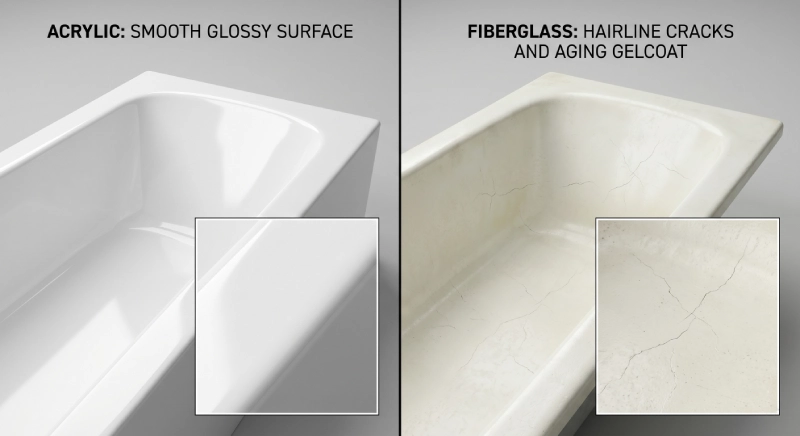
Acrylic: This material is non-porous and reinforced with fiberglass and resin underneath. It’s highly impact-resistant. In a typical villa, an acrylic tub has a reliable lifespan of 15–30 years.
Fiberglass: It relies on a thin gelcoat surface. This layer is inherently brittle. Over time, it’s prone to spiderweb cracks, fading, and structural flexing. The lifespan is often just 10–15 years.
The Project Angle: If a fiberglass tub cracks in Villa #14, you aren’t just paying for a repair; you are dealing with a frustrated homeowner. Across dozens of units, even a small failure rate compounds into a measurable operational and financial burden. And unlike minor surface wear, structural cracks in fiberglass often require full replacement rather than repair.
2. Heat Retention: The Luxury Buyer Experience
Luxury buyers pay for the ultimate “spa experience.”
Acrylic is naturally warm to the touch and an excellent insulator, meaning the bathwater stays hot significantly longer.
Fiberglass loses heat rapidly and feels colder and “cheaper” when the user steps in.
The Project Angle: If your marketing brochure mentions “Luxury Spa-like Bathrooms,” a fiberglass tub makes that promise feel hollow. This becomes especially critical during property viewings, where first impressions directly influence buyer decisions.
3. Weight and Installation Efficiency
Both materials are lightweight, which is fantastic for multi-story villas where floor loading is a concern.
However, acrylic is structurally stronger. At George Group, our acrylic tubs are engineered with reinforced bases. This reduces installation errors and minimizes the risk of post-installation issues such as seal failure or leakage — issues that are costly to fix once the villa is completed and handed over.
4. Aesthetics: Property Premium and Resale Value
In luxury developments, visual quality directly influences buyer perception and pricing power.
Acrylic has a deep, high-gloss finish that stays vibrant and resists yellowing.
Fiberglass can look dull very quickly as the gelcoat wears thin, affecting how buyers perceive the overall quality of the property over time.
Acrylic Bathtub
Fiberglass Bathtub
Do Acrylic Bathtubs Last Longer Than Fiberglass? (The TCO Breakdown)

Many clients ask me, is acrylic or fiberglass bathtub better for the bottom line? Let’s look at the math over a 50-unit villa example.
The Fiberglass Scenario: You save roughly $15,000 upfront. But by Year 5, you might need to replace 2-3 tubs due to structural cracks. In finished villas, replacing one tub involves tile removal and labor — often costing 2–3 times the product itself. In many cases, these costs are not budgeted upfront, creating unexpected pressure on project margins.
The Acrylic Scenario (The George Group Way): You invest more upfront, but your maintenance calls drop to near zero. Your homeowners are happy, and your developer’s “Quality Guarantee” remains intact.
Key Insight: Choosing acrylic can reduce long-term maintenance costs by up to 30% over 5 years. For developers managing tight margins, this difference directly impacts project profitability.
Real-World Case Study: 10-Unit Luxury Villa Project in Côte d'Ivoire
To show you exactly how this TCO strategy plays out on-site, let’s look at a recent project we successfully delivered.
George Group partnered with a high-end developer for a 10-unit luxury villa project in Côte d’Ivoire. Each villa required 5 premium bathtubs (a 50-bathtub procurement scope), alongside comprehensive bathroom fixtures. The developer’s core challenges perfectly mirrored our TCO discussion: they needed strict control over procurement efficiency, zero installation conflicts, and guaranteed long-term reliability for the high-end African market.
Why Acrylic Was the Strategic Choice: Instead of risking brittle fiberglass materials that struggle with long-term wear, the developer opted for our ergonomic acrylic bathtubs. We provided high-gloss, installation-ready reinforced units that perfectly matched their construction drawings.
The Business Impact:
0% Installation Errors: The structural integrity of the acrylic tubs, combined with our pre-matched modular approach, eliminated costly on-site rework.
25% Faster Installation: Because the reinforced acrylic units were structurally sound and easy to handle without flexing, labor efficiency improved significantly.
Long-term TCO Protection: The developer secured a durable finish that elevated the master ensuites without the looming risk of structural cracking or yellowing.
As the developer noted: “George Group’s standardized approach allowed us to replicate the high-quality bathroom setup across multiple villas with minimal on-site adjustments.” This is the exact peace of mind and scalability that a premium acrylic specification delivers.
Why Do High-End Developers Prefer Acrylic in Singapore and Global Markets?
In humid or tropical climates like Singapore or Southeast Asia, building materials are tested to their limits. Acrylic handles temperature fluctuations much better without warping. This aligns with a broader shift toward durable, low-maintenance materials in long-term asset-focused developments.
At George Group, we support large-scale projects with stable supply capacity and lead times under 4 weeks. This ensures your project isn’t delayed by material shortages.
What Are the Disadvantages of Acrylic Bathtubs?
To ensure a balanced decision, consider the limitations:
Higher Upfront Cost: Requires a larger initial capital outlay.
Surface Scratches: While durable, the surface can be scratched if cleaned with harsh chemicals.
Our Mitigation: Acrylic is fully repairable. Minor scratches can be buffed out, significantly reducing replacement frequency compared to fiberglass.
Frequently Asked Questions
1. Acrylic vs fiberglass bathtub durability: Do they turn yellow or fade?
Unlike fiberglass—where the thin gelcoat often fades or yellows after a few years—premium acrylic is colorfast and maintains its high-gloss finish for decades.
2. How long do acrylic bathtubs last in real projects?
A high-quality reinforced acrylic bathtub typically lasts 15 to 30 years, nearly double the lifespan of standard fiberglass units.
3. Why do fiberglass bathtubs crack over time?
Fiberglass relies on a brittle gelcoat surface over a flexible base. Over time, repeated stress from weight and temperature changes causes cracks and structural fatigue.
4. How do developers justify the higher upfront cost of acrylic bathtubs?
Developers evaluate Total Cost of Ownership (TCO). Lower maintenance, fewer replacements, and higher buyer satisfaction typically offset the initial cost difference within the first 3-5 years.
5. What is the biggest risk of choosing fiberglass in multi-unit developments?
The biggest risk is cumulative failure. Even a low defect rate can lead to repeated maintenance issues across multiple units, increasing unbudgeted costs and damaging project reputation.
6. Is fiberglass ever used in luxury villa projects, and under what conditions?
Fiberglass is rarely specified for premium villas. It may only be considered for secondary guest bathrooms with very low traffic or in projects where the building is intended for short-term temporary use rather than long-term luxury residence.
7. How does bathtub material affect property value and buyer perception?
Material quality directly impacts perceived value. Acrylic maintains a premium appearance that supports high-end positioning, while fiberglass tends to look “budget” after minimal wear.
8. What should procurement teams check before finalizing a bathtub supplier?
Focus on: Material thickness, reinforcement type, certifications (CE, cUPC), and supply stability. Requesting a physical sample is strongly recommended before locking in your BOQ.
9. Can acrylic bathtubs be repaired if damaged?
Yes. Unlike fiberglass, which often requires full replacement after a structural crack, acrylic is highly repairable. Minor damage can be polished out on-site without disrupting tiles or plumbing.
Final Verdict: Which Is Better Acrylic or Fiberglass Bathtub?

When defining the best bathtub material for luxury homes:
Acrylic = Long-term ROI + Lower Risk + Premium Positioning.
Fiberglass = Short-term Saving + Long-term Liability.
For projects where brand positioning matters, acrylic is the clear and strategic choice. For developers aiming for the premium segment, fiberglass is increasingly becoming a non-viable option. From an asset lifecycle perspective, acrylic aligns far better with long-term property value strategies.
Acrylic vs fiberglass is only part of the decision.
For developers, architects, and procurement teams working on luxury villas or hospitality projects, material selection should always be evaluated within a broader lifecycle and ROI framework.
For a complete overview of all premium bathtub materials—including solid surface, cast iron, and stone resin—and how they perform in luxury real estate projects, read our full guide: What is the Best Bathtub Material for Luxury Villa Real Estate Projects in 2026?
This pillar guide helps you align material choice with design intent, budget strategy, and long-term asset value.
Partner with George Group for Your Next Project
Before finalizing your material specification, consider evaluating the real long-term impact. No obligation evaluation available for project teams.
For Procurement Teams:
Request a physical sample to compare thickness and finish side by side. We can arrange sample delivery within days for project evaluation.
Test the durability: See exactly why our reinforced acrylic outlasts the competition.
For Project Decision-Makers:
Get a Bulk Quote: We offer highly competitive tiered pricing for projects with 50+ units.
Request a TCO Analysis: Let our team help you calculate the exact long-term savings for your development.
Why Trust George Group?
Our products are CE and cUPC certified, meeting the highest international standards. We have a proven track record of on-time global delivery.
Ready to elevate your project? Contact George Group today during your BOQ or specification stage to validate material selection before your procurement is locked.
References & Sources
Project Case Study & Data: Côte d’Ivoire Luxury Villa Bathroom Solution – George Build Shop (Details the 50-bathtub procurement scope, 0% installation error rate, and 25% efficiency increase).
Material Lifespan & Durability: Acrylic vs. Fiberglass Bathtubs: What’s the Difference? – Angi Expert Guide (Industry benchmark supporting the up to 30-year lifespan of acrylic vs. 10–15 years for fiberglass).
International Quality Standards: IAPMO / cUPC Certification and European CE Marking Guidelines – Global regulatory frameworks for plumbing safety and structural durability.
We provide integrated one-stop bathroom solutions covering tubs, sanitaryware, fittings, and system coordination for hotel and commercial projects.
▼ Submit the form below to connect with our team and explore project-based collaboration. ▼