
Sanitary Ware Manufacturer in China
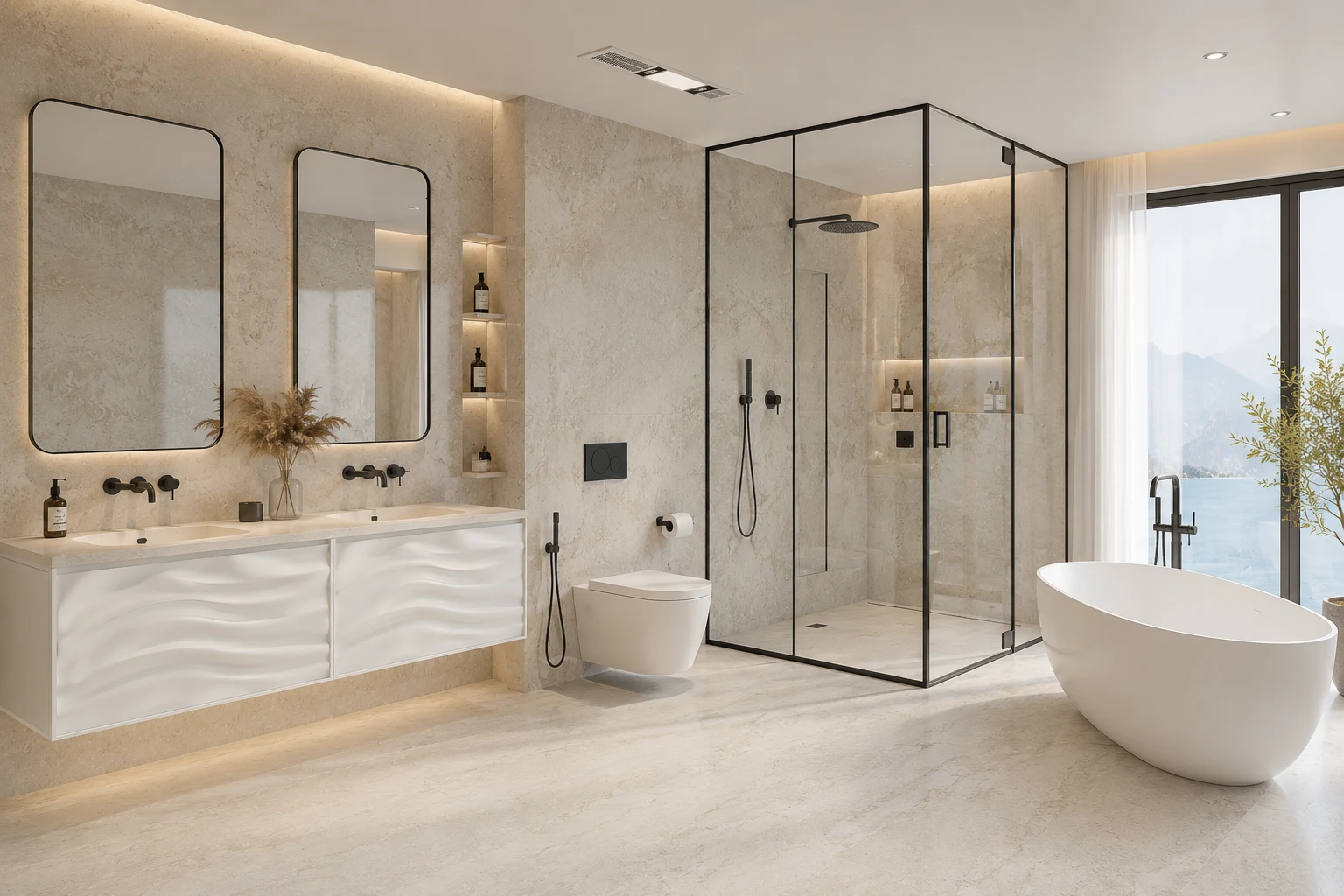
George Group’s sanitary ware business serves hotel, apartment, and hospital projects.
We provide project-based sanitary ware supply covering product selection, customization, manufacturing, multi-category coordination, and export delivery.
Factory-backed production for project sanitary ware supply
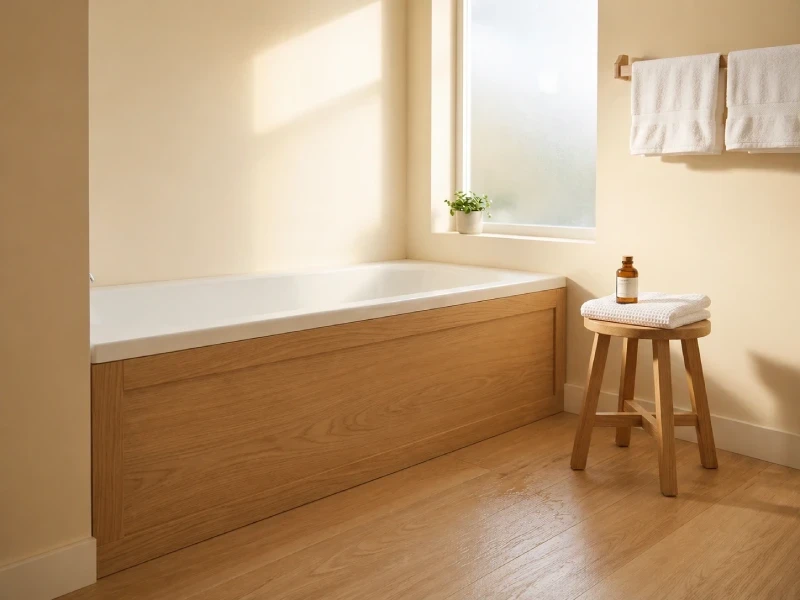
Bathtub Manufacturing in China
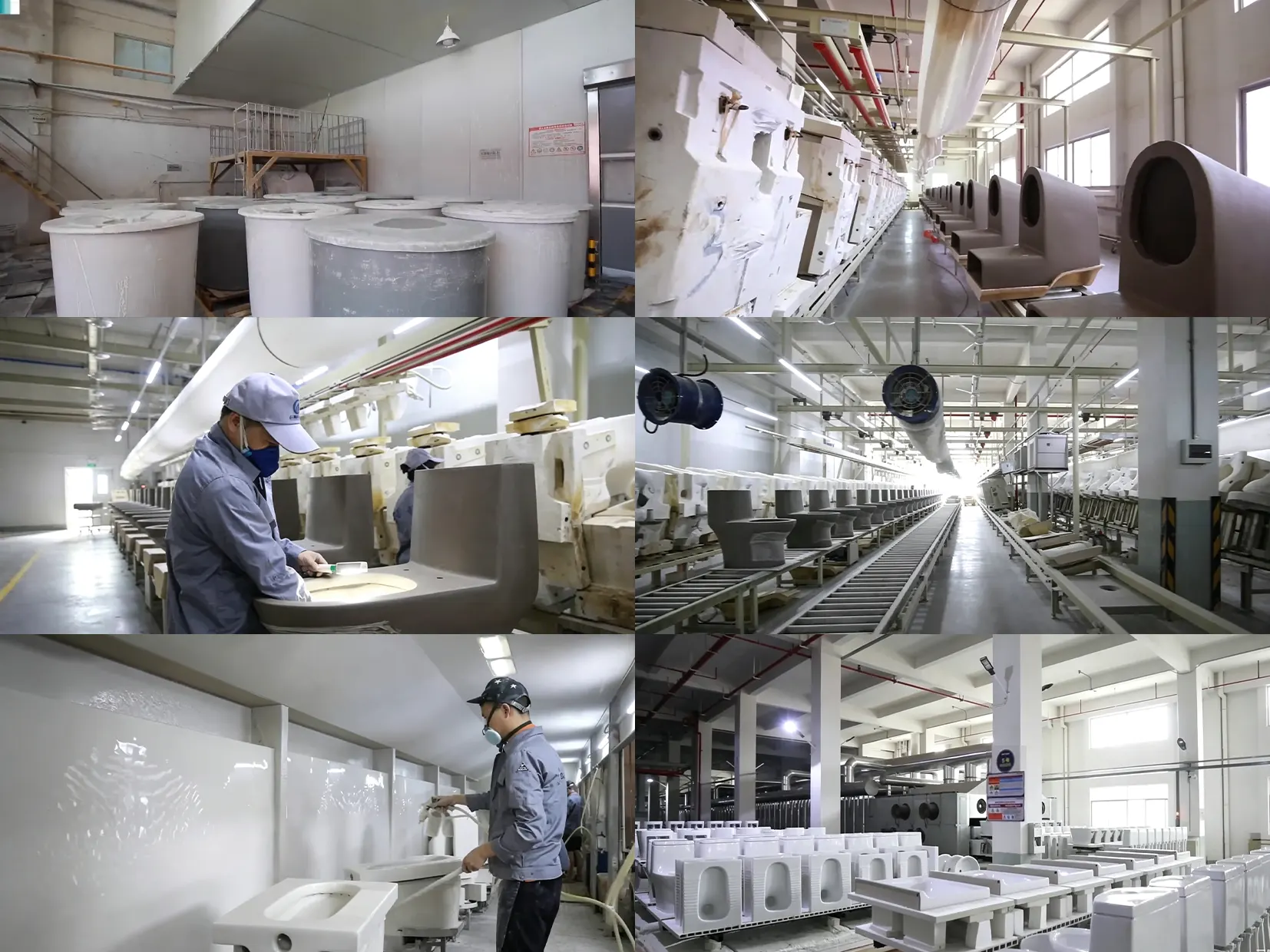
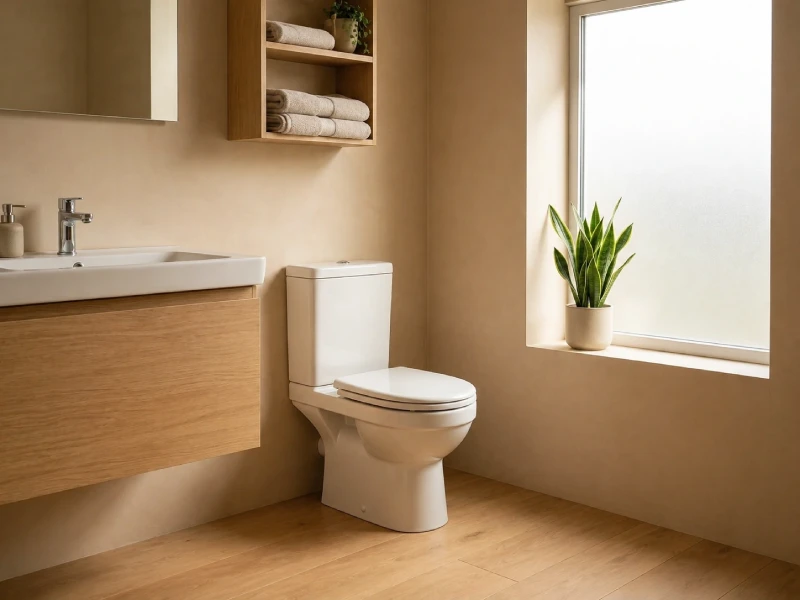
Toilet Manufacturing in China
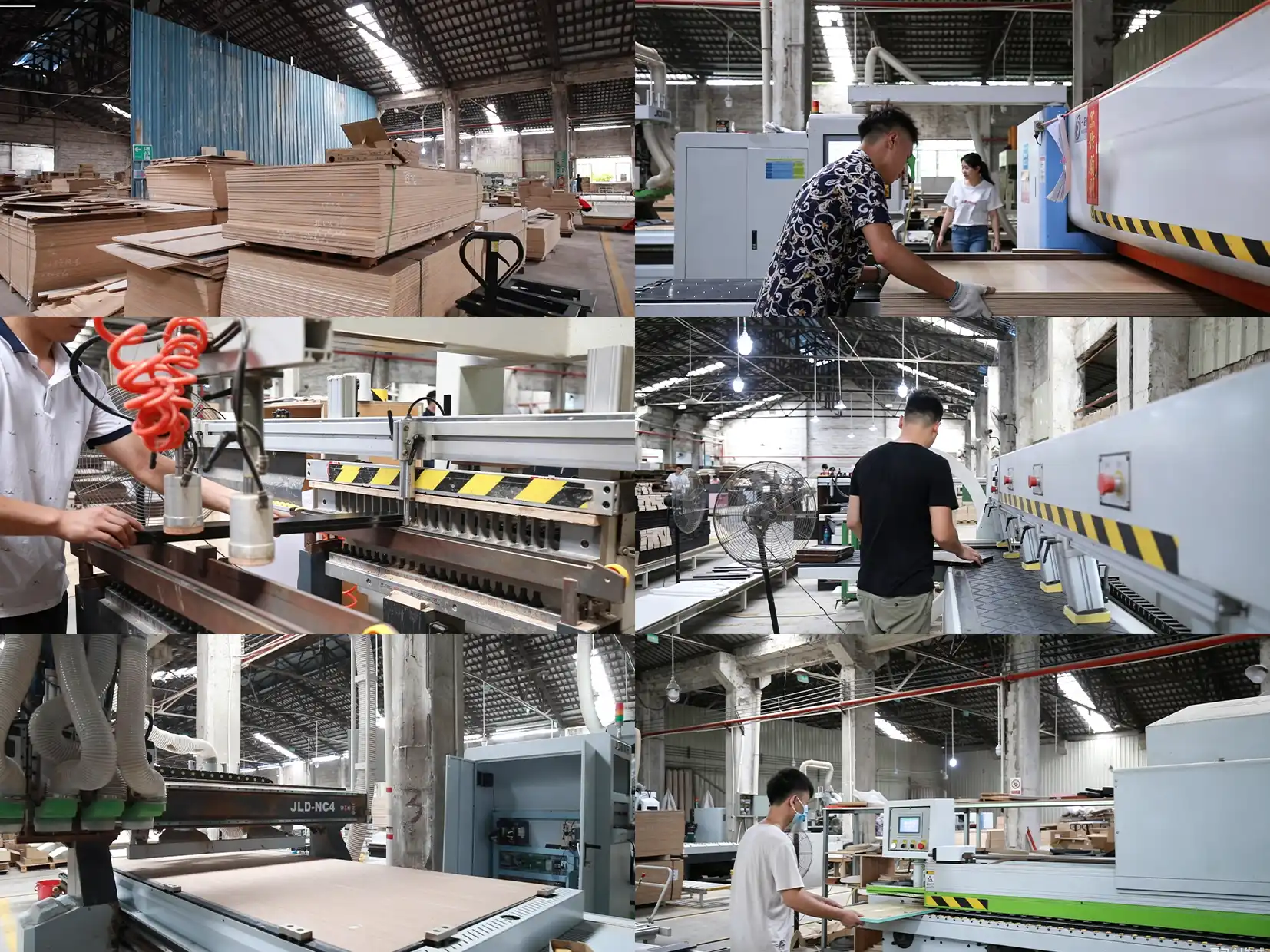
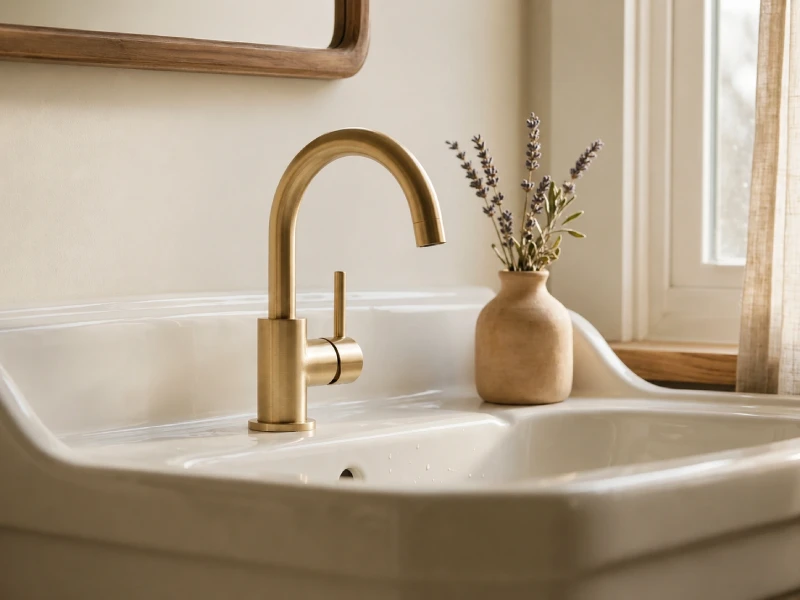
Bathroom Vanity Manufacturing in China
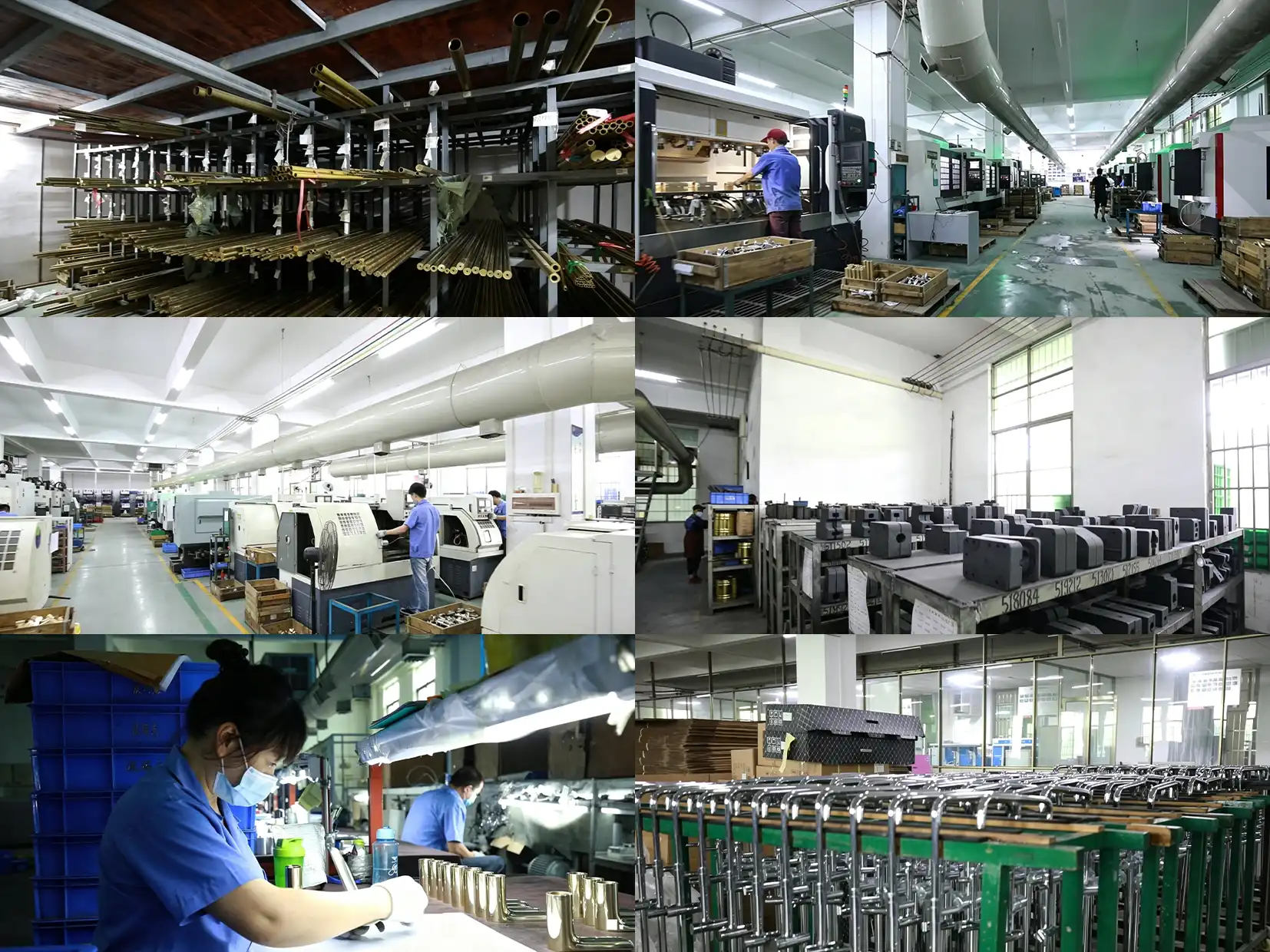
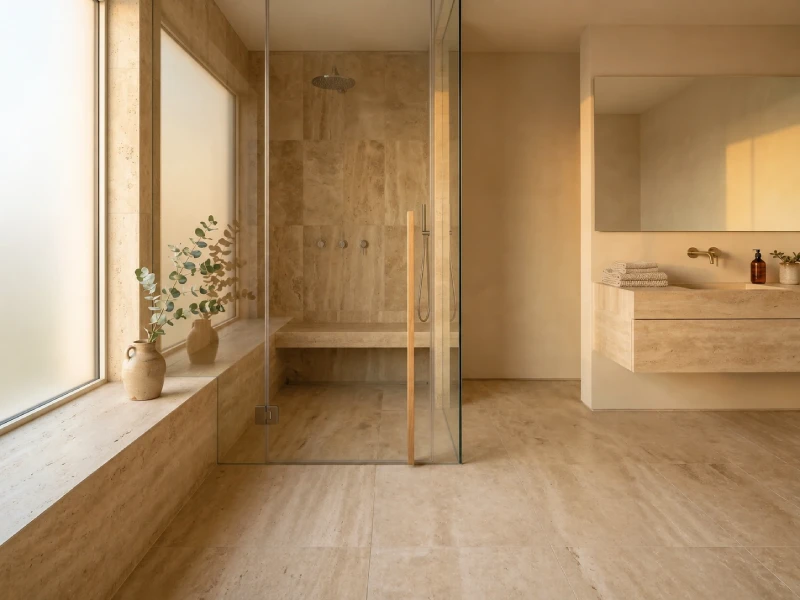
Shower Door Manufacturing in China
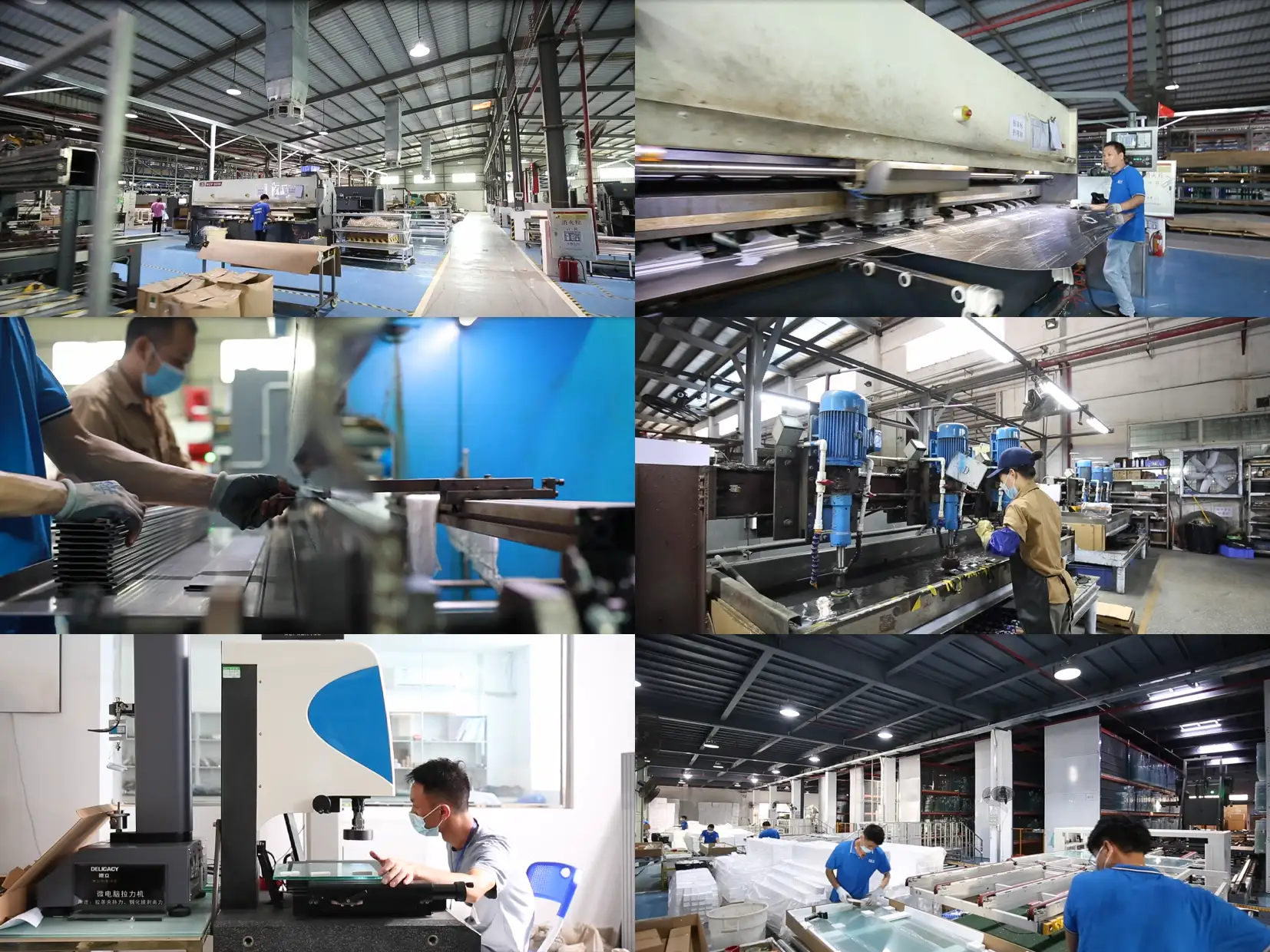
China Sanitary Ware Product Categories
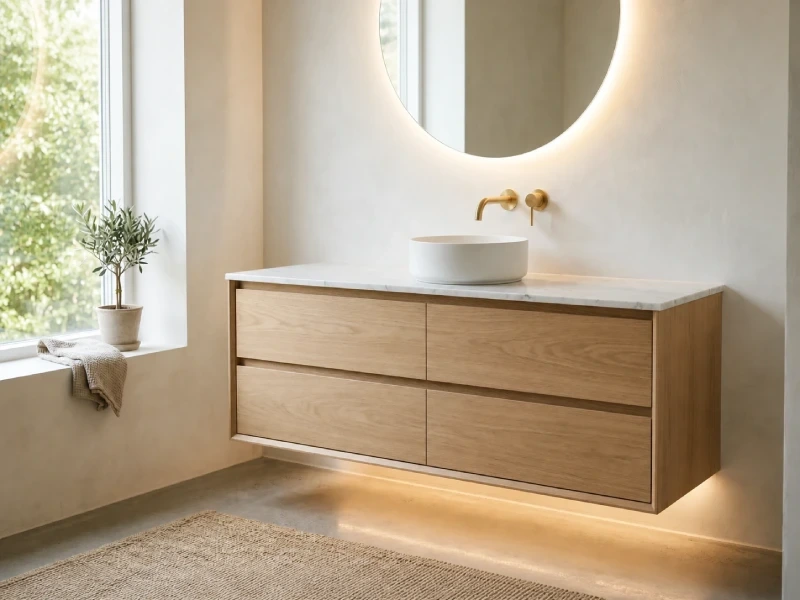
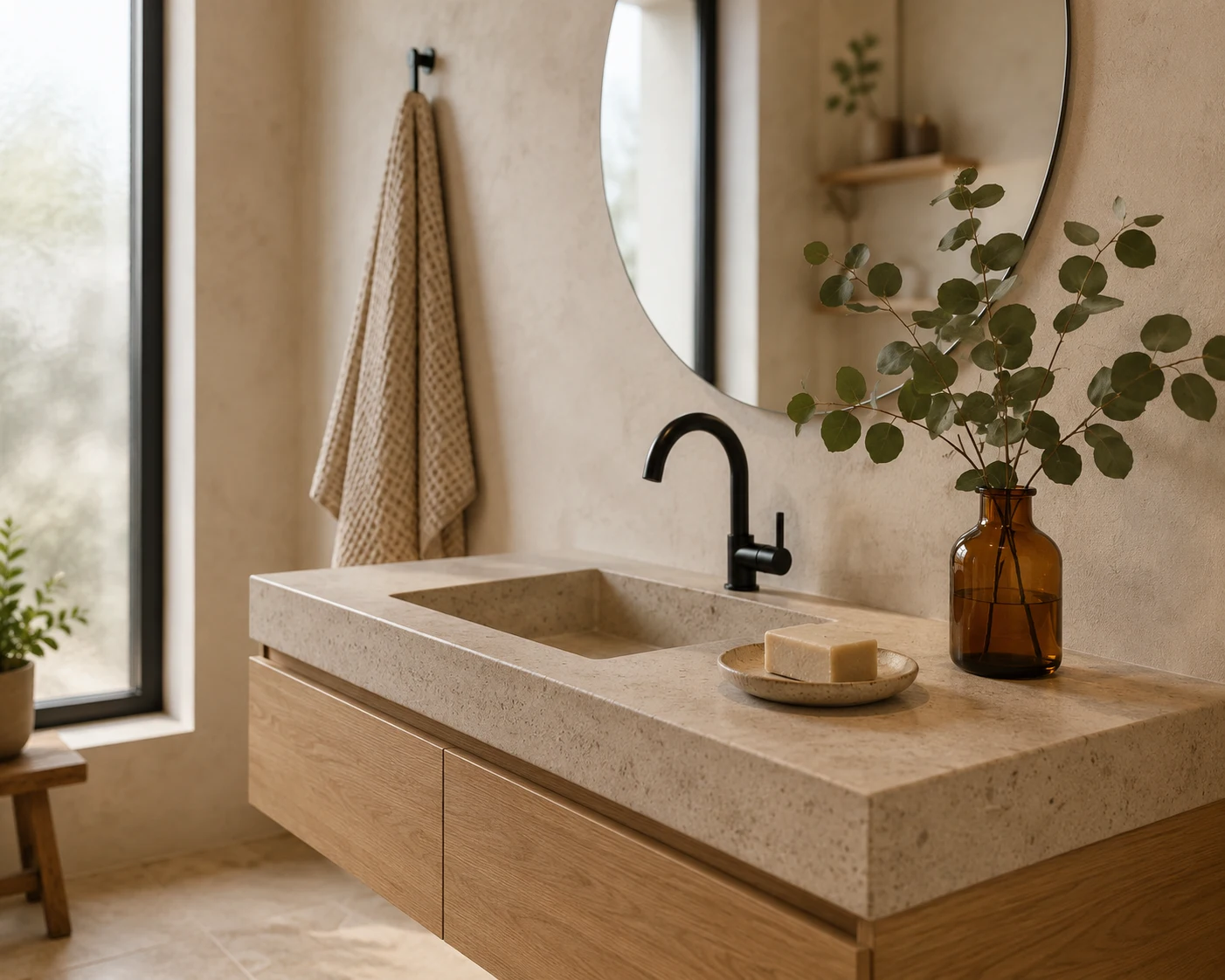
Premium sanitary ware collections
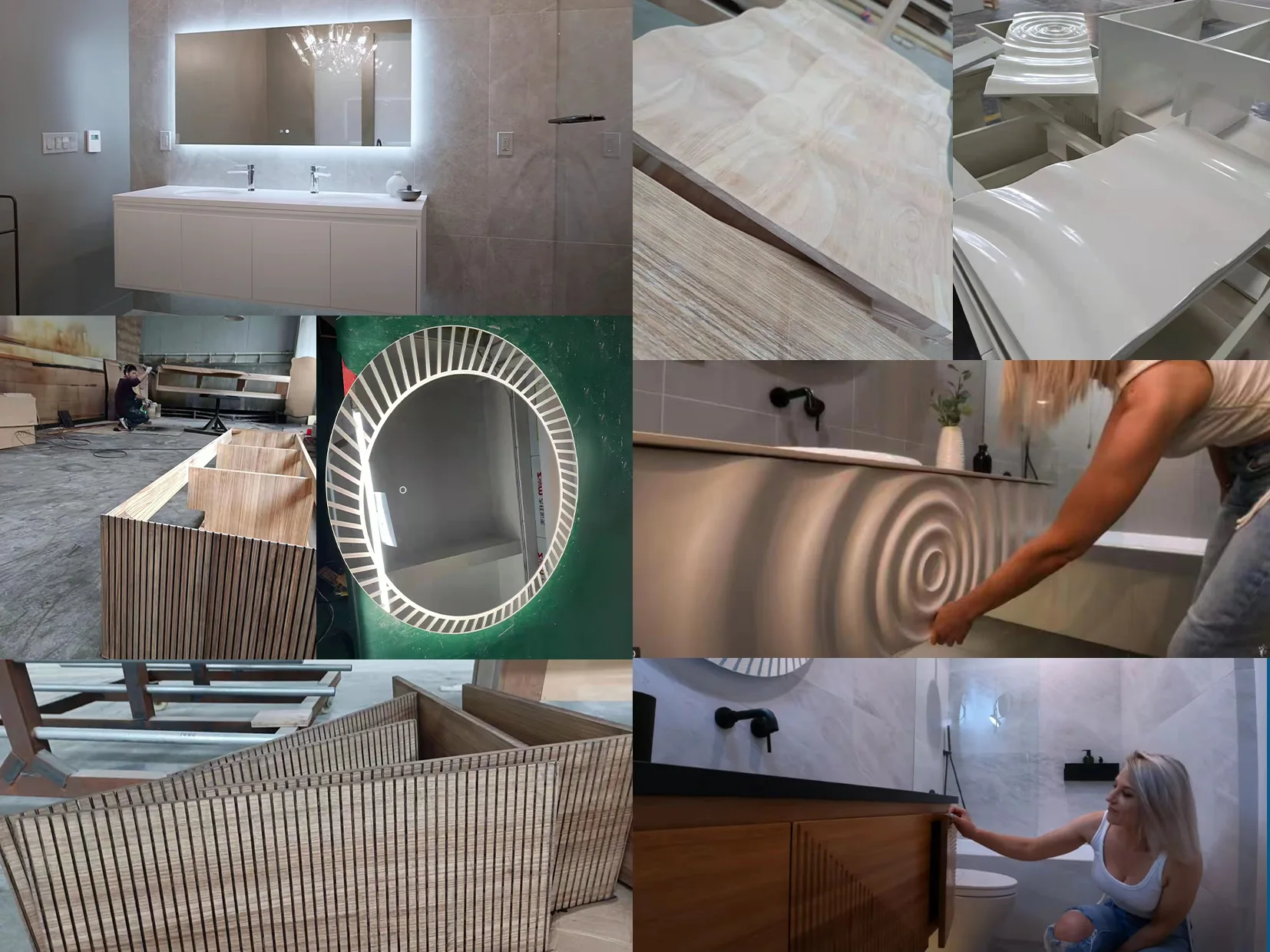
George Group supplies premium bathroom collections for hotels, serviced apartments, boutique hospitality properties, and commercial projects.
Spring series

Transparent resin, natural veneer, and water-inspired forms create a calm look for hospitality and wellness bathrooms.
Linglong series
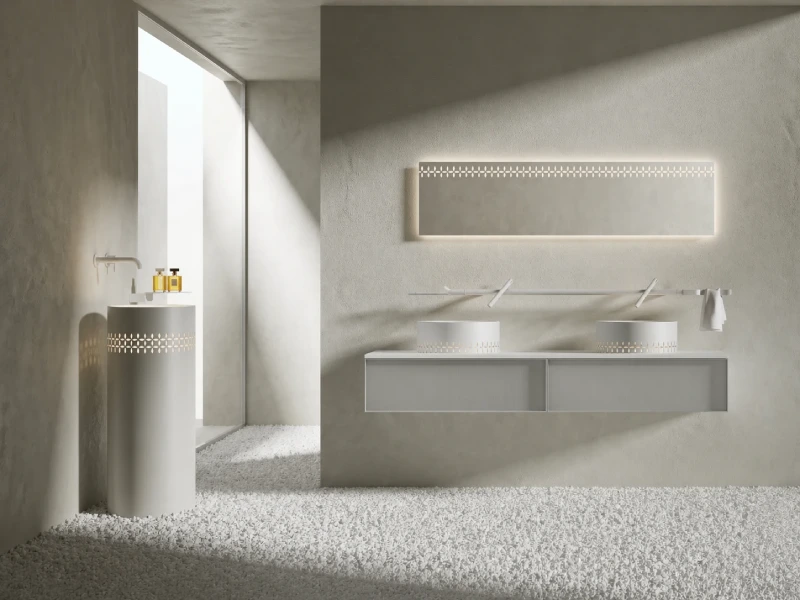
Inspired by Chinese Linglong porcelain, this refined collection combines carved details, soft lighting, and Eastern elegance.
Forest series
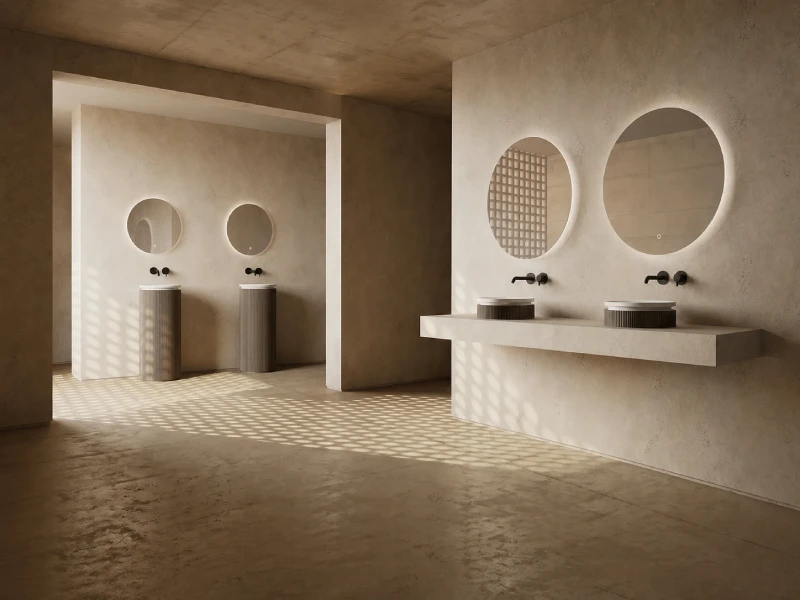
Wood and stone textures create a warm, grounded atmosphere for resorts, spas, and nature-inspired bathroom projects.
Matrix series
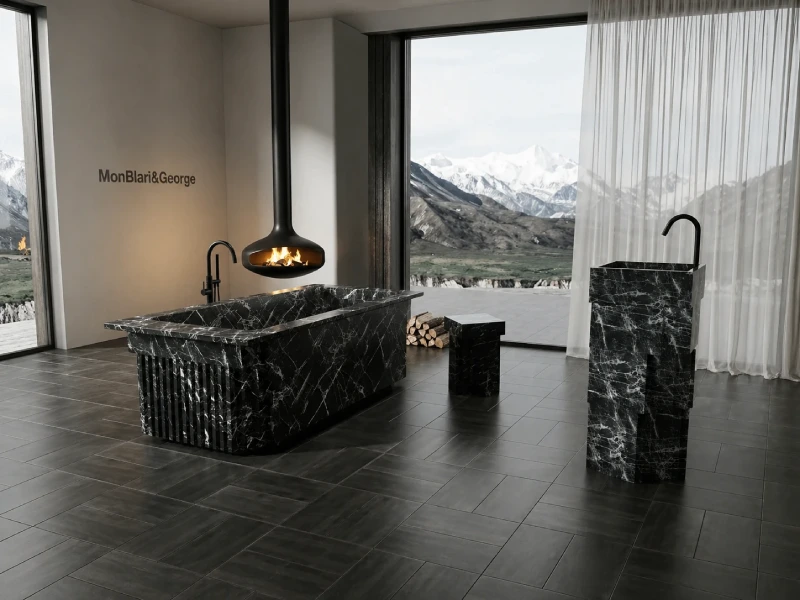
Geometric stone forms and architectural proportions create statement bathrooms for luxury hotels and design-led apartments.
Flower series

Petal-inspired curves, soft finishes, and sculptural basins suit boutique hotels and suite bathrooms.
Beryl series
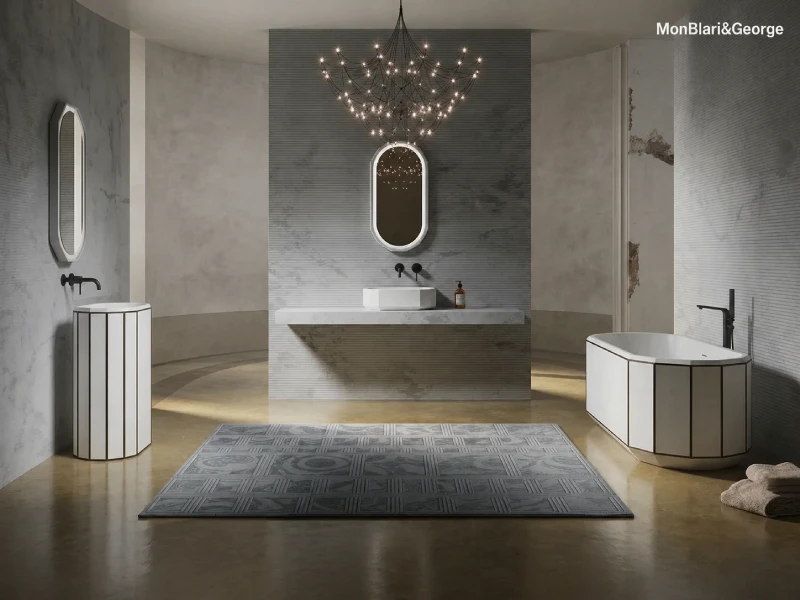
Diamond-faceted solid-surface forms and a seamless, nonporous structure create a bold look for luxury bathroom spaces.
Italian minimalism
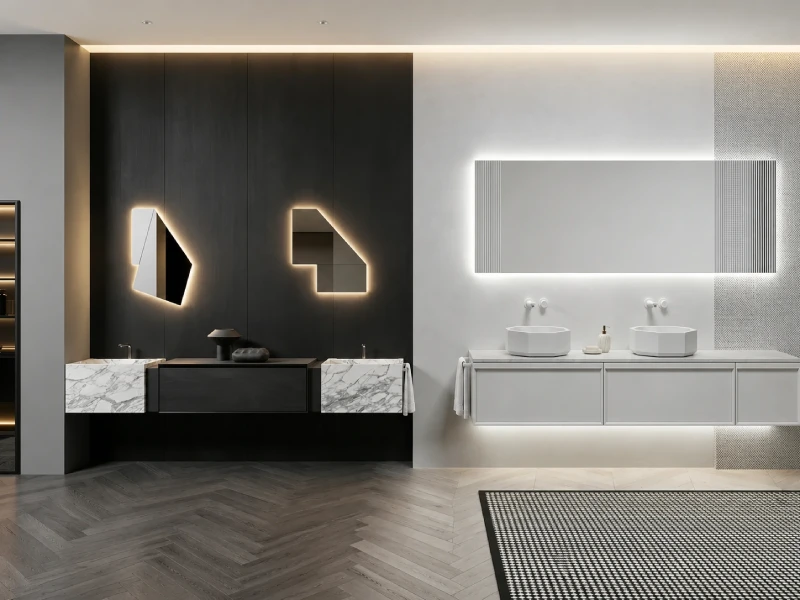
Clean geometry, marble surfaces, and wall-hung proportions suit modern hotels and long-stay apartment projects.
Swing series
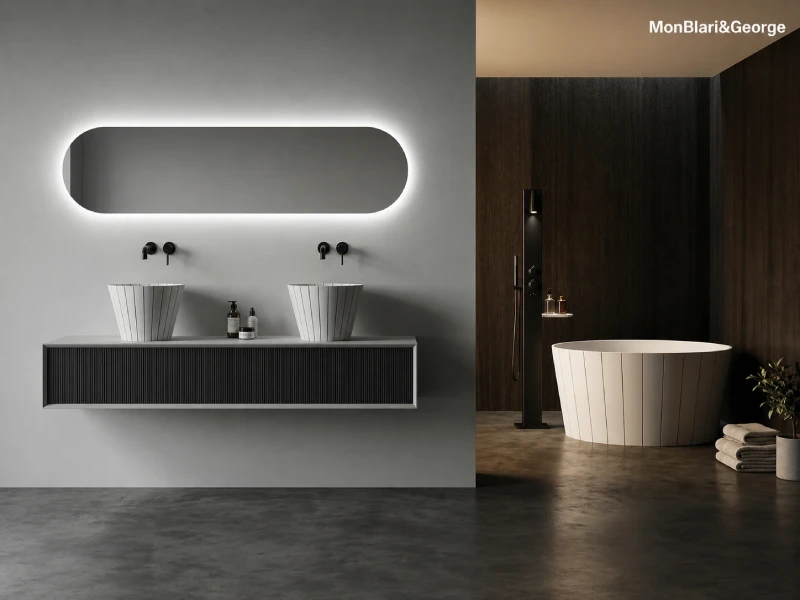
Fluid geometry, resin inlays, and expressive materials suit high-end hotels and resort bathrooms.
For project-level bathroom selection—not single-item retail or lowest-price purchasing.
Sanitary Ware Projects Supplied by George Group
Explore villa, apartment, resort, and residential projects supplied by George Group, with coordinated sanitary ware selection, customization, QC, packing, and delivery.
Saudi Arabia Hospital Project
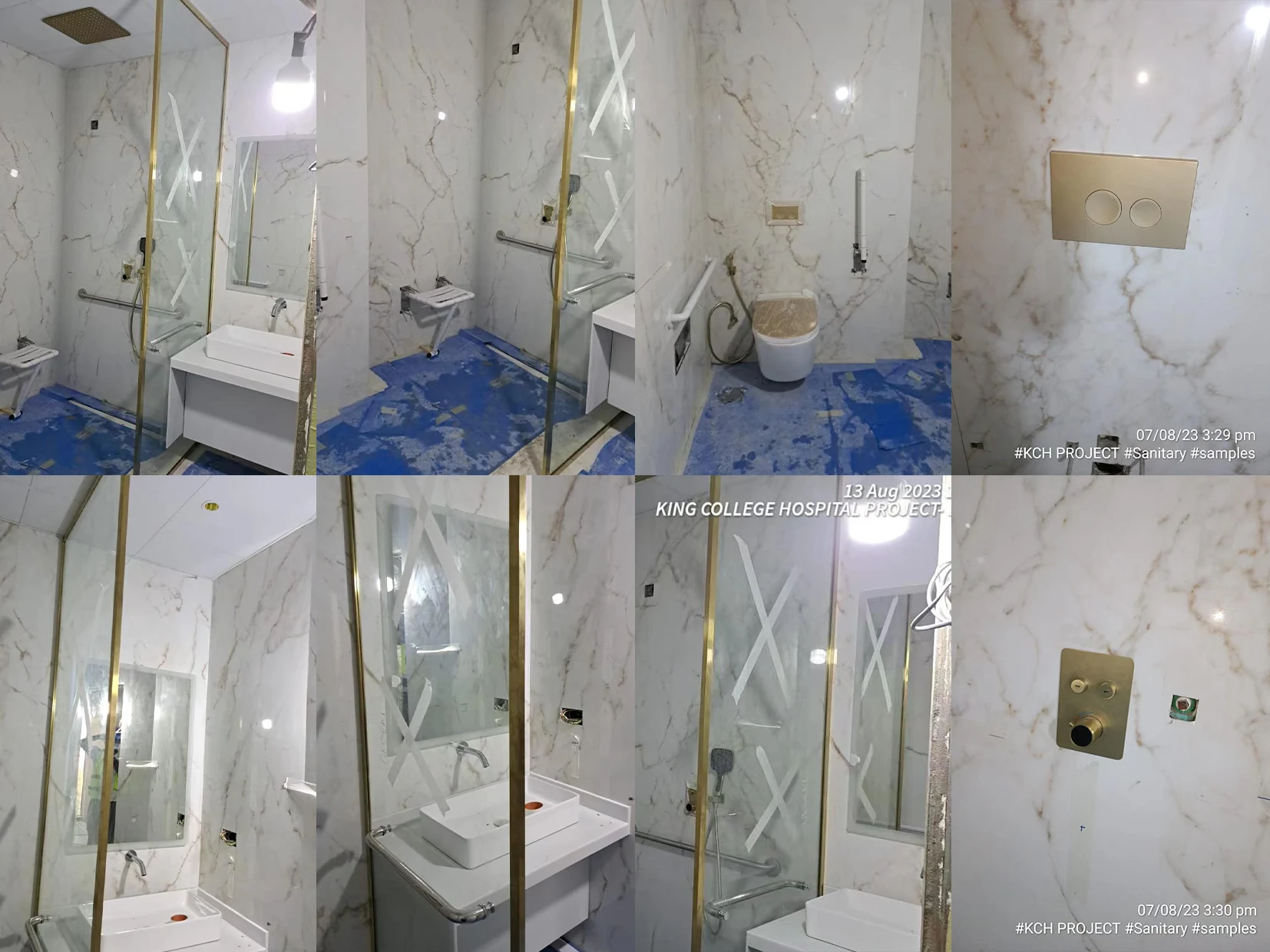
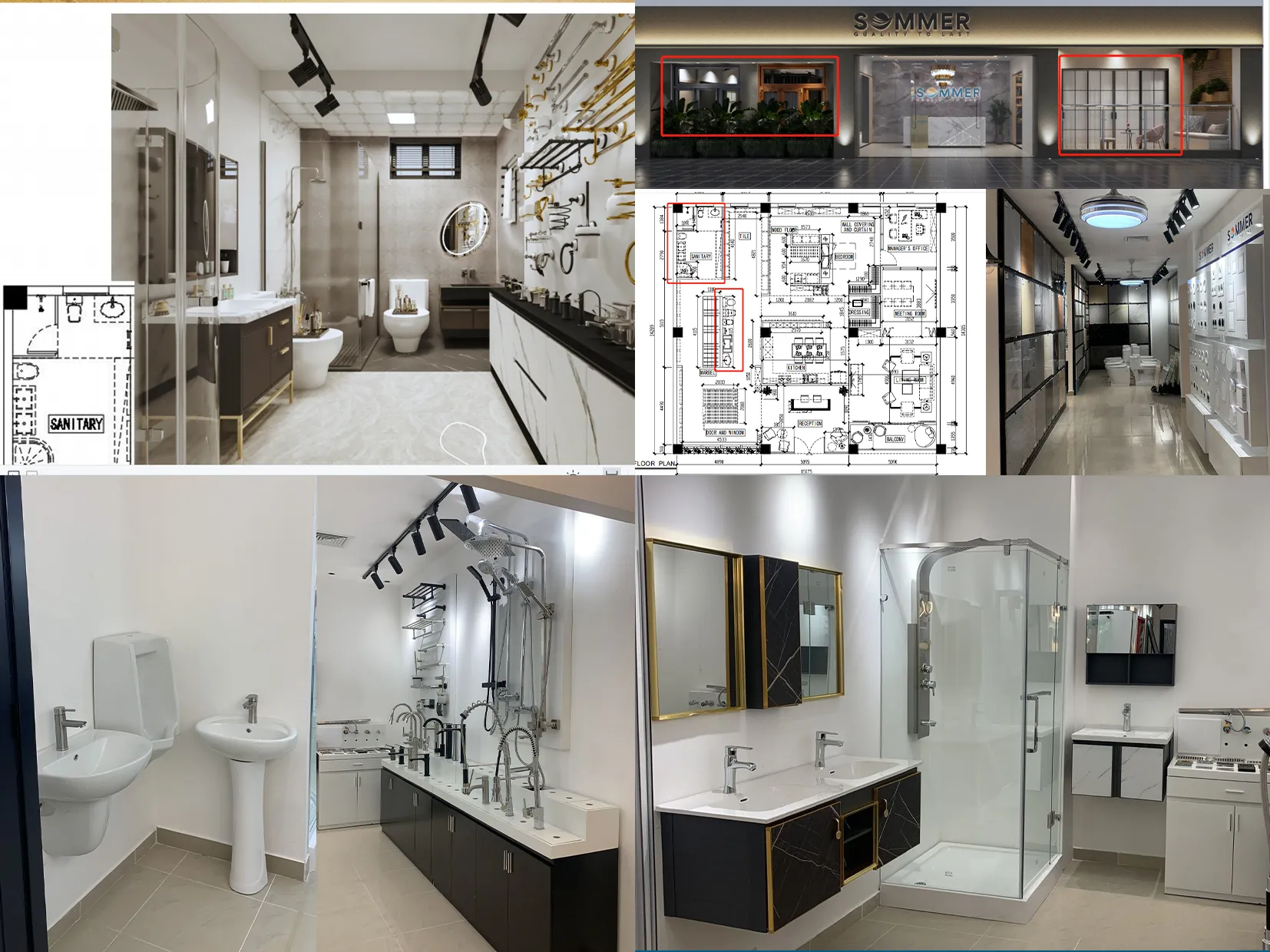
Dominican Republic Showroom Project
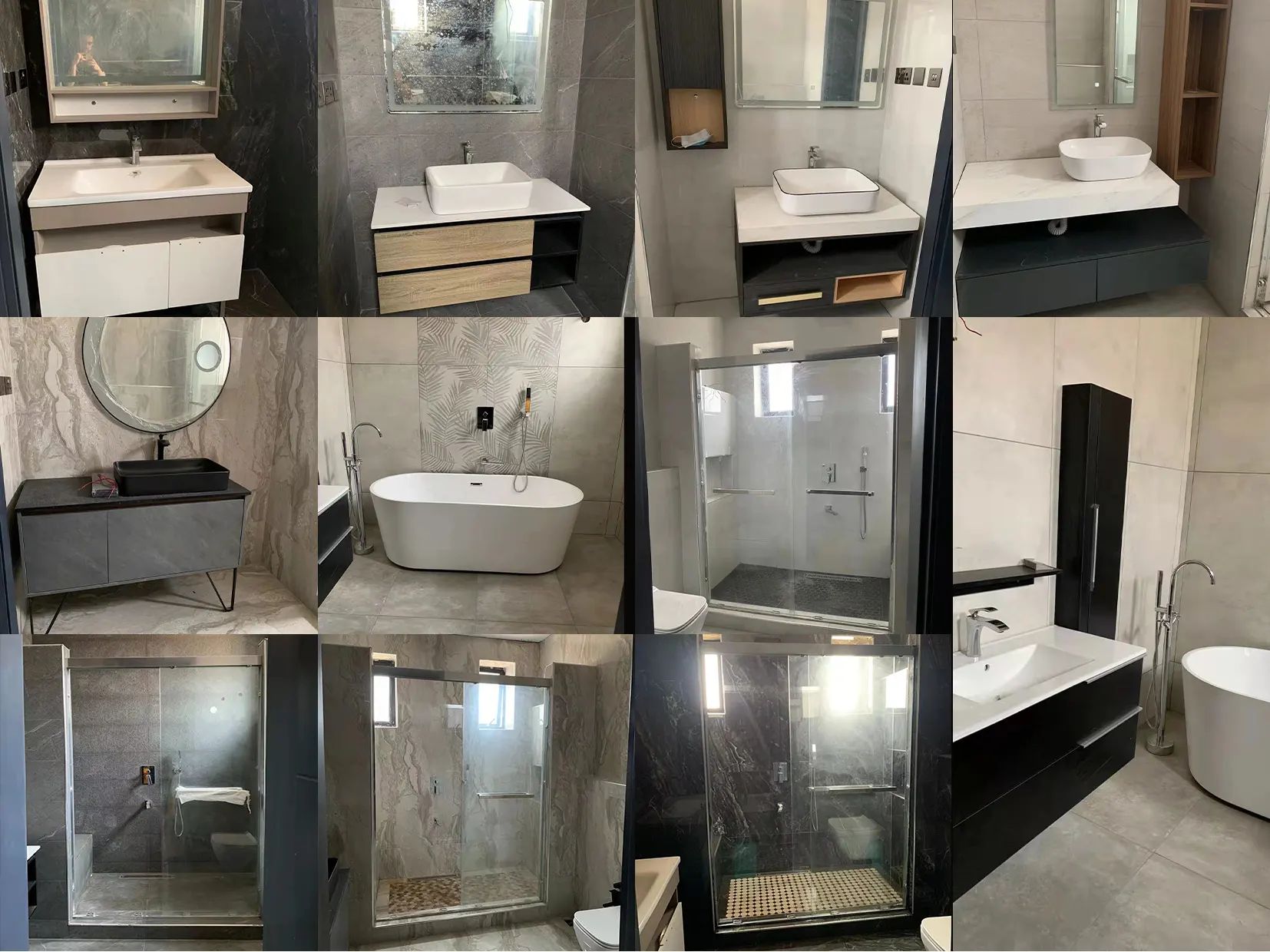
Malawi Project
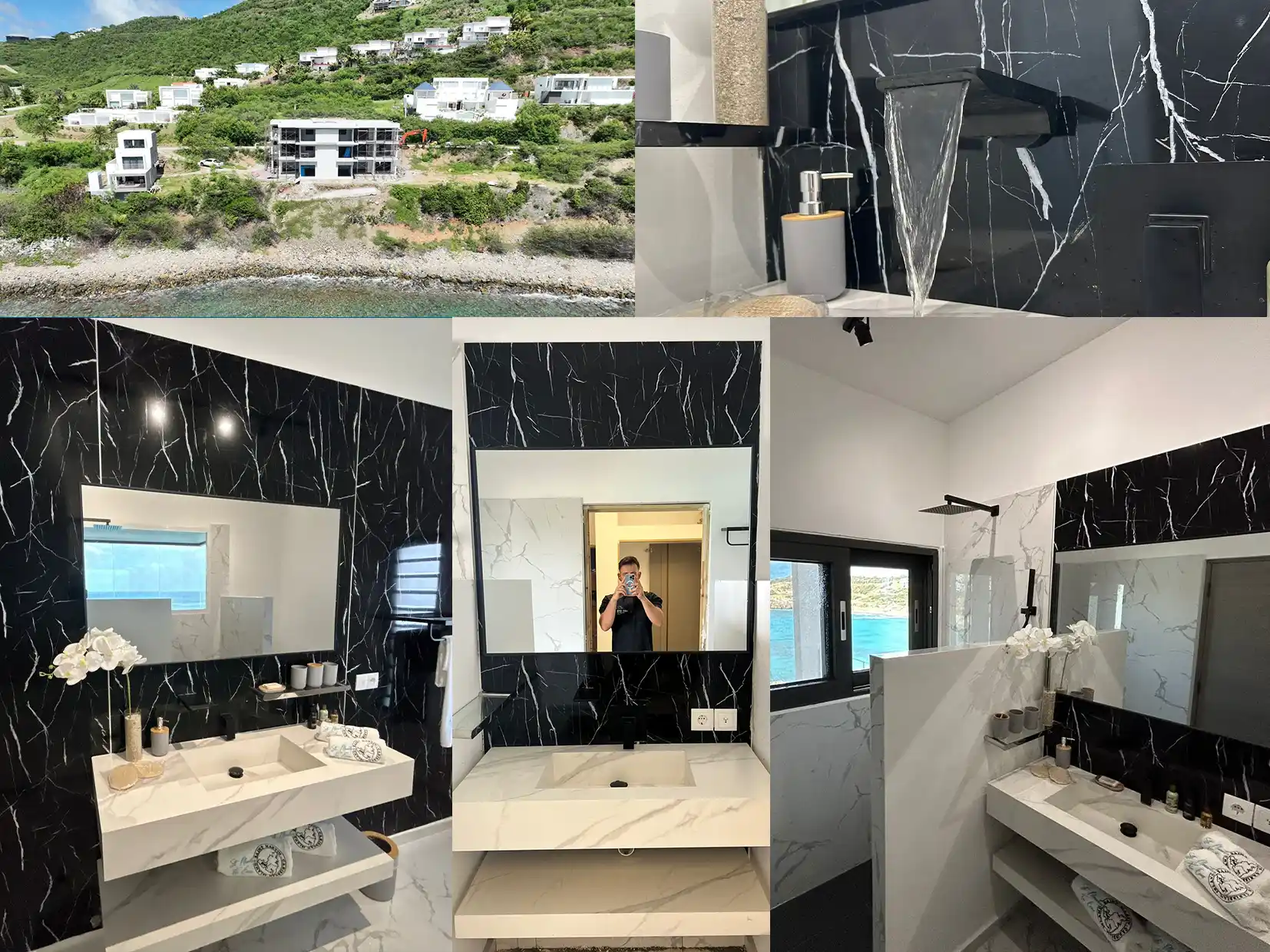
Saint Martin Resort Project
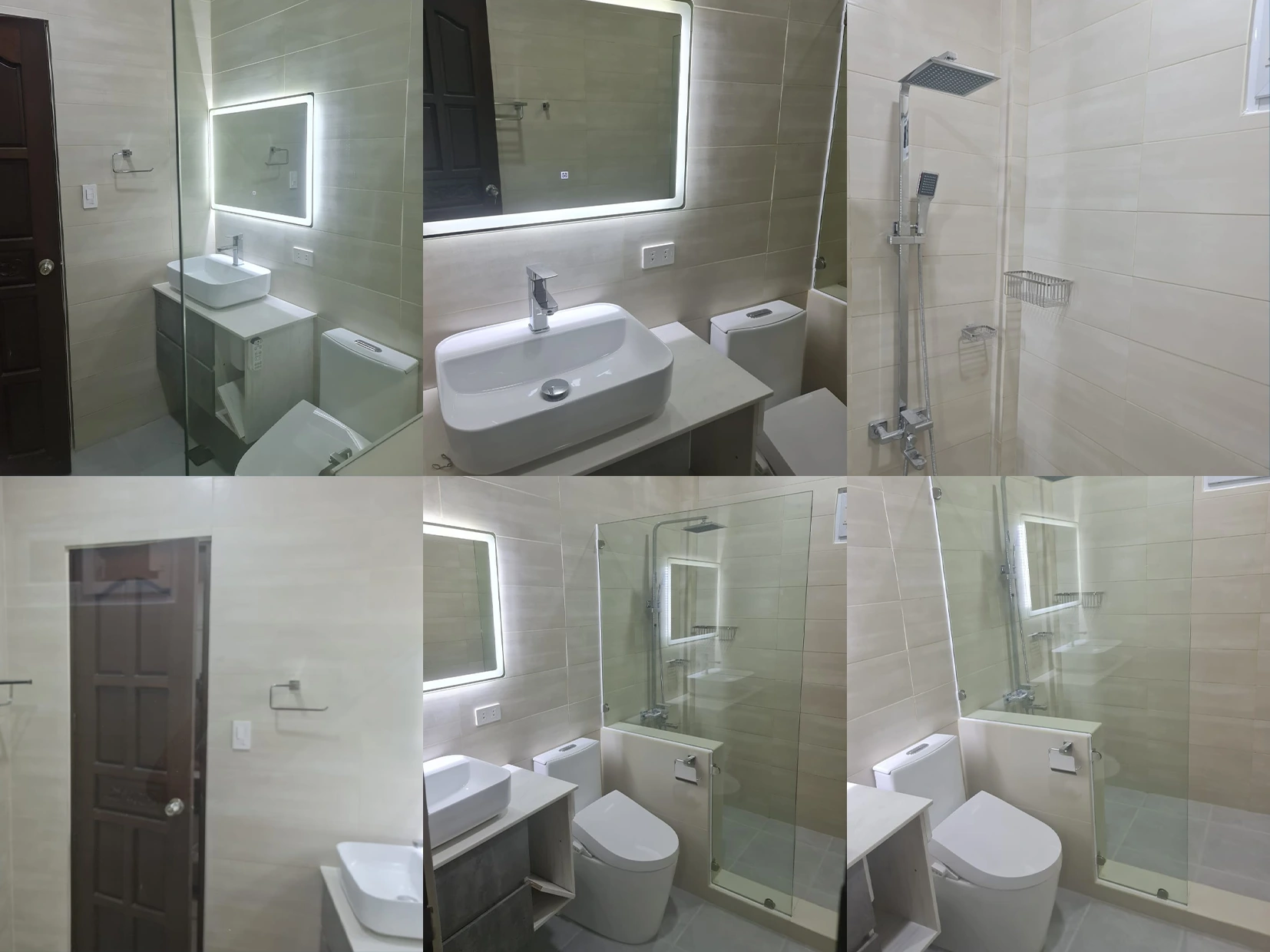
Philippines Villa Project
U.S. Real Estate Development Project
Start Your Sanitary Ware Project

No final BOQ or product list yet? Just tell us what project you’re working on, what products you need, and roughly how many. We can help you put the sanitary ware package together from there.
Send Your Project Information
BOQ, fixture schedule, drawings, project list, or room count.
On-time sanitary ware delivery for your project
George Group builds your sanitary ware delivery schedule around the project timeline, room count, and installation phases. We coordinate production, inspection, container loading, and shipping—and identify long-lead sanitary ware items early to keep delivery manageable.
Step 1: Map the project schedule
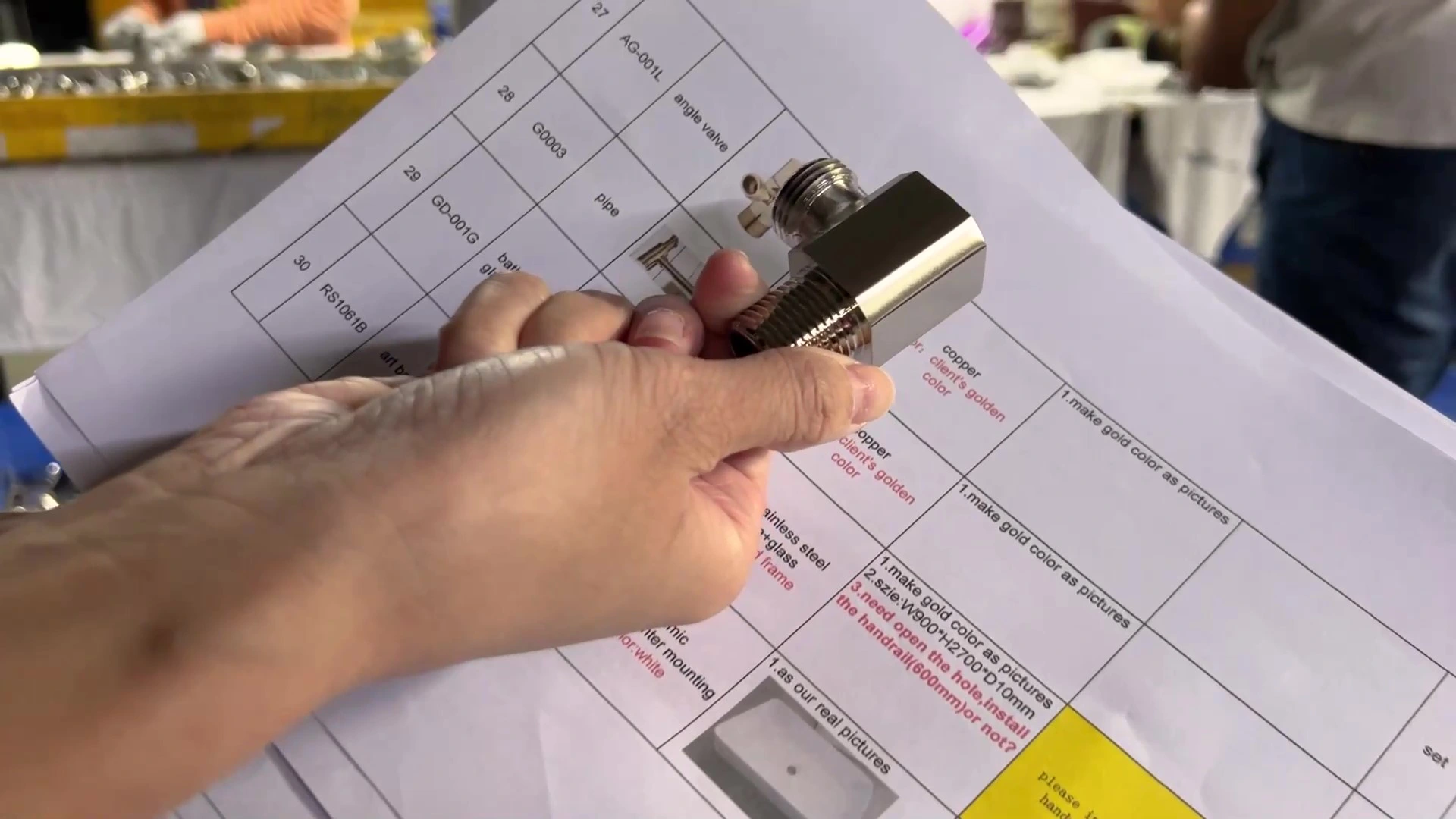
We calculate the sanitary ware production lead time backward from your target on-site installation date. Production starts only after the technical drawings and material samples are signed off.
Step 2: Break down each project phase
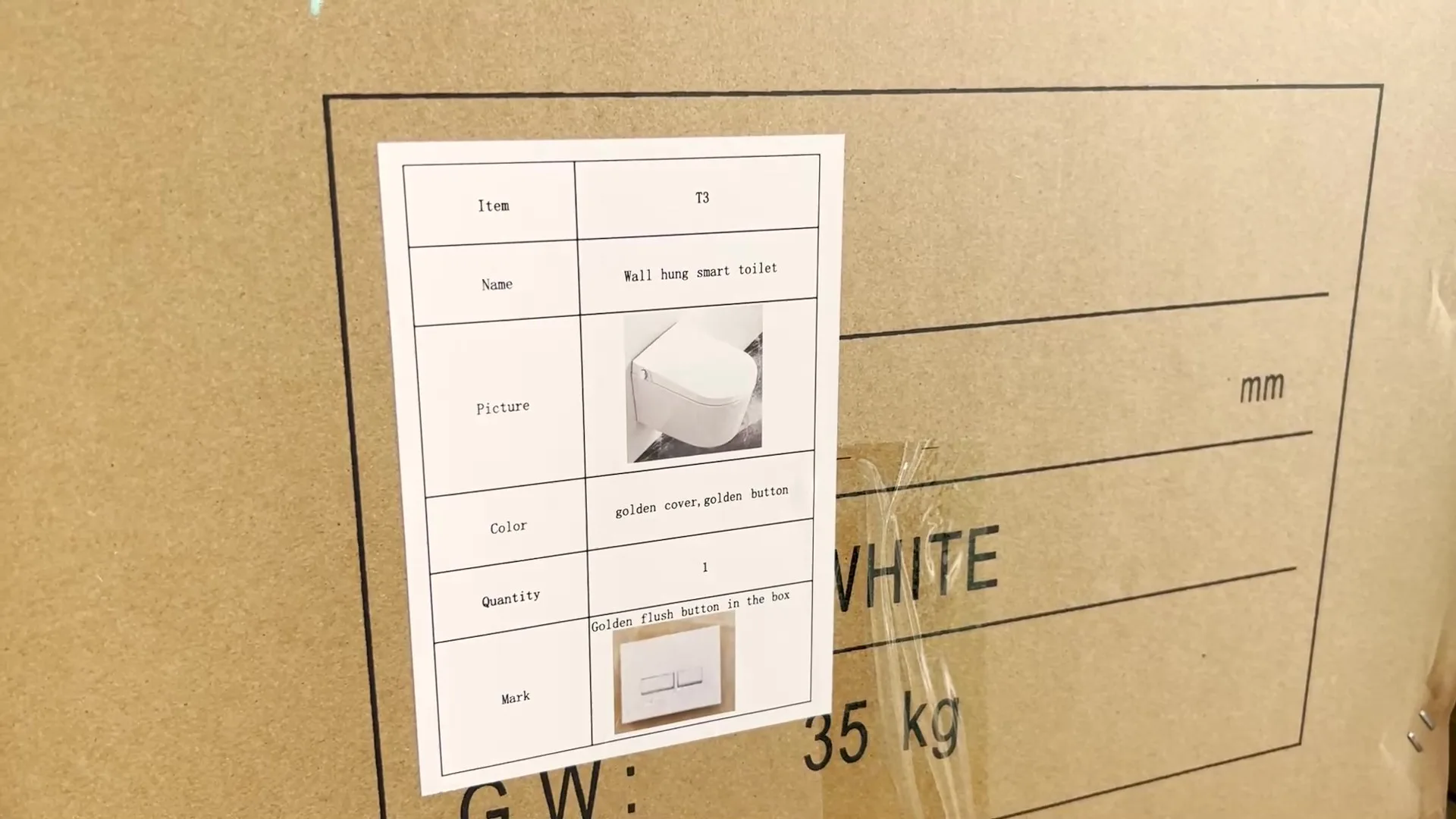
We break down the sanitary ware BOQ by room count, floor, and project phase. Long-lead items, including custom vanities and smart toilets, are separated for early project production scheduling.
Step 3: Complete visual pre-shipment QC
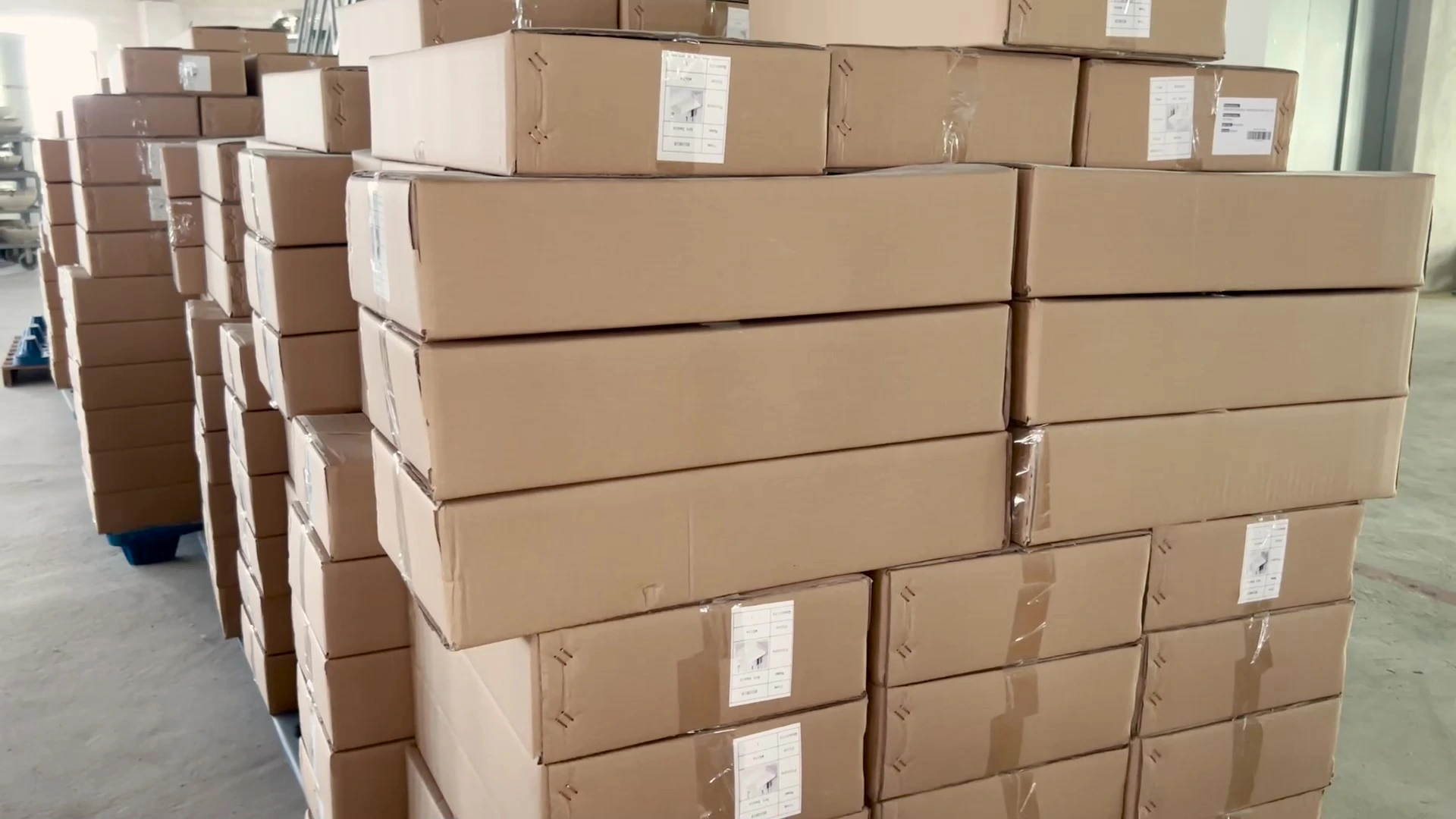
Every order undergoes trial assembly, glaze checks, and moisture testing. Before shipment, we provide QC photos, detailed packing lists, and loading videos for review.
Step 4: Plan staged container loading
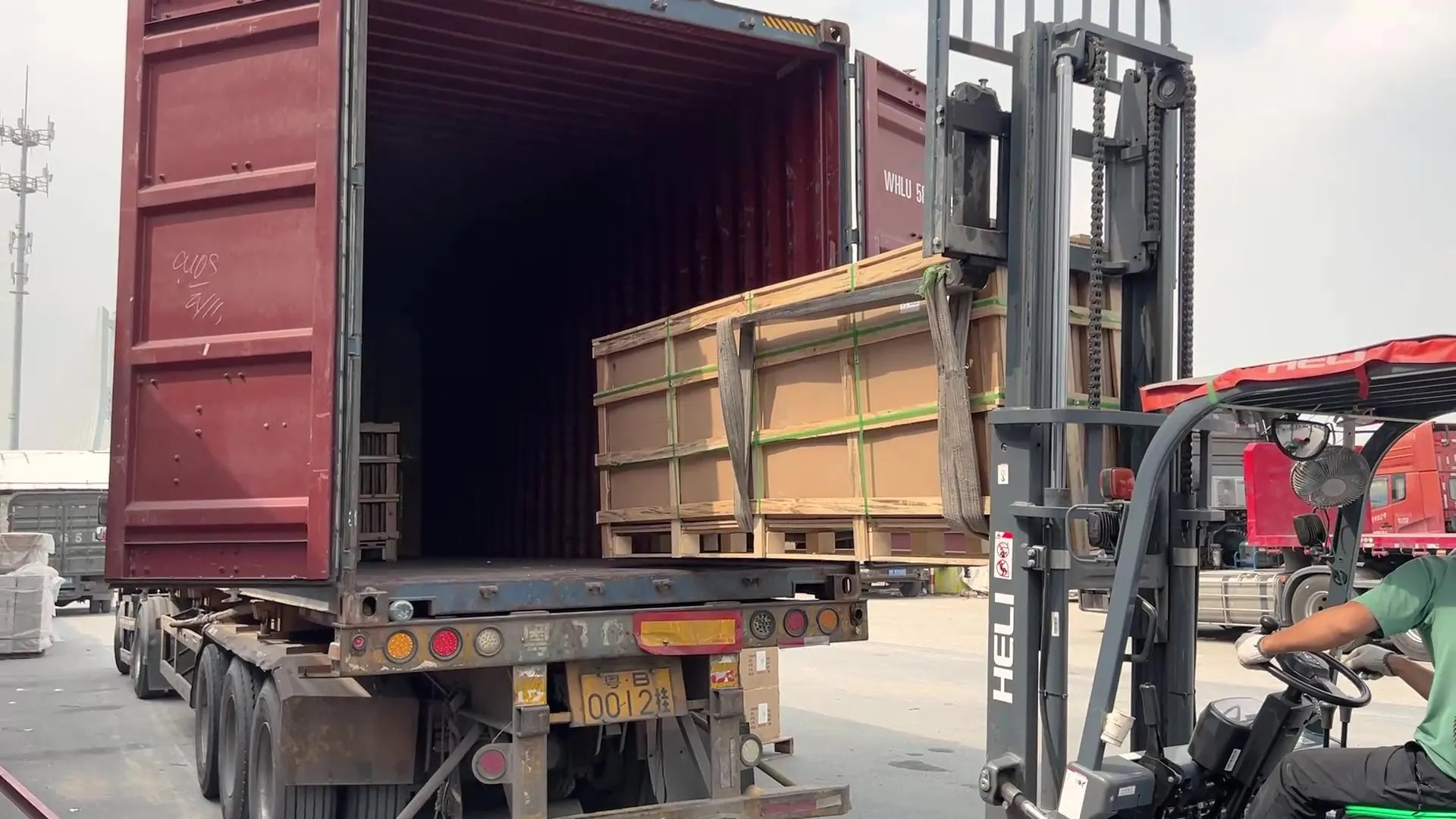
Choose split shipment for concealed parts needed during the early installation stages. You can also use full-container sanitary ware consolidation to manage shipping lead times and limited site storage more efficiently.
Sanitary ware packages planned by space, quantity, and finish
George Group supplies coordinated bathroom fixture packages by space type, specification, finish, and quantity. This space-based sanitary ware solution helps project buyers maintain consistent models, matching finishes, and coordinated schedules across the project—not source individual products based on the lowest unit price.
Hotel guest rooms
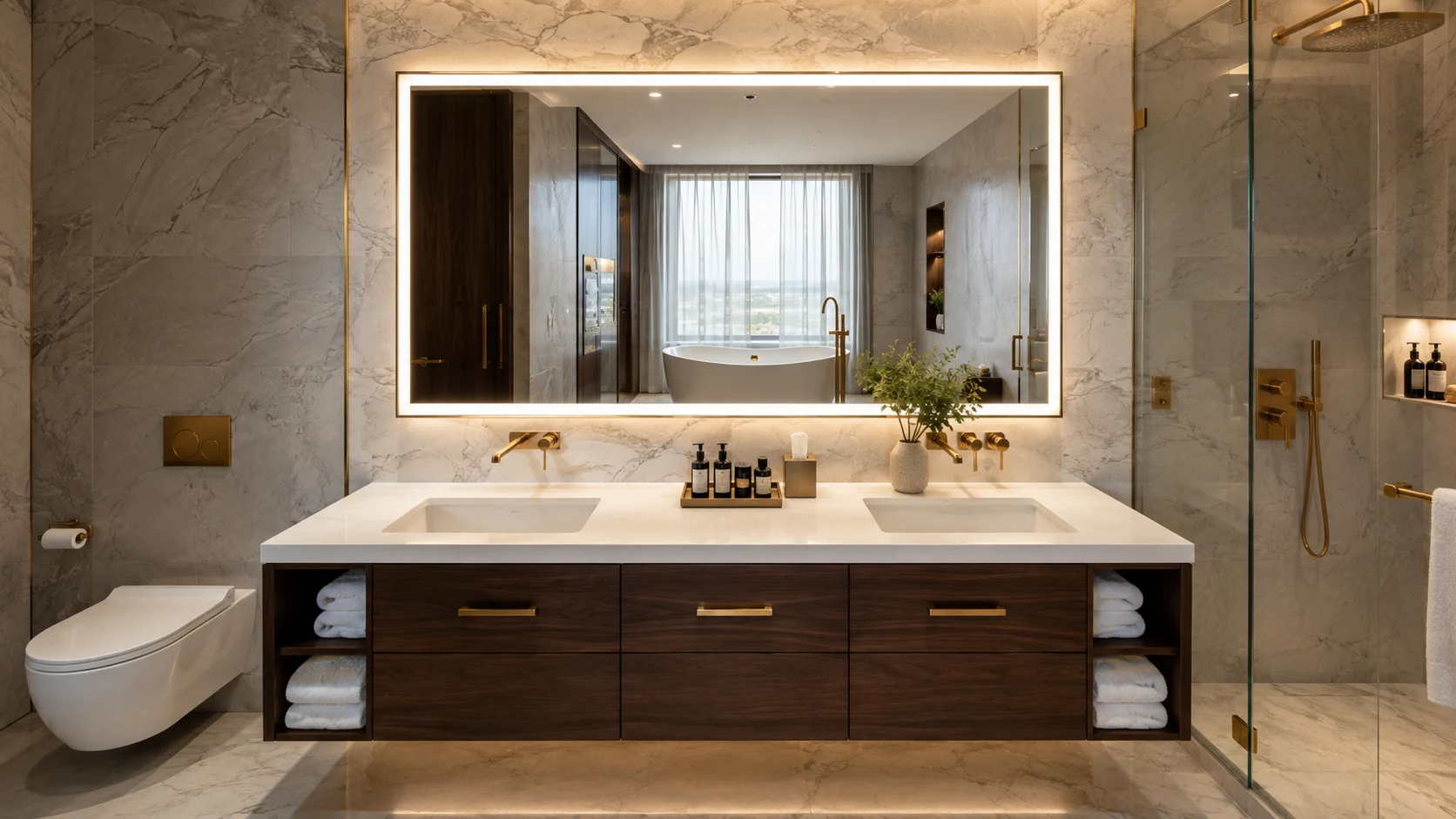
Budget tier: Standard / Premium
Typical products: Bathroom vanities, ceramic basins, smart toilets, wall-hung toilets, bathtubs, shower enclosures, faucets, mirrors, and accessories.
Selection priority: Maintain consistent product models, ceramic white tones, and PVD metal finishes across standard rooms, executive suites, and accessible guest rooms while preventing installation conflicts.
Schedule output: Model + finish + quantity by room type
Hospital and medical bathrooms
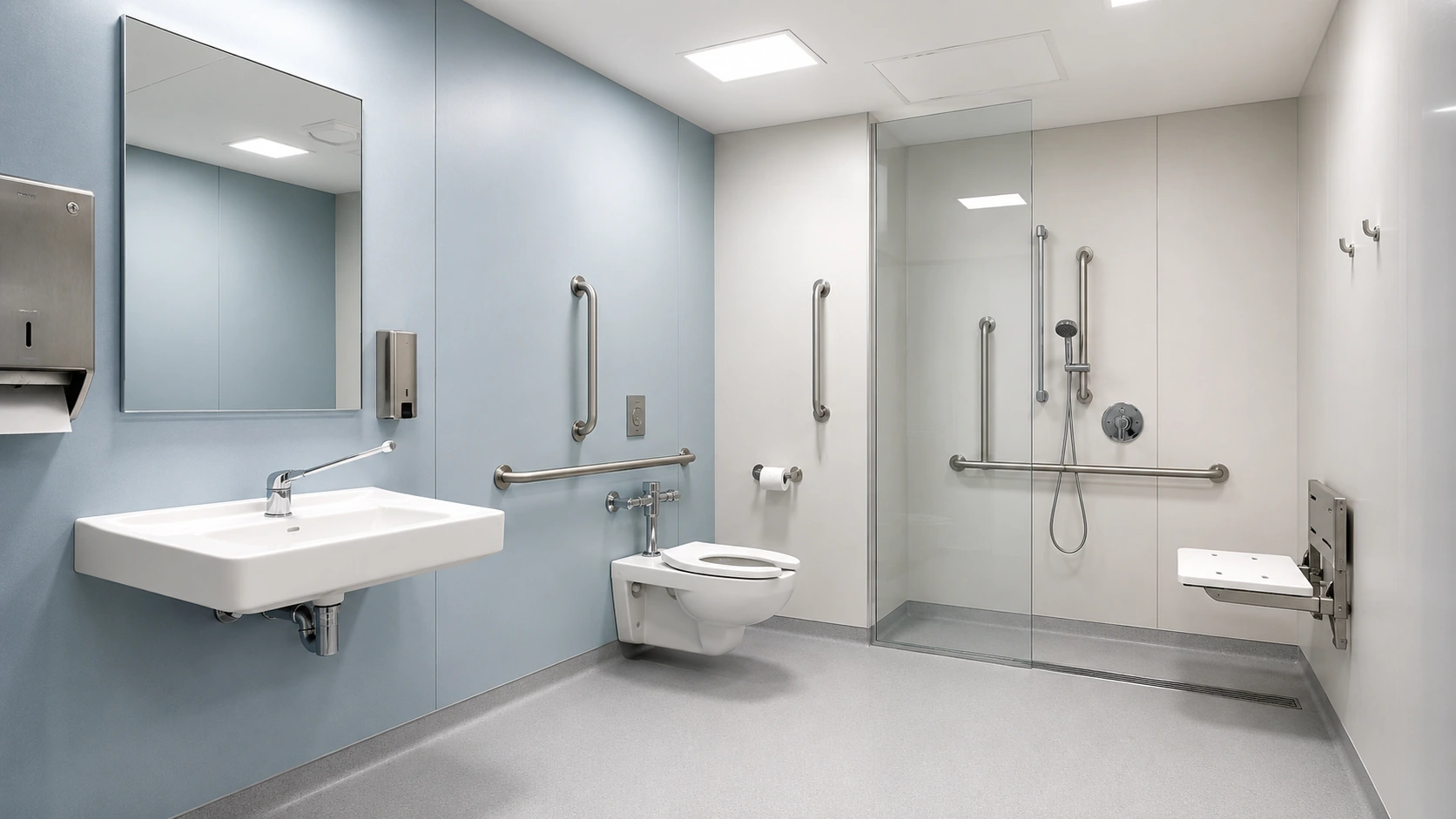
Budget tier: Institutional-grade
Typical products: Ceramic basins, wall-hung rimless toilets, medical faucets, floor drains, mirrors, shower doors, accessories, and accessible bathroom fixtures.
Selection priority: Match fixtures to project specifications, cleaning requirements, long-term durability needs, replacement-part requirements, and applicable accessibility standards for patient rooms and treatment areas.
Schedule output: Model + finish + quantity by medical space
Apartment units
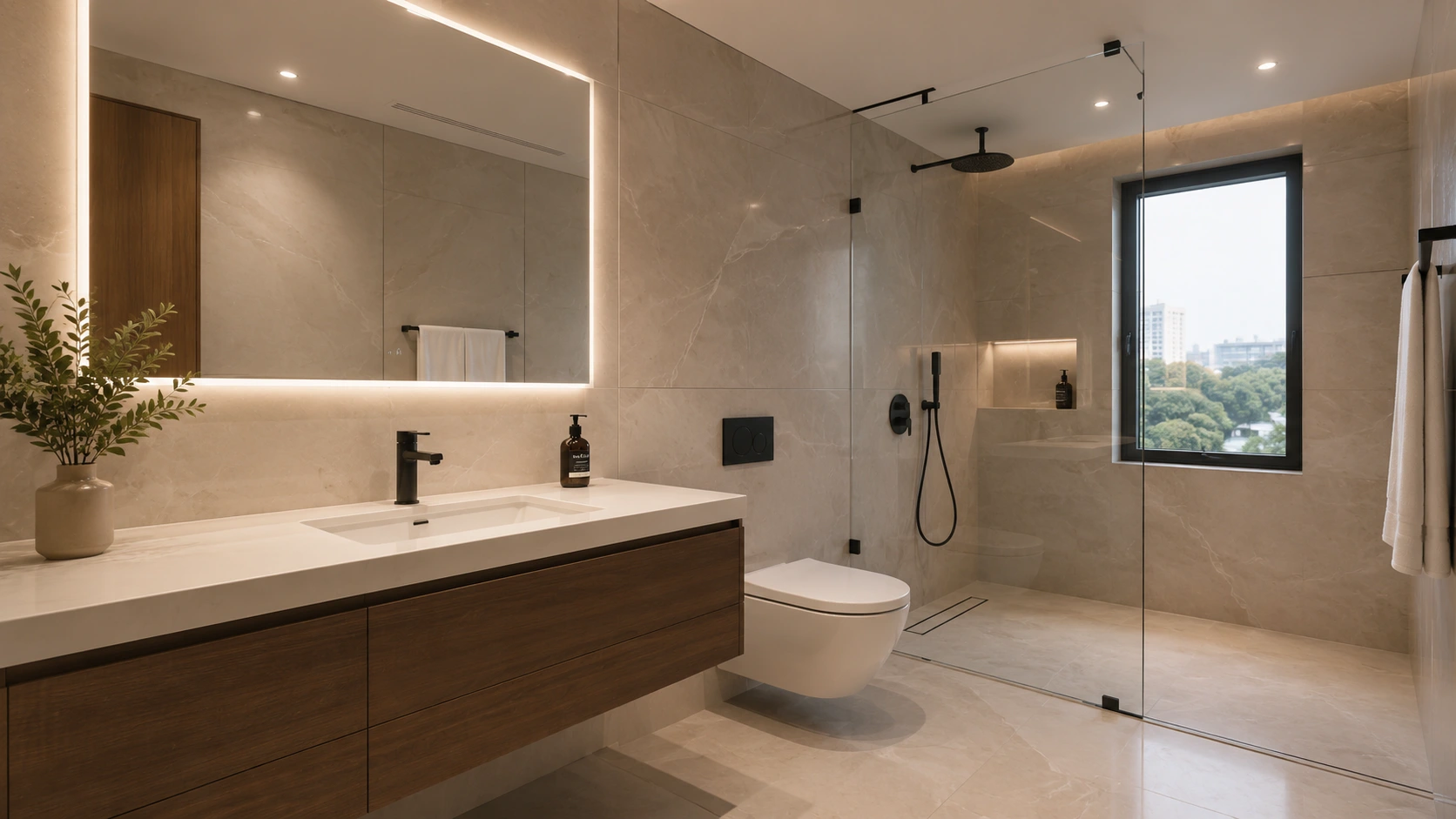
Budget tier: Standard / Premium
Typical products: Bathroom vanities, ceramic basins, one-piece or wall-hung toilets, shower doors, bathtubs, faucets, floor drains, mirrors, and accessories.
Selection priority: Balance unit cost and structural durability across studio, one-bedroom, and penthouse layouts through standardized vanity sizes and streamlined batch production.
Schedule output: Model + finish + quantity by floor and unit plan
Public restrooms
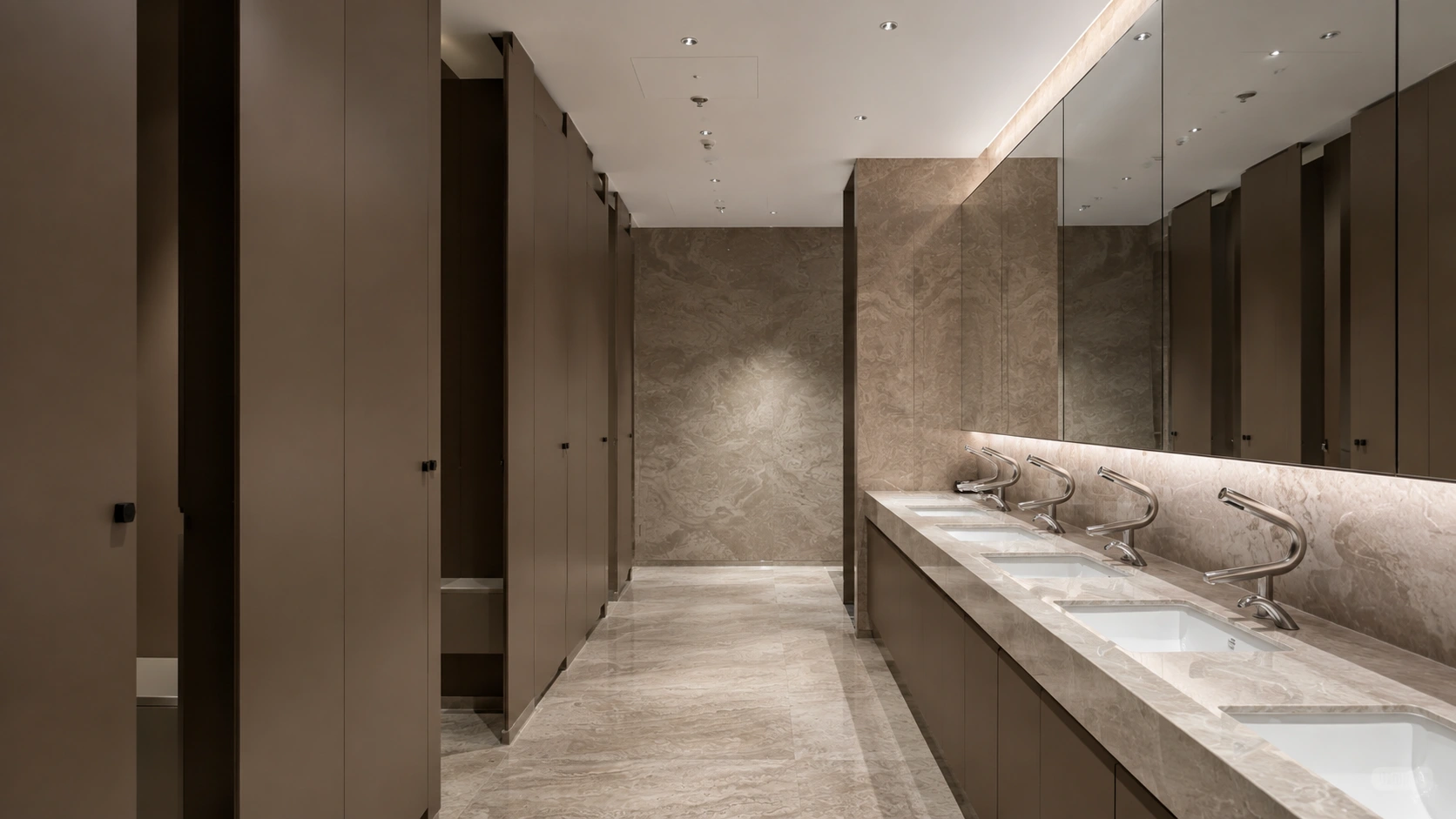
Budget tier: Standard / Institutional-grade
Typical products: Wall-hung toilets, urinals, sensor faucets, ceramic basins, heavy-duty floor drains, mirrors, accessories, and accessible cubicle products.
Selection priority: Address high-traffic durability, touchless water control, vandal-resistant hardware, consistent metal finishes, and replacement-product availability for commercial public areas.
Schedule output: Model + finish + quantity by public zone
From room types to a confirmed product schedule
- Room type: Guest room, suite, ward, apartment unit, public zone, or staff area.
- Product models: Bathroom vanities, ceramic basins, toilets, showers, faucets, and hardware accessories.
- Finish family: PVD hardware finishes, including chrome, matte black, brushed gold, and brushed nickel, with consistent ceramic white tones.
- Quantity: Organized by room count, floor, building section, or project phase.
- Budget tier: Standard, premium, or institutional-grade options.
- Final schedule: A confirmed model, finish, and quantity list mapped directly to the project BOQ.
| Room type | Quantity | Vanity | Toilet | Shower | Finish | Tier |
|---|---|---|---|---|---|---|
| Standard guest room | 120 sets | 80 cm custom vanity | Wall-hung concealed toilet | Sliding enclosure + thermostatic shower | Chrome | Standard |
| Executive suite | 20 sets | 120 cm rock-slab vanity | Smart bidet toilet | Freestanding tub + concealed shower | Brushed Gold | Premium |
| Accessible guest room | 6 sets | Concave wheelchair basin | Raised toilet + grab bars | Barrier-free thermostatic shower | Chrome | Institutional-grade |
| Lobby restroom | 4 spaces | Integrated public basin | Sensor-flush wall-hung toilet | N/A — touchless sensor faucets | Matte Black | Institutional-grade |
| Staff washroom | 10 sets | Pedestal basin | Durable two-piece toilet | Basic handheld shower set | Chrome | Standard |
The data above illustrates a project bathroom fixture schedule format for client BOQ planning.
Budget options for different project requirements
- Standard: Coordinated core models for apartments, staff areas, and cost-controlled project spaces requiring CE or WaterMark compliance.
- Premium: Upgraded PVD finishes, smart bidet functions, rock-slab vanities, and design-focused selections for luxury hotel suites and high-end residential units.
- Institutional-grade: High-durability, low-maintenance fixtures, touchless systems, and vandal-resistant designs for hospitals and high-traffic public areas.
Project quality control and delivery assurance
- Pre-shipment trial assembly: Vanity units, shower enclosures, and concealed plumbing systems are trial-assembled at the factory to verify 100% opening-size and pipe-connection accuracy.
- Room-by-room and floor labeling: Shipments are packed and labeled by floor, room number, or zone so site crews can move crates directly to the required area without additional sorting.
- Spare-parts allocation: Each project order includes 1%–2% of critical spare parts, including cartridges, hoses, and gaskets, to help prevent construction delays.
Compliance evidence matched to each market and product model
A product is not automatically approved or suitable for every market. Final compliance depends on the exact product model, destination market, project specification, and local approval requirements.
Market-specific compliance checks
| Market | Common evidence | What we confirm |
|---|---|---|
| Australia | WaterMark listing; WELS registration and rating information, where applicable | Exact model ID, certificate or registration number, active database status, expiry date, supplied configuration, and installation conditions. |
| New Zealand | Applicable MBIE recognition notice, product certificate, and supporting technical information | Product-specific recognition, applicable New Zealand Building Code clauses, conditions, limitations, and installation requirements. |
| North America | cUPC, UPC, or other plumbing-product evidence specified for the project | Listed model, applicable standards such as NSF/ANSI 61 and ASME A112.19.2, certification status, product configuration, and local plumbing-code requirements. |
| Europe / EEA | CE marking and applicable Declaration of Performance documentation, where required | Applicable EU harmonized rules, relevant EN standards such as EN 997, EN 14528, and EN 14428, declared performance, technical documentation, and model identification. |
| Saudi Arabia / Gulf markets | SASO, Saber, applicable GSO standards, or other conformity evidence, where required | Product category, applicable technical regulation, model registration, conformity certificate, shipment-level requirements, and G-Mark, LVD, or EMC compliance for electrical products. |
| Other markets | Project specifications, local standards, test reports, or importer requirements | Destination, product category, requested standard, approval route, and evidence required before the model is confirmed. |
Certificate evidence by product model
SGS CE-LVD Verification of Compliance
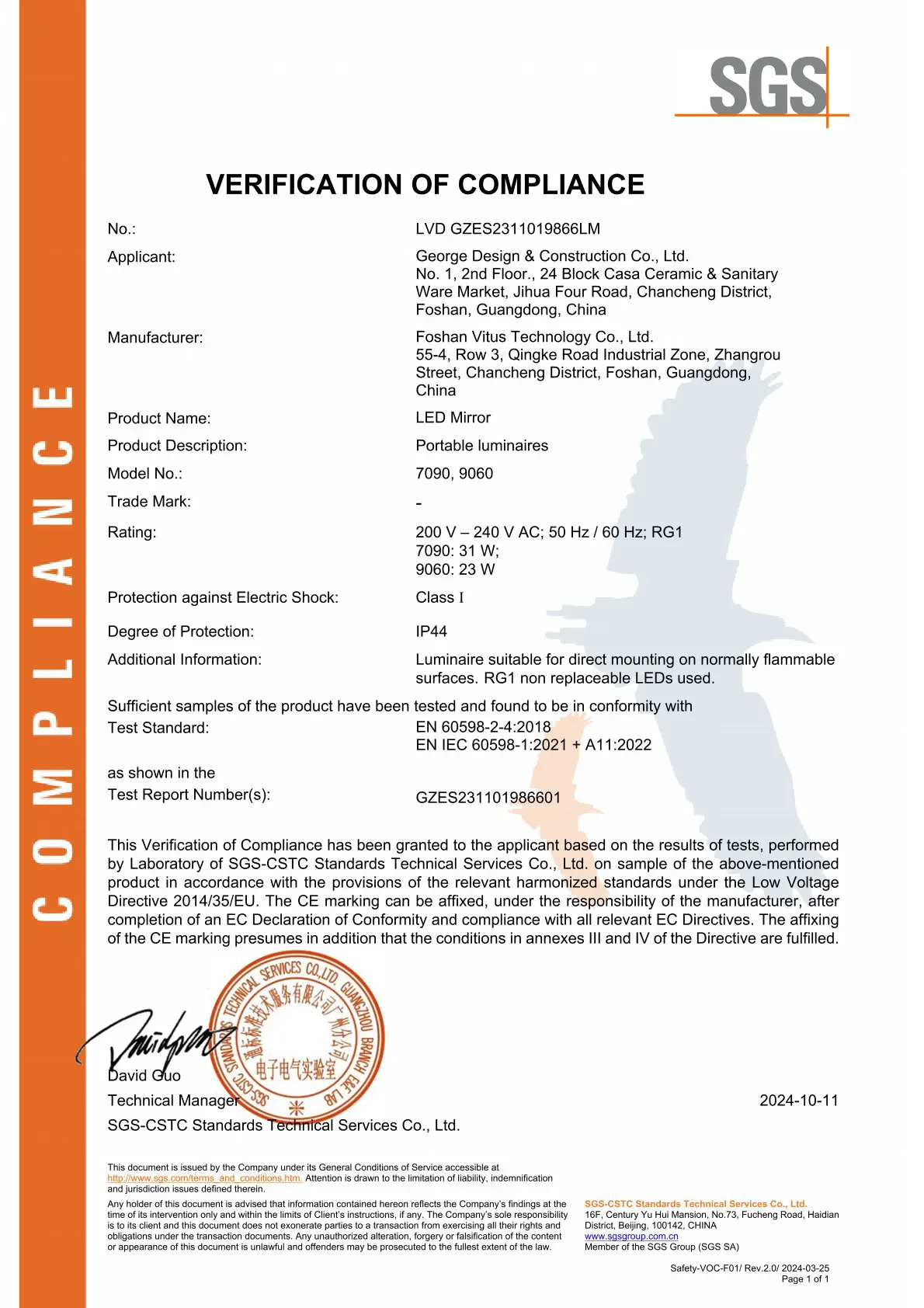
Covered product: LED mirror
Covered model codes: 7090, 9060
Certificate or listing number: LVD GZES2311019866LM
Applicable market: European Union / EEA
Current status: Issued October 11, 2024
Supporting test standards: EN 60598-2-4:2018; EN IEC 60598-1:2021+A11:2022
Verification note: Coverage applies only to models 7090 and 9060. CE marking also requires completion of the Declaration of Conformity and all other applicable EU requirements.
IAPMO Lead-Free Certificate of Listing
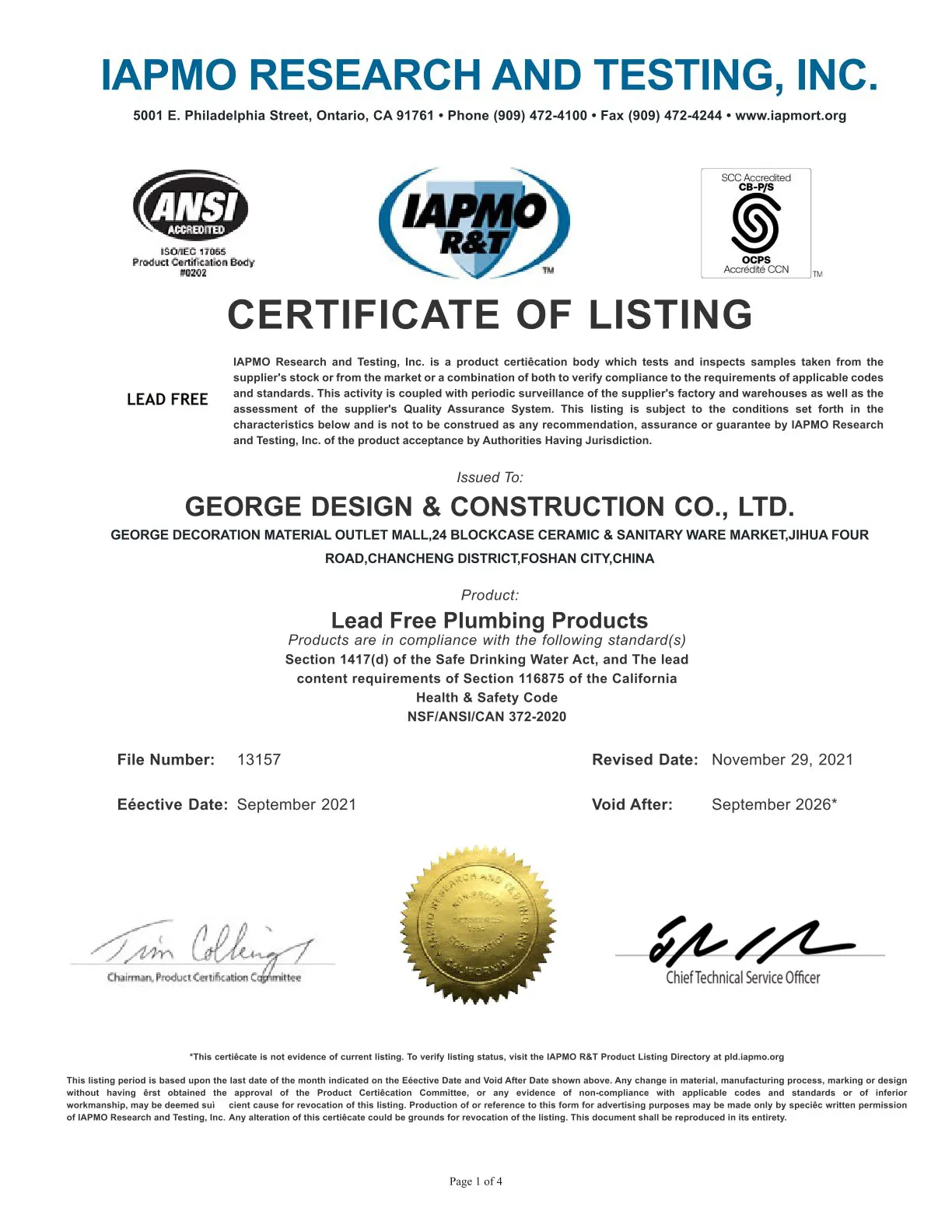
Covered product: Kitchen and basin faucets
Covered model codes: YC-series models listed on certificate pages 3–4
Certificate or listing number: File No. 13157
Applicable market: North America—lead-free plumbing applications
Current status: Valid through September 2026
Supporting test standard: NSF/ANSI/CAN 372-2020
Verification note: Coverage applies only to the listed models and finish variants. Final acceptance depends on the local authority.
IAPMO cUPC Certificate of Listing
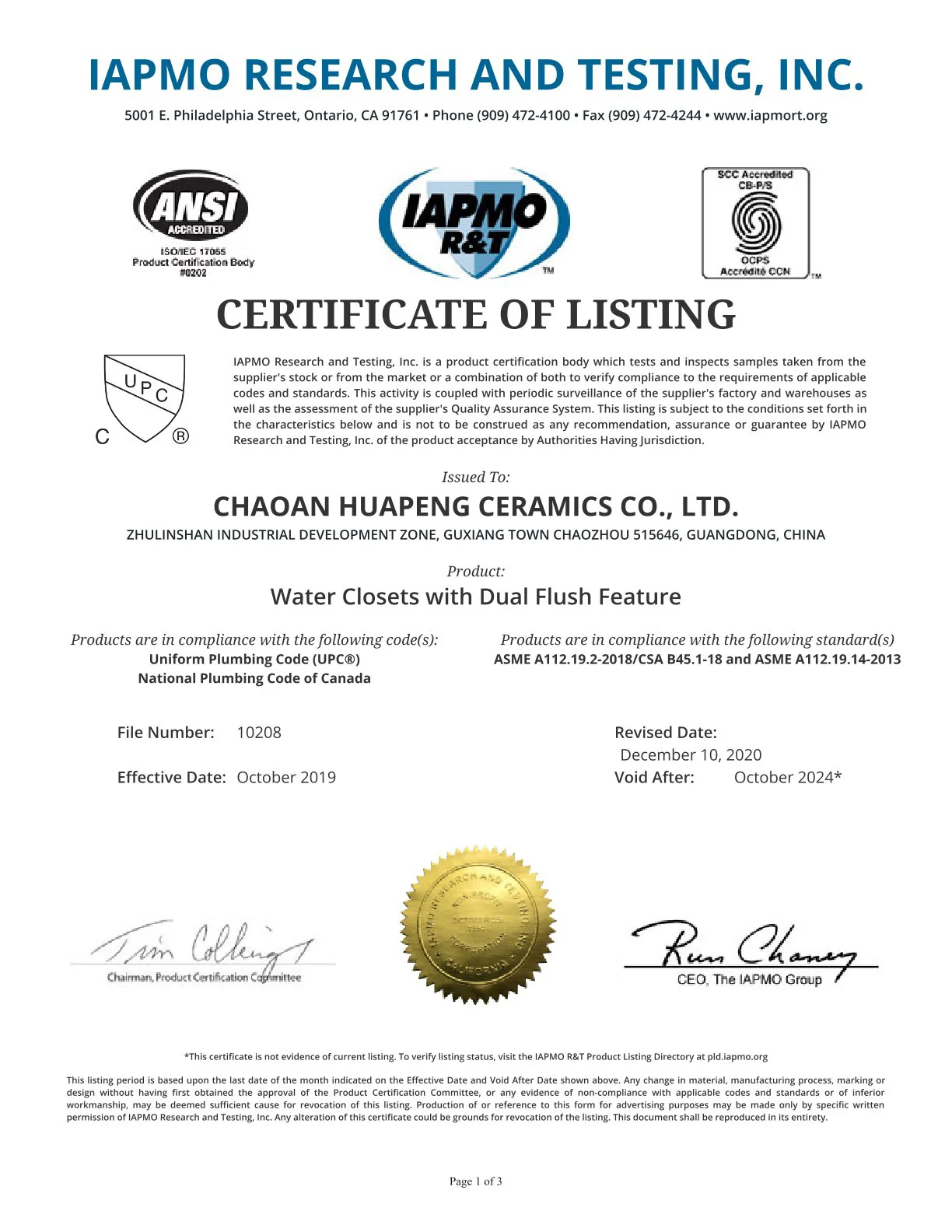
Covered product: Dual-flush water closets
Covered model codes: KDK-302, KDK-303, KDK-A03, KDK-A04, KDK-A05, KDK-A09, KDK-A10
Certificate or listing number: File No. 10208
Applicable market: United States and Canada
Current status: Expired October 2024
Supporting test standards: ASME A112.19.2-2018/CSA B45.1-18; ASME A112.19.14-2013
Verification note: Coverage applies only to the listed toilet models. Final acceptance depends on the local authority.
WaterMark Certificate of Conformity
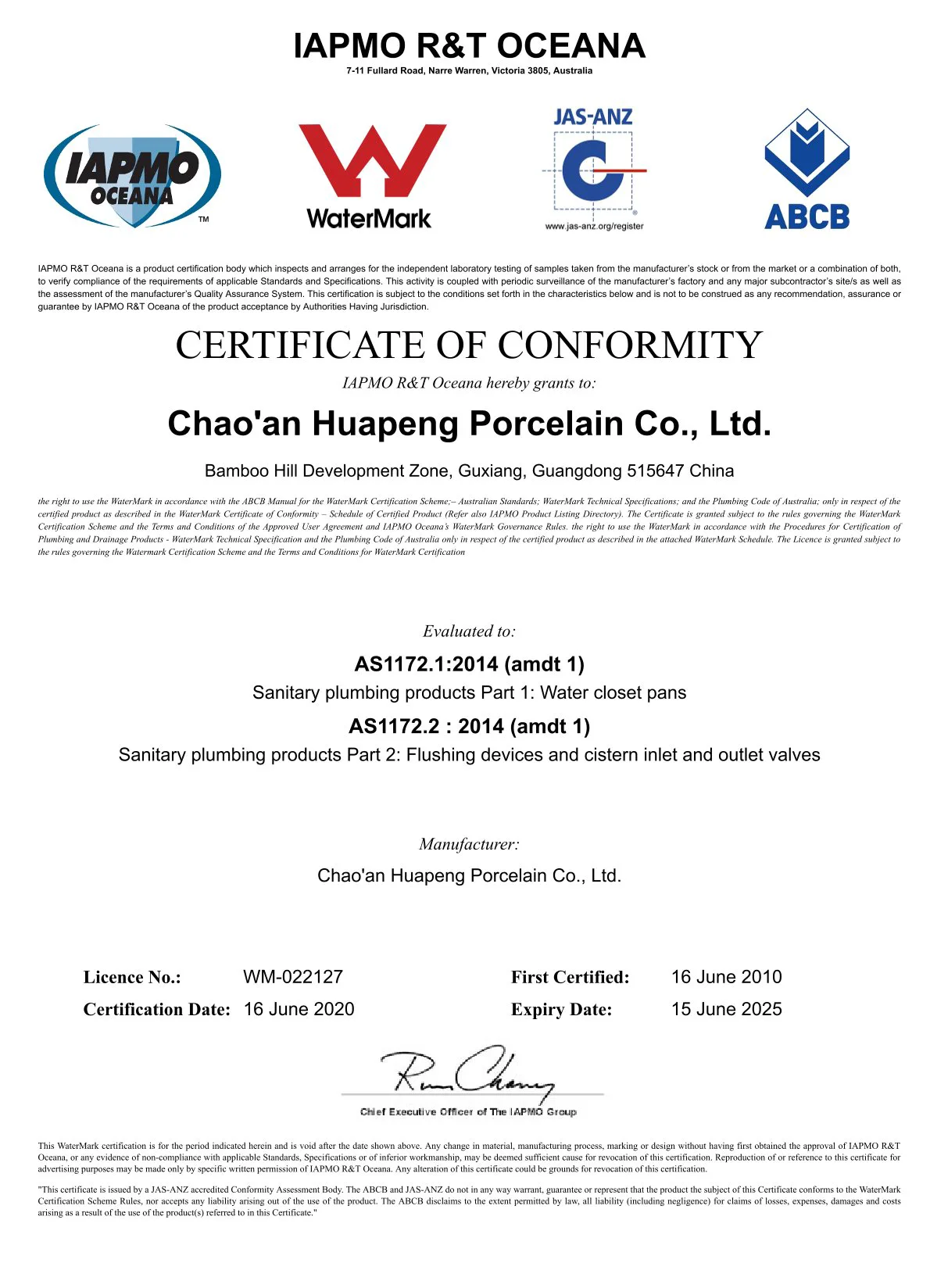
Covered product: Water closets, pans, and flushing cisterns
Covered model codes: Listed KDK and Stylus models
Certificate or listing number: WM-022127
Applicable market: Australia
Current status: Expired June 15, 2025
Supporting test standards: AS 1172.1:2014; AS 1172.2:2014
Verification note: Coverage applies only to the listed models. Confirm the current WaterMark status before quotation.
SASO Water Efficiency Test Report
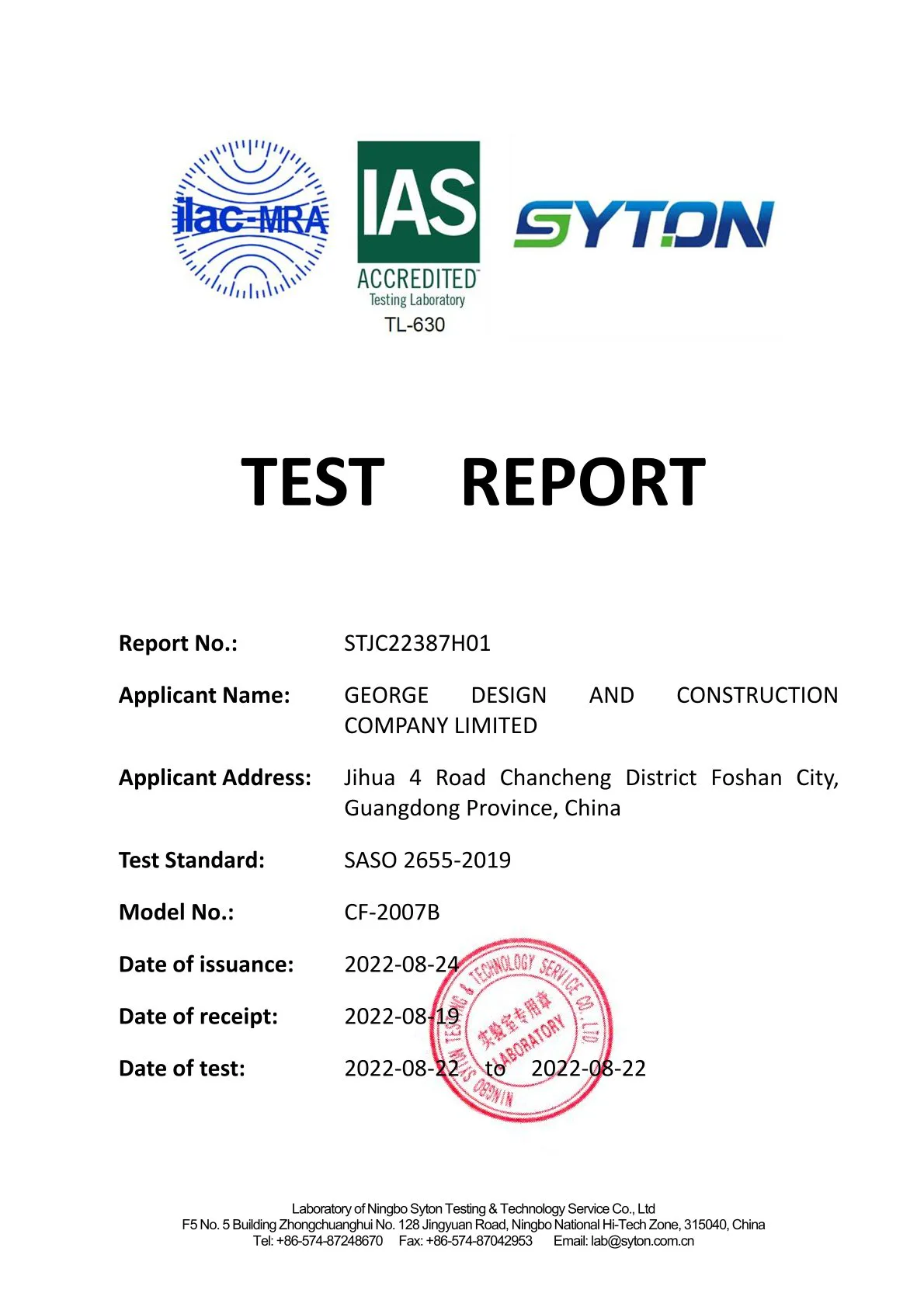
Covered product: Mixer tap for private toilets
Covered model code: CF-2007B
Certificate or listing number: STJC22387H01
Applicable market: Saudi Arabia
Current status: Issued August 24, 2022
Supporting test standard: SASO 2655-2019
Verification note: Coverage applies only to model CF-2007B, tested at Water Consumption Grade A.
What we verify before quotation
Step 1: Confirm the destination market
Confirm the destination country, project type—hotel, hospital, or multi-family apartment—and the required local plumbing standard.
Step 2: Match the exact product model
Match the proposed product code, finish, and technical configuration directly to the project BOQ and architect’s fixture schedule.
Step 3: Verify certificate coverage
Confirm that the active certificate or listing schedule covers the exact model code being quoted, without relying on a generic substitution.
Step 4: Confirm validity and test evidence
Check the certificate status, expiry date, required test standards, and supporting reports. This may include 24-hour salt-spray testing, ceramic-glaze water absorption, or lead-free testing, depending on the product and project requirements.
Step 5: Review installation requirements
Review the plumbing and electrical configuration, including S-trap or P-trap connections, rough-in dimensions, water pressure, voltage, and IP ratings, before approval by the building inspector.
Quality control from approved sample through final loading
We lock the approved sample, drawings, and product specifications before bulk production begins. Incoming, in-process, and finished-product inspections then cover dimensions, finishes, functions, fittings, glass, and packaging. QC photos, videos, and inspection records are available for project review before loading.
Incoming quality control (IQC)
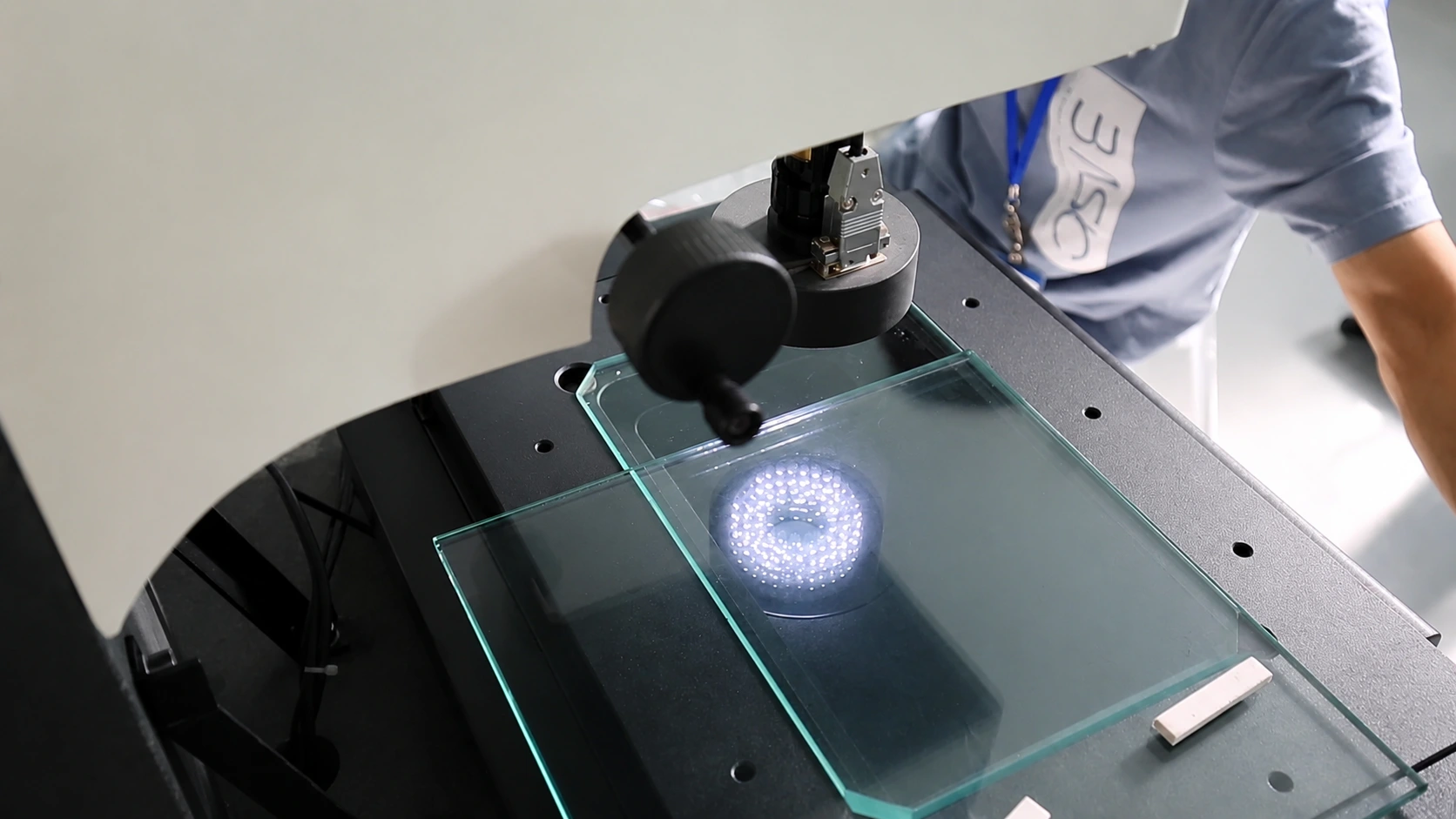
- Inspection focus: Raw-material integrity and engineering compliance
- Components inspected: Ceramic body clay, cabinet boards, tempered glass, raw brass, and valve cartridges
- Risks controlled: Microcracking, moisture swelling after installation, spontaneous glass breakage, and early hardware failure
How incoming materials are checked: All raw materials are inspected before bulk production. Ceramic bodies are checked for density, internal structural integrity through acoustic resonance testing, and water absorption below 0.5%. Moisture-resistant cabinet boards in E1/P2 grades are inspected for edge-seal integrity to reduce swelling in high-humidity hotel and apartment bathrooms. Safety glass is checked for edge-grinding quality and verified for the applicable SGCC or CE tempered-glass marking. Raw brass and stainless steel undergo spectral analysis to confirm lead-free compliance. Valve cartridges, including Sedal and Flühs, are batch-sampled for multi-cycle durability testing.
In-process quality control (IPQC)
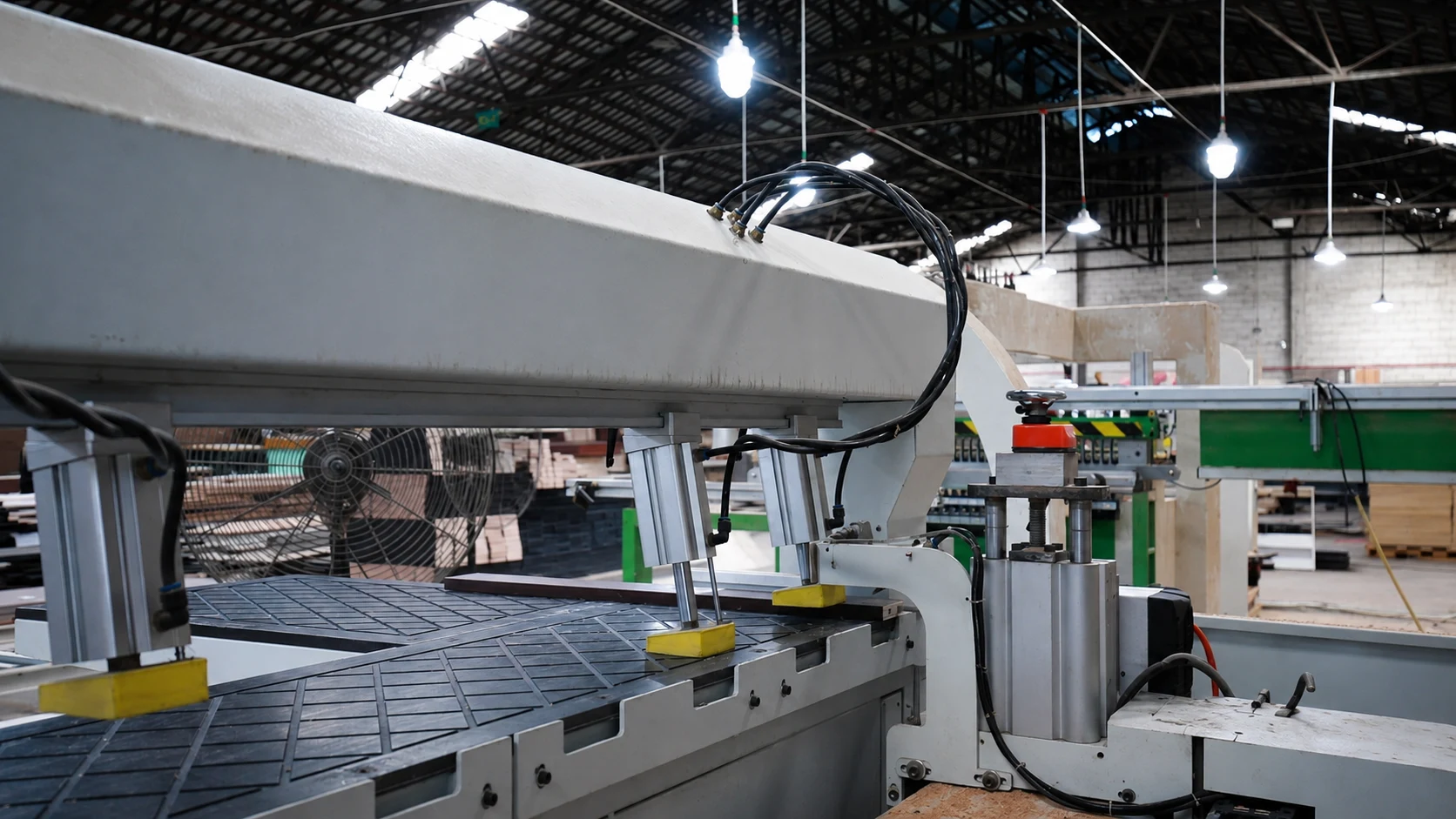
- Inspection focus: Dimensional accuracy, surface consistency, and pre-assembly verification
- Components inspected: Vanity CNC cutouts, glaze thickness, PVD and electroplated finishes, hinges, and drawer slides
- Risks controlled: Plumbing mismatches, inconsistent finishes, misaligned cabinet doors, and rough slide operation
How production quality is controlled: Line inspectors monitor dimensions and surface finishes throughout production. Vanity countertop cutouts, faucet holes, and drain openings are controlled to ±1–2 mm tolerances for alignment with the specified plumbing fixtures. Glaze thickness and self-cleaning ceramic coatings are checked under standardized light boxes. PVD, chrome, and matte-black finishes undergo colorimeter testing to maintain Delta E below 1.0 across batches. Before leaving the production line, shower-enclosure sliding systems and cabinet hinges using DTC or Blum hardware are trial-assembled to confirm smooth, quiet operation.
Outgoing quality control (OQC)
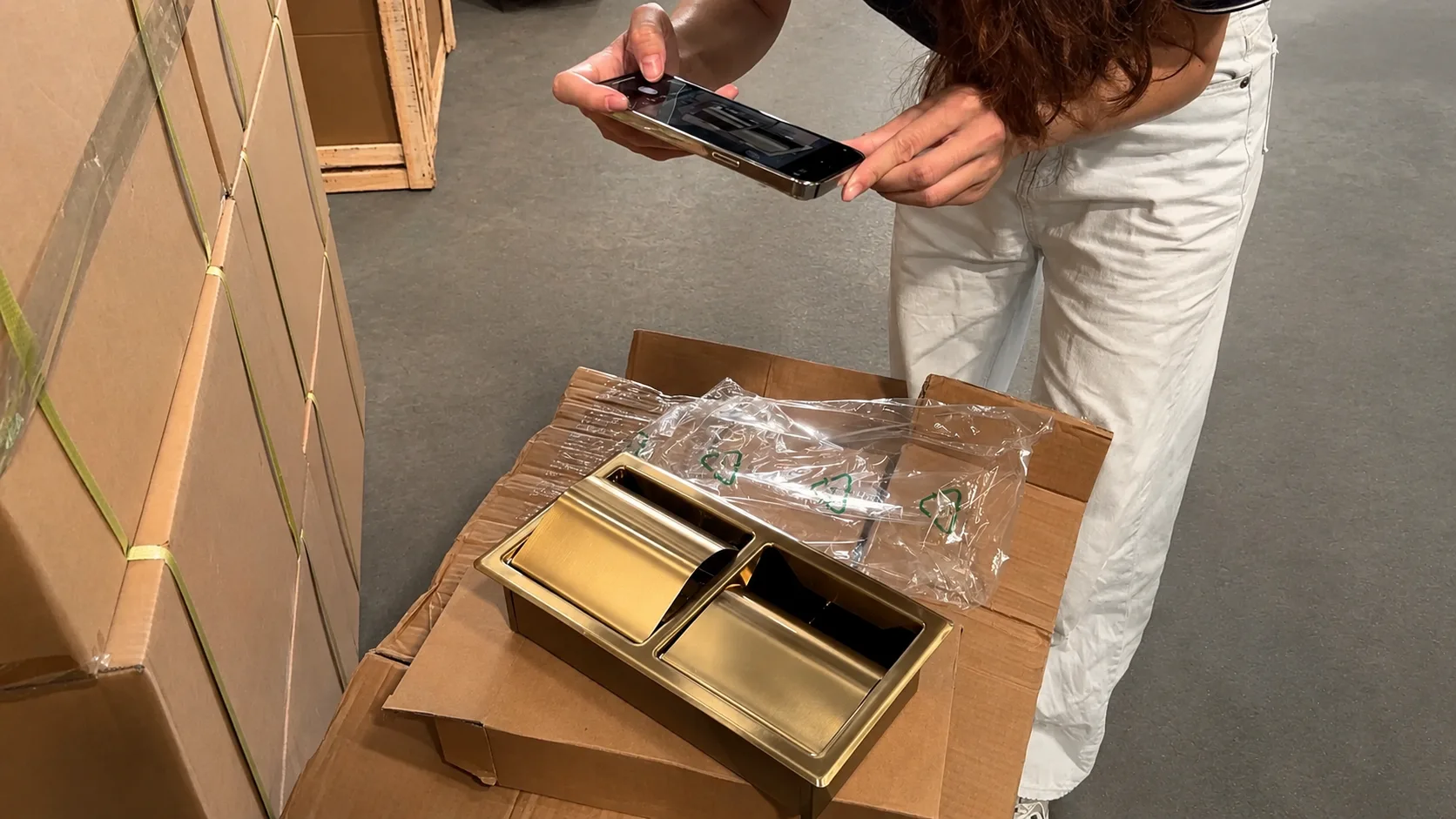
- Inspection focus: 100% pre-packing functional testing and AQL inspection
- Components inspected: Wall-hung toilets, faucets, shower mixers, LED mirrors, and complete vanity units
- Risks controlled: Concealed leaks, clogging, electrical faults, and missing accessories
How finished products are tested: Every completed product must pass the final outgoing quality control gate. Faucets, shower sets, and valves undergo 100% pneumatic and hydrostatic pressure testing at 0.6–0.8 MPa to identify internal leaks before products are installed inside walls. Toilets undergo 100% flush-performance testing. Fully glazed trapways are checked to verify waste removal without clogging. LED mirrors undergo electrical-safety and anti-fog testing. Hardware and fittings undergo 24–48 hours of NSS/AASS salt-spray testing, targeting grade 9–10 corrosion resistance. Complete accessory kits are checked against the master project checklist before release.
What we check before loading
Our pre-shipment checklist turns technical quality control into documented project-risk control.
- Finish consistency: Colorimeter testing verifies Delta E below 1.0 across ceramics, electroplated hardware, and cabinet finishes to prevent visible differences between rooms and production batches.
- Size-tolerance control: Critical dimensions, vanity cutouts, and 300/400 mm toilet rough-ins are checked to ±1–2 mm to reduce wall-clearance and installation conflicts.
- Flush and waste performance: 100% flush testing with standardized test media verifies waste removal and checks for trapway blockages in high-traffic commercial applications.
- Water pressure and leakage: Hydrostatic and air-pressure tests are completed on mixers, valves, and overflow drains to identify concealed leaks before shipment.
- Door and hardware alignment: 3D hinge adjustments and dynamic slide testing verify that cabinet doors and glass shower doors operate without friction or sagging.
- Hardware salt-spray durability: NSS/AASS corrosion testing checks faucets, hinges, and drains for use in humid coastal environments and areas exposed to intensive cleaning.
- Glass safety and impact resistance: CE- or SGCC-marked tempered glass undergoes edge inspection and stress-point checks. Anti-shatter film can also be applied where specified.
- Packaging and export drop testing: Cartons are reinforced with EPE protective corners and honeycomb board and tested to ISTA 1A/3A drop-test requirements for long-distance ocean freight.
QC evidence provided before shipment
George Group provides a pre-shipment verification package so off-site procurement managers, developers, and general contractors can review the order before loading.
- Detailed QC inspection checklist: A signed inspection document summarizing visual, dimensional, and functional pass/fail results against the project’s technical data sheet.
- HD photo and video verification package: Close-up photos of finishes, digital-caliper measurements, live water-leakage test videos, and trial-assembly videos of shower enclosures.
- Room-level and zone-level labeling: Outer cartons are marked with room numbers, floor zones, and product codes so the site team can distribute products without opening and sorting every carton.
- Container-loading supervision and seal log: Loading photos show the cargo arrangement, with heavy ceramics and bathtubs below and glass and vanities above to reduce breakage risk. The container seal number is recorded for shipment traceability.
How nonconforming products are handled
Quality control means resolving defects inside our facility—not loading known problem products into the container.
- Identify and isolate: Any component that fails an IPQC or OQC visual, functional, or dimensional check is flagged, tagged, and quarantined from the main production line.
- Rework or replace: Nonconforming products undergo supervised factory rework or complete component replacement using pre-inspected inventory.
- Reinspect and record: Reworked products must complete the full OQC inspection cycle again. Quality sign-off records are updated only after the corrective action has been verified.
- Complete an 8D root-cause analysis: Major defects trigger an 8D CAPA corrective and preventive action report to address tooling, raw-material inputs, or assembly.
One project team accountable from selection through delivery
A dedicated George Group project technical lead coordinates design, production, QC, mixed-container loading, and logistics under one controlled schedule. This reduces coordination errors and delivery delays across the full bathroom package.
| Coordination area | Multiple suppliers | George Group one project team |
|---|---|---|
| Project ownership | Separate contacts manage different products, with no single party accountable for the complete result. | One accountable project technical lead coordinates decisions, MEP interface checks, and follow-ups across the full bathroom package. |
| Product schedule | Toilets, vanities, shower doors, and accessories are managed in separate files that may not align. | One controlled product schedule locks models, finishes, quantities, and room types across all production lines. |
| Project changes | A model or quantity change may not reach every factory, leading to finish mismatches or installation conflicts. | Model, finish, quantity, and delivery changes are recorded through one version-control process, from Rev_01 to Rev_02. |
| Quality issues | Suppliers may blame one another for finish mismatches, moisture damage, or concealed-valve fitting failures. | Pre-shipment trial assembly, glaze-uniformity checks, and wet-zone compatibility are verified through one unified QC system. |
| Consolidated loading | Products arrive on different schedules and use inconsistent packing standards, increasing ocean-freight costs. | Toilets, vanities, bathtubs, and hardware are combined into project-based mixed-container loads to optimize CBM. |
| Delivery coordination | Unaligned factory schedules make site delivery unpredictable for contractors and project managers. | Production, packing, loading, and logistics tracking are managed through one official communication loop. |
Meet Helen, your sanitary ware project contact

Helen leads sanitary ware project coordination at George Group, supported by 10 years of bathroom-industry experience, a 30-person project team, and 200+ completed projects. For hotel, hospital, and apartment buyers, she keeps product selection, design requirements, production updates, QC evidence, container consolidation, and delivery communication within one accountable workflow.
FAQ for Sanitary Ware Manufacturer in China
Q1: How can project procurement managers verify a sanitary ware manufacturer in China for commercial engineering projects?
A: Project procurement managers should evaluate a China sanitary ware manufacturer based on verified B2B project history, international certifications (ISO 9001, CE, WaterMark, ADA), and strict quality control systems. George focuses exclusively on large-scale engineering projects—including luxury hotels, healthcare facilities, and multi-family apartments—rather than low-margin retail or single-unit orders. Our facility employs automated tunnel kilns firing vitreous china at 1280°C, delivering water absorption rates under 0.2% and commercial-grade durability. We support third-party factory audits and issue precise shop drawings prior to mass production.
Q2: What materials and quality standards should be specified for hospital and hotel sanitary ware?
A: Commercial project specifications demand Grade-A vitreous china, anti-bacterial glaze coatings, lead-free brass or 304/316 stainless steel fittings, and ADA-compliant ergonomics. George engineered sanitary ware products are purpose-built for high-traffic healthcare and hospitality environments, featuring anti-microbial surfaces and heavy-duty soft-close hardware. Unlike generic commodity suppliers, we maintain strict color tolerance standards to ensure uniform consistency across thousands of units in a single project build.
Q3: Why should developers partner with a project specialist like George instead of retail wholesalers?
A: Partnering with a B2B project specialist delivers custom architectural alignment, single-source accountability, and dedicated project risk mitigation. George does not serve retail stores, individual homeowners, or price-war wholesalers; our entire infrastructure is engineered for developers, general contractors, and project managers seeking project-level certainty. We supply fully integrated bathroom packages—from customized vanity sets with quartz tops to specialized medical sanitary fixtures—ensuring smooth jobsite installation and long-term project warranties.
Q4: How do you guarantee batch color consistency and custom sizing across multi-unit apartment projects?
A: Batch consistency and dimensional accuracy are guaranteed using automated firing technology, computerized spectrophotometer color checking, and standardized raw glaze formulas. George applies strict B2B quality control standards, including pre-shipment dry-lay assemblies for complex multi-unit apartment developments. We customize vanity dimensions, basin cutouts, and concealed wall-hung carrier frames to match your MEP drawings perfectly, eliminating costly site re-work.
Q5: Can I request OEM/ODM customization and mock-up room samples for high-end hotel projects?
A: Yes, complete OEM/ODM customization and physical mock-up sample rooms are standard procedures for qualified commercial engineering projects. George works alongside architects and design firms to create 1:1 scale sample units, enabling project stakeholders to inspect surface finish, flushing performance, and structural integrity before volume manufacturing begins. Please note that George caters exclusively to commercial project volumes and does not fulfill retail sample requests.
Q6: What are the typical lead times and phased logistics for bulk commercial sanitary ware shipments?
A: Production lead times for bulk engineering orders typically range from 25 to 35 days following final CAD drawing and sample sign-off. George manages specialized project logistics, utilizing moisture-proof export packaging, container space optimization, and phased delivery schedules aligned with your jobsite timeline. Designed for general contractors and developers, our phased delivery prevents site congestion while eliminating project delay penalties.
Q7: What warranty terms and technical support does George provide for engineering project packages?
A: George provides comprehensive project warranties up to 10 years on vitreous china ceramic bodies and 5 years on commercial hardware valves and fittings. Every commercial engineering package includes detailed installation guides, spare parts kits (including flush valves and mounting hardware), and dedicated technical support throughout the construction cycle. We ensure project managers receive end-to-end reliability from initial design selection to post-handover inspection.
Visit George Group’s Factory & Showroom in Foshan
Choosing a sanitary ware manufacturer is about more than product photos. At George Group, we invite customers from around the world to visit our factory and showroom in Foshan, China, so you can inspect product quality, manufacturing processes, and project capabilities in person.