
With over 10 years of experience in the bathroom and sanitary ware industry, I’ve worked closely with developers and project managers across global residential projects. This experience has shown what works — and what leads to costly failures in real residential projects.
This is especially critical for developers searching for how to choose ADA grab bars that meet both compliance and design expectations.
ADA grab bars are now a standard feature in residential bathrooms, especially in luxury villas and apartments. However, many developers still treat them as a simple product choice. In reality, they are a project risk decision.
A wrong selection can lead to inspection failure, costly rework, and design compromises that negatively impact buyer perception, delay project timelines, and increase overall project risk.
This guide focuses on developer-level decision-making. It provides a clear framework for developers who need to choose ADA grab bars that meet both compliance standards and project design requirements. Instead of basic consumer advice, we will break down how to ensure compliance, protect design integrity, and avoid costly mistakes.
For a complete overview of ADA compliance standards, refer to our pillar guide on ADA grab bar requirements.
Quick Answer
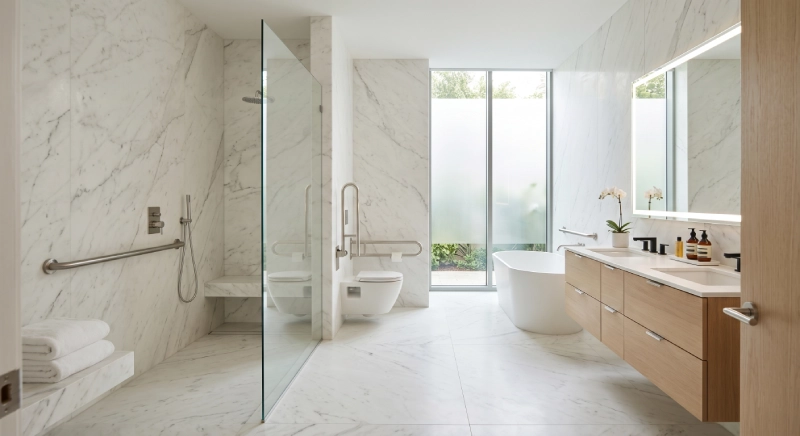
To choose ADA grab bars for residential projects, developers should evaluate five critical factors: material durability, ADA compliance, structural wall support, design integration, and overall project risk. These factors determine whether the installation will pass inspection and perform reliably over time.
Material durability
ADA compliance requirements
Wall structural support
Design integration
Overall project risk
Table of Contents
Why Is Choosing ADA Grab Bars a Project Risk Decision, Not Just a Product Choice?
For project managers, grab bars are not just accessories — they are part of a system involving safety compliance, structural integrity, and design integration.
Reopening a tiled wall due to failed load testing is an expensive and avoidable mistake — often costing hundreds or even thousands per bathroom, especially in large-scale developments. It delays project delivery and often leads to inspection failure.
In luxury projects, the impact is even greater. Poorly designed grab bars can disrupt the entire bathroom aesthetic, making compliance and design alignment equally critical.
What Are the Minimum ADA Grab Bar Requirements Every Project Must Meet?
Quick ADA Grab Bar Requirements Checklist
Minimum load capacity: 250 lbs
Diameter: 1.25–1.5 inches
Installation height: 33–36 inches
Structural support: Must be anchored to structural blocking (not surface-mounted only)
These are baseline compliance requirements — not selection criteria for high-end projects, but the minimum threshold to avoid inspection failure and basic compliance risks. (See our related layout guides for toilet, shower, and bathtub ADA compliance for specific placement details).
Material Selection: Which Options Work in Real Residential Projects?
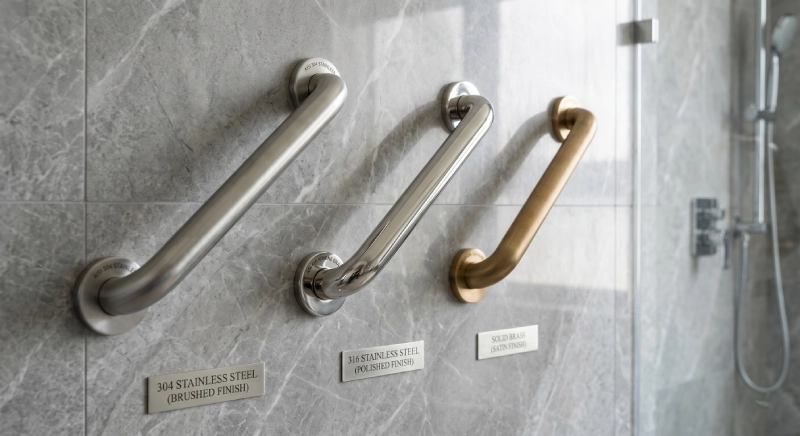
Material selection directly impacts lifecycle cost, not just initial purchase price. If you choose the wrong material, you will face replacements in a few years. Let’s look at the materials that actually work in real-world residential projects, not just what looks good in catalogs.
Stainless Steel (304 / 316)
For standard residential projects, 304 stainless steel grab bars are the industry standard. They offer excellent durability and rust resistance. However, for coastal projects or ultra-luxury villas, upgrading to 316 stainless steel is recommended due to its superior corrosion resistance in high-humidity environments.
Low-Grade Stainless (201)
Never use 201 stainless steel in a bathroom. I have seen developers try to save a few dollars using 201. It is not suitable for high-end residential environments due to its high risk of corrosion.
Brass & Specialty Materials
If you want premium aesthetic integration, brass grab bars are phenomenal. They come at a higher cost but are heavily used in luxury positioning. Brass offers a weighty, premium feel that high-end homeowners love.
304 Stainless Steel
316 Stainless Steel
Brass
201 Stainless Steel
Finish Strategy: How to Align ADA Grab Bars With Luxury Bathroom Design?
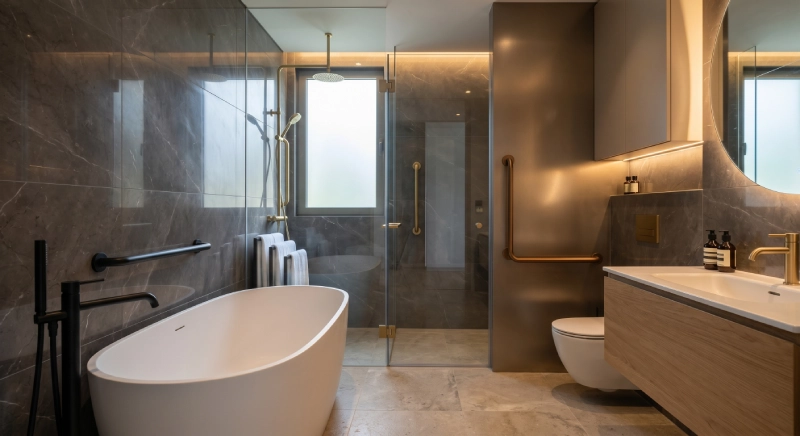
ADA compliance does NOT mean design compromise. You can follow guidelines and still have a stunning bathroom.
The “Hospital Look” Problem
The biggest complaint I hear from interior designers is the “hospital look.” Standard chrome grab bars look institutional. They remind people of clinics, not luxury villas.
Design-Friendly Finishes
To solve this, you need modern grab bars with design-friendly finishes:
Matte Black: Black grab bars are ideal for modern minimal designs. They create a sleek, industrial, or contemporary vibe.
Brushed Gold/Brass: Ideal for luxury villas. Grab bars in a brushed finish scream elegance.
Bronze: Bronze grab bars work beautifully in rustic or transitional luxury homes.
Satin Stainless: Offers a neutral, high-end look that blends easily.
Coordination With Bathroom Fixtures
Grab bar finishes should align with faucets, shower systems, and other accessories to maintain a cohesive and consistent luxury bathroom design.
Why Are Most ADA Grab Bar Failures Caused by Wall Structure, Not the Product?
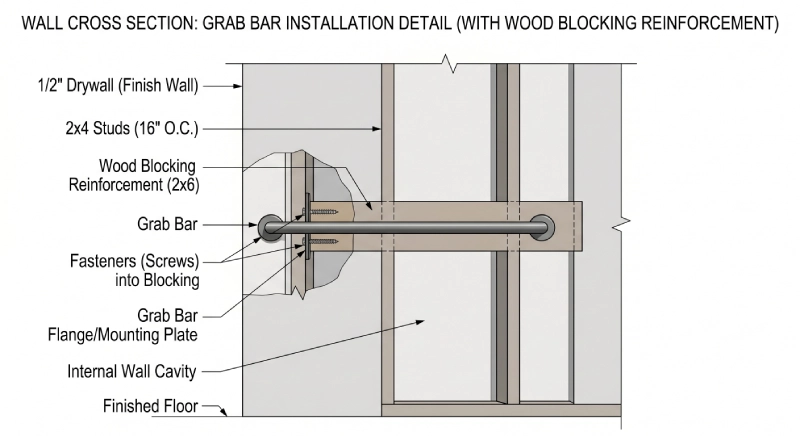
Most failures are not caused by the product itself — but by overlooked structural and installation details.
The Hidden Issue: Missing Blocking
The number one issue is missing blocking. If there is no wood or steel reinforcement inside the wall, you have a problem. Installing grab bars on drywall only creates a massive failure risk. The bar will rip out of the wall under a 250 lb load. Without proper reinforcement, even compliant products will fail under load. (Check our detailed [installation] guide for proper structural blocking techniques).
Construction Timing Mistake
Blocking must be installed before wall closure. If your contractor forgets this step, you are in trouble.
Inspection Risk
If non-compliance is discovered too late, demolition is required. You will have to tear down expensive marble tiles just to add a wooden block. Always ensure structural compliance during the framing stage.
What Are the Supplier Selection Criteria for Developers?
When you are doing bulk projects, your supplier becomes a critical project partner. Here is how you evaluate them.
Technical Documentation Capability
Can the project supplier provide CAD and BIM drawings? This is non-negotiable for large developers. They must also provide clear compliance documentation proving they meet ADA requirements.
Production Stability
For large projects, batch consistency is critical. You cannot have 50 bronze grab bars that are dark brown, and another 50 that look copper. Color and finish uniformity are what separate a qualified supplier from a bad one.
Project Delivery Capability
Lead time reliability is life or death for a project schedule. Also, check their export packaging standards. Proper packaging standards are essential to prevent damage during international shipping.
Engineering Support
A top-tier supplier provides installation guidance. They coordinate with your contractors. They don’t just sell you the metal; they sell you the solution.
Before selecting a supplier, developers should evaluate the following key criteria:
BIM / CAD Support
Batch Consistency
Lead Time Reliability
These capabilities are essential for ensuring consistency and compliance across multi-unit residential developments.
What is the Best Bulk Procurement Strategy for Residential Developers?
If you are building luxury villas, you need a smart procurement strategy.
Standardization Strategy
Unify the sizes across all bathrooms. Instead of using 10 different lengths, stick to 2 or 3. This reduces SKU complexity. For example, use standard straight bars for showers and folding units near toilets if space is tight. Sometimes, angled grab bars are perfect for multi-use shower corners.
Cost vs Risk Balance
The cheapest supplier does NOT equal the lowest project cost. If you save $5 on a bar but spend $500 fixing a rusted wall, you lost money. A small saving at procurement stage can result in significant losses during construction or maintenance. Balance cost and risk accordingly.
Phased Procurement for Large Projects
To avoid storage issues on site, use phased procurement. But ensure your supplier can guarantee batch consistency across phases.
How to Coordinate ADA Grab Bars With Architects, Contractors, and Suppliers?
Design Stage
Engage your supplier early. Achieve early integration into the bathroom layout. This avoids retrofitting conflicts later. Determine where the grab bars will go before the plumbing is finalized. Early coordination avoids costly design changes later in the project.
Construction Stage
Ensure blocking alignment during framing. Conduct a strict height verification before the drywall goes up. Proper coordination during construction can prevent thousands of dollars in rework and avoid unnecessary delays.
Procurement Stage
Implement a specification freeze before ordering. Do not change finishes after the order is placed, as it disrupts the production and delivery schedule.
What Are the Common Mistakes Developers Must Avoid?
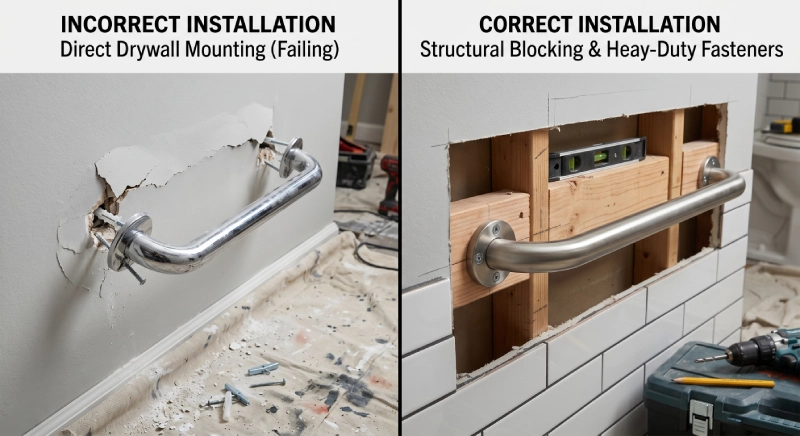
Over my decade in this industry, I constantly see developers make these mistakes:
Choosing based only on price: You get what you pay for.
Ignoring wall reinforcement: Drywall anchors will fail ADA load tests.
Late-stage ADA compliance checks: Do not wait until final inspection to verify compliance.
Mixing different suppliers across rooms: This ruins finish consistency.
Ignoring finish consistency: Your bronze grab bars must match your bronze showerhead.
How Much Does a Wrong Grab Bar Decision Cost a Project?
A small mistake in grab bar selection can lead to tile demolition, labor delays, and significant cost overruns — especially in large residential developments where the impact is multiplied across multiple units. You are not just paying for a replacement bar. You are absorbing the costs of tile removal, paying for extra specialized labor, dealing with project handover delays, and suffering brand damage when high-end buyers notice the rework.
Frequently Asked Questions (FAQ)
1. What happens if grab bars fail inspection?
If grab bars fail inspection, the wall may need to be reopened to install proper structural support, leading to additional labor costs, delays, and potential damage to finished surfaces.
2. What is the ADA weight requirement for grab bars?
Grab bars must support at least 250 lbs of force when properly installed.
3. Can grab bars be installed after tiling?
It is possible, but not recommended. Without pre-installed blocking, installation may require wall demolition.
4. What is the best material for coastal residential projects?
316 stainless steel is recommended due to its superior corrosion resistance in high-humidity environments.
5. Do grab bars need to match bathroom fixtures?
Yes, matching finishes is important in luxury residential projects to maintain design consistency.
Conclusion: Why Should ADA Grab Bars Be Treated as a System?
In practice, successful projects treat grab bar selection as an early-stage specification decision—not a late-stage product choice. It is time to change our mindset. ADA grab bars should be treated as a system, not a mere accessory.
Compliance + Structure + Design + Procurement = A Fully Integrated System.
Mistakes are incredibly expensive, especially in luxury residential projects where buyer expectations are high. Early planning, proper coordination, and working with the right supplier help reduce rework and protect project ROI.
References
ADA Guidelines for Structural Integrity & Placement: Detailed requirements for the 250 lbs load capacity, structural blocking, and 33–36 inch height parameters. U.S. Access Board – Chapter 6: Bathing Rooms https://www.access-board.gov/ada/guides/chapter-6-bathing-rooms/
Grab Bar Installation & Blocking Requirements: Technical overview explaining why structural blocking is mandatory to meet the 250 lb load threshold and avoid inspection failures. Stepping Thru Accessibility – Blocking for Grab Bars https://www.steppingthruaccessibility.com/blocking-for-grab-bars-what-is-there-to-know/
Material Science (304 vs 316 Stainless Steel): Metallurgical breakdown of why 316-grade stainless steel is the standard for high-humidity and coastal architectural projects. SRS Group – Use of Marine-Grade Materials in Architectural Projects https://www.srsgroup.co.nz/blog/use-of-marine-grade-materials-in-architectural-projects/
Project Planning Support for Residential Developments
Planning a new project? Get expert support on specifications, finish coordination, and supplier selection—right from the early stages.
- Grab bar specification planning
- Finish coordination across bathroom fixtures
- Bulk procurement strategy