
Short Answer
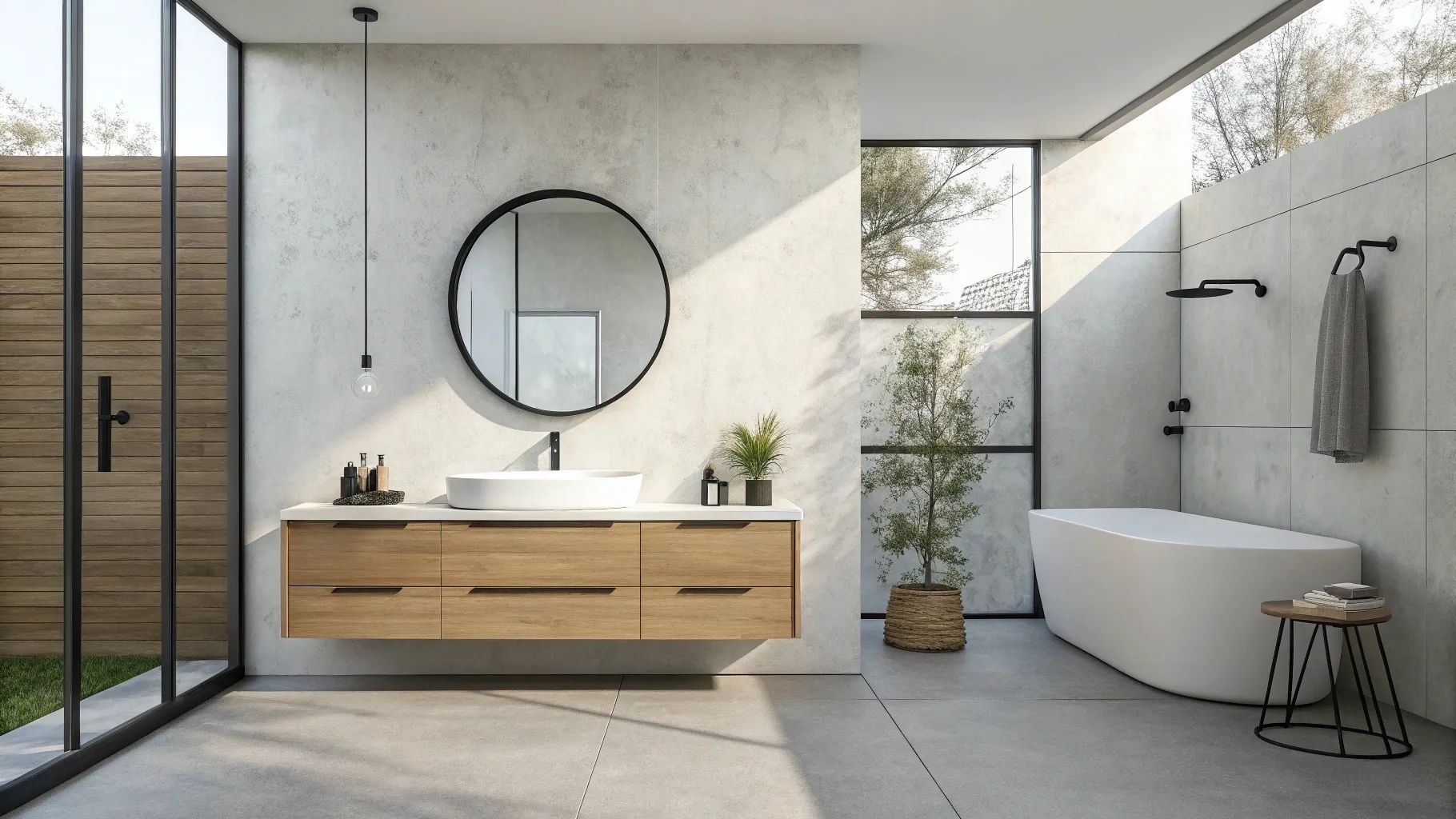
The Problem: In luxury developments, traditional safety fixtures often clash with premium interior aesthetics, creating an unwanted “hospital look” that downgrades the perceived value of the space.
The Strategy: The key is to integrate ada bathtub grab bar requirements into the architectural system from day one. This requires specifying concealed mounting systems, aligning finishes exactly with primary plumbing fixtures, and utilizing multi-functional designs.
The Result: When executed correctly, safety fixtures disappear into the architecture. This approach allows developers to meet strict compliance mandates while maintaining a seamless, high-end design language.
Hello, I’m Helen. I’ve spent over ten years in the sanitary ware industry, working directly with overseas developers, architects, and B2B procurement teams. Over the past decade, I’ve seen one recurring nightmare in high-end villa projects.
A project manager walks into our showroom, looks at a standard accessible bathroom setup, and sighs. “Helen,” they say, “my clients are paying millions for these luxury villas. I absolutely cannot put a cold, clinical metal pipe inside their custom marble master suite.”
I hear this in almost every high-end project discussion—and it’s a valid concern.
On one side, you have strict ada bathtub grab bar requirements to follow. You need to ensure safety for elderly residents, multigenerational families, or hotel guests. On the other side, you have a design vision that demands elegance, warmth, and exclusivity.
In most luxury projects, grab bar decisions are made too late—usually during the finishing stage, which is why design conflicts happen. This is not a product issue, but a system planning issue.
Table of Contents
Why Do Luxury Bathrooms Struggle with ADA Safety vs. Aesthetics?
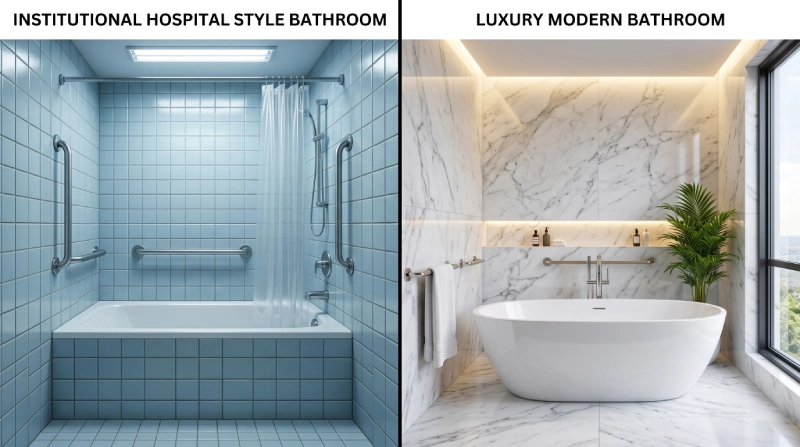
In luxury projects, the bathroom is a sanctuary. The bathtub is often the visual centerpiece of the room. However, from both field experience and safety reports, the bathtub area is consistently one of the highest-risk zones in residential bathrooms. The combination of stepping in and out, soapy water, and slick surfaces creates a high-risk environment for slips and falls.
As a developer or designer, you are facing intense pressure from three distinct angles:
Legal Liability: You must strictly follow ada bathtub grab bar requirements to ensure code compliance and protect your firm from costly lawsuits.
User Experience & Dignity: Nobody wants to feel “fragile” in their own luxury home or a five-star resort. A clinical-looking bar is a visual reminder of physical limitations.
Spatial Aesthetics: Visual cohesion drives the premium market value of your property. One mismatched, ugly fixture can ruin a $50,000 bathroom renovation.
This is why bathtub safety is not optional. The real question for developers is not installation—it is whether the grab bar is integrated into the architectural system from day one.
Why Do Standard ADA Grab Bars Look Like They Belong in a Hospital?
To fix the problem, we must first dissect it. After analyzing hundreds of failed bathroom designs at George Group, I’ve pinpointed exactly where the “hospital look” comes from:
Exposed Flanges: Those bulky circular plates with visible screws at the ends of the bar. They scream “medical facility.”
Polished Stainless Steel: Standard high-reflectance chrome or polished steel clashes horribly with modern muted tones. It looks cheap.
Oversized Diameters: Many standard bars use thick, oversized tubing. This completely ruins the delicate proportions of luxury bathroom hardware.
Random Placement: Slapping a bar onto a finished wall—cutting randomly across expensive tile lines—creates immediate visual chaos.
The root issue is not product design—it is late-stage introduction into an already finished aesthetic system. In high-end projects, these details are immediately noticeable and difficult to ignore. From a design perspective, these elements break visual continuity and disrupt material harmony.
How Can You Make ADA Bathtub Grab Bars Look Luxurious?
Here are the proven strategies we use at George Group to meet ada bathtub grab bar requirements without compromising high-end design.
Finish & Material Selection
Your grab bar must speak the exact same visual language as your faucets, showerheads, and hinges.
Custom Coatings: We use advanced PVD technology to create matte black, brushed nickel, or champagne bronze finishes.
Harmonization: In high-end projects, inconsistency in finishes—especially across multiple suppliers—is one of the most common causes of visual mismatch during final installation. If your master bath uses brushed gold fixtures, your grab bar must be an exact brushed gold match.
Diameter & Proportion Control
The ada bathtub grab bar requirements state that the outside diameter of the gripping surface must be between 1¼ inches and 2 inches.
The Sweet Spot: The 1¼-inch diameter is widely preferred in luxury projects because it balances compliance, ergonomics, and visual minimalism in a single specification.
Concealed Mounting & Clean Lines
Nothing ruins a slab of custom marble faster than industrial screws.
Hidden Flanges: Always specify concealed mounting systems with seamless, twist-and-lock decorative covers.
Maintenance & Execution: For hotel projects, this not only simplifies cleaning and long-term maintenance, but also reduces installation risks. This minimizes installation errors during on-site execution, especially when coordinating with tile and stone contractors.
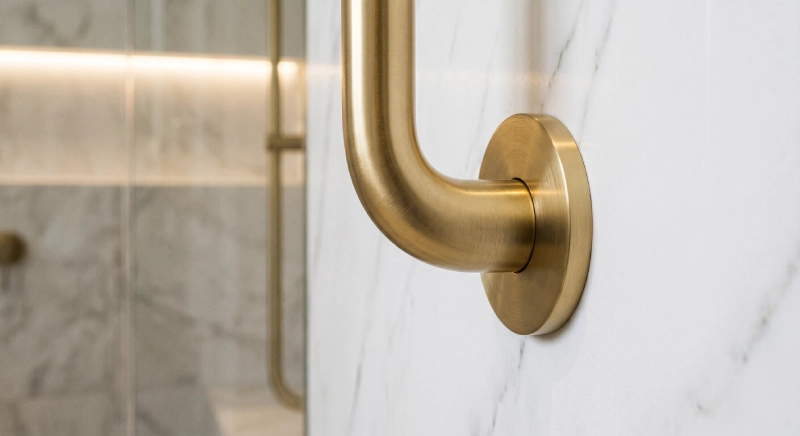
Multi-Functional Integration
Elevate the bar’s “reason for existing.”
The Hybrid Approach: Use a structurally reinforced bar that serves as a premium towel rack or shampoo shelf.
The Psychology: In high-end villa projects, this approach is increasingly used to reduce visual fragmentation. When users see function first, they accept safety naturally. This not only improves visual acceptance but also increases perceived value without adding extra fixtures.
How Do Real Luxury Villas Integrate ADA Bathtub Grab Bar Requirements?
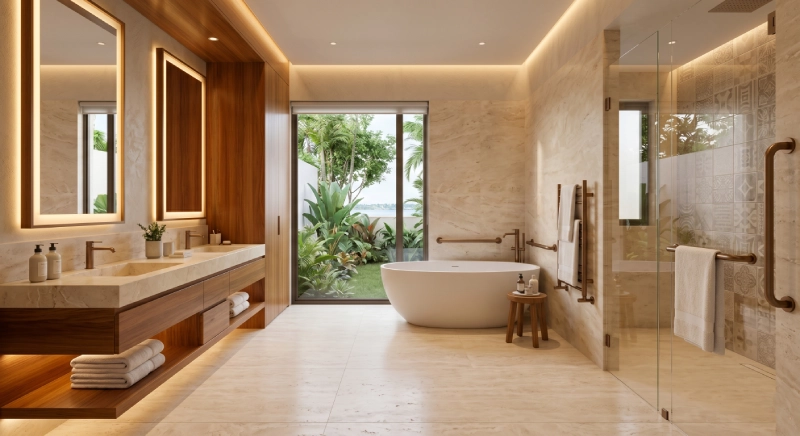
Let me share how this works in reality. Recently, George Group partnered with a developer for a stunning project: the Côte d’Ivoire Luxury Villa Bathroom Solution.
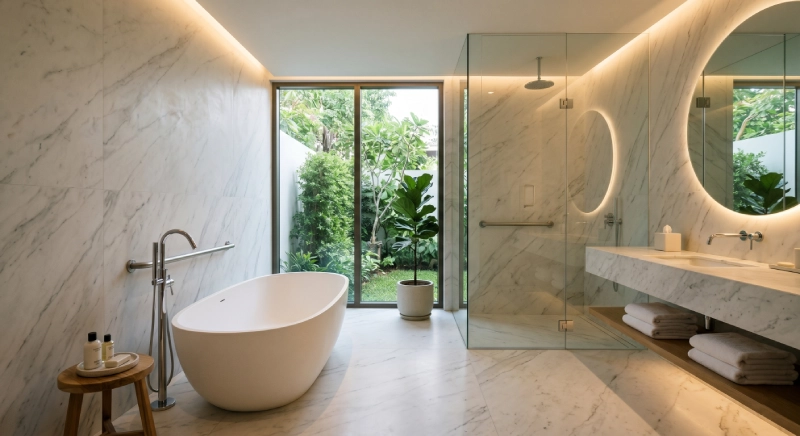
This project consisted of 10 ultra-luxury villas. The client wanted a top-tier residential experience featuring beautiful freestanding acrylic bathtubs and custom double vanities. During the initial procurement phase, their team almost ordered standard, off-the-shelf ADA safety bars.
When I reviewed their architectural drawings, I immediately flagged this. Standard institutional bars would have destroyed the elegant, warm aesthetic of their custom stone bathrooms.
Design Integration Strategy: Instead of treating the ada bathtub grab bar requirements as an afterthought, we integrated them into the custom hardware package. We supplied multi-functional grab bars that doubled as high-end towel rails, perfectly color-matched to the vanity faucets using custom PVD coatings.
The Result: The project achieved full ADA compliance while maintaining a consistent luxury interior language across all bathroom fixtures.
In several projects we’ve reviewed, late-stage grab bar adjustments resulted in full tile replacement. For developers and procurement teams, the difference is not only visual—it directly affects installation coordination, supplier consistency, and long-term maintenance:
Standard "Institutional" Bar
George Group Premium ADA Bar
What Are the Most Common Mistakes Designers Make with ADA Grab Bars?
Even experienced architectural teams can trip up on safety details. Avoid these costly mistakes:
Focusing Only on Looks: A beautiful bar placed incorrectly cannot support the biomechanics of stepping over a tub wall.
Forgetting Structural Backing: If you don’t install solid wood or steel blocking behind the tile during the framing stage, the bar will rip straight out of the drywall.
Ignoring Spacing Rules: You must maintain exactly 1.5 inches of clearance between the bar and the wall.
Installation Failures: These mistakes don’t just affect safety—they directly impact timelines, budgets, and overall project delivery. These issues typically only appear during inspection or final walkthrough, when correction costs are significantly higher.
Design mistakes in ADA grab bar installation are often not caused by aesthetic decisions alone, but by a lack of understanding of the underlying compliance framework—especially requirements related to height, clearance, structural load, and placement rules.
To fully understand these standards and avoid specification errors during procurement and installation, developers should refer to a complete regulatory breakdown: ➡️ What Are the Essential ADA Grab Bar Requirements for 2026 Residential Bathroom Projects?
This guide provides the foundational compliance structure that supports all design decisions in luxury villa and hotel bathroom projects.
A Pre-Procurement Checklist for ADA Bathtub Grab Bar Integration
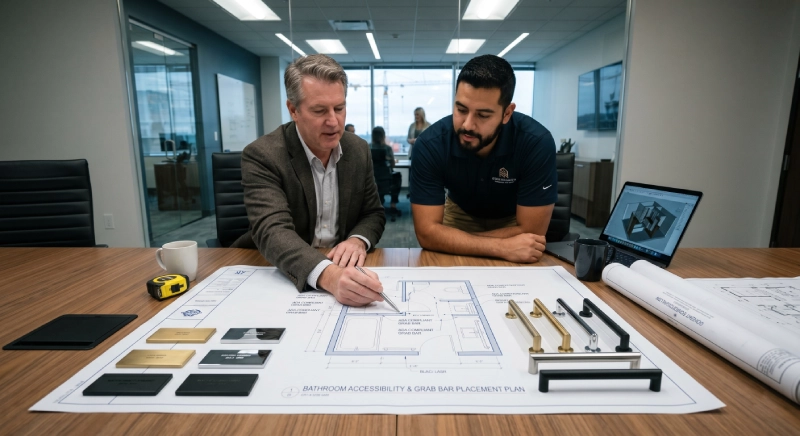
Before you approve the final procurement list for your next villa project, run through this quick checklist:
Structural Prep: Has the contractor installed structural backing (blocking) in the tub area?
Code Compliance: Do the lengths and heights meet the specific ada bathtub grab bar requirements for your region?
Visual Harmony: Does the surface finish exactly match the shower system and vanity hardware?
System Consistency: Is the grab bar part of a complete hardware collection from George Group, rather than a single isolated product?
User Logic: Is the placement based on real human movement entering and exiting a wet tub?
Procurement Risk: Are multiple suppliers creating finish inconsistencies across the bathroom?
Do Designer Grab Bars Still Meet Overall ADA Bathtub Compliance?
Remember, the physical design of the bar is only one piece of the puzzle. To fully pass inspections, these beautiful fixtures must fit into a larger layout system. Usually, this requires a minimum 24-inch bar on the back wall and a dedicated bar on the control wall.
Compliance is not a product specification—it is a system-level coordination problem between design, structure, and installation teams.
Frequently Asked Questions (FAQ) for Project Developers
1. What are the exact ada bathtub grab bar requirements regarding weight capacity in commercial projects?
Commercial ADA standards dictate that the grab bar, fasteners, and mounting surface must withstand a minimum concentrated load of 250 pounds (1112 N) applied in any direction. At George Group, our premium concealed-mount bars are engineered to exceed these structural requirements when installed with proper wall blocking.
2. Can custom finish grab bars survive harsh daily cleaning in hospitality projects?
Yes, but you must specify PVD (Physical Vapor Deposition) coatings. Cheaper painted bars will chip. PVD bonds the finish at a molecular level, offering extreme resistance to commercial cleaning agents.
3. How can we install heavy-duty grab bars on custom marble tiles without cracking them?
You must install solid wood or steel blocking behind the wallboards before tiling. During installation, contractors must use high-quality diamond drill bits with water cooling to create clean holes, allowing the flange to anchor directly into the structural blocking, not the tile.
4. Do multi-functional grab bars strictly comply with ADA standards?
Yes—if designed correctly. The gripping surface must maintain the 1¼ to 2-inch diameter rule, and there must be a clear 1.5-inch space between the gripping bar and the shelf/wall. We design our multi-functional units specifically to pass these strict clearance tests.
If you’re evaluating suppliers, these are exactly the technical details you should confirm before making a final decision.
Conclusion
In luxury bathroom projects, ADA grab bars are no longer standalone safety products—they are integrated architectural elements that must be considered during early-stage design coordination.
At George Group, we work with developers to align safety compliance with material consistency and installation feasibility from the beginning of the project lifecycle. By moving beyond a compliance-only mindset, your projects can effortlessly meet ada bathtub grab bar requirements without compromising the high-end vision your clients expect.
References
U.S. Access Board: 2010 ADA Standards for Accessible Design – Chapter 6: Plumbing Elements and Facilities (Used for diameter, clearance, and 250-lb structural load mandates).
Centers for Disease Control and Prevention (CDC): Nonfatal Bathroom Injuries Among Persons Aged ≥15 Years (Supporting data on slip and fall risks in residential bathtubs).
George Group Technical Specifications: Project data and integration parameters derived from the Côte d’Ivoire Luxury Villa Bathroom Solution.
We provide integrated one-stop bathroom solutions covering tubs, sanitaryware, fittings, and system coordination for hotel and commercial projects.
▼ Submit the form below to connect with our team and explore project-based collaboration. ▼