
With over 10 years of experience supplying sanitary ware for global commercial projects, I have seen countless high-end restrooms fail final inspections due to misunderstood ada bathroom faucet requirements. For architects, specifiers, and facility managers, balancing stringent plumbing codes with luxury aesthetics often feels like an impossible compromise. Aesthetically refined commercial restrooms are sometimes forced to revert to traditional fixtures just to pass building inspections. But commercial bathroom design has evolved.
By selecting modern ada compliant bathroom faucets with low-torque cartridges or touchless activation, facilities can significantly reduce inspection risks while lowering total cost of ownership (TCO).
In this comprehensive specification guide, we will break down the non-negotiable standards and show you how to select fixtures that elevate your project’s elegance while increasing the likelihood of smooth inspection approval.
Table of Contents
What Are the Non-Negotiable ADA Bathroom Faucet Requirements?
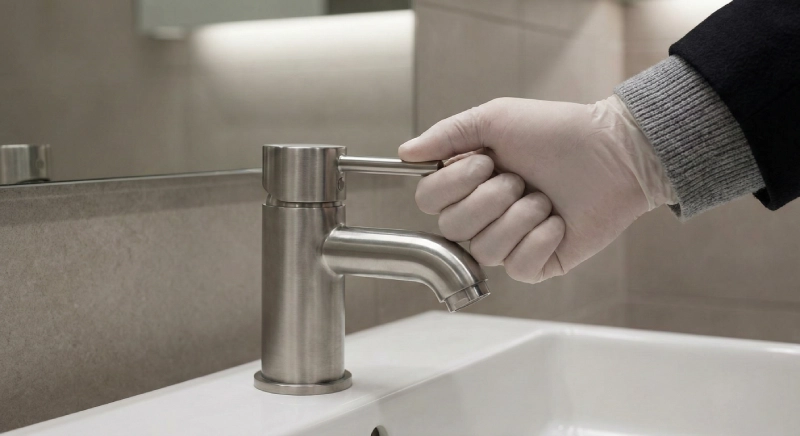
According to the 2010 ADA Standards for Accessible Design (Section 309.4), operable parts must require no more than 5 pounds of force and must not require tight grasping, pinching, or twisting of the wrist. Furthermore, ADA standards require self-closing or metering faucets to deliver a water flow cycle of at least 10 seconds to allow adequate handwashing.
Section 606.4 of the ADA Standards specifically governs faucet controls for lavatories and sinks, reinforcing operability and accessibility requirements. These requirements apply to all public and commercial restroom installations subject to ADA compliance. Understanding these rules is the foundation of any commercial project:
The 5-Pound Operable Force Limit: The days of stiff, heavy handles are over. To ensure your single lever faucet meets this strict limit, high-quality ceramic disc cartridges are essential. Inferior cartridges may gradually exceed the 5-lb operating force threshold due to cartridge wear, leading to compliance failures down the line. Always request torque testing reports from your supplier to ensure long-term reliability.
The “No-Grasp” Rule: Traditional cross-knob handles are generally not compliant in accessible public restrooms. Modern minimalist single lever faucets and sensor faucets have become the standard, as they can be easily operated with the side of a fist or the back of a hand.
What Are the ADA Faucet Height and Clearance Requirements?
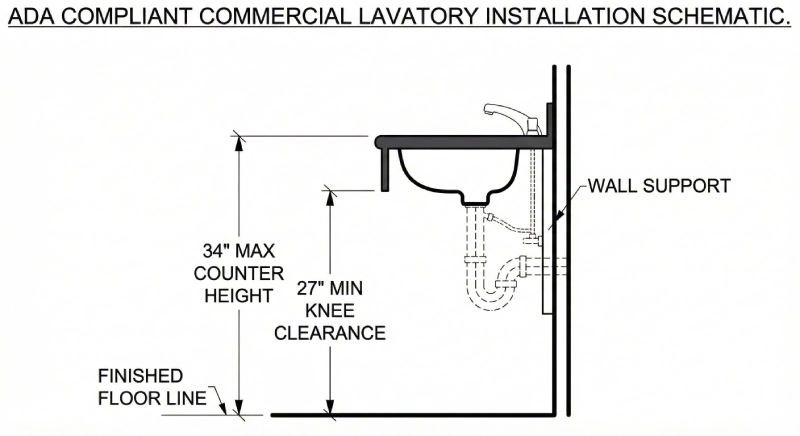
Compliance is deeply tied to the installation. Even the best accessible lavatory faucets will fail inspection if installed on the wrong vanity. These dimensions specifically apply to accessible lavatories in public and commercial facilities:
34 inches maximum rim or counter surface height from the finished floor.
27 inches knee clearance underneath the sink.
At least 8 inches deep at 27 inches high (with extended clearance required below per ADA knee space specifications).
ADA-compliant faucets are only one part of accessible restroom design. Other safety elements, such as ADA bathroom grab bars, are also essential for ensuring safe transfers and user stability.
Should You Choose Manual or Touchless Faucets to Meet ADA Bathroom Faucet Requirements?
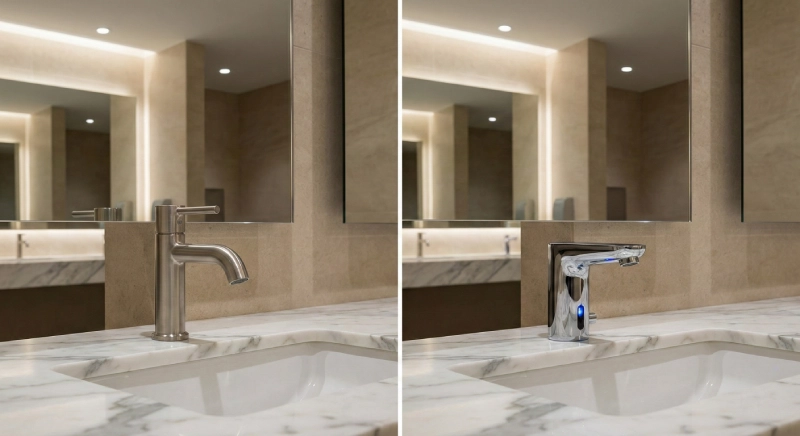
Many project managers search for “ADA touchless faucet requirements” or “ADA single lever faucet compliance” when specifying fixtures. Once you understand the basic rules, the next major decision is choosing the activation method. To help project managers and specifiers visualize the operational differences, here is a quick comparison matrix:
Single Lever vs Touchless Sensor Faucet
Modern Single Lever Faucet
Touchless Sensor Faucet
Both options can meet ada bathroom faucet requirements when properly specified and installed.
Touchless Sensor Faucets
Best Scenario: High-traffic commercial office buildings, airports, and busy shopping malls.
The Advantages: A touchless faucet inherently meets ADA operating force requirements, provided it complies with timing regulations. From a sustainability standpoint, industry case studies suggest potential water savings of approximately 20–30% in high-traffic environments when utilizing an automatic shut-off sensor faucet, optimizing TCO while maximizing hygiene.
Modern Single-Lever Faucets
Best Scenario: Luxury hotel guest rooms and VIP lounges.
The Advantages: A manual single lever faucet offers a classic, tactile luxury experience with no electrical hardwiring required. Designed with modern ergonomics, a properly engineered low-torque cartridge design can satisfy ADA operability standards when correctly specified.
What Makes a Faucet Finish Truly Commercial-Grade for High-Traffic Projects?
In hospitality, healthcare, airport, and institutional environments, specifying residential-grade finishes is a costly mistake that facility managers quickly regret.
The TCO Perspective & The PVD Advantage: Standard electroplated faucets often peel when subjected to high-frequency cleaning with aggressive chemicals. For demanding commercial environments, PVD (Physical Vapor Deposition) is widely considered the most durable finish technology available. It forms a highly bonded surface layer through a vacuum deposition process, providing superior resistance to corrosion, abrasion, and chemical exposure.
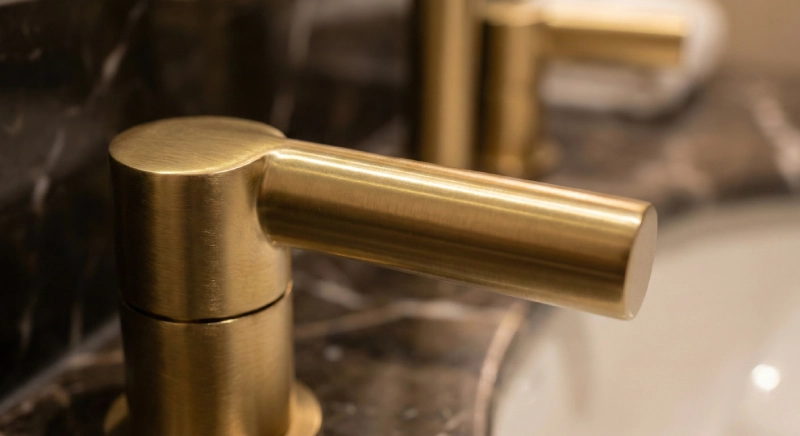
Trending Hotel Finishes: To achieve a premium hotel-grade faucet finish, Spot-Resist Brushed Gold and Gunmetal/Matte Black are currently top choices. They hide fingerprints and water spots, significantly reducing daily maintenance time for housekeeping staff.
How Do You Match ADA Faucets with Commercial Sink Profiles Without Violating Reach Rules?
A compliant bathroom requires a holistic approach. The compliant commercial faucet must marry perfectly with the sink basin.
What Is the ADA Forward Reach Range for Faucet Controls?
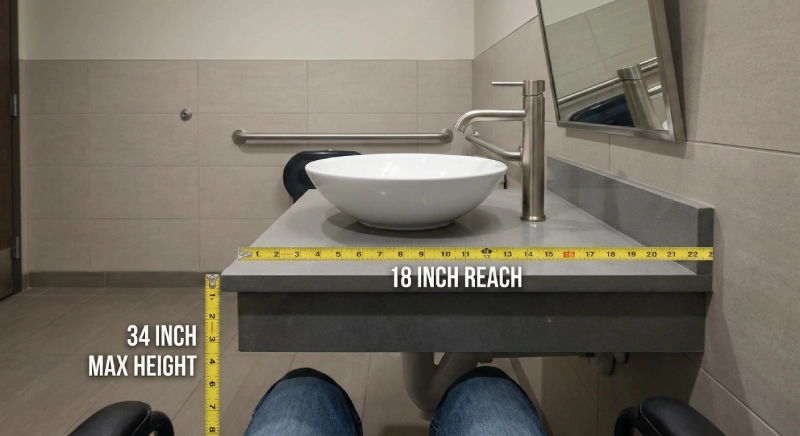
The water stream must fall within the accessible reach range of a person using a wheelchair. ADA Standards Section 308 regulates forward and side reach ranges for operable parts to ensure accessibility from a seated position. Forward reach and operable part placement must remain within allowable height ranges when measured from the finished floor. If the spout of your faucet is too short and the sink is too deep, the user is forced to lean uncomfortably forward, potentially resulting in non-compliance during inspection.
The Vessel Sink Challenge Architects love vessel sinks for luxury hotels, but their bowl height easily pushes the user’s reach above the 34-inch limit. If your design mandates a vessel sink, you must pair it with tall ADA-compliant fixtures and precisely calculate the water drop point to ensure accessibility without splashing.
Do ADA Faucets Need cUPC, NSF, or WaterSense Certification?
Understanding ada faucet certification requirements is crucial for B2B procurement. ADA itself does not mandate product certification; compliance is based on installation and performance standards. However, other certifications are legally mandatory for any commercial plumbing fixture:
NSF 61 / Lead-Free: NSF/ANSI 61 and applicable lead-free requirements form the absolute legal baseline for commercial buildings in North America to protect public health.
WaterSense & LEED Points: Choosing a single lever or touchless faucet with a flow rate restricted to 1.2 GPM not only reduces municipal water bills but may contribute toward LEED certification credits under applicable water efficiency categories.
cUPC Certification: When evaluating ada vs cupc, remember that while ADA governs accessibility, cUPC is your mandatory passport into the North American plumbing code system. All specified fixtures should carry up-to-date cUPC approvals to ensure legal installation.
What Are the Most Common ADA Bathroom Faucet Compliance Mistakes?
Below are the most common compliance errors observed during commercial restroom inspections:
Cross handles installed instead of single levers or touchless sensors.
Wrong mounting height exceeding the strict 34-inch maximum rim height.
Spout reach too short, forcing the user to exceed the forward reach range.
Metering faucets delivering less than the minimum 10-second flow cycle.
Non-certified plumbing components lacking mandatory cUPC or NSF approvals.
FAQ
What is the maximum force allowed for ADA faucets?
ADA Standards (Section 309.4) limit the required operable force to a maximum of 5 pounds.
Are sensor faucets automatically ADA compliant?
Not automatically. A sensor faucet inherently meets the operating force rule but must comply with ADA timing requirements for self-closing or metering valves (minimum 10-second flow cycle as required under ADA Standards).
Do ADA faucets need cUPC certification?
ADA itself does not mandate cUPC certification. However, plumbing codes in North America require fixtures to carry cUPC or equivalent approvals for legal installation.
What is the maximum sink height under ADA?
The maximum counter or sink rim height is 34 inches above the finished floor, paired with a minimum 27-inch knee clearance below.
Why Should You Partner with George Buildshop for?
When managing a multi-million-dollar hotel build or office complex, you need more than a vendor—you need a reliable engineering partner. At George Buildshop, we provide end-to-end B2B services, from initial compliance reviews to customized OEM/ODM production. We ensure your specified ADA-compliant fixtures seamlessly blend luxury aesthetics with uncompromising compliance.
Delays caused by non-compliant fixtures can lead to costly redesigns and schedule overruns. Early-stage specification alignment significantly reduces compliance-related project risks. Contact our engineering team to review your specifications and ensure full compliance before procurement.
Related ADA Bathroom Compliance Guides
References & Industry Standards
U.S. Department of Justice. (2010). 2010 ADA Standards for Accessible Design. ADA.gov. (Specifically referencing Section 308: Reach Ranges, Section 309.4: Operation, and Section 606: Lavatories and Sinks).
U.S. Environmental Protection Agency (EPA). WaterSense: Bathroom Faucets. EPA.gov. (Referencing water efficiency and 20–30% consumption reduction data).
NSF International. NSF/ANSI Standard 61: Drinking Water System Components – Health Effects. NSF.org. (Referencing lead-free compliance for commercial plumbing fixtures).
We support hotel and commercial projects with integrated solutions that reduce specification gaps and coordination risks.
▼ Contact us via the form below to evaluate your project and collaborate. ▼