
Project delays, unforeseen rework, and inconsistent installation outcomes crush developer profitability. Many developers still evaluate bathtub procurement based on unit pricing — yet true ROI lies in operational consistency. Every mismanaged bathtub installation can silently eat up 20–30% of expected ROI. And yet, most procurement strategies still treat bathtub supply as a purchase, not a process — that’s where projects quietly start losing money.
ROI in modern construction is now determined by operational control over the entire supply chain, not just the unit price of the materials; this shift to an industrialized supply chain is necessary to ensure financial stability and predictable performance across all multi-project portfolios.
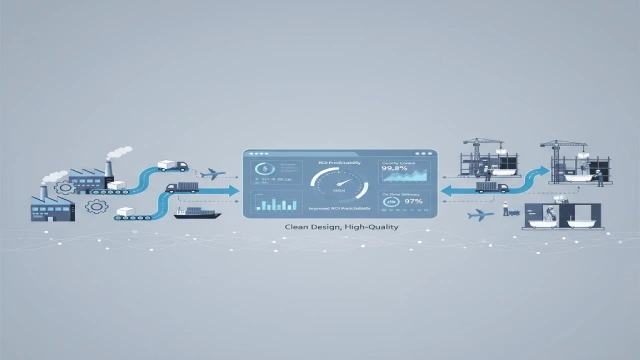
You need a reliable process. This is not a theory — recent data across multi-unit projects proves how control translates to returns.
Data shows why: 68% of bathtub-related project delays in 2024 were linked to poor logistics coordination. That is a massive problem.
This reliance on traditional craftsmanship and manual tracking creates systemic risk. Moving forward, industrialized sourcing of sustainable bathtub material dramatically cuts coordination waste and schedule uncertainty. In large-scale developments, the bathtub package is often one of the most logistics-intensive components — making its industrialization an immediate ROI lever. The profitability of your assets depends on how well you control the execution.
Table of Contents
Does Your Fragmented Supply Chain Create Hidden Costs for Your Project?
Do you realize how one component’s delay can jeopardize your entire project’s stability? When procurement relies on multiple vendors, accountability disappears. Every delay or mismatch becomes a shared problem — and your project bears the cost.
A fragmented bathtub supply chain causes significant financial unpredictability because multiple middlemen lead to unclear responsibility for quality, manual tracking creates high error rates, and increased rework and damage inflate the project’s total lifecycle cost.
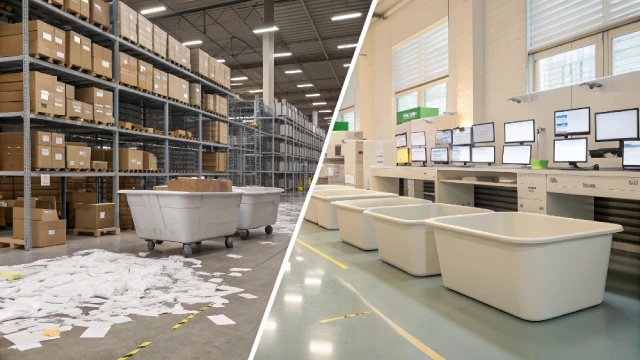
One procurement director I worked with once told me: “When every project relies on manual coordination, every mistake multiplies.” He found that a single part delay could paralyze a floor of construction. According to Contimod’s 2024 construction cost overrun statistics, large projects experience an average cost overrun of around 28%, with delivery and coordination issues among the top causes. These figures demonstrate that fragmented supply isn’t just an operational flaw — it’s a financial risk multiplier. Inconsistent accountability is the hidden tax developers pay for fragmented sourcing. If your bathtub procurement is fragmented, your ROI is already compromised before installation begins.
Traditional vs Industrialized Bathtub Material Sourcing: Financial Impact
Here’s a direct comparison showing how traditional bathtub sourcing drains ROI — and how industrialization restores it.
Fragmented Supply Problems and Industrial Solutions
1. Multiple Middlemen
Direct Financial Consequence: Inconsistent quality, costly disputes.
Mitigation Through Industrialization: Single-source quality control and accountability.
2. Manual Tracking / Sourcing
Direct Financial Consequence: High error rates, unexpected inventory shortages.
Mitigation Through Industrialization: Digital, real-time logistics tracking and inventory planning.
3. Rework & Damage
Direct Financial Consequence: Replacement cost plus expensive site labor time loss.
Mitigation Through Industrialization: Factory quality inspection and protective delivery systems.
In short, industrialization turns reactive cost management into proactive ROI creation.
Industrialized Supply: Guaranteeing Financial Predictability
You need predictable outcomes across all your projects. I’ve seen developers regain control the moment they switched from reactive ordering to managed industrial systems — especially in large-scale bathtub projects where precision and timing directly affect cash flow.
Industrialized bathtub supply transforms procurement from a manual transaction into a predictable, data-driven process by implementing standardized product configurations, digital logistics with real-time tracking, and clear quality traceability from the manufacturing base directly to your job site.
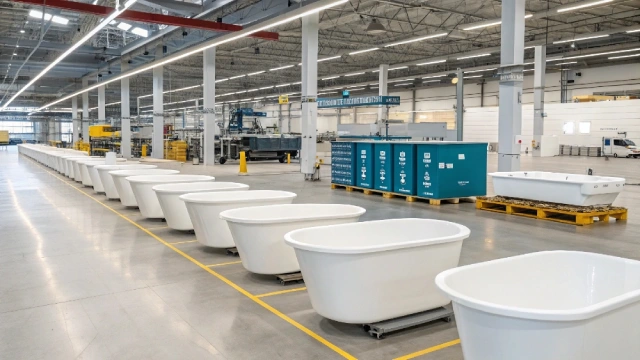
Industrialized supply doesn’t just deliver bathtubs — it delivers predictability. This is the key difference savvy procurement directors now demand. A managed industrialized supply chain provides full digital logistics, offering real-time tracking and inventory predictability. According to a 2024 study published in MDPI’s journal Technologies, companies that integrate digital technologies into their supply chains have achieved 20–30% reductions in cost and delay-related inefficiencies. That improvement isn’t just logistics efficiency — it’s weeks of regained project time and thousands in avoided penalties. This proves that visibility equals control. The quality traceability means every component is logged and inspected at the source. For developers managing multiple sites, a standardized bathtub supply chain ensures that every installation is repeatable, traceable, and financially predictable.
Together, these pillars create a transparent, measurable, and scalable bathtub procurement ecosystem.
Modular Installation: Eliminating On-Site Schedule Delays
Construction schedules constantly slip due to variable on-site installation quality and time. This reliance on individual craftsmanship is slow, expensive, and unreliable. This pattern can’t sustain growth in today’s fast-moving development cycles.
Modular bathtub installation systems standardize performance and drastically speed up delivery by shifting complex, labor-intensive assembly to the factory, resulting in a 40% reduction in installation time, predictable cost per unit, and greatly lowered on-site defect rates.

How Prefabricated Bathtub Material Installation Improves ROI?
I often tell my clients, “Every hour saved on-site compounds across 200 bathrooms.” When we use modular bathtub installation systems, we reduce the requirement for variable on-site craftsmanship. Because bathtubs require precise plumbing and sealing, modular pre-assembly removes most on-site uncertainty — turning one of the most variable trades into a fixed-schedule process. The question isn’t whether modular systems work — it’s how quickly you can standardize them. According to Dodge Data & Analytics’ Prefabrication & Modular Construction 2020 SmartMarket Report, around 90% of surveyed contractors reported improved productivity, quality, and schedule certainty after adopting modular or prefabricated methods, while more than 80% noted enhanced cost predictability and reduced waste. This acceleration is crucial — installation becomes less about fitting and more about connecting standardized components. The result is not just faster fitting — it’s a financial model where time saved equals money preserved. This provides a predictable cost per unit, which makes it easier for your project managers to supervise, and leads to lower defect rates.
Here’s how prefabrication changes measurable project outcomes.
Installation Methods and Their ROI Impact
1. Traditional Stick-Build
Performance Metric: High labor variability, slow fitting, material waste.
Impact on Project ROI: Unpredictable schedules, increased penalties, high TCO.
2. Modular / Pre-Fabricated
Performance Metric: Low site labor requirement, factory-controlled assembly.
Impact on Project ROI: Fixed schedules, accelerated turnover, superior ROI optimization.
Prefabrication doesn’t just save time—it transforms unpredictability into measurable performance.
Case Insight: When Bathtub Supply Control Equals ROI
You want evidence that this strategic shift works in the real world. I have seen the difference control makes firsthand.
In a recent 300-unit residential project, we compared two identical buildings — one using traditional sourcing, the other an industrialized modular system. Installation finished three weeks faster, with rework reduced from 12% to under 2%.

The second building, using the modular system, completed its bathtub installation three weeks ahead of the first. The rework rate dropped from 12% to below 2%. This outcome makes one thing clear: strategic material sourcing — not just lower prices — drives profitability. The financial benefits come not from the unit price, but from the elimination of expensive, late-stage site delays and labor rework. This shift, powered by sustainable bathtub material and modular supply, delivers repeatable ROI gains. These results show that a controlled bathtub sourcing and installation model can be replicated across any residential or hospitality development.
How Modular Bathtub Supply Translates to Tangible ROI Gains?
The results speak for themselves — process control directly translated into measurable ROI.
Traditional vs Modular Performance Comparison
1. Installation Duration
Traditional Method (Building 1): 10 Weeks (Delayed)
Modular System (Building 2): 7 Weeks (On Time)
2. Rework Rate
Traditional Method (Building 1): 12% of units needed corrections.
Modular System (Building 2): < 2% of units needed corrections.
3. Financial Impact
Traditional Method (Building 1): Daily delay penalties and higher labor spend.
Modular System (Building 2): Three weeks saved, penalty-free handover.
Strategic Takeaways: How Developers Can Build for Predictable ROI
Developers who achieve predictable ROI all start the same way — by mapping control points inside their bathtub supply chain.
Start by auditing your current supply dependencies and partnering with strategic suppliers that offer transparent logistics and modular bathtub installation solutions.
This means integrating standardized components early in design, measuring ROI by lifecycle efficiency, and auditing current supply failure points. Industrialization isn’t just about efficiency — it’s about building financial predictability into every project. At George Build Shop, we help developers transform uncertainty into predictable ROI. Audit your bathtub supply chain today—and take control of your next project’s profitability. The sooner your bathtub systems become industrialized, the sooner ROI stops being unpredictable.
This article is a part of our bathtub series. See more about: How Can the Right Bathtub Choice Boost ROI for Developers?
We provide integrated one-stop bathroom solutions covering tubs, sanitaryware, fittings, and system coordination for hotel and commercial projects.
▼ Submit the form below to connect with our team and explore project-based collaboration. ▼