Short Answer: Bathtub faucet failures in hotel projects are rarely due to product defects but result from specification errors made before site conditions are fully verified—affecting up to 20–30% of newly opened rooms in international hotels. The three critical triggers are: locking aesthetics before hydraulic data is confirmed, ignoring installation tolerances, and separating procurement from maintenance realities. Treating the faucet as a system interface rather than a decorative item allows most operational risks to be eliminated before procurement begins.
In the global hospitality sector, project success is measured by the seamless transition from construction to occupancy. However, a decade of auditing sanitary ware installations reveals that the most persistent technical failures are “built-in” during the design phase.
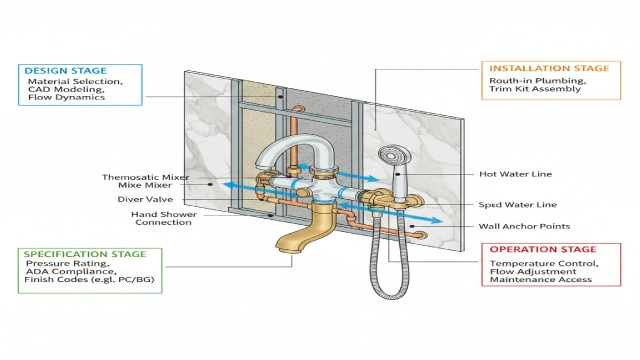
Most failures follow a predictable chain: Design → Specification → Procurement → Installation → Operation. Addressing the technical interface at each step is the only way to reduce post-opening risk.
Table of Contents
When bathtub faucet failures are set in motion?
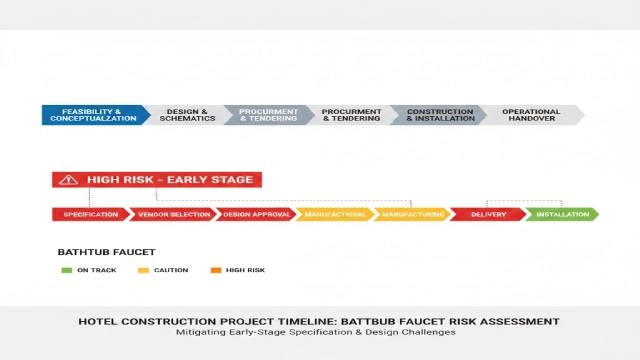
In hotel projects, technical failures are often determined during the schematic design phase, long before the procurement team issues a purchase order.
Aesthetic-driven specification: Failures begin when a bathtub faucet is selected primarily to meet a visual mood board without MEP (Mechanical, Electrical, and Plumbing) verification.
Incomplete site data: At this stage, critical variables like dynamic water pressure or the building’s piping layout are often undefined.
Structural liability: If a floor-standing model is specified but the concrete slab is poured without the necessary structural reinforcement, the initial visual decision becomes an irreversible technical liability.
Because procurement cycles are often rigid, teams frequently proceed with suboptimal fixtures rather than risk a delay in the opening schedule, effectively “scheduling” a future maintenance crisis.
This initial decision often fails because different bathtub faucet types carry very different installation, service, and lifecycle implications in hotel projects.
Why faucets fail on site despite appearing correct?
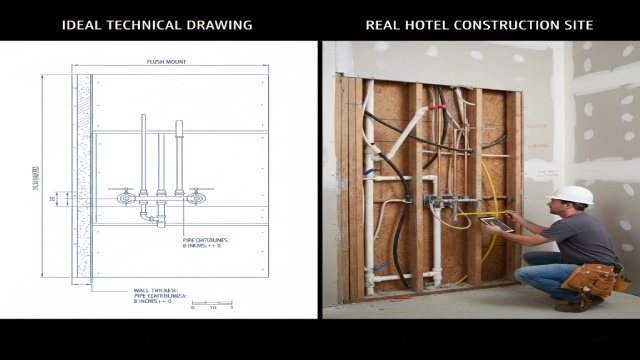
In hotel projects, faucets fail on site because drawings assume ideal tolerances and hydraulic conditions that do not exist in real construction environments.
Water pressure verification In operational environments, the performance of the faucet assembly is dependent on the building’s hydraulic profile. Post-opening failures often occur because the verification process does not account for the difference between static pressure and the dynamic pressure experienced during peak occupancy. Without floor-by-floor verification, a bathtub faucet may experience insufficient flow for a luxury experience or excessive pressure that leads to premature seal degradation and “water hammer” effects.
Installation tolerances and site variance Construction tolerances for wall finishes—including stone cladding and waterproofing membranes—can vary significantly. If the valve system does not allow for a wide range of depth adjustment, the final trim will fail to sit flush. Teams that fail to prioritize how to install bathtub faucet systems with adjustable deep-wall kits often find themselves with unstable fixtures that cannot be corrected without damaging the finished bathroom wall.
This is especially common when teams select wall-mounted or freestanding bathtub faucets based on appearance alone, without fully validating on-site structural conditions.
Why failures surface only after hotel opening?
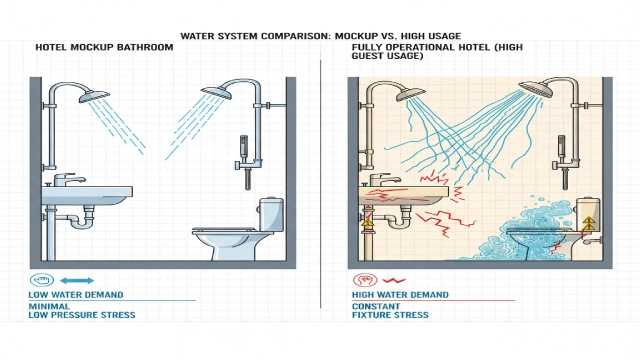
The primary reason for latent failures is that standard verification processes, particularly mockup rooms, do not simulate the rigors of high-frequency hotel operations.
In many hotel projects, mockup rooms fail to reflect real operational conditions because they do not simulate long-term, high-load usage. A touchless bathroom faucet may pass a visual inspection but fail in a high-traffic lobby due to infrared interference from specific lighting or reflective surfaces that were absent during the single-room test phase.
Furthermore, design and procurement teams are often focused on initial CAPEX (Capital Expenditure), while facilities managers inherit the OPEX (Operating Expenditure). If a commercial faucet is selected without considering a “maintenance-first” design—such as the ease of replacing a cartridge without specialized tools—the long-term maintenance costs will eventually eclipse the initial procurement savings.
In many cases, the root cause is not a defect but a misunderstood flow rate that only reveals its impact once real guest usage begins.
Why faucet issues escalate into operational risks?
In the hospitality industry, the majority of faucet-related issues are categorized as system mismatches rather than product defects, placing the financial burden on the hotel operator.
System mismatches are not defects: If a high-end fixture fails because the project’s central water heating system allows for excessive mineral buildup, the manufacturer’s warranty is typically void.
Integration failures: Project leads can reduce this risk by ensuring that the internal specifications of the commercial faucet, such as the grade of the ceramic discs, are calibrated to the site’s specific water chemistry.
Maintenance adaptation risk: When a complex fixture becomes difficult to maintain, facilities teams often “throttle” supply valves to prevent recurring leaks. This results in a degraded guest experience where the hotel pays for a luxury experience but delivers a subpar one.
Over time, these issues are amplified by finish choices, as different surface treatments respond very differently to daily cleaning intensity and hotel operating cycles.
Why unit price misleads total project cost?
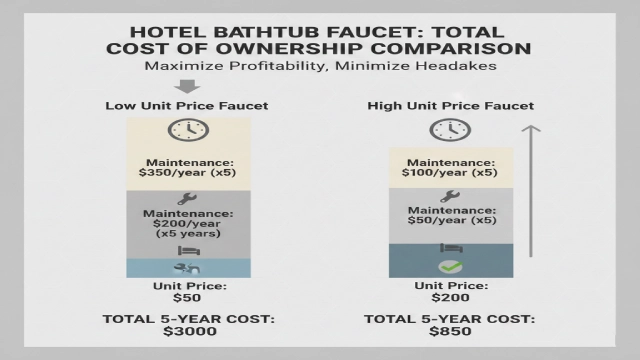
In hospitality projects, the cheapest faucet is rarely the lowest-cost decision. The total cost of ownership, including maintenance and downtime, far outweighs the initial purchase price.
The hidden cost of “Room Down” time High-quality fixtures designed specifically for hospitality environments are built to withstand high-cycle operational demands. A single leak can take a guest room out of service for up to 3 days, leading to a revenue loss of $1,200–$2,500 per room depending on the hotel’s ADR (Average Daily Rate). In this context, an unverified bathtub faucet becomes the most expensive component in the bathroom.
The risk of fragmented supply chains Selecting fixtures based on the lowest bid often results in a fragmented supply chain. If a project uses multiple unverified brands, the maintenance team must stock a complex and non-compatible array of spare parts. Standardizing on a reliable system through a partner like George Buildshop ensures that technical support and identical replacement components remain available throughout the hotel’s lifecycle.
How to reduce bathtub faucet risk before specification freeze?
The most effective way to mitigate risk is to move beyond aesthetic selection and perform a “system interface” audit. Before procurement begins, project teams should shift focus from “decorative items” to “technical interfaces.”
Technical checklist for project leads:
Dynamic Pressure Testing: Has the pressure been verified during simulated peak usage times across different floors?
Adjustment Range: Does the valve system accommodate the maximum possible thickness of site-applied stone or tile?
Standardization: Are the internal components of the commercial faucet standardized across the project to simplify future maintenance?
Installation Support: Are there clear, site-specific guides on how to install bathtub faucet sets for local contractors?
Sensor Calibration: For any touchless bathroom faucet, has the sensor been tested against the specific lighting used in the final design?
Conclusion: The Value of System-Level Audits
Experienced project teams often engage in a third-party technical review before freezing specifications. Performing a system-level audit can reveal risks that are still inexpensive to correct and prevent costly operational failures after the hotel opens.
If you are approaching the procurement phase, consider a system-level audit to identify and mitigate interface risks. At George Buildshop, we help project teams bridge design intent and operational reality, ensuring the bathtub faucet functions seamlessly from day one. By choosing George Buildshop, you gain a partner who prioritizes “maintenance-first” engineering to ensure long-term asset performance.
We support hotel and commercial projects with integrated solutions that reduce specification gaps and coordination risks.
▼ Contact us via the form below to evaluate your project and collaborate. ▼