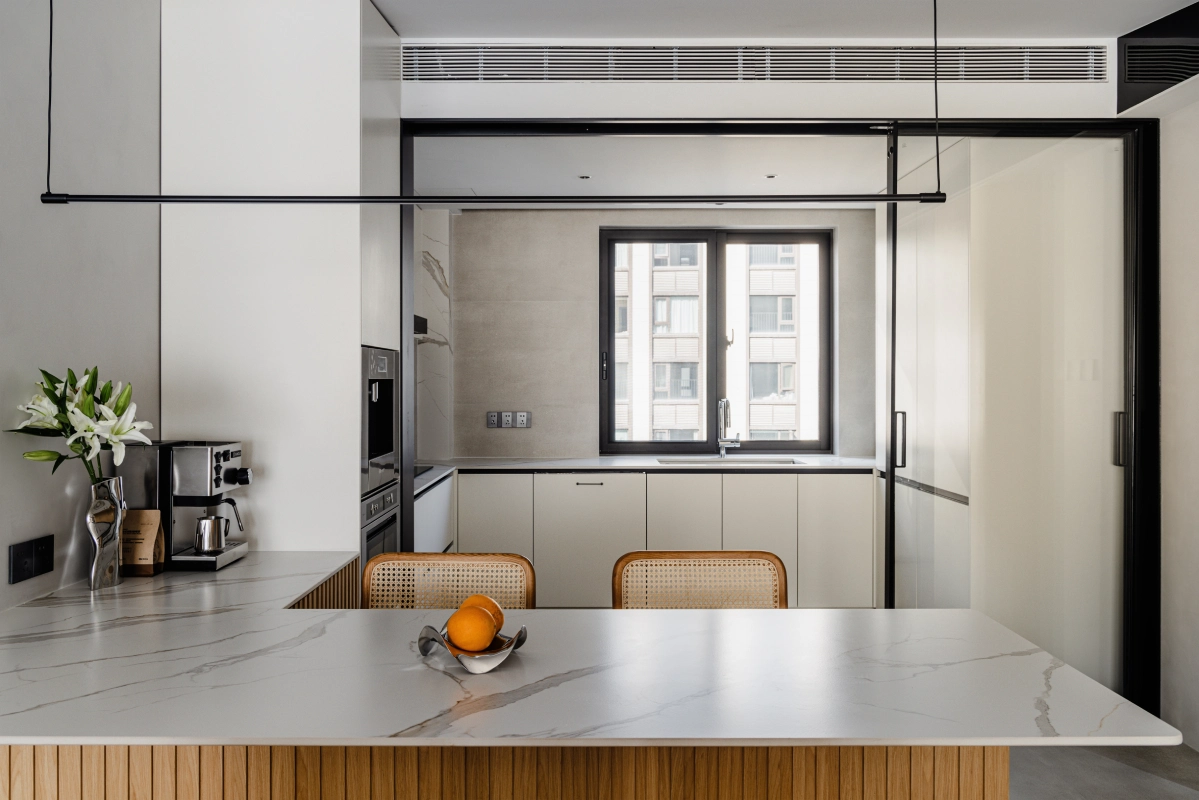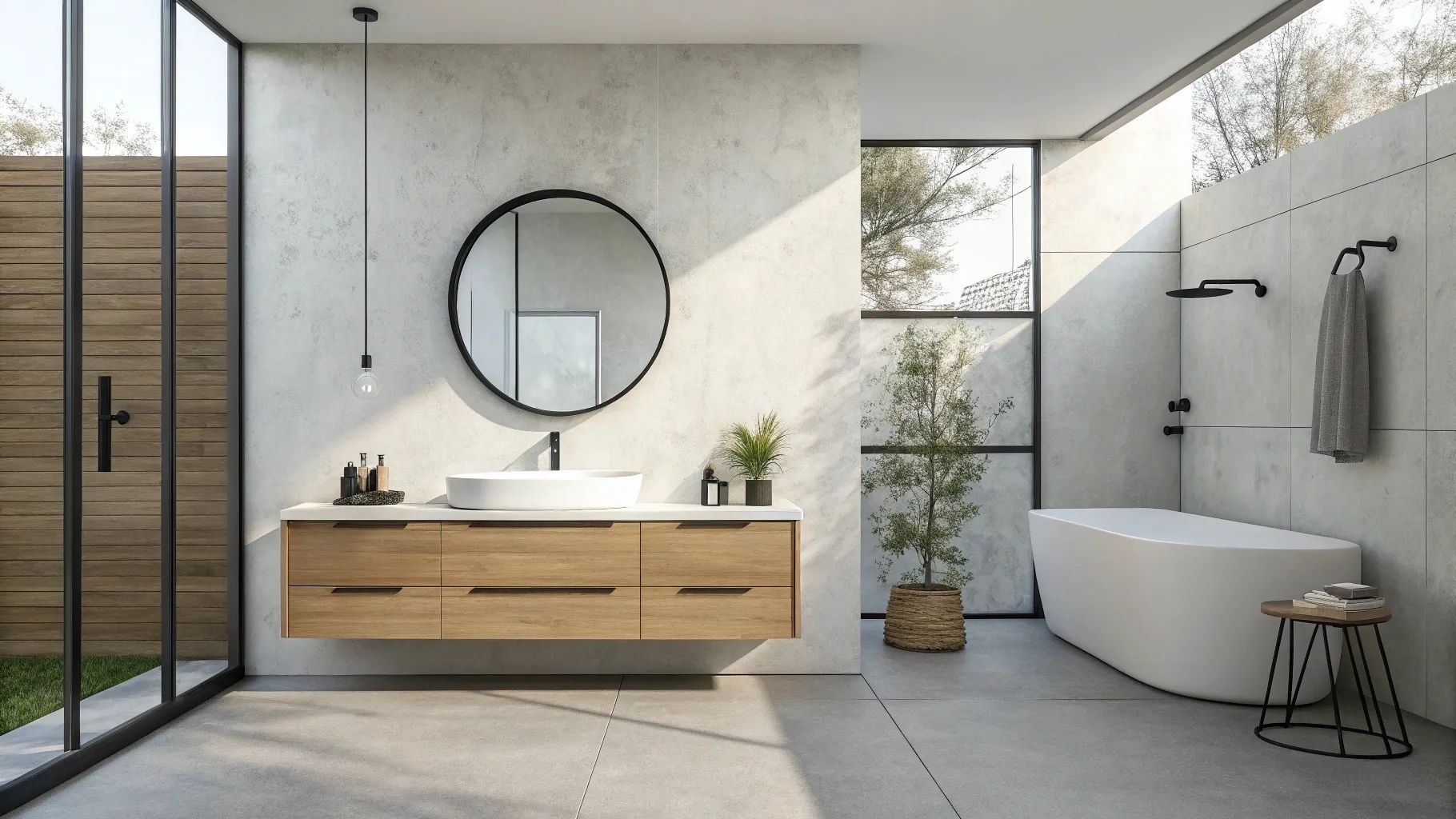

Ordering custom bathroom vanity tops without checking the right specs is one of the most costly mistakes in any hotel or apartment project. One wrong measurement can delay your entire renovation.
Before ordering custom bathroom vanity tops with sinks, confirm size, thickness, sink type, faucet hole position, edge profile, and material. These specs control whether the top fits your cabinet, works with your plumbing, and holds up under daily use.
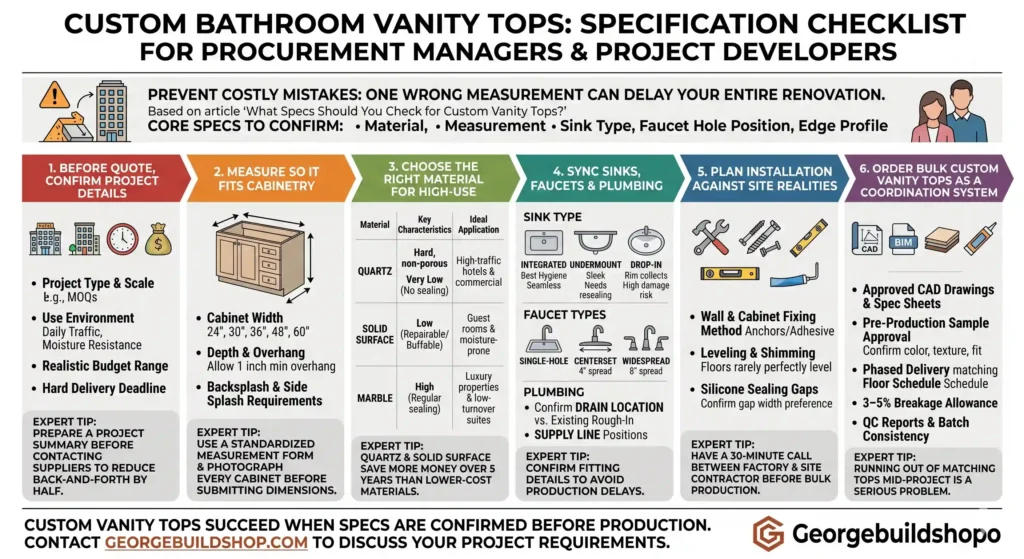
I have worked with procurement teams on projects ranging from single apartments to 200-room hotels. The problems I see most often are not about price or material. They are about missing details at the start. In the sections below, I will walk through every spec you need to confirm — before you ask for a single quote.
Table of Contents
What Specs Should You Confirm Before Requesting a Quote?
Sending a vague inquiry wastes everyone’s time. Without clear project details, a supplier cannot give you an accurate price, lead time, or production plan.
Before requesting a quote, confirm your project type, number of units, use environment, budget range, required delivery date, and whether you need batch-consistent production. These details turn a casual inquiry into a real procurement conversation.
Project Type and Scale
State whether this is a hotel renovation, serviced apartment, or residential project. The number of rooms directly affects pricing, production scheduling, and minimum order quantity.
Use Environment
A hotel bathroom sees much heavier use than a home bathroom. Tell your supplier the expected daily traffic. This affects which material and surface finish they recommend for your custom bathroom vanity tops.
Budget and Lead Time
Give a realistic budget range and a hard delivery deadline. Suppliers need both to recommend the right production path. If your deadline is tight, they may need to adjust material sourcing or factory scheduling.
| Key Category | Information Required | Impact on Production |
|---|---|---|
| Project Type & Scale | Type (Hotel, Serviced Apartment, Residential) and total room count. | Directly dictates pricing tiers, MOQ (Minimum Order Quantity), and factory scheduling. |
| Use Environment | Expected daily traffic/usage intensity (e.g., high-traffic commercial vs. private). | Determines the selection of material durability, moisture resistance, and surface finish. |
| Budget & Lead Time | Realistic budget range and a firm delivery deadline. | Influences material sourcing, manufacturing speed, and priority in the production line. |
When procurement managers skip these details, the first quote rarely matches what they actually need. A clear brief reduces back-and-forth by at least half. I always ask my clients to prepare a one-page project summary before contacting any supplier. It makes the whole process faster and more accurate.
How Do You Measure a Custom Vanity Top So It Actually Fits?
Wrong measurements are the single biggest cause of installation problems. A top that is even 5mm too wide or too short can cause costly delays on a job site.
To measure correctly for custom size bathroom vanity tops, record the cabinet width, depth, and height. Also check backsplash height, side splash requirements, and overhang. Measure the existing top if one is in place — bathroom vanities have no universal standard size.
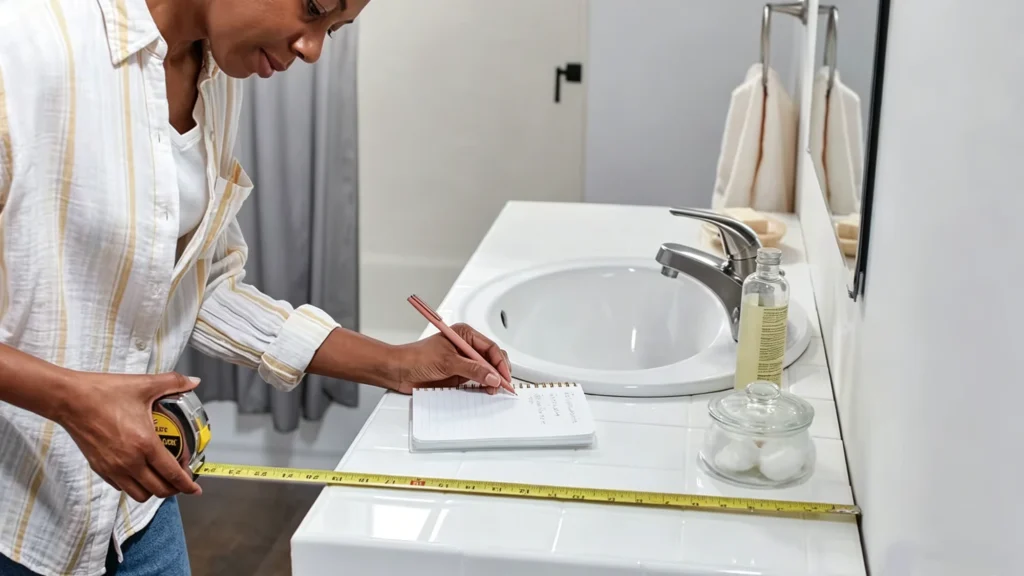
Cabinet Width
Standard cabinet widths are commonly 24, 30, 36, 48, and 60 inches. Your top should overhang the cabinet slightly — typically by about 1 inch on exposed sides. Always confirm this with your installer.
Depth and Overhang
Depth is often overlooked. If the cabinet has no existing top, add at least 1 inch to the cabinet depth to allow a front overhang. This prevents water from running directly onto cabinet doors.
Backsplash and Side Splash
Confirm whether a backsplash is required and its height. Also check if a side splash is needed where the top meets a wall. These details affect both material usage and installation fit for custom cut bathroom vanity tops.
| Feature | Standard Specifications | Key Functional Requirement |
|---|---|---|
| Cabinet Width | 24", 30", 36", 48", 60" | Allow for a 1-inch overhang on all exposed sides. |
| Depth & Overhang | Cabinet Depth + 1 inch (min) | Creates a drip edge to prevent water from damaging cabinet doors. |
| Splash Guards | Backsplash & Side Splash | Protects walls from moisture; height must be confirmed for material calculation. |
Measurement errors multiply fast in bulk projects. If one room is measured wrong and nobody catches it before production, you may receive 50 identical tops that all need adjustment on site. I recommend having your site team use a standardized measurement form and photograph every cabinet before submitting dimensions to the factory.
Case Snapshot: The 150-Room Precision Challenge
Pain: A Dubai resort project faced a 15mm plumbing offset across 150 rooms due to wall inconsistency.
Solution: George Bathroom provided on-site CAD mapping and custom laser-cut backsplashes to hide site gaps.
Result: 100% fit rate upon first delivery, saving 12 days of on-site cutting and labor.
Which Material Is Best for Hotel and Apartment Projects?
Not every material performs the same in high-use environments. Choosing by appearance alone leads to expensive maintenance problems later.
For hotel and apartment projects, the best custom vanity top materials are quartz and solid surface. Both are nonporous, easy to clean, stain-resistant, and low maintenance — key requirements for high-turnover environments.
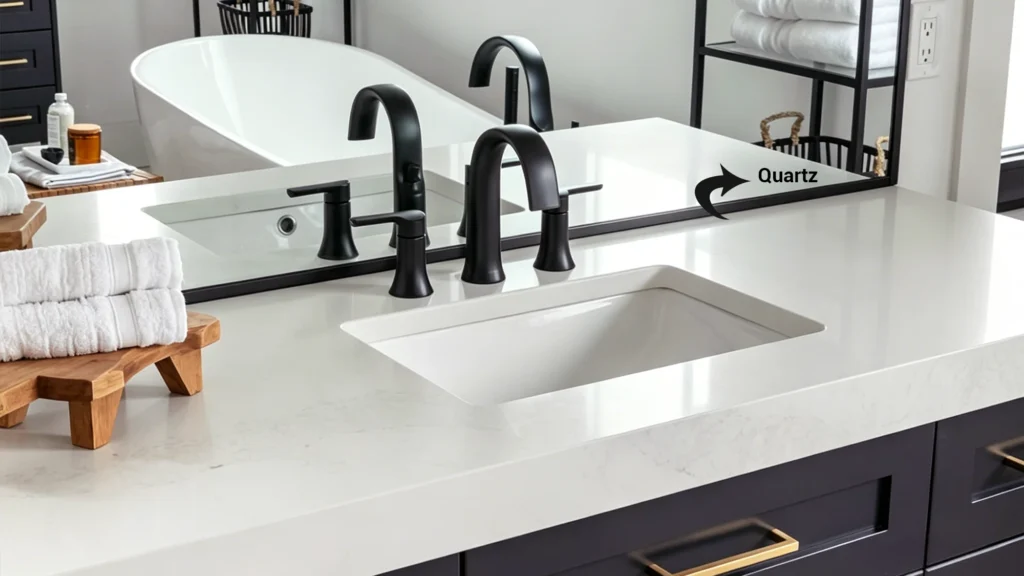
Custom Quartz Bathroom Vanity Tops
Quartz is hard, nonporous, and resists staining and scratches. It requires almost no sealing and holds its appearance well under daily cleaning with commercial products. It is one of the most popular choices for hotel projects.
Custom Corian Bathroom Vanity Tops
Corian and similar solid surfaces are nonporous and seamless. They reduce moisture buildup in joints, which lowers the risk of mold growth. Minor surface scratches can be buffed out, which extends the product’s useful life in guest rooms.
Custom Marble Bathroom Vanity Tops
Marble is visually premium but requires more maintenance. It is porous and can stain if not sealed regularly. I only recommend marble for luxury properties with dedicated housekeeping resources and lower room turnover rates.
| Material | Key Characteristics | Maintenance Level | Best For |
|---|---|---|---|
| Quartz | Hard, non-porous, scratch/stain resistant. | Very Low (No sealing) | High-traffic hotels & commercial use. |
| Solid Surface (Corian) | Seamless, non-porous, mold-resistant. | Low (Repairable/Buffable) | Guest rooms & moisture-prone areas. |
| Marble | High-end aesthetic, premium visual. | High (Regular sealing) | Luxury properties & low-turnover suites. |
The real cost of a material is not just the unit price. It includes cleaning time, resealing frequency, replacement rate, and guest complaints. In my experience, quartz and solid surface save more money over a 5-year period than lower-cost materials that require frequent repair or early replacement.
Should You Choose an Integrated Sink, Undermount Sink, or Separate Sink?
The sink type changes everything — cleaning time, installation complexity, and how the surface holds up over years of use.
For hotel and high-turnover projects, an integrated sink is the best choice. It creates one continuous surface with no seams or edges, which reduces dirt buildup, speeds up daily cleaning, and eliminates the risk of water seeping under the sink rim.
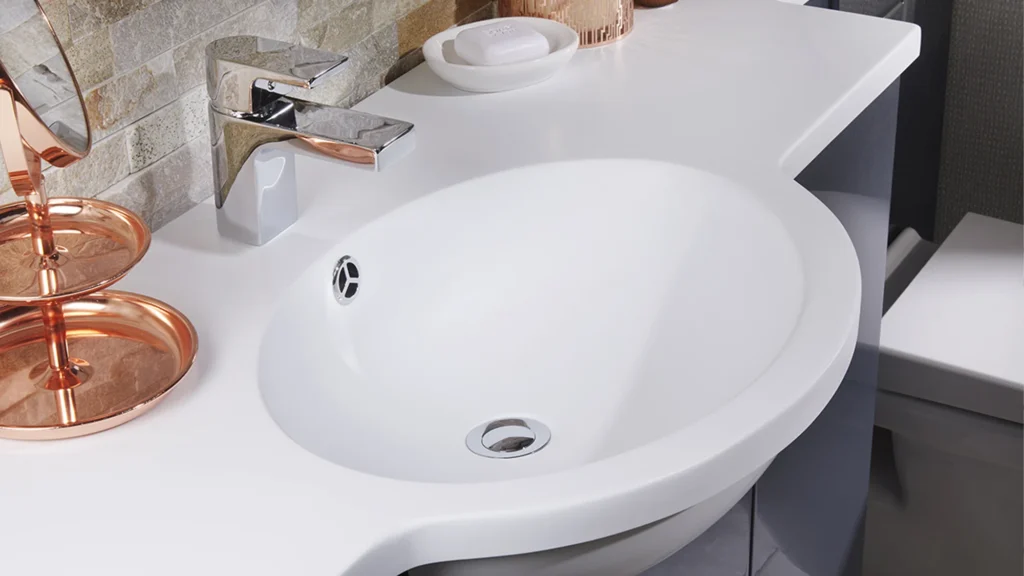
Integrated Sink
An integrated sink is formed as one piece with the custom bathroom vanity tops with sinks. There are no joints between the basin and the countertop. This is the easiest surface to wipe clean and the most hygienic option for shared or commercial bathrooms.
Undermount Sink
An undermount sink is mounted below the countertop surface. The edge where the sink meets the top can collect grime over time if not sealed properly. It looks clean but requires more maintenance attention than an integrated design.
Separate Drop-In Sink
A drop-in sink sits on top of the counter with a visible rim. This rim collects water and soap residue. For hotel environments, this creates extra cleaning work and a higher risk of water damage around the rim over time.
| Sink Type | Construction | Hygiene & Maintenance | Ideal Application |
|---|---|---|---|
| Integrated | One-piece (seamless) | Highest. No joints; easiest to wipe clean. | High-traffic & commercial bathrooms. |
| Undermount | Mounted below counter | Moderate. Sleek look; needs periodic resealing. | Modern residential & upscale suites. |
| Drop-In | Rim sits on counter | Lowest. Rim collects soap/water; high damage risk. | Budget residential or low-use areas. |
Sink choice also affects your faucet hole position and drain location. If you change sink type mid-project, you may need to revise the top template entirely. I have seen projects delayed by two weeks simply because the sink model was changed after production templates were already approved.
What Faucet Hole and Plumbing Details Must Be Checked?
A faucet hole drilled in the wrong position requires rework on site. That rework costs time and money — especially when it repeats across 80 guest rooms.
Before production, confirm whether your faucet requires a single hole, centerset, or widespread configuration. Also verify the hole diameter and center-to-center distance. Many custom vanity tops come with pre-drilled holes, so changing the faucet style later adds significant labor cost.
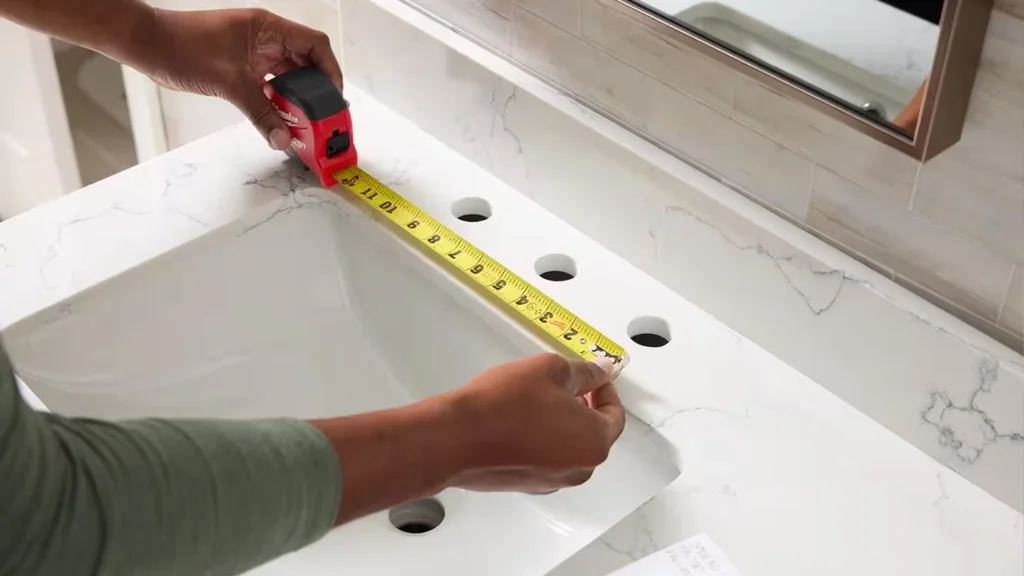
Single-Hole Faucet
A single-hole faucet needs one hole, typically 35–38mm in diameter. It is simple, clean, and works well for small to medium vanity tops in standard hotel rooms.
Centerset Faucet
A centerset faucet uses two handles on a shared base. The standard spread is 4 inches center-to-center. Confirm this with your faucet supplier before finalizing the template for your custom bathroom vanity tops.
Widespread Faucet
A widespread faucet has three separate holes — typically 8 inches apart. This configuration requires careful template planning. Any misalignment between the top and the faucet makes installation very difficult.
| Faucet Type | Hole Requirement | Standard Spacing | Best Application |
|---|---|---|---|
| Single-Hole | 1 Hole (35–38mm) | N/A | Modern designs & standard hotel rooms. |
| Centerset | 3 Holes (Shared base) | 4" center-to-center | Traditional styles & space-saving units. |
| Widespread | 3 Separate Holes | 8" center-to-center | Luxury properties & high-end suites. |
Plumbing coordination is often left until the last stage of a renovation. That is a mistake. If the drain location on your template does not match the existing drain rough-in position on site, the whole top may need to be repositioned or re-cut. Confirm drain center distance and supply line positions before you submit any production drawings.
What Installation Details Should You Confirm Before Production?
A vanity top that cannot be installed smoothly wastes the time of every contractor on site. Production specs and installation realities must match from the beginning.
Before production, confirm wall fixing method, leveling requirements, backsplash attachment, silicone sealing gaps, and whether the top will interfere with supply or drain lines. These details must be checked against actual site conditions, not just drawings.
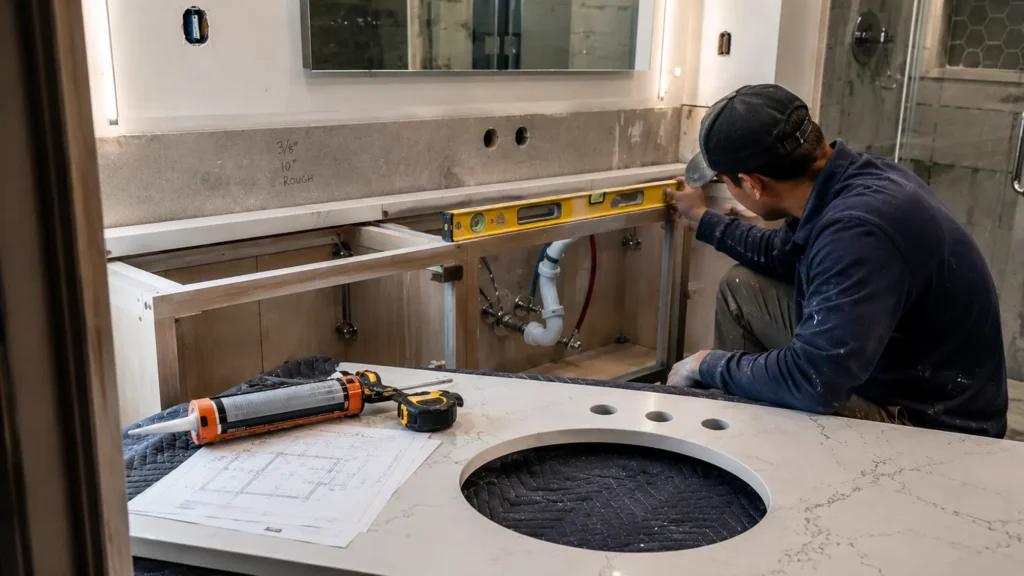
Wall and Cabinet Fixing
Confirm whether the top will be fixed to the wall, glued to the cabinet, or both. Some installations use mechanical anchors; others rely on construction adhesive. Each method affects how the top must be finished at the edges and back.
Leveling and Shimming
Hotel bathroom floors and walls are rarely perfectly level. Your production team should know the acceptable tolerance and whether shims will be used. A top that is even slightly uneven will affect how water drains across the surface.
Silicone Sealing
All joints between the top, wall, and sink must be sealed with silicone. Confirm the gap width your installer prefers so the factory can plan the edge finish accordingly. Allow enough time for silicone to cure before the room is used.
I always tell procurement managers: the factory makes the product, but the installer puts it in place. If these two teams never communicate, problems happen on site. Before bulk production starts, I recommend a short call between your factory contact and your site contractor. Thirty minutes of alignment can prevent three days of rework.
How Should Hotels, Resorts, and Apartments Buy in Bulk?
Bulk orders for vanity tops are not just large quantities of the same item. They are coordinated production and delivery systems that must run on schedule across an entire property.
For hotel and apartment bulk orders, confirm unified specs, batch color consistency, CAD drawing approval, pre-production samples, delivery phasing, breakage allowance, and on-site installation support before placing any order.

CAD Drawings and Spec Sheets
Request CAD drawings and spec sheets for every top variation in your project. If you are using BIM for the renovation, ask your supplier whether they can provide compatible files. Approved drawings reduce production errors and give you a clear record if disputes arise.
Pre-Production Sample Approval
Always approve a physical sample before bulk production begins. This confirms color, texture, edge profile, sink cutout accuracy, and surface finish. For custom marble bathroom vanity tops or custom quartz bathroom vanity tops, color variation between material batches is a real risk that only a sample can catch.
Phased Delivery and Breakage Allowance
Plan delivery in phases that match your renovation floor schedule. Also order a 3–5% breakage allowance to cover handling damage and on-site installation losses. Running out of matching tops mid-project is a serious problem when the material batch is no longer available.
QC Reports and Batch Consistency
Ask for a QC report with each production batch. This should document material source, surface measurements, and visual inspection results. For large hotel projects, consistent finishes across every guest room protect the property’s brand image.
| Installation Factor | Standard Methods / Requirements | Operational Impact |
|---|---|---|
| Fixing Method | Mechanical anchors and/or construction adhesive. | Ensures structural stability and dictates edge finishing. |
| Leveling | Use of shims to compensate for uneven floors/walls. | Prevents water from pooling and ensures correct drainage. |
| Sealing | Silicone application at all joints (top, wall, sink). | Prevents moisture penetration and mold growth. |
A single measurement error in a home project means one bad installation. In a 150-room hotel, the same error repeated across every floor means 150 problems. The procurement process for bulk custom bathroom vanity tops must be treated as a production coordination system, not just a purchasing transaction. The suppliers who understand this are the ones worth working with long-term.
Conclusion
Custom vanity tops succeed when specs, materials, measurements, and installation details are confirmed before production — not after. Contact us at georgebuildshop.com to discuss your project requirements.
Transform Your Project with a One-Stop Bathroom Partner
Why coordinate with five different suppliers when you can get complete bathroom space design, custom vanity tops, and premium sanitary ware from one source? At George Buildings, we specialize in delivering consistency for hotels and resorts worldwide.
Ready to start your precision-built bathroom project? Fill out the form below to connect with our expert team.