The right bathtub size for hotels is a procurement and cost-risk decision—not just a design preference. It significantly reduces installation risk, protects project timelines, and controls long-term operating costs. Allowing design choice alone to drive the final size decision instead of risk management is a dangerous mistake that can ruin your budget.
For hotel procurement teams, bathtub size is a cost-risk decision—not a design preference. The right size minimizes installation risk, controls long-term operating costs (water, cleaning), and protects project timelines. The focus should be on standardization and feasibility for the specific room type, not just luxury.
In my ten years in the sanitary ware field, working on international projects, I have seen small bathtub size changes cause massive project delays. I use my industry expertise to stop these size mistakes before they start.
Table of Contents
Is There a “Standard” Bathtub Size for Hotels?
Do you believe there is a single, magical dimension that all hotel projects can use to simplify their sourcing? Relying on a simple, universal standard bathtub size for your hotel project can lead to problems when you try to install it in different room types later on.
There is no single standard bathtub size for hotels. Each room type requires a size optimized for installation feasibility and operational cost. Choosing the right size ensures minimal project risk and smooth procurement.
When my client, Sarah, was building a new chain of mid-range business hotels, she initially chose a typical bathtub size 1700mm(approximately 67 inches) popular in residential projects. This decision created two major cost headaches for her procurement team.
- Installation Risk: The 67-inch 1700-mm tub was slightly too long for the standard room bathroom footprint. This meant installers had to spend extra time and money chipping into the finished walls to make the tub fit, compromising the waterproofing seal.
- Operational Cost: The larger bathtub size also meant higher water consumption per guest, which significantly increased the hotel’s long-term utility bills in a high-cost region.
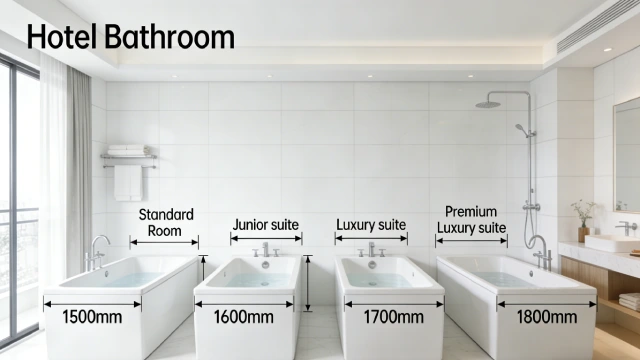
My advice was to standardize on a compact 1500mm or 1600mm(approximately 59–63 inches) tub for most of the standard rooms. This smaller standard bathtub size cut the installation risk to near zero and immediately reduced the water bill. We reserved the larger 1700mm(approximately 67 inches) size only for the top-tier suites. This strategic sizing minimizes the Total Cost of Ownership (TCO), a crucial distinction that separates successful procurement from risky, design-driven sourcing.
Recommended Bathtub Size by Hotel Room Type
Standard / Business Rooms
Junior Suites
Luxury Suites
Source: The Spruce – Standard Bathtub Sizes Guide
MingSun Group – Hotel Bathroom Dimensions & Fixture Placement Guide
Why Bathtub Size Becomes a Cost & Risk Issue in Hotel Projects?
Are you treating bathtub size as a simple line item on a spreadsheet? This thinking is flawed because a bathtub is a large, fixed fixture whose size creates ripple effects of risk that cost you money and time.
Bathtub size decisions directly impact installation compatibility, structural load capacity, waterproofing complexity, and international logistics risk. These are all critical concerns for procurement teams because errors here lead to project delays, costly damage claims, and long-term maintenance liabilities.
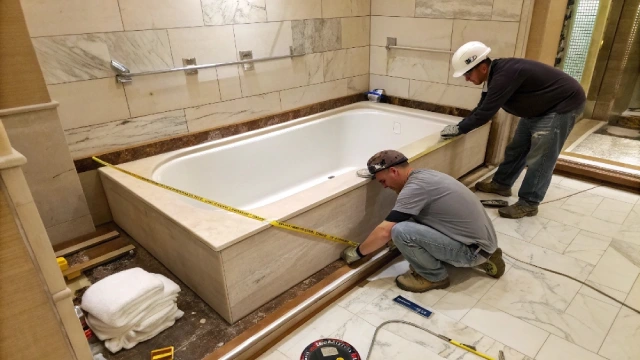
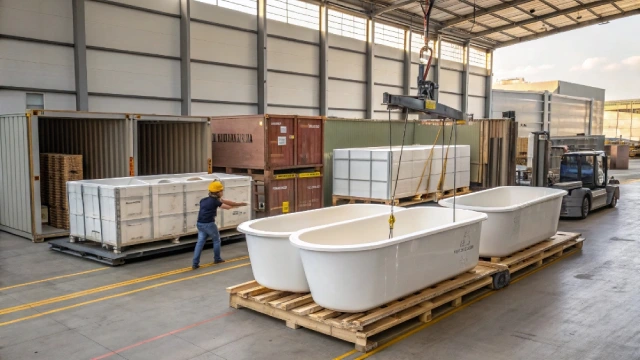
I once consulted with a client in Dubai who sourced an unusually large, irregularly shaped tub for a new luxury resort. The high hotel bathtub size caused three major non-design problems we had to fix. The large size meant we could fit fewer units into each shipping container, which greatly increased the freight cost per tub. Also, the unusual dimensions made the tubs very heavy and difficult to maneuver through the narrow service corridors of the hotel. This struggle led to several tubs being dropped or damaged, causing schedule delays and replacement costs. The bathtub size was the core problem. Furthermore, procurement must check the slab deflection tolerance for a large tub filled with water. A 400-liter tub adds 400 kg of static load to the floor. This structural load is critical for procurement teams to review with the engineering team to prevent floor cracking and long-term maintenance issues.
Bathtub Size–Related Risks & Procurement Controls
Installation Time
Structural Load
Waterproofing Integrity
What Are the Key Pain Points When Selecting Bathtub Size in International Hotel Projects?
The procurement team must be the final gatekeeper for size because we understand the international supply chain and the total project cost consequences better than anyone else.
Pain Point 1: Assuming One Size Fits All Room Types
Do you believe using only one standard bathtub size simplifies your project logistics perfectly? While standardization is good, assuming one size works for every room type ignores the fact that a guest in a standard room has different expectations than a guest in a penthouse suite.
Standardization by room type simplifies procurement, logistics, and on-site coordination, which greatly reduces risk. However, trying to use a large, expensive suite-sized tub in a small, standard room only increases cost and complexity without justifying the expense.
Pain Point 2: Designing by Nominal Dimensions, Not Installable Dimensions
Are you trusting the typical bathtub size dimensions listed in a supplier’s catalog without checking the actual dimensions for installation? The nominal size is a marketing number. The actual size, including the lip, the flange, and the waste pipe connection, is the number that matters on site.
Procurement decisions must ensure the true installable dimensions match the project’s specifications exactly to prevent costly rework. The flange width and the actual exterior wall-to-wall size must be checked because a 10mm mismatch can halt installation for an entire floor.
Pain Point 3: Oversizing for “Luxury” Without Considering Usage Frequency
Are you selecting the largest bathtub size possible just to convey a sense of luxury to your guests? The perceived benefit of a huge tub is small compared to the very large increase in your hotel’s long-term operating expenses.
Oversized bathtubs rarely increase guest satisfaction enough to justify the cost but consistently increase cleaning time, water usage, and maintenance cost. This is a major procurement concern that directly impacts the hotel’s long-term profitability and TCO.
Pain Point 4: Ignoring Structural Load and Floor Constraints
Are you authorizing the purchase of very large tubs without checking with the structural engineer first? A filled bathtub is a significant static load. The floor system must be designed to support this weight safely.
Procurement teams must consider structural load implications for larger, heavier tubs to avoid long-term floor maintenance and liability costs. The risk of slab deflection or cracking is real, and the purchase decision for any large bathtub size must be signed off by the engineering team.
Pain Point 5: Forgetting Replacement & Renovation Feasibility
Does your current hotel bathtub size allow for easy replacement during a future renovation cycle? If the tub is too big to fit through the finished bathroom door frame, replacing it means major demolition and extended room downtime.
Bathtub size decisions must account for future replacement feasibility to avoid extended room downtime and renovation cost spikes. A standard size that fits through a standard door frame will save weeks of costly labor during the hotel’s next major refurbishment.
Pain Point 6: Underestimating Logistics & Damage Risk in Overseas Supply
Are you sourcing an oddly shaped or extremely long bathtub from an overseas factory? Large, non-standard shapes increase the risk of damage during shipping and handling many times over.
Oversized or non-standard tubs increase shipping and handling risks because they take up space inefficiently in the container and are harder to secure. Procurement must mitigate this risk by preferring standard rectangular shapes that maximize container fill and minimize movement.
How Should Hotels Determine the Recommended Bathtub Size by Room Type?
Choosing the right hotel bathtub size is a function of expected guest usage and project feasibility. The wrong size increases project risk and future operating cost.
Before breaking down recommended bathtub sizes by room type, it’s important to note that size selection should always be aligned with material choice, installation method, and long-term performance expectations.
These factors are explained in detail in our commercial bathtub selection framework, which outlines how size decisions interact with durability, installation risk, and lifecycle cost.
Bathtub Size Strategy by Hotel Room Type
Standard / Business Rooms
Deluxe / Junior Suites
Executive / Luxury Suites
Standard / Business Hotel Rooms
For a standard room where the guest may only use the tub occasionally, I recommend a length of 1500mm to 1600mm(approximately 59–63 inches). This typical bathtub size saves water and simplifies the on-site installation within a typically smaller bathroom footprint. This is the most cost-effective decision for mass procurement.
Deluxe Rooms & Junior Suites
In these rooms, a slightly larger tub, perhaps 1700mm(approximately 67 inches), meets the expectation for more comfort. This standard bathtub size is still widely available from most suppliers and fits safely in most container types, keeping logistics cost and risk low.
Executive Suites & Luxury Rooms
For the highest-tier rooms, you can go up to 1800mm or choose a deep soaking tub. The key here is to confirm the structural load with the engineer before ordering and ensure there is ample maintenance access behind the skirt or panel due to the complexity of the larger size.
Source: Forbes Home – Standard Bathtub Size Guide
Resort Hotels
In a resort, the experience of a soak is important. Instead of maximizing length, consider maximizing depth within a typical bathtub size 1700mm(approximately 67 inches) footprint. This provides a luxury feel without the high cost and high risk of a super-long tub and complex installation.
Serviced Apartments & Long-Stay Hotels
For long-stay properties, guests prioritize easy cleaning. A standard, easy-to-clean enamel or acrylic tub in the 1600mm(approximately 63 inches) range is best. This standard bathtub size avoids the high cost of cleaning a massive tub that is used every day.
What Practical Checklist Should Be Followed Before Finalizing Bathtub Size?
You must use this checklist before you sign the final purchase order. It ensures the hotel bathtub size decision is sound from a procurement and risk perspective.
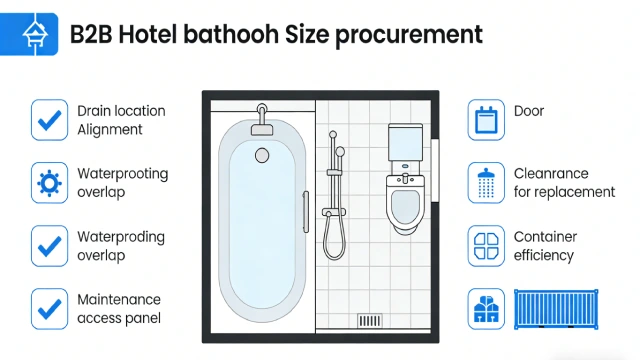
- Drain location confirmed:Does the tub drain location match the floor slab and pipe layout?
- Waterproofing detail reviewed:Does the bathtub size leave enough lip-to-wall coverage for secure waterproofing?
- Maintenance access ensured:Is there a removable access panel for the drain and plumbing connections?
- Replacement feasibility evaluated:Does the standard bathtub size fit through the finished bathroom door and corridor?
- Logistics constraints assessed:Does the size maximize container load efficiency and minimize overseas shipping damage risk?
How Bathtub Size Impacts Long-Term Cost, Not Just Design?
The bathtub size directly affects total cost of ownership (TCO) for the next ten years. A larger tub increases the water and energy needed to fill it, increases the cleaning time for housekeeping staff, and drastically increases the cost and time needed for future replacement. Procurement must choose the size that offers the best balance of guest satisfaction and minimal long-term operational impact.
Conclusion
The best hotel bathtub size for international projects is the one that can be procured reliably, installed repeatedly with minimal on-site cutting, and replaced easily during renovation—all without causing disruption to hotel operations. Partnering with our team ensures expert procurement guidance, minimizing risk and maximizing long-term cost efficiency for your hotel projects.
FAQ
Q: What is the most common bathtub size used in standard hotel rooms?
A: For standard and business hotel rooms, the most common bathtub size is 1500–1600 mm(approximately 59–63 inches) in length. This size fits most modular bathroom layouts, minimizes installation risk, and reduces water and cleaning costs, making it the safest choice for large-scale hotel procurement.
Q: Is there a universal standard bathtub size for all hotel projects?
A: No. There is no single standard bathtub size that works for all hotel room types. Bathtub size should be standardized by room category, not across the entire property. Using one size for every room often increases installation difficulty, operational cost, and future replacement risk.
Q: Does a larger bathtub size significantly improve guest satisfaction?
A: In most cases, larger bathtub sizes do not proportionally increase guest satisfaction. While oversized tubs may look luxurious, studies and operational data show that they are rarely used more frequently than standard tubs, but they consistently increase water usage, cleaning time, and maintenance costs.
Q: Why is bathtub size considered a procurement risk issue, not a design decision?
A: Bathtub size affects installation compatibility, structural load, waterproofing details, logistics efficiency, and long-term replacement feasibility. Errors in size selection can cause project delays, damage claims, and costly rework, which is why procurement teams—not design teams alone—must control the final decision.
Q: How does bathtub size affect future renovation and replacement?
A: If a hotel bathtub size is too large to pass through standard bathroom doors or service corridors, future replacement may require wall demolition and extended room downtime. Choosing a standard, replaceable bathtub size significantly reduces renovation cost and operational disruption over the hotel’s lifecycle.
Q: Should procurement teams verify bathtub size with engineers?
A: Yes. For large or deep bathtubs, procurement must obtain engineering confirmation of slab load capacity. A filled bathtub can add 400 kg or more of static load, and failing to verify this can lead to structural issues and long-term liability.
One-Stop Bathroom Solutions for Commercial Projects
We provide integrated one-stop bathroom solutions for hotel and commercial projects, supporting coordinated specifications and project execution.
▼ Submit the form below to connect with our team and explore project cooperation. ▼