Key Takeaway: In high-rise construction, selecting a hotel bathtub faucet is a structural decision. Wall-mounted faucets are ideal for space efficiency and lower maintenance (OPEX). Freestanding bathtub faucets (or floor mounted bathtub faucet systems) are the luxury standard for standalone tubs but require MEP finalization before the concrete slab pour. Failure to align with professional bathroom faucet suppliers early results in structural coring costs exceeding $2,000 per room.
Hello, I’m Helen. Over the past decade in the sanitary ware industry, I’ve stood on the dusty floors of half-finished hotels from Dubai to New York. As someone who has worked with hotel developers across multiple high-rise projects over the past ten years, I’ve seen project managers lose sleep over a simple hotel bathtub faucet specification error.
In high-rise hotel projects, the choice between wall-mounted and freestanding fixtures is an engineering decision, not just an aesthetic one. Unlike typical bathroom faucet suppliers, George Buildshop operates as both a commercial faucet manufacturer and a technical coordination partner. We bridge the gap between design intent and site execution, ensuring your early MEP alignment and maintenance-first engineering determine your long-term Total Cost of Ownership (TCO).
Table of Contents
When do I need to finalize the bathtub faucet selection in a hotel project?
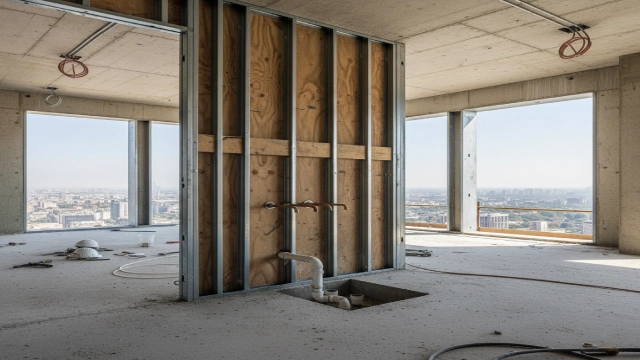
You must finalize the hotel bathtub faucet model during the Construction Documentation (CD) phase. Specifically, floor mounted bathtub faucet specs are required before the concrete slab pour, while wall mounted faucet specs must be locked in before wall-stud framing and waterproofing.
In my ten years of experience, 20% of hotel project delays are caused by “late-spec syndrome.” A commercial faucet is not a decorative finishing touch; it is a fixed MEP component.
Schematic Design (SD): Decide the mounting type (Wall vs. Floor).
Design Development (DD): Lock in flow rates (GPM) to meet LEED or local environmental codes.
Construction Documentation (CD): This is the “Point of No Return.” Once the slab is poured or walls are closed, most hotel bathtub faucet decisions become financially irreversible.
What are the hidden installation risks of freestanding bathtub faucets in high-rise buildings?
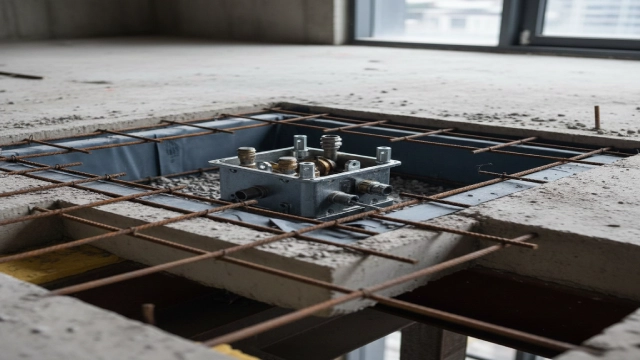
The primary risks of a freestanding bathtub faucet include post-tension cable interference during core drilling and waterproofing membrane failure. If a floor mounted bathtub faucet is not pre-planned, the cost of retrofitting—including X-raying slabs and structural coring—can add significant unplanned expenses to the budget.
When you install a freestanding bathtub faucet in a high-rise, you are boring into the structural heart of the building. I once consulted on a 5-star project where the rough-in boxes were off-center by just 2 inches. Because the slab was already poured, they couldn’t move the pipes without hitting rebar.
As experienced international bathroom faucet suppliers for high-rise hotels, George Buildshop mitigates these risks with our Universal Rough-in Box System. This system allows for 360-degree leveling after the slab is set and features an integrated flashing sleeve that bonds with your waterproofing layer, preventing the #1 cause of hotel insurance claims: sub-floor leaks.
How does the choice of faucet impact the hotel’s long-term maintenance costs (OPEX)?
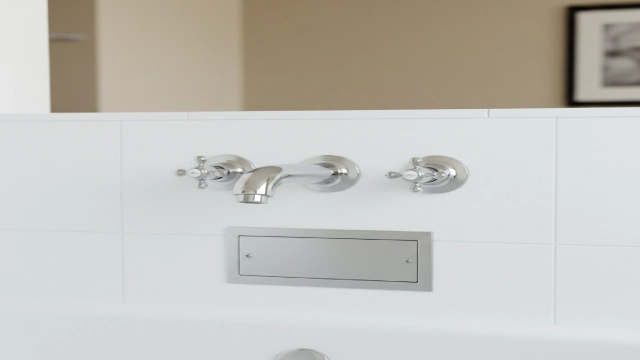
Wall mounted faucets generally offer lower OPEX because they allow for front-access maintenance without disturbing floor finishes. However, the long-term cost for any commercial faucet is dictated by the cartridge cycle life; high-traffic hotels should require fixtures that exceed 500,000 cycles (ASME A112.18.1 standards).
From my experience working with hotel owners and project managers over the past decade, many bathroom faucet suppliers focus on finishes while ignoring rough-in accuracy and service access. A room out of inventory is lost revenue.
Serviceability: A George Buildshop wall-mounted hotel bathtub faucet allows a technician to swap a ceramic cartridge in 15 minutes by removing the faceplate.
Durability: Our floor mounted bathtub faucet models use Lead-Free Brass and Grade 304 Stainless Steel. We don’t use plastic internals. Why? Because a plastic nut cracking on the 40th floor can cause a $100,000 flood.
Which style delivers a better ROI for luxury guest experiences?
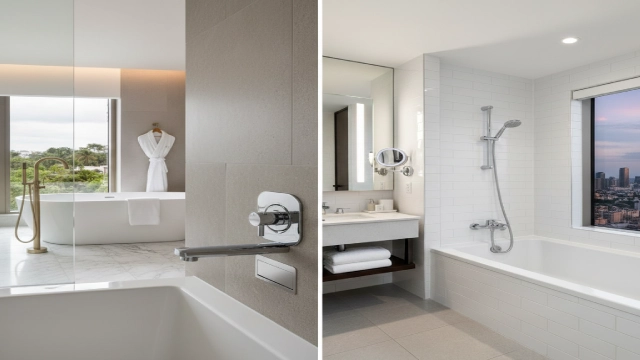
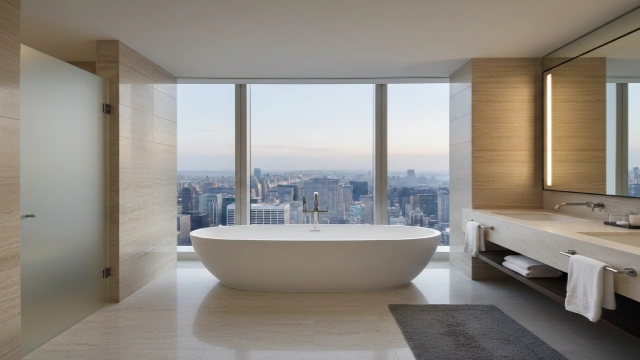
A freestanding bathtub faucet, often specified as a floor mounted bathtub faucet in hotel drawings, provides a higher ROI for signature suites by justifying a higher Average Daily Rate (ADR) through visual “wow factor.” Conversely, a wall mounted faucet delivers better ROI in high-density urban hotels by reclaiming 4–6 square feet of floor space per bathroom.
Market research indicates that 95% of guests equate bathroom quality with overall hotel brand value.
The Freestanding Impact: It is a sculptural element. If your brand is about “Modern Luxury,” a floor mounted bathtub faucet paired with a stone tub is your “Instagrammable” moment.
The Wall-Mounted Efficiency: In urban high-rises where every square inch is worth $1,000, a wall mounted faucet keeps the floor clear, making the bathroom feel larger and allowing for faster housekeeping turnover.
Can I install a freestanding bathtub faucet on an existing concrete slab?
Yes—but it is a complex engineering compromise. Installing a floor-mounted bathtub faucet on an existing concrete slab typically requires either core drilling the slab (often involving structural scanning) or constructing a raised plumbing plinth. In high-rise renovation projects, the plinth approach is generally the lower-risk option, though it requires secondary waterproofing and reduces the room’s effective ceiling height.
In renovation projects, some of the most challenging discussions arise during so-called “luxury upgrades.” When a hotel refresh proposes replacing a standard bathtub with a freestanding centerpiece, the hotel bathtub faucet often becomes the primary technical bottleneck—long before aesthetics or brand positioning are resolved.
If you are facing an existing-slab condition, experienced commercial teams typically evaluate two viable paths:
The Structural Route:
Core drilling may appear straightforward, but high-rise slabs commonly contain post-tension cables. Without precise scanning and engineering approval, a single misstep can compromise structural integrity and halt the project.
The Architectural Route:
A raised, waterproofed design plinth allows space for commercial-grade faucet supply and drainage without penetrating the structural slab. While this approach introduces coordination challenges—such as detailing, waterproofing continuity, and ceiling height impact—it avoids irreversible structural risk.
In practice, capable bathroom faucet suppliers should not simply flag these retrofits as “impossible.” They should be able to support the project with appropriate extension components, coordinated shop drawings, and clear installation parameters. If a retrofit is under consideration, final design approval should not proceed until slab thickness and routing constraints are verified—once finishes are installed, correcting a drainage or routing error can become a costly post-installation issue.
Conclusion: Which Bathtub Faucet Choice Actually Works in High-Rise Hotels?
In my ten years at George Buildshop, I’ve learned that the difference between a successful hotel opening and a delayed disaster is the Technical Specification. Whether you choose the sleek efficiency of a wall mounted faucet or the bold statement of a freestanding bathtub faucet, your choice must be backed by MEP reality.
Unlike typical bathroom faucet suppliers, we don’t just ship boxes; we engineer solutions. Every hotel bathtub faucet system we provide is a commitment to your building’s longevity and your guests’ satisfaction.
Are you facing a design deadline or a tricky MEP coordination? Would you like me to perform a free Pre-Construction Bathtub Faucet Risk Review based on your SD or DD drawings? Let’s ensure your commercial faucet choice is a pillar of your project’s success, not a liability.
In the end, whether a wall-mounted or freestanding faucet is chosen without a system-level perspective, these installation decisions can contribute to the broader patterns that explain why bathtub faucet decisions fail in hotel projects.
Useful References & Industry Standards
We support hotel and commercial projects with integrated solutions that reduce specification gaps and coordination risks.
▼ Contact us via the form below to evaluate your project and collaborate. ▼