
Hotel bathroom renovations often stall when comparing sliding shower doors vs hinged configurations for busy guestrooms. Choosing between frameless sliding shower doors and a frameless hinged shower door requires balancing daily maintenance, guest comfort, and physical space limits.
Neither door type works best for every hotel property. Sliding doors save floor space in tight layouts with zero swing radius, while hinged doors offer wider entry clearance and simpler cleaning paths. The right decision balances room geometry, long-term maintenance costs, and total guest safety.
In my years of working with hotel bathroom projects, I see many buyers make quick decisions based solely on catalog photos. Looking closely at real operating systems and project drawings prevents costly mistakes across hundreds of operational hotel rooms.
How Do Sliding and Hinged Shower Doors Really Differ?
Broken rollers, misaligned tracks, and leaking hinges cause severe guest dissatisfaction and unexpected maintenance costs. Choosing hardware without understanding mechanical differences leads to constant guestroom repairs and costly premature replacements.
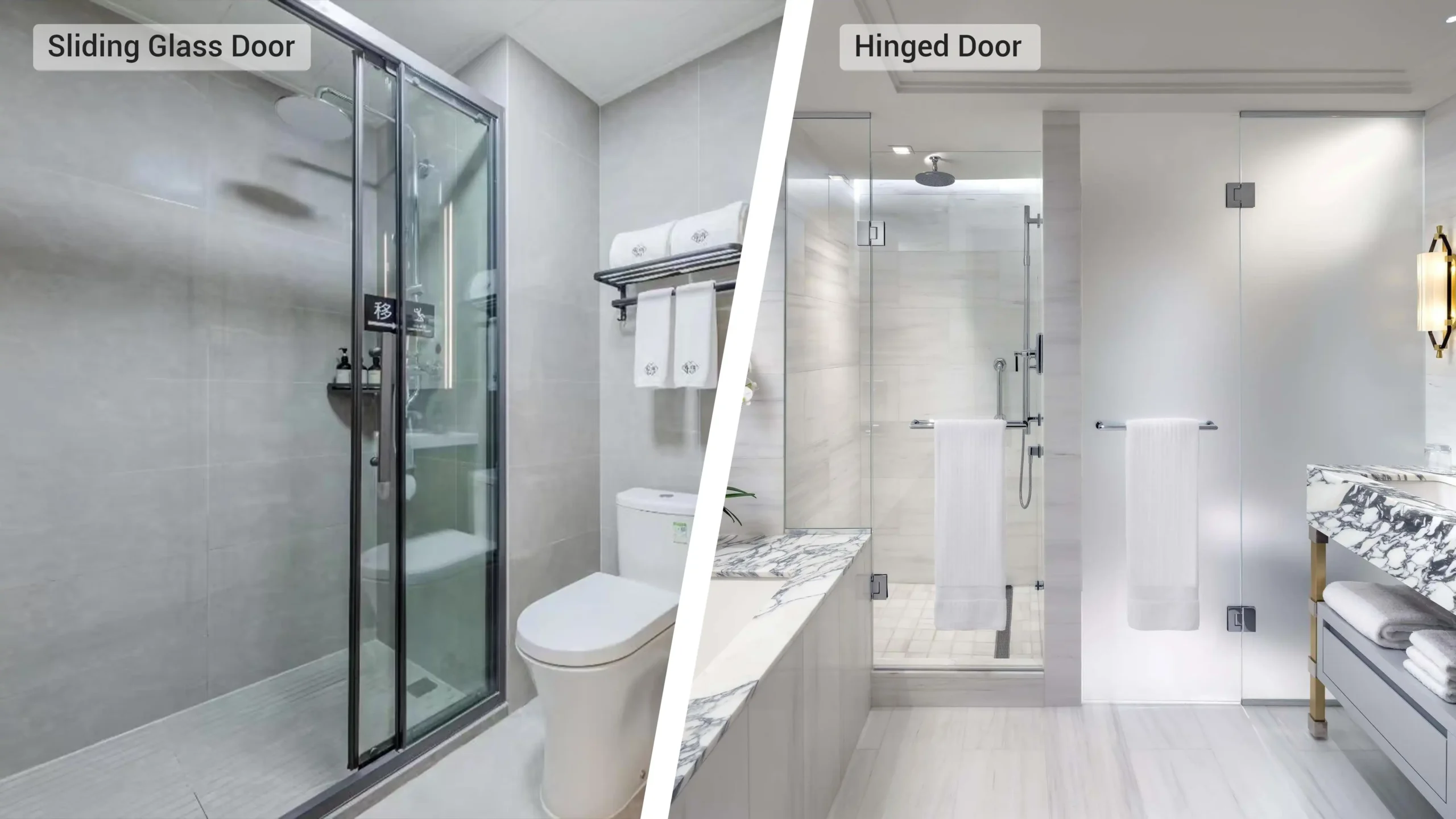
Sliding doors operate horizontally on overhead rails and bottom guides, which saves bathroom floor space. Hinged doors pivot outward or inward on wall or glass mounts, which provides a wider walk-in entry. Mechanical complexity and cleaning access differ significantly between the two systems.
Sliding Door Operating System
Sliding systems use upper tracks, rolling wheels, bottom guides, and glass stoppers to move overlapping glass panels. These mechanical parts allow smooth horizontal movement in tight spaces. However, the extra moving components create more friction points that require routine alignment and track cleaning.
Hinged Door Operating System
Hinged shower systems rely on wall-to-glass or glass-to-glass pivot hinges paired with vinyl water seals. They swing on a fixed axis and have fewer rolling parts. Durability depends entirely on hinge load capacity, glass panel weight, and wall structural anchoring.
Frameless Sliding vs Frameless Hinged
Frameless design is an aesthetic structural choice, while sliding versus hinged is an operational mechanism choice. Frameless sliding shower doors use exposed stainless steel top rollers, whereas a frameless hinged shower door uses minimal wall clamps. Both require heavy tempered glass and precise field leveling.
Many buyers assume hinged doors always outlast sliding models because they have fewer moving components. In reality, heavy glass panels put continuous rotational torque on wall anchors. High-grade slider rollers with stainless bearings often perform just as reliably when installation tolerances remain tight and properly leveled.
Which Door Works Better for a Hotel Bathroom Layout?
Poor shower door planning causes doors to crash into toilets, vanities, and entry passages. These spatial layout conflicts frustrate hotel guests, crack expensive glass panels, and trigger emergency room repair calls.
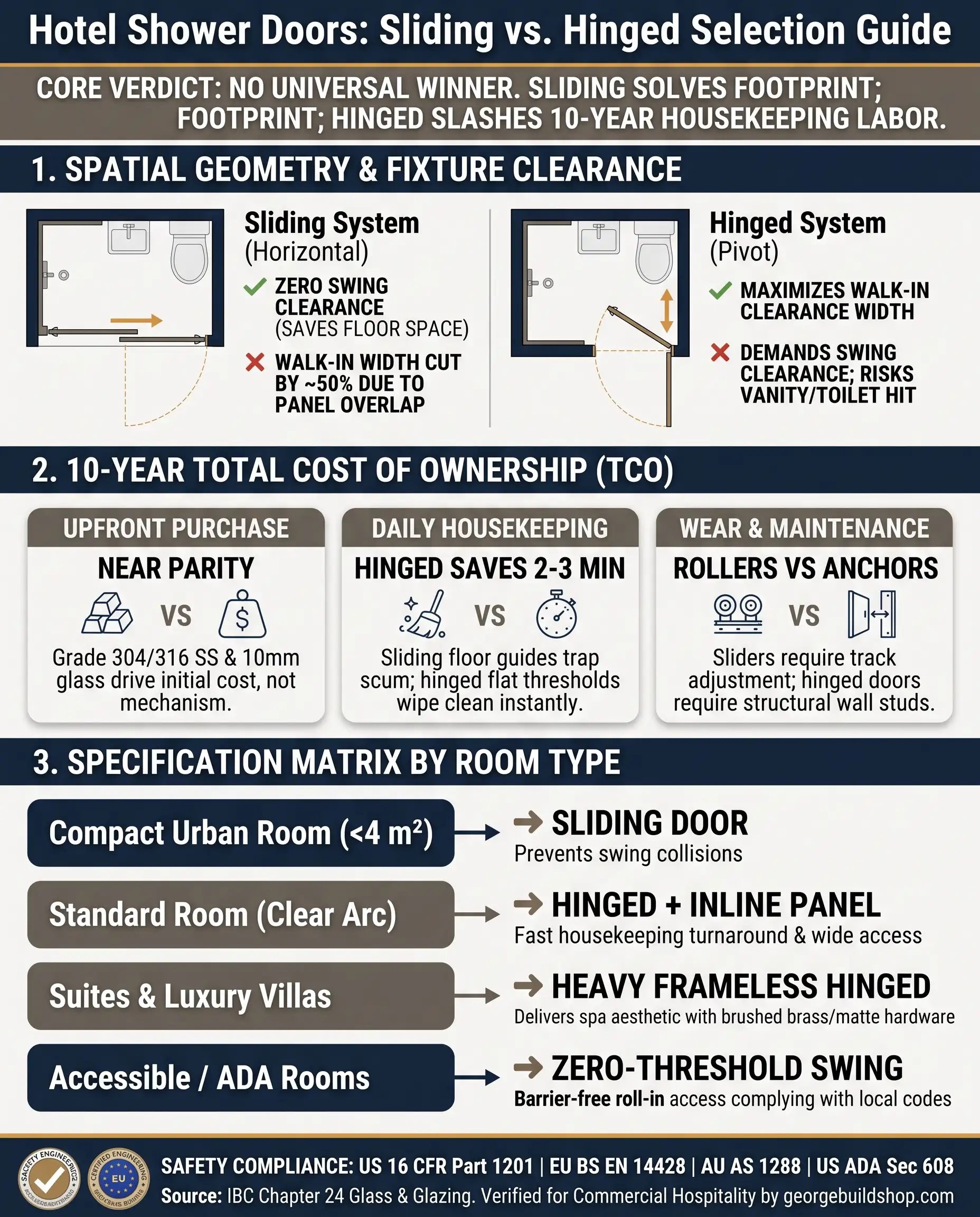
Sliding doors perform better in tight bathrooms because they require zero exterior swing clearance. Hinged doors work best in spacious layouts where clear swing paths exist. Evaluating toilet locations, vanity clearances, and shower valve access determines the correct layout choice.
Swing Clearance and Fixture Conflicts
Hinged doors require an unobstructed clear arc to open safely without hitting bathroom fixtures. Installers must verify clearance against the vanity edge, toilet bowl, towel bars, and main entrance door. Sliding panels eliminate these swing collisions completely because glass travels along the shower curb.
Clear Opening vs Nominal Shower Width
A nominal 1200 mm shower opening does not provide 1200 mm of usable walk-in entry width. Sliding doors overlap two glass panels, which cuts the clear entry opening roughly in half. Hinged doors with stationary inline panels offer significantly wider walk-in access for guests.
Shower Controls and Entry Position
Shower valve placement directly influences guest comfort before entering the water stream. Guests should reach mixer valves without stepping into the cold wet zone. Sliding door configurations allow flexible left or right panel opening, while hinged doors must swing away from the showerhead spray pattern.
Compact Hotel Rooms and Walk-In Showers
Walk-in showers in urban hotel rooms often sit in compact alcove spaces between three walls. Sliding doors keep high-traffic circulation clear in standard guestrooms. When bathroom layouts feature generous floor plans and wide openings, hinged systems deliver an open, high-end guest experience.
Room layout decisions should focus on three-dimensional geometry rather than basic bathroom floor area alone. Even a large luxury bathroom can suffer from fixture interference if towel warmers or vanity edges block the swing path. Always review the door travel arc on actual architectural floor plans.
Which Door Costs Less to Own and Maintain in Hotels?
Cheap shower enclosures often become massive operational money pits across multi-room hotel properties. Frequent water leaks, daily housekeeping delays, and broken replacement hardware quickly erase any initial purchasing savings.
Hinged shower doors generally cost less to maintain over a ten-year operational lifespan in hotels. Sliding doors carry similar initial manufacturing costs but require more housekeeping labor to clean bottom tracks. True ownership cost combines purchase price, daily cleaning, and component replacements.
Initial Cost Drivers
Initial purchasing costs depend on glass thickness, hardware material grades, surface finishes, and custom fabrication sizes. Sliding door vs hinged door cost comparisons show minimal variance at the factory level. Project volume and installation complexity impact total upfront capital expenditure far more than door mechanism type.
Housekeeping Workload
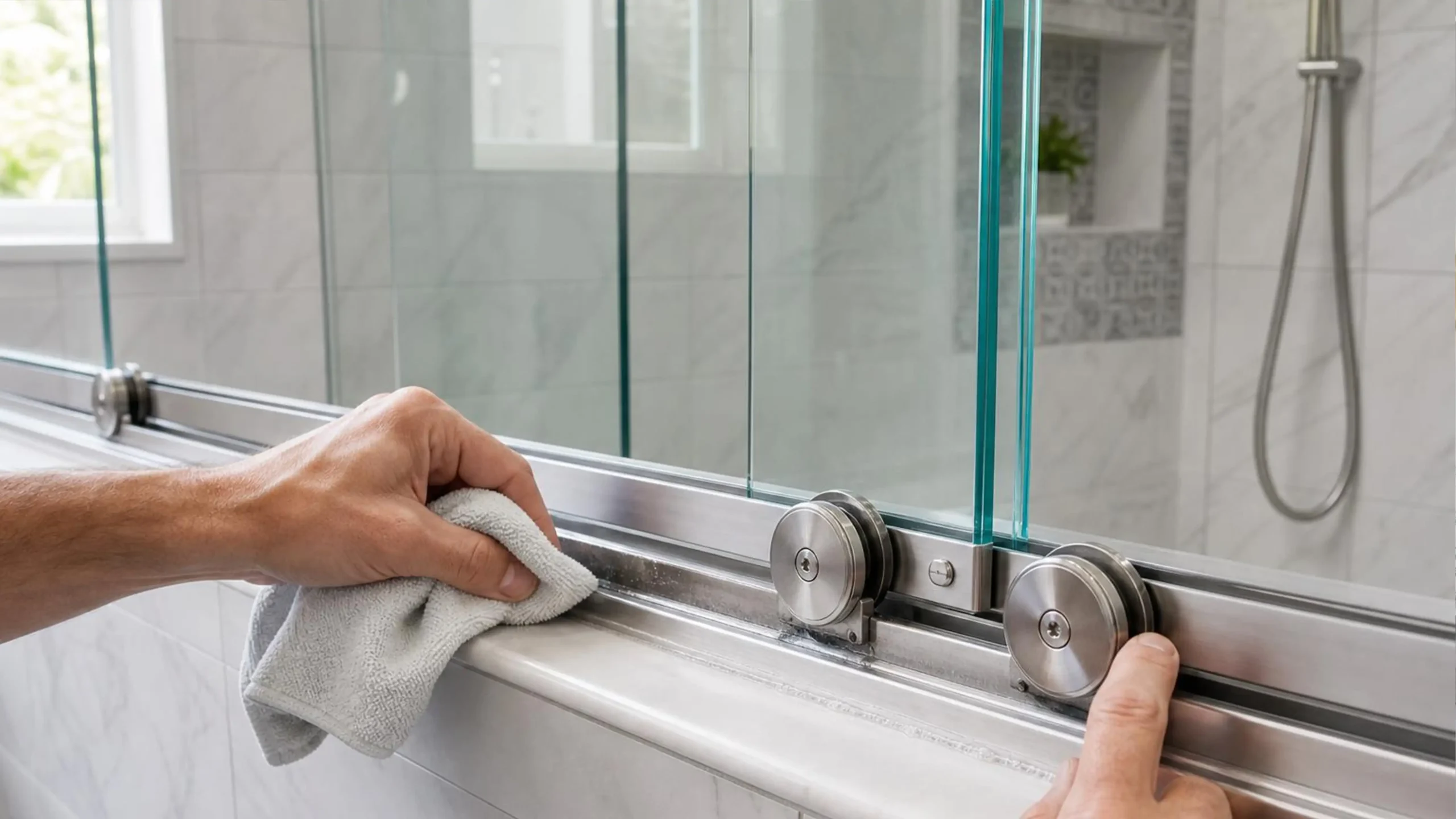
Housekeeping labor represents a major hidden cost across hundreds of operational hotel rooms. Sliding doors have overlapping glass and floor guide tracks that collect soap scum and moisture. Hinged doors feature flat bottom thresholds that housekeeping staff can wipe down in seconds.
Rollers, Hinges, and Wear Parts
Hardware wear parts dictate long-term durability in high-turnover hospitality environments. Sliding systems depend on internal roller bearings, bump stops, and bottom guide blocks. Hinged doors utilize brass pivots and clamping plates, which suffer less wear if properly rated for glass panel weights.
Water Containment and Guest Complaints
Escaped shower water damages guestroom baseboards, wets dry bathroom zones, and generates immediate guest complaints. Outward-swinging hinged doors often drip water onto bathroom floors during exit. Sliding doors contain spray effectively inside the stall curb, provided magnetic seals and bottom sweeps remain aligned.
Spare Parts and Room Downtime
Custom hardware failures can take hotel guestrooms out of commercial service for weeks. Procurement teams must verify that rollers, hinges, and bottom seals are standardized for rapid replacement. Choosing doors with accessible spare parts protects daily room revenue and speeds up engineering repairs.
When calculating total cost of ownership, hotel owners must look beyond initial factory invoice prices. A door that saves fifty dollars upfront can generate thousands in housekeeping wages over five years. Investing in marine-grade stainless hardware and cleanable profiles delivers substantial long-term operating savings.
Which Door Should You Choose for Each Hotel Room Type?
Applying one shower door specification across an entire hotel project leads to major operational headaches. Misaligned doors, tight spaces, and accessibility failures disrupt guest stays and complicate renovation schedules.
Match shower door systems to specific guestroom categories rather than forcing a single design across the property. Compact rooms benefit from sliding doors, spacious suites favor hinged glass, and accessible rooms require barrier-free openings. This tailored approach optimizes space, budget, and guest satisfaction.
Compact Standard Guest Rooms
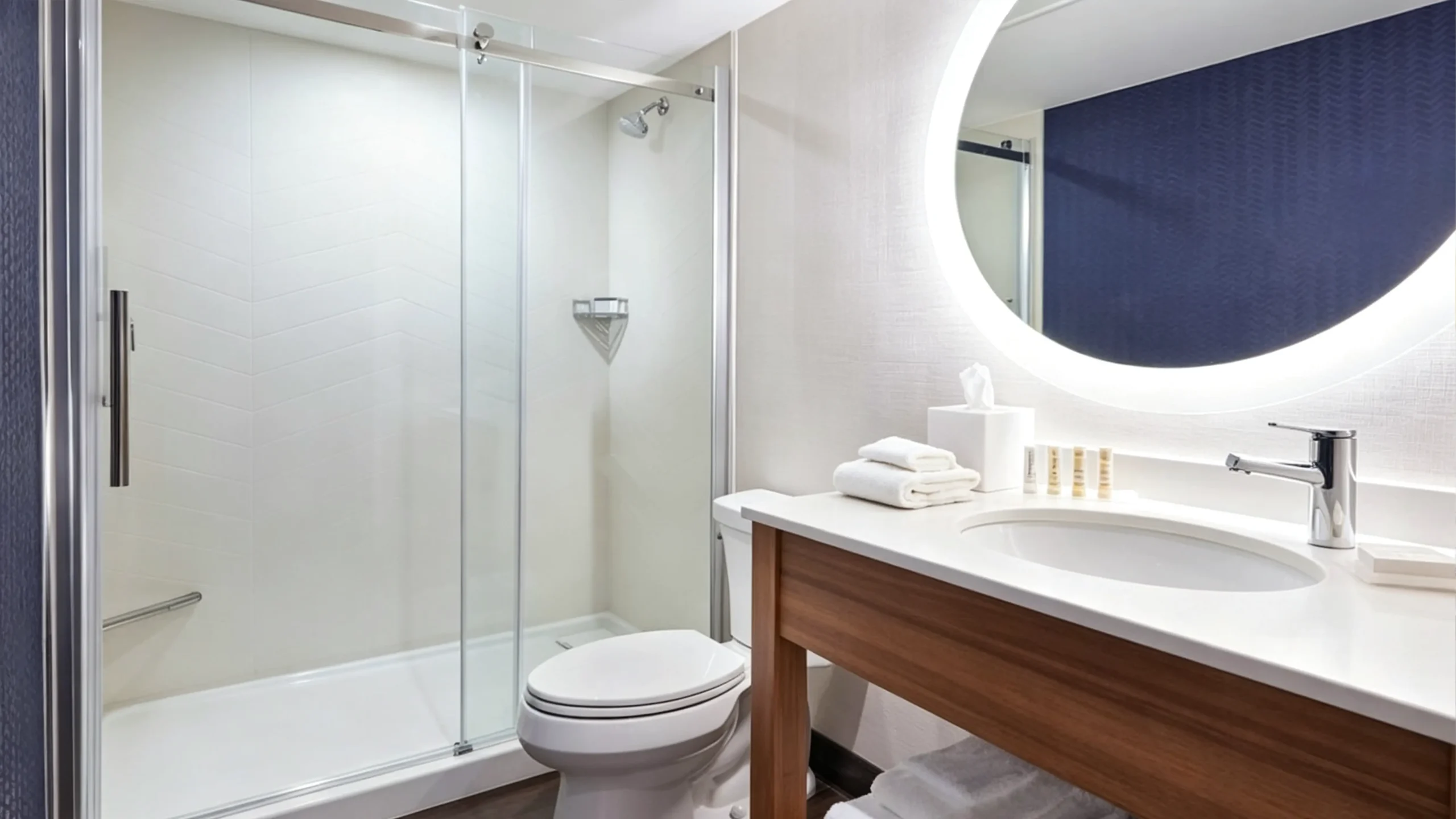
Compact guestrooms require sliding enclosures to maximize usable circulation space around the vanity and toilet. Sliding panels prevent collisions in tight alcove enclosures. However, buyers must ensure the finished shower width provides sufficient clear entry width after factoring in panel overlap dimensions.
Standard Rooms With Clear Swing Space
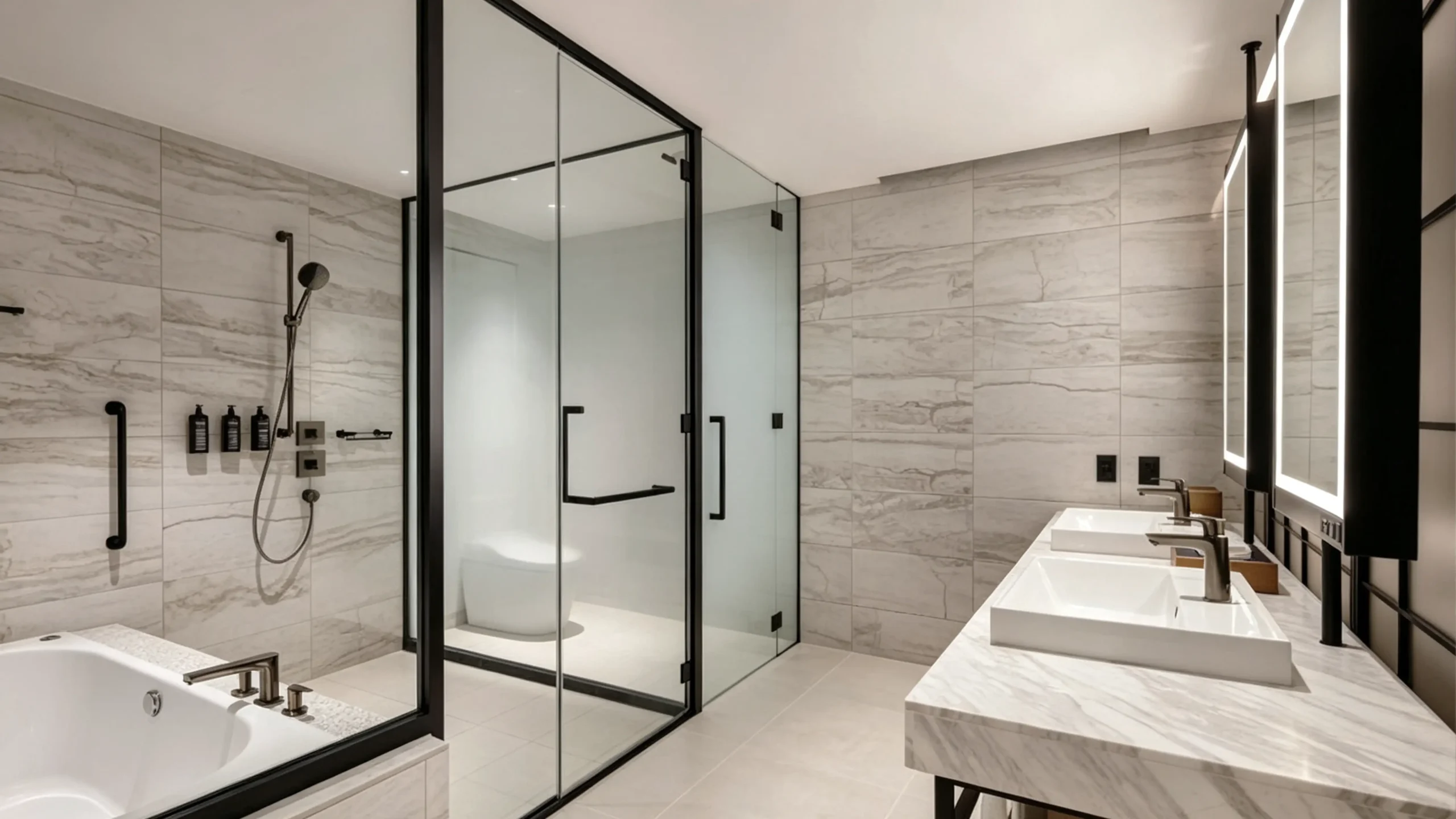
Standard guestrooms with unobstructed floor clearance benefit from hinged doors paired with stationary inline glass panels. This layout eliminates floor tracks, simplifies daily room cleaning, and provides open entry. The layout functions smoothly because the door swings outward without striking adjacent bathroom fixtures.
Suites and Premium Rooms
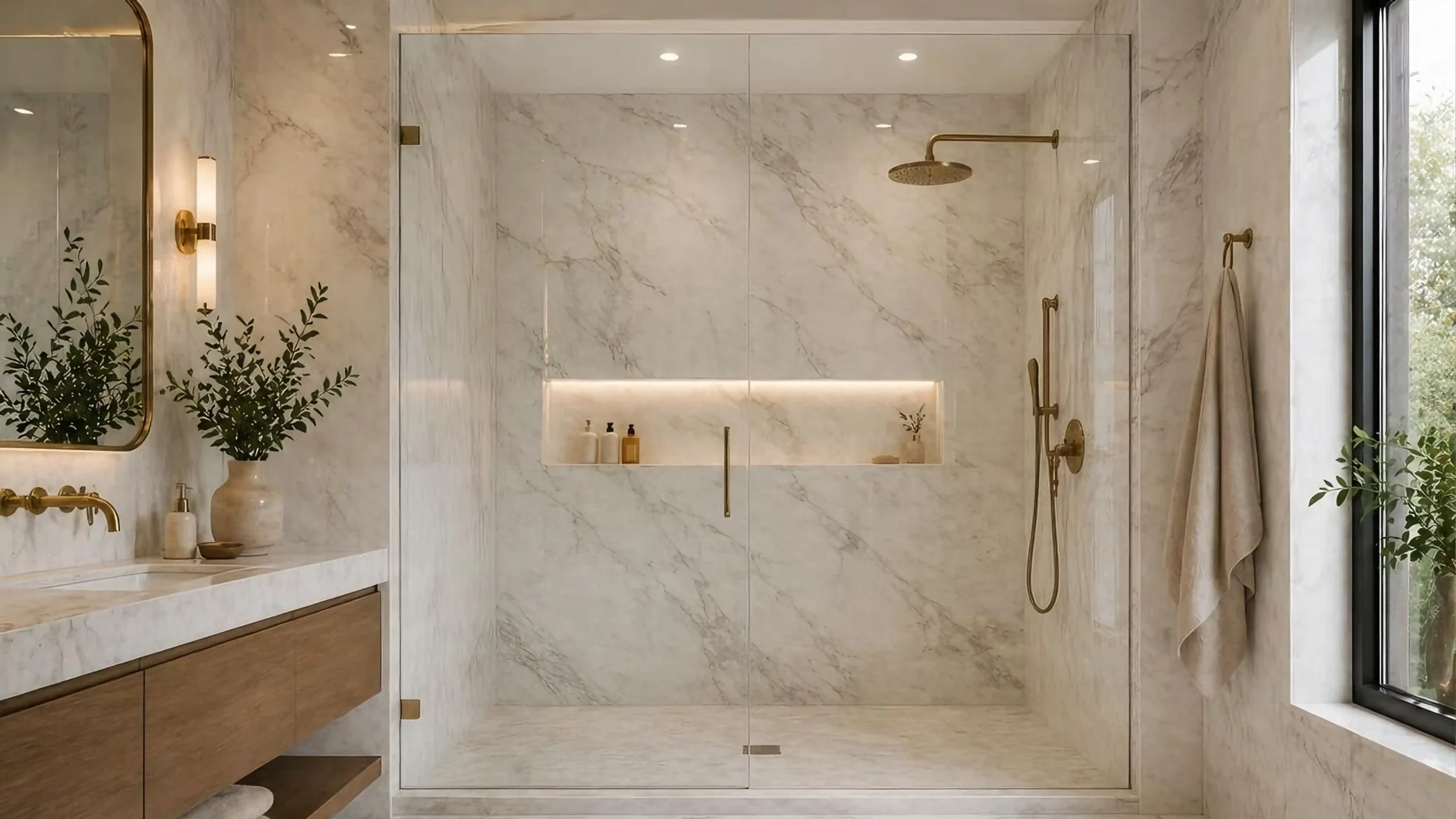
Executive suites and luxury villas prioritize visual elegance and spacious walk-in access. Heavy frameless hinged systems with brushed brass or matte black hardware deliver a premium aesthetic. Large openings accommodate wide glass panels, giving guests a luxurious, spa-like bathing environment during their stay.
Accessible Rooms
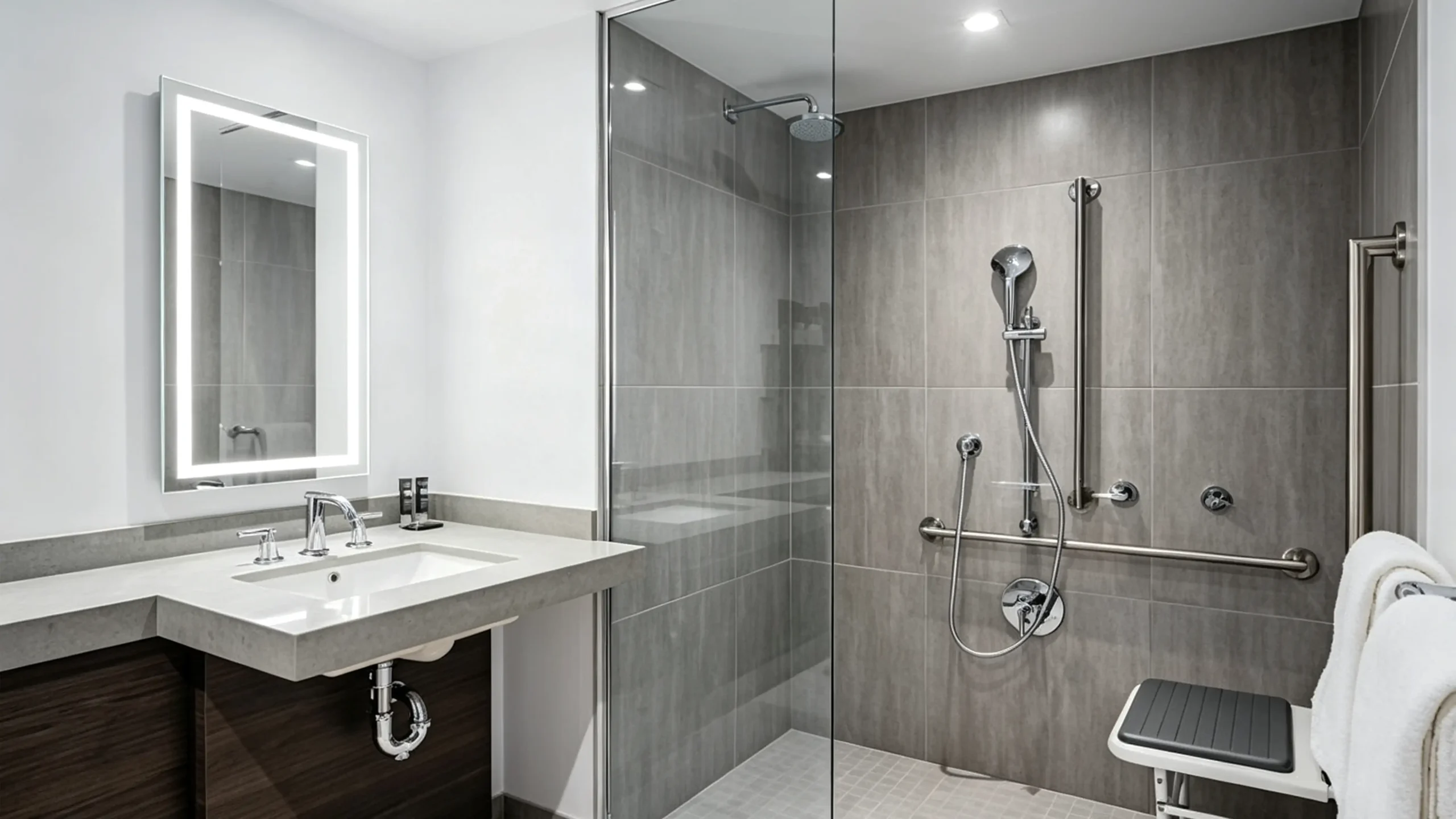
Accessible guestrooms require barrier-free entry thresholds and wide unobstructed openings for wheelchair transfers. Standard sliding or inward-swinging doors often restrict necessary turning radii. Procurement managers should specify specialized zero-threshold doors or wide out-swinging systems that comply with local accessibility guidelines.
Renovation Rooms With Existing Conditions
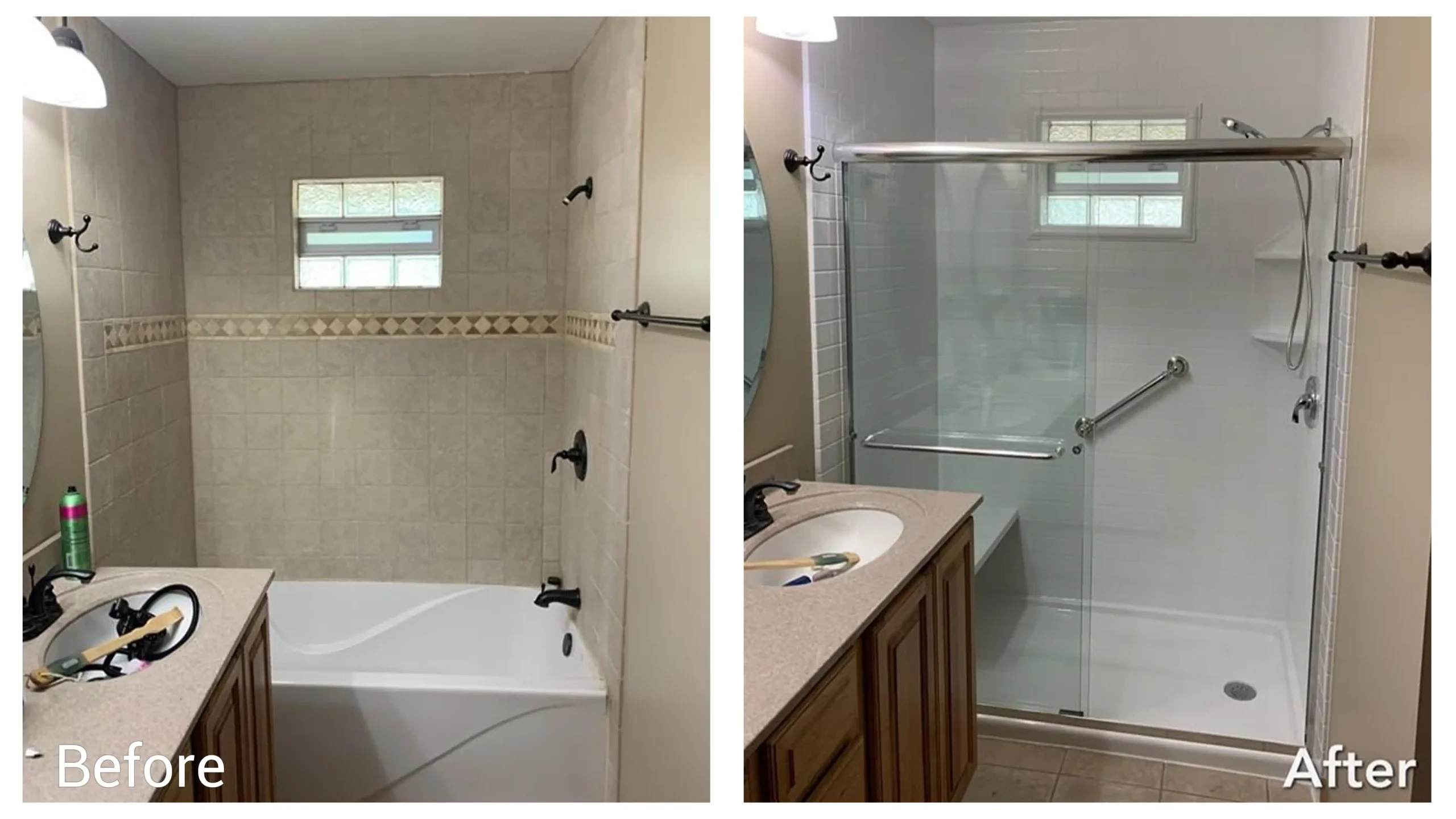
Renovation projects present out-of-plumb walls, uneven tile surfaces, and fixed plumbing locations. Sliding systems with adjustable wall profiles accommodate structural variations across older rooms. Hinged doors require structural wall backing and perfectly vertical surfaces to prevent glass sagging and seal binding.
| Room Condition | Sliding Door | Hinged Door | Main Selection Reason |
|---|---|---|---|
| Tight fixture clearance | Strong candidate | Check carefully | Prevents swing collisions |
| Wide clear entry priority | Check opening loss | Strong candidate | Maximizes walk-in width |
| High housekeeping priority | Check track design | Strong candidate | Eliminates bottom dirt tracks |
| Controls near entrance | Check open side | Check hinge side | Allows dry valve access |
| Accessible room | Separate review | Separate review | Meets barrier-free codes |
| Variable wall openings | Strong candidate | Check wall plumb | Provides installation tolerance |
| Premium luxury suite | Viable option | Strong candidate | Delivers high-end aesthetic |
Standardizing finishes and glass specifications across different room categories creates visual consistency while allowing mechanical flexibility. You can install sliding doors in standard rooms and hinged doors in suites using identical metal finishes. This strategy maintains architectural brand harmony while solving specific spatial constraints in each bathroom.
What Specifications and Codes Should Hotel Buyers Check?
Unverified shower door specifications cause severe regulatory compliance failures, project delays, and dangerous glass shatter risks. Hotel developers face heavy legal liabilities when substandard hardware fails under continuous commercial guest use.
Hotel buyers must verify certified safety glazing, structural hardware load ratings, and destination building codes before placing volume orders. Specifications must clearly define glass thickness, corrosion resistance, adjustment tolerances, and water containment. Proper technical documentation ensures safety and seamless project handover.
Source:
- https://codes.iccsafe.org/content/IBC2018/chapter-24-glass-and-glazing
- https://www.ecfr.gov/current/title-16/chapter-II/subchapter-B/part-1201
Safety Glass Requirements by Market
Commercial shower doors require certified tempered or laminated safety glass tailored to local market building codes. Projects in the United States must comply with 16 CFR Part 1201 standards. European and British projects reference BS EN 14428 specifications, while Australian projects require AS 1288 certification.
Accessible Guest Room Requirements
Accessible guestrooms demand strict adherence to regional accessibility standards such as ADA Section 608 in the United States. Shower enclosures must never obstruct grab bars, mixer controls, or wheelchair transfer paths. Specifiers must verify door threshold heights and clear opening widths for accessible units.
Glass and Hardware Specifications
Detailed specifications protect hotel owners from premature hardware failure and corrosion. Procurement sheets should define 304 or 316 stainless steel hardware, solid brass hinges, and tempered glass thickness. Clear requirements for magnetic vinyl gaskets, bottom sweeps, and structural wall anchors prevent field installation failures.
Required Approval Documents
Procurement teams must collect comprehensive submittal packages from manufacturers before approving bulk production. These packages include detailed shop drawings, glass cut sheets, material test reports, and warranty certificates. Having approved hardware finish samples and spare parts schedules ensures smooth long-term property maintenance.
Approving shower doors for commercial hospitality requires far more rigor than residential purchasing. A single uncertified glass batch can fail building inspections and delay hotel grand openings for months. Always demand third-party testing reports and verified factory shop drawings before confirming production schedules.
Are There Other Common Questions About Hotel Shower Doors?
Conclusion
Selecting the right hotel shower doors requires balancing layout constraints, long-term maintenance costs, and guest safety. Contact our team at georgebuildshop today to review your project drawings and specifications smoothly.
Ready to Specify the Right Shower Doors for Your Project?
Selecting the right hotel shower doors goes far beyond aesthetics—it requires balancing strict layout constraints, code compliance, and long-term durability. Unverified specifications can trigger severe regulatory failures and delay your grand opening.
Submit your project details, floor plans, or architectural drawings below. Our engineering team will review your specifications and provide a comprehensive, risk-free sourcing plan.