In the high-stakes environment of commercial sanitary ware procurement, a recurring pattern emerges during the specification phase. Developers and project leads spend weeks debating faucet curvatures or vanity finishes, yet when the topic of how to clean a jetted whirlpool tub arises, it is frequently sidelined. The prevailing assumption is that hygiene is a “back-of-house” operational detail to be managed by housekeeping post-launch.
This is a fundamental miscalculation.
In commercial environments, the question of how to clean a jetted whirlpool tub is not a cleaning instruction—it is a diagnostic test of whether the system was designed to survive hotel operations. As a project leader, you are not merely purchasing a luxury fixture; you are embedding a complex, concealed circulatory system into the building’s infrastructure. Experience suggests that once these units are tiled into place, the decision becomes irreversible. Ignoring these systemic risks leads to operational and reputational consequences that no amount of industrial jetted tub cleaner can rectify.
For a system-level view of how commercial whirlpool bathtubs succeed or fail in hotel projects—from cost control to specification and risk prevention—see this comprehensive guide for hotels and resorts.
👉 Commercial Whirlpool Bathtubs for Hotels & Resorts: Cost, Specification Risks, and How to Avoid Project Failures
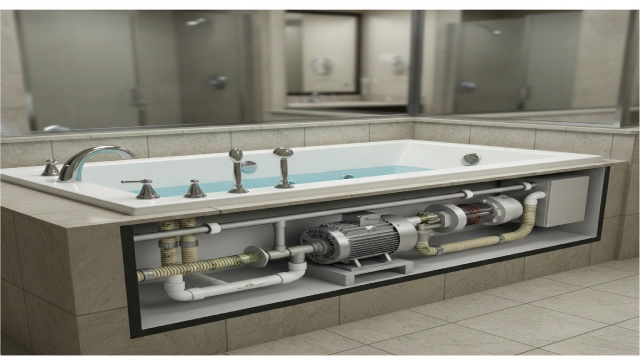
Table of Contents
Why Is Applying Residential Logic to Commercial Jetted Tub Maintenance a Failure of Strategy?
The primary oversight in many procurement plans is the attempt to scale residential maintenance logic into a 300-room commercial resort. In a private residence, the process of how to clean jets on a whirlpool tub is a flexible, low-frequency task. If a homeowner neglects a flush cycle for a month, the risk is contained and personal.
In a hotel, the operational reality shifts:
The Biofilm Compound Effect: A domestic unit may see use twice weekly; a high-occupancy resort unit handles back-to-back bather loads consisting of oils, minerals, and organic debris. Project audits indicate that organic accumulation in commercial internal lines is approximately 12x higher than in residential units within the first six months of operation.
The Labor Window Paradox: Housekeeping teams operate on rigid turnover schedules. If a deep-clean SOP for a jetted tub cleaner takes 45 minutes to execute correctly, yet the room turnover window is only 30 minutes, the internal system maintenance will be bypassed.
Auditability and Liability: Unlike a private home, a hotel must provide an auditable trail of hygiene. When a guest activates the system, the property is legally and reputationally responsible for the microbial quality of the water emerging from those lines.
Applying residential standards to a hotel with jet tub in room is not a cost-saving measure; it is a failure to account for the intensity of commercial use.
What Are the Hidden Variables That Turn Maintenance Into a Systemic Liability?
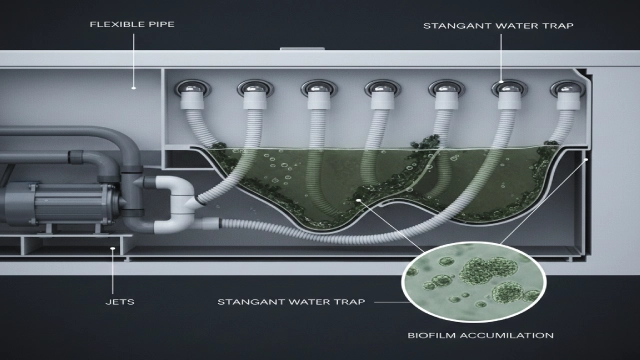
To evaluate a system’s viability, one must look beyond the acrylic shell and into the concealed engineering. If these variables are not addressed during the procurement stage, the project is likely inheriting a long-term deficit.
1. Internal Plumbing Geometry and Stagnation
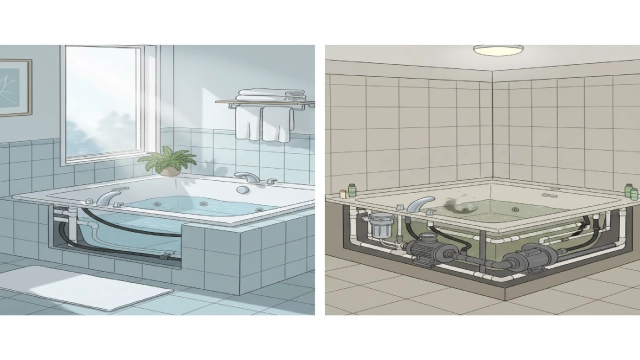
Most non-commercial-grade whirlpool systems utilize flexible piping that sags between support points. These sags become “gravity traps” for residual water. Ignoring this only becomes a problem after operation begins. In a longitudinal study of mid-scale hotel properties, systems lacking rigid, self-draining PVC lines experienced a 60% higher rate of “black flake” guest complaints within the first 18 months. When the internal plumbing is not designed for 100% gravity evacuation, the system becomes fundamentally un-maintainable.
2. Chemical Hostility and Material Fatigue
Commercial housekeeping requires aggressive, high-potency disinfectants to meet health codes. However, many systems utilize seals and O-rings designed for mild, consumer-grade solutions. In practice, these industrial chemicals often lead to seal embrittlement. Once an internal pump seal fails behind a finished wall, the cost of remediation—incorporating moisture damage and tile replacement—frequently exceeds the initial cost of the tub by a factor of five.
3. Access Reality and Repetitive Maintenance
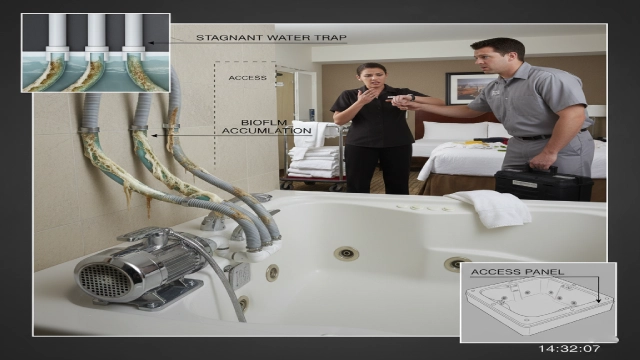
In many hotel projects, maintenance failure is not a result of staff negligence, but a design flaw. If the internal components or filters are not accessible via standardized, tool-free panels, they will not be serviced. Data shows that systems engineered with commercial access in mind reduce labor overhead by 35% per month, as they allow for rapid, repeatable inspections that align with standard shift patterns.
4. Inspection and Brand Liability Exposure
In the era of viral social media, a single video showing debris emerging from a jet can permanently suppress a property’s ADR (Average Daily Rate). For hotels with jetted tubs, the cleanliness of the system is a direct proxy for the perceived safety of the entire brand. If a system is not “auditable”—meaning the staff cannot easily verify the cleanliness of the internal lines—it remains a latent liability.
Pseudomonas aeruginosa wound infection associated with a nursing home’s whirlpool bath
The Decision Path: Categorizing Operational Risk
Each project requires a unique evaluation of its operational constraints. These categories serve as a framework for identifying where a system may fall short of its intended ROI.
Operational Reality of Whirlpool Tub Cleaning in Hotels
Lower-Turnover Rooms
Possible only when occupancy allows for 60-minute turnover windows and dedicated engineering or housekeeping support is consistently available.
High-Occupancy Boutique Hotels
Fast turnover cycles lead to rapid biofilm buildup. In real hotel operations, the manual steps required to clean jets on a whirlpool tub cannot keep pace with daily guest volume.
Manual-Only Flush Systems
In practice, these systems are frequently disabled by maintenance teams within 12–24 months to prevent guest complaints, odor issues, and service calls.
The “Irreversible” Threshold
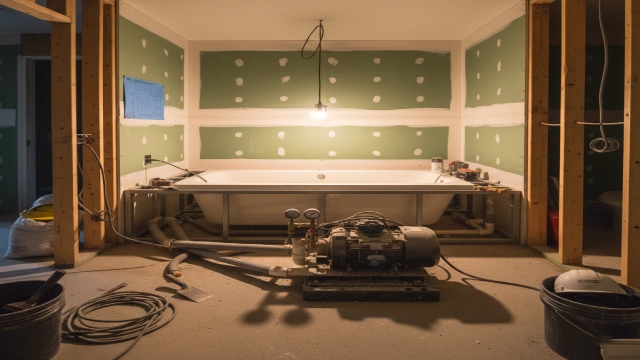
If a project reaches the tiling phase with a system that lacks an automated purge function, the risk has already been locked in. Once the walls are closed, there is no “cleaning hack” that can compensate for a lack of automated disinfection or gravity-fed drainage. The property is essentially committed to a decade of reactive cost management
What Is the True Cost of a "Standard" System in a Commercial Project?
The central question for a developer is not how to execute the cleaning, but whether the project can afford the consequences of a maintenance-heavy system. No jetted tub cleaner, regardless of chemical strength, can compensate for a system that traps water by design.
In many cases, the “savings” achieved by choosing a standard system over a commercial-grade one are illusory. A unit that is $300 cheaper at the point of purchase often incurs thousands in excess labor and chemical costs over its lifespan. Successful developers treat these fixtures as mechanical assets—similar to an HVAC system—where serviceability is the primary metric of value.
Evaluating Systemic “Self-Care” Capabilities
Before finalizing specifications, decision-makers should evaluate the following:
Automatic Purge Cycles: Does the system automatically blow out residual water and dry the lines after every use?
Antimicrobial Piping: Are the internal lines treated to inhibit biofilm growth between deep cleans?
Non-Destructive Access: Can the pump and critical junctions be reached without damaging the architectural finish?
If these features are absent, the cleaning challenge is not being solved; it is simply being deferred to the operations budget.
Conclusion: Moving from Information to Judgment
The history of 4-star hotel renovations is littered with jetted tubs that were eventually disconnected and caulked shut because they became impossible to manage. Within two years of opening, maintenance teams often find it safer to disable the system entirely than to risk a hygiene-related lawsuit or a social media crisis.
The purpose of this evaluation is not to provide a manual for using a specific jetted tub cleaner, but to help project leaders identify where their procurement strategy might be creating a ticking reputational time-bomb. For project owners and specifiers, this question must be resolved before procurement—it cannot be effectively delegated to operations after handover.
There are no absolute answers in project development, only trade-offs. However, the most costly trade-offs are often those made in the name of initial budget savings while ignoring long-term operational reality. Teams who fail to reassess their system choices at this stage often spend the following five years managing consequences rather than assets.
We provide integrated one-stop bathroom solutions covering tubs, sanitaryware, fittings, and system coordination for hotel and commercial projects.
▼ Submit the form below to connect with our team and explore project-based collaboration. ▼