
Many hotel and apartment buyers pick a vanity based on looks alone. That mistake leads to installation problems, cleaning headaches, and unhappy guests. When comparing a floating vs freestanding vanity, the right choice depends on your wall type, cleaning workflow, storage needs, and project scale.
A floating vanity mounts directly to the wall, with no legs touching the floor. A freestanding vanity sits on the floor and supports itself. The difference is not just visual — it affects how you install, clean, store, and maintain the unit across dozens or hundreds of rooms.
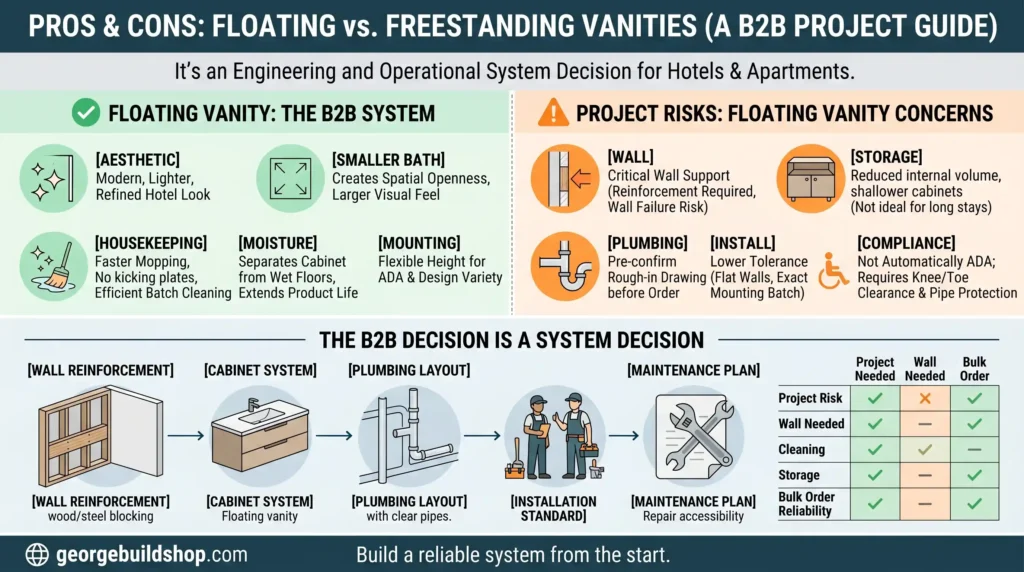
I have worked with both vanity types on large projects, and I can tell you that neither is always better. The better choice is the one that fits your wall condition, your housekeeping process, your storage requirements, and your long-term budget. Let me walk you through each factor so you can decide with confidence.
Table of Contents
What Is the Difference Between a Freestanding Vanity and a Floating Vanity?
Most buyers assume the difference is only about style. That assumption causes real problems later. The true difference is in how each vanity is supported, and that affects everything from installation to long-term maintenance.
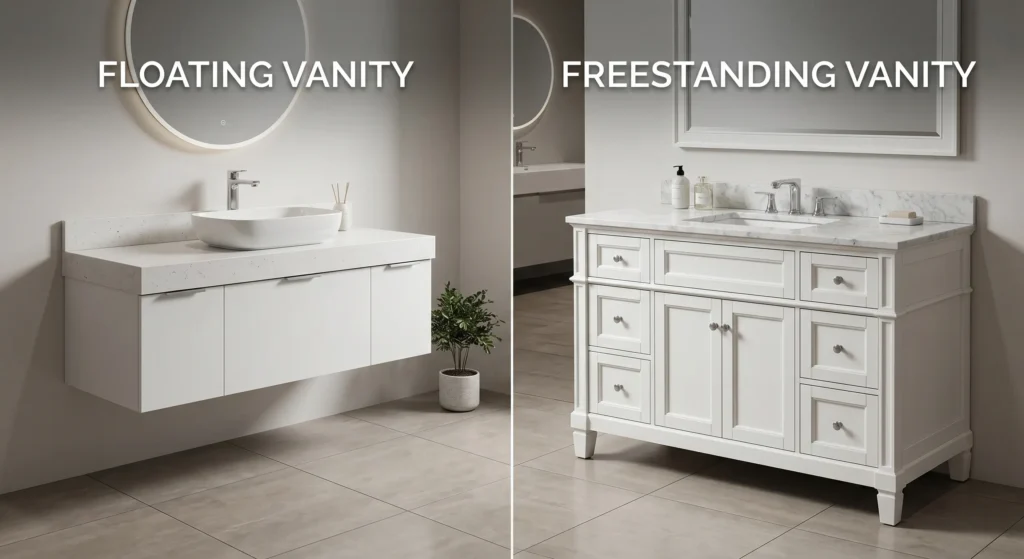
A floating vanity is wall-mounted and has no floor contact. A freestanding vanity rests on the floor using its own base or legs. The key differences are in wall support requirements, installation complexity, storage capacity, and how each unit handles moisture over time.
Floating Vanity
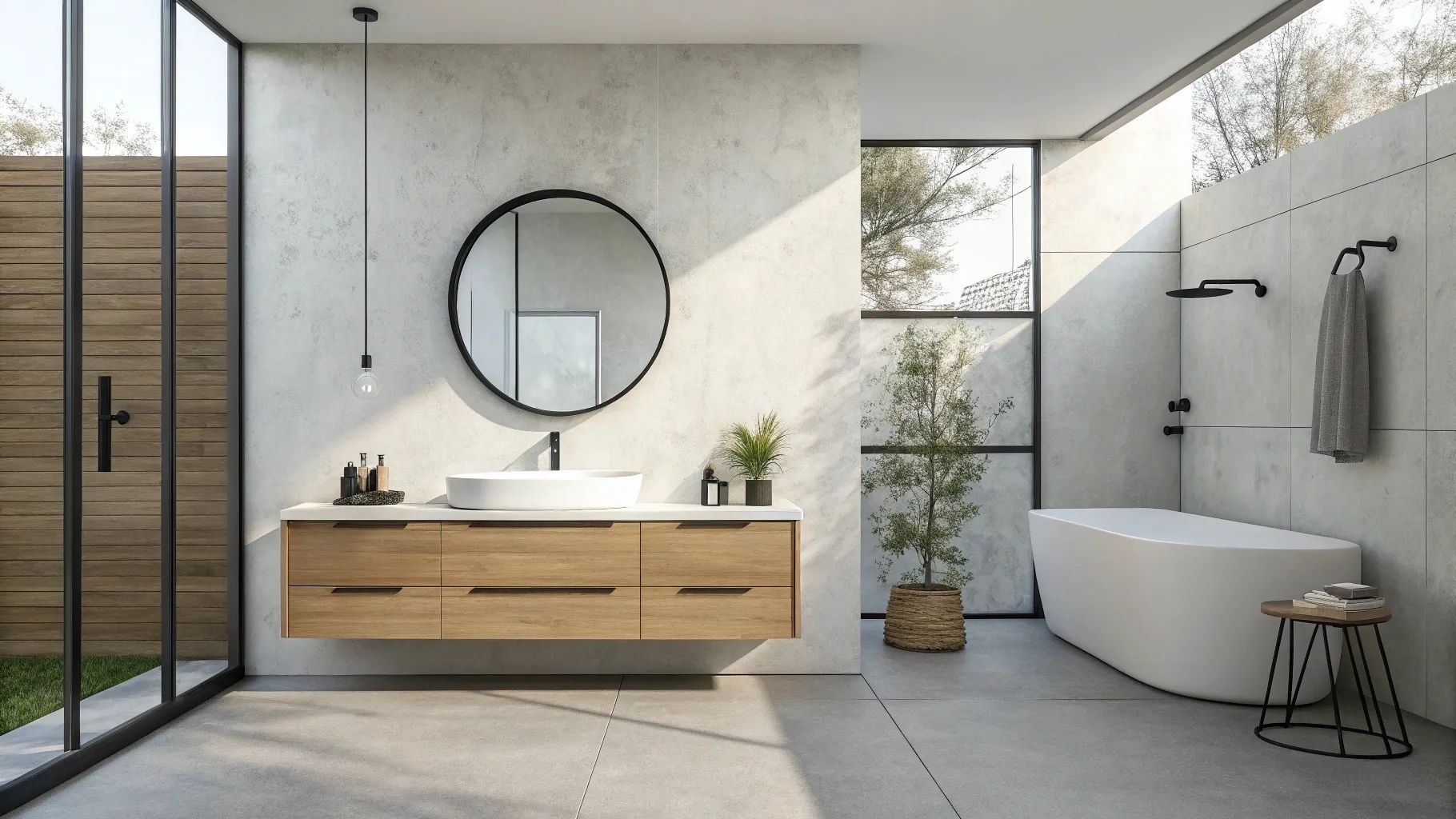
A floating vanity, also called a wall-hung or wall-mounted vanity, is fixed to the wall using brackets or mounting rails. It requires solid wall backing — usually wood blocking or steel framing — to hold the weight safely. The cabinet hangs in the air, which creates open floor space below.
Freestanding Vanity
A freestanding vanity stands on the floor using a solid base or furniture-style legs. It does not rely on the wall for structural support. Most freestanding units are easier to move, easier to replace, and easier to install without special wall preparation.
Key Structural Difference
The floating bathroom vanity depends entirely on the wall. The freestanding vanity depends on the floor. This distinction drives every other difference in installation, cleaning, storage, and maintenance.
When I explain this to procurement teams, I always say: the vanity you pick must match the wall you have, not just the mood board your designer submitted. On large projects, wall type is the first thing to confirm before placing any order.
Which Vanity Is Easier to Install in Large Projects?
Large-scale installation looks simple on a schedule. In practice, even small wall inconsistencies become expensive problems when you are fitting out 50 or 200 rooms. The vanity type you choose will either reduce or multiply that risk.
A freestanding vanity is generally easier to install at scale because it requires no special wall preparation. A floating vanity needs confirmed wall structure, correct stud or blocking placement, and precise plumbing positioning. Any wall error in a floating vanity installation adds direct rework cost.
Freestanding Vanity Installation Advantage
A freestanding vanity can be placed against almost any wall type. It does not need additional blocking or internal wall reinforcement. This makes it a lower-risk choice when you are working with drywall, older construction, or walls with unknown internal conditions.
Floating Vanity Wall Requirements
A floating vanity must be anchored into solid structure. Before installation, your team must confirm wall type (drywall, concrete, or tile backer), stud spacing, blocking placement, and exact plumbing rough-in position. Missing any one of these details leads to sagging, cracking, or fixture failure — problems I have seen discussed repeatedly in contractor forums.
Bulk Installation Risk
When you are installing the same unit in 80 rooms, a 1 cm error in stud placement or plumbing height becomes a pattern across the entire floor. Freestanding units absorb minor wall variations without issue. Floating vanities do not. For large renovation projects with unpredictable wall conditions, the freestanding vanity almost always wins on installation reliability.
I always tell project managers to visit the site and check one real wall before finalizing the vanity spec. A drawing assumption about wall structure is not the same as a confirmed site measurement. This single step can prevent weeks of rework.
Which Vanity Is Easier to Clean for Housekeeping?
Hotel housekeeping staff clean each bathroom multiple times per week. Over time, the vanity design either helps them work faster or slows them down. This is a detail many buyers overlook during procurement.
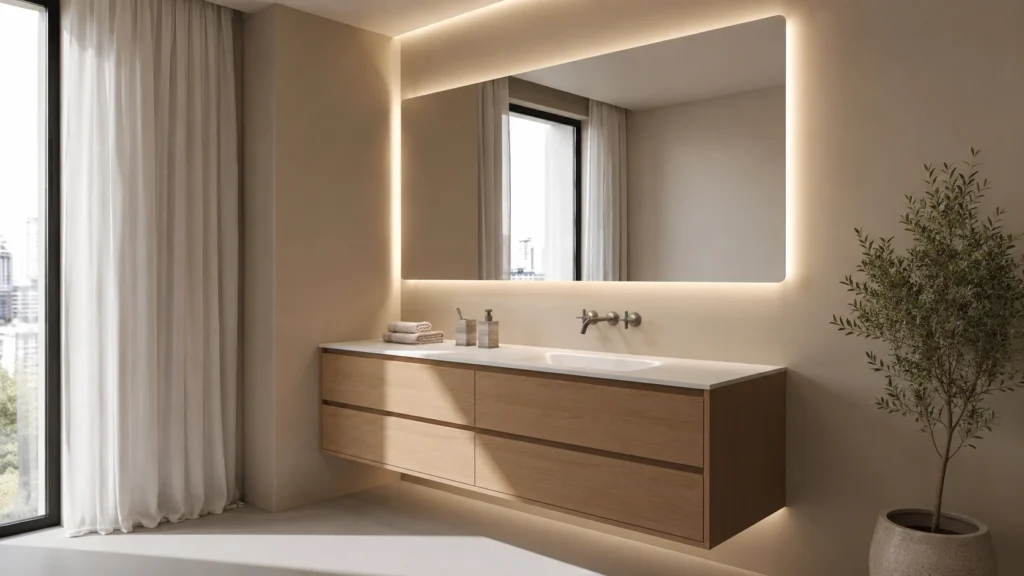
A floating vanity is easier to clean because the open floor space below allows a mop or vacuum to pass through without moving the unit. There are fewer corners where dirt and moisture can collect. This makes it a practical choice for high-frequency cleaning environments like hotel guest rooms.
Floating Vanity Cleaning Benefit
Because a floating bathroom vanity has no base touching the floor, housekeeping can clean the entire bathroom floor in one pass. There are no kick plates, no base trim edges, and no hidden corners that trap hair, dust, or cleaning product residue.
Freestanding Vanity Cleaning Challenges
A freestanding vanity has a base, side panels, and a gap between the floor and the cabinet bottom. These areas collect dust, moisture, and debris. In humid climates — which is common in bathroom environments — moisture trapped under a freestanding base can also lead to swelling or mold over time if the unit is not properly sealed.
Housekeeping Efficiency at Scale
Across 100 rooms, the time saved per clean adds up to real labor cost. If each floating vanity saves two minutes of cleaning per room turn, that becomes significant over a year. For high-turnover hotels with tight housekeeping windows, this efficiency difference matters when choosing between a floating bathroom double vanity and a standard floor-standing unit.
The cleaning benefit of a floating vanity is real, but it only matters if the rest of the bathroom floor is also easy to access. If you have other fixed floor fixtures nearby, the open floor space below the vanity is less useful. Always think about the full room layout, not just the vanity in isolation.
Which Vanity Offers More Storage for Guests or Tenants?
Storage is one of the most practical factors for guests who stay more than one night. A vanity that looks great but offers almost no storage creates complaints. This is where the floating vs standard vanity debate often comes down to how long guests are staying.
A freestanding vanity typically offers more storage than a floating vanity of the same width. Floating vanities are often designed with lighter, shallower cabinets to reduce wall load. For long-stay guests, apartments, and rental units, a freestanding unit usually provides the storage depth and drawer count that tenants actually need.
Freestanding Vanity Storage Advantage
A freestanding vanity can be built with a full-depth cabinet, multiple drawers, and a solid base that provides additional internal volume. Because the floor carries the weight, the cabinet design is not limited by wall load calculations. This makes freestanding units better suited for apartments and long-stay hotel rooms where guests need space for toiletries, hair tools, and daily essentials.
Floating Vanity Storage Limits
A floating vanity must keep its weight manageable for the wall mounting system. This often leads to shallower cabinet depths and fewer internal compartments. For a short-stay hotel room where guests carry minimal luggage, this is acceptable. For a long-stay apartment or extended-stay unit, it is a real limitation that affects tenant satisfaction.
Matching Storage to Stay Length
Resort villas and boutique hotels can lean into the floating bathroom vanity for its design appeal since most guests stay only a few nights. Budget hotels, serviced apartments, and rental properties should prioritize storage depth and choose a freestanding unit. The stay length should drive the storage decision.
I have seen projects where the designer chose a floating vanity for every room type to keep the aesthetic consistent. That works for a luxury short-stay property. For a mixed-use development with some long-stay units, it becomes a recurring complaint in tenant reviews. Matching the vanity to the guest profile is just as important as matching it to the design brief.
Which Vanity Works Better for ADA Bathroom Rooms?
Many project buyers assume that choosing a floating vanity automatically satisfies ADA requirements. That assumption is incorrect and can lead to compliance failures during inspection. ADA accessibility is a design system, not a single product choice.
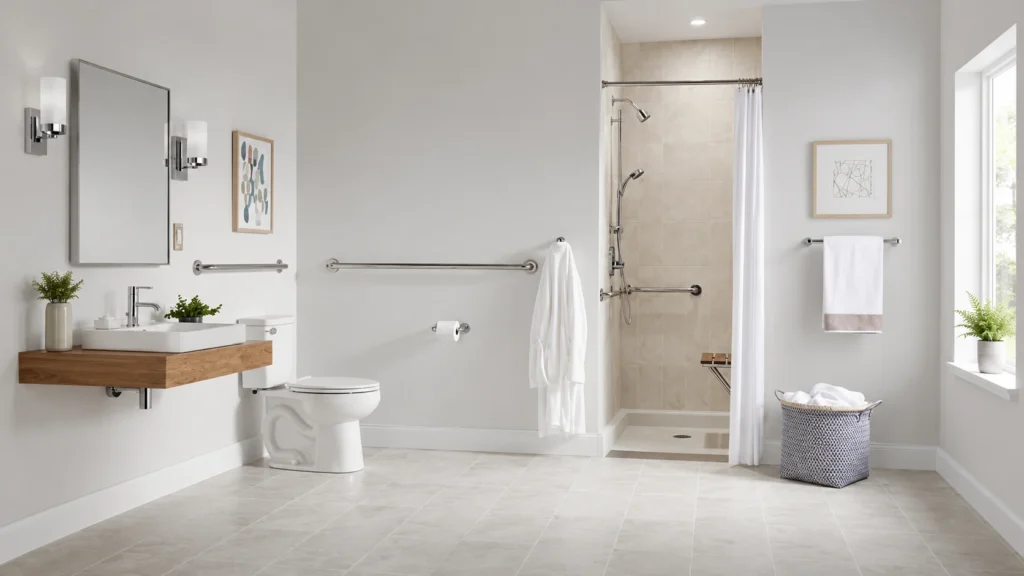
For ADA-compliant bathrooms, a floating or open-base vanity can support the required knee and toe clearance, but the full design must also confirm countertop height, pipe protection, clear floor space, and mounting bracket positions. The U.S. Access Board sets specific requirements for lavatories and sinks that must be verified at the drawing stage.
ADA Countertop Height
The Access Board requires the top of the lavatory surface to be no higher than 34 inches from the finished floor. This applies to both floating and freestanding vanities. The vanity type alone does not determine compliance — the installed height does.
Knee and Toe Clearance
For a wheelchair user to approach the sink, the design must provide at least 27 inches of knee clearance height, 8 inches of knee clearance depth, and 9 inches of toe clearance. A floating vanity can meet these numbers, but only if the cabinet body, drain pipe, and mounting hardware do not intrude into the required clear space.
Pipe Protection and Mounting Position
Exposed drain pipes and supply lines under an ADA vanity must be insulated or covered to protect users with limited sensation from burns. Mounting brackets and support rails must also be positioned so they do not block the required knee clearance zone. These details must be confirmed on the construction drawing, not assumed after installation.
Plan ADA Vanities at Drawing Stage
ADA accessible rooms should have the vanity design confirmed before construction begins. Retrofitting a non-compliant installation is expensive and disruptive. I always advise clients to submit the full vanity spec — including bracket position, drain location, and countertop height — to their accessibility consultant before ordering.
ADA compliance is not just about the vanity. It is about the entire bathroom system working together. The vanity must be designed alongside the mirror height, the grab bar placement, the turning radius, and the door clearance. A floating vanity that meets the knee clearance requirement but blocks the turning radius still fails the inspection.
Which Vanity Is Better for Bulk Hotel or Apartment Orders?
Ordering 50 or 500 vanities is not the same as ordering one. At scale, small inconsistencies in size, finish, or hardware become visible across an entire floor. Bulk procurement requires a different level of specification discipline.
For bulk hotel or apartment orders, the most important factors are dimensional consistency, moisture-resistant construction, standardized hardware, protective packaging, and confirmed spare part availability. Both floating and freestanding vanities can work at scale, but the order process must include detailed drawings, sample approval, and clear installation documentation.
Dimensional Consistency
Every unit in a bulk order must match the approved drawing dimensions within an agreed tolerance. A 2 mm difference in cabinet height across 100 rooms creates a visible inconsistency in countertop alignment and mirror positioning. Before production begins, confirm the exact cabinet width, depth, height, and countertop overhang in a signed drawing.
Moisture-Resistant Construction
Bathroom vanities in hotels and apartments face daily water exposure. The cabinet board must be moisture-resistant (MR-grade or waterproof grade), and all edges must be fully sealed. Ask your supplier for board certification and edge treatment specs before approving production.
Standardized Hardware and Accessories
All hinges, drawer slides, handles, and mounting brackets in a bulk order should come from the same manufacturer batch. Mixed hardware batches create variation in finish color and operating feel that guests will notice. Confirm hardware brand, finish code, and model number in the purchase agreement.
Packaging and Spare Parts
Large shipments need individual unit packaging that protects corners, countertops, and doors during freight. Ask your supplier what spare parts — hinges, drawer slides, touch latches — will be available for the first three years after delivery. This is a standard question I always include in supplier qualification.
The best way to protect a bulk order is to run a pre-production sample approval. Have one unit built to the full specification, inspect it on-site or at the factory, and sign off before mass production begins. This single step catches most problems before they reach 200 rooms.
Project Snapshot: 150-Room Coastal Resort Fit-out
Pain: The property had aging drywall framing that could not safely support the load of standard floating vanities without massive structural renovation.
Solution: We engineered a specialized lightweight vanity series with customized hidden support brackets and moisture-resistant MR-grade boards.
Result: Zero wall damage across 150 rooms, saving the developer 3 weeks of schedule delays and $15,000 in structural modification costs.
How Should Project Buyers Choose Between Them?
The choice between a floating vanity and a freestanding vanity is a project decision, not a style decision. Every project type has a different set of priorities, and the right vanity must match those priorities.
| Project Type | Better Choice | Reason |
|---|---|---|
| Luxury hotel rooms | Floating vanity | Modern look, easier floor cleaning |
| Budget hotel rooms | Freestanding vanity | Lower installation risk, no wall blocking needed |
| Resort villas | Floating or freestanding | Depends on design brief and storage needs |
| Apartments | Freestanding vanity | More storage, easier long-term maintenance |
| ADA rooms | Floating / open base design | Better knee clearance when designed correctly |
| Renovation projects | Freestanding vanity | Less wall modification required |
| New construction | Floating vanity | Wall support can be planned from the beginning |
| Long-stay units | Freestanding vanity | Better storage volume for tenants |
Confirm Wall Conditions First
Before choosing a floating vanity for any project, confirm the wall type, stud spacing, blocking availability, and plumbing rough-in position. Do this on-site, not from a drawing. Any wall condition that does not support safe anchoring means a freestanding vanity is the lower-risk choice.
Match Storage to Stay Length
Short-stay hotel rooms can work with the lighter storage of a floating bathroom vanity. Long-stay units, apartments, and serviced residences need the deeper storage that a freestanding vanity provides. Do not apply one vanity type to all room categories in a mixed-use project without checking the storage requirement for each category.
Include Accessibility in the Brief
If your project includes ADA or accessible rooms, include the full vanity specification — countertop height, bracket position, pipe protection, and knee clearance — in the design brief from the start. Do not leave accessibility compliance as a final check after procurement.
When I work with procurement teams, I always say the same thing: the best vanity is the one that fits your wall, your housekeeping process, your storage needs, and your maintenance budget. Style comes after those four things are confirmed. Get those right, and the style will follow.
Conclusion
The floating vs freestanding vanity decision comes down to wall conditions, cleaning needs, storage requirements, and project scale. Choose based on your project, not just your mood board. Contact georgebuildshop if you need help specifying the right vanity for your next hotel or apartment project.
Your Partner in High-Scale Hospitality Projects
Choosing between a floating and freestanding vanity is only the first step. At Georgebuildshop, we specialize in bridging the gap between high-end design and on-site reality. From custom vanity engineering and 3D space design to supplying the full suite of bathroom fixtures, we ensure your project is delivered with dimensional precision and aesthetic consistency.
Ready to specify the perfect vanity for your next hotel or resort project? Use the form below to share your project details, and our B2B experts will provide a comprehensive technical assessment and quote.