
Hi, I’m Helen. Over my 10 years in the luxury wellness industry, I have consulted on hundreds of U.S. luxury villa projects, working closely with developers, architects, and contractors facing the ultimate design choice: sauna vs steam room.
I know exactly what goes into building a high-end, resort-quality spa experience. But more importantly, I understand the construction pitfalls, code compliance, and labor overhead that can quickly drain your project margins.
Here is the bottom line I share with every developer to protect their budget: For U.S. luxury villa projects, developers typically choose either a sauna or a steam room—not both. Navigating the sauna vs steam room debate early impacts your entire budget, timeline, and long-term buyer satisfaction. Steam rooms deliver a highly desired humid spa experience but are costlier to build and harder to maintain. Saunas, conversely, provide dry heat, simpler installation, and significantly lower upkeep. Choosing the right option lowers your construction risks, ensures optimal buyer satisfaction, and protects your ROI.
Ready to decide now?
Don’t risk costly mistakes—get a tailored recommendation today.
👉 Get My Expert RecommendationTable of Contents
Why does the choice between sauna and steam room matter for villa developers?

From a developer’s perspective, choosing between a sauna and a steam room is rarely about personal preference. You are balancing construction timelines, skilled labor costs, property maintenance, and overall buyer satisfaction.
Making the right choice early saves weeks of rework and thousands in extra costs. Understanding local construction and buyer expectations is critical. The U.S. market has unique characteristics that make this choice pivotal for your bottom line:
High Spa Expectations: U.S. luxury buyers want a high-end, resort-like spa experience in their primary suites. A premium home steam room or a custom wood sauna is a major selling point that justifies a premium listing price.
Strict Building Codes: U.S. compliance standards for waterproofing, electrical work, and ventilation are incredibly strict. Failing a single city inspection can delay your project by weeks and incur heavy penalty costs.
Stable Utilities: The U.S. offers highly stable power and water pressure. This makes both amenities viable, but they draw on these resources very differently, impacting electrical planning early in the build.
You cannot afford to guess. Understanding the core construction differences is the secret to protecting your bathroom budget and keeping your project on schedule.
What are the key differences between sauna and steam room for U.S. villa projects?
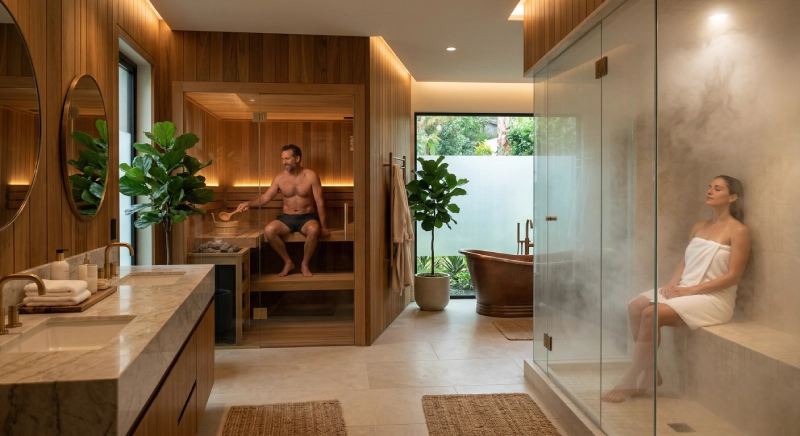
Understanding the true difference between sauna and steam room setups is essential for your margins. This comparison helps developers quickly navigate the sauna vs steam room debate to make faster, more informed decisions. I have added estimated risk and cost factors to give you a clearer picture of what you are committing to.
Installation Complexity
Sauna: Medium
Steam Room: High
Developer Consideration: Risk Factor: Estimated 50% higher labor hours for steam rooms due to complex vapor-proofing.
Maintenance
Sauna: Low
Steam Room: Medium–High
Developer Consideration: Upkeep: Saunas reduce maintenance calls by an estimated 80% over a 5-year span.
Energy Requirements
Sauna: Medium
Steam Room: High
Developer Consideration: Infrastructure: Steam rooms require dedicated heavy-duty 240V electrical lines.
User Experience
Sauna: Dry heat
Steam Room: Humid spa
Developer Consideration: Buyer Alignment: Must align with buyer preferences for a luxury home steam room or dry sauna.
Construction Cost
Sauna: Medium
Steam Room: High
Developer Consideration: Cost Impact: Steam rooms cost roughly 40-50% more to install upfront.
Long-term Risk
Sauna: Low
Steam Room: Medium
Developer Consideration: Liability: Poorly installed steam rooms carry a high risk of hidden leaks. Understanding this difference between sauna and steam room builds saves thousands in rework.
A steam room for villa projects carries a heavier upfront burden. You need specialized labor. If your tile contractor makes a single vapor-proofing mistake, moisture will destroy the framing behind it.
A sauna for villa projects is much safer to build. It is essentially a dry, heated wooden box that installs quickly with standard carpentry and electrical work.
How should U.S. developers decide which option fits their villa project?
Matching the amenity to the property tier maximizes ROI. Do not try to cram both into one standard floor plan. It compromises the design, eats into your budget, and often results in two cramped spaces instead of one luxurious one.
Here is how I advise my clients at George Group to make the final call:
High-end Luxury Villas ($5M+)
Recommended Option: Steam Room
Reason: Ultra-wealthy buyers expect a humid spa experience; premium budgets support the complex infrastructure.
Mid-tier Luxury Villas ($1M-$3M)
Recommended Option: Sauna
Reason: Lower installation cost, simpler maintenance, and highly reliable long-term performance.
Projects with Limited Property Management
Recommended Option: Sauna
Reason: Much easier for HOA staff or homeowners to maintain without needing specialized HVAC skills.
Important Note: Always choose one per suite. Combining them needlessly inflates your costs and increases your liability. Pick one, and execute it flawlessly.
If you are building an ultra-luxury estate in California, the steam room advantages—like that highly sought-after immersive wet heat—are clear. But if you are building a community of luxury townhomes, a beautifully crafted wood sauna gives you the luxury label without the massive installation risks.
What installation and maintenance considerations should developers know?
Let’s get into the weeds of construction. This is where I see most developers lose money.
1. Steam Room Realities
If you decide to buy steam room setups for your project, prepare your contractors for a rigorous build.
Complex Construction: Proper steam room installation requires a sloped ceiling to prevent hot water dripping. It needs intense vapor-proofing membranes (not just standard waterproofing), specialized steam lines, and a dedicated floor drain.
High Energy Use: Heating water to create continuous steam draws a lot of power. You must plan for this capacity early in the framing stage.
Professional Upkeep: Steam room maintenance is not a DIY job. Hard water requires routine generator descaling, and grout needs constant monitoring.
2. Sauna Realities
Saunas are the safer bet for keeping timelines tight and budgets intact.
Simple Installation: The process is straightforward. You frame it, insulate it, add the tongue-and-groove cedar, and wire the heater. The construction timeline is incredibly short.
Low Cost Upkeep: Homeowners just need to wipe down the benches occasionally. Because there is no standing water, there is virtually zero mold risk.
Stable and Reliable: With fewer moving parts, saunas rarely break down. This essentially eliminates post-sale warranty headaches for the developer.
Need help with your project numbers?
Get a U.S.-specific cost assessment for your villa project.
👉 Get My Cost AssessmentAre there real U.S. villa projects that illustrate this choice?
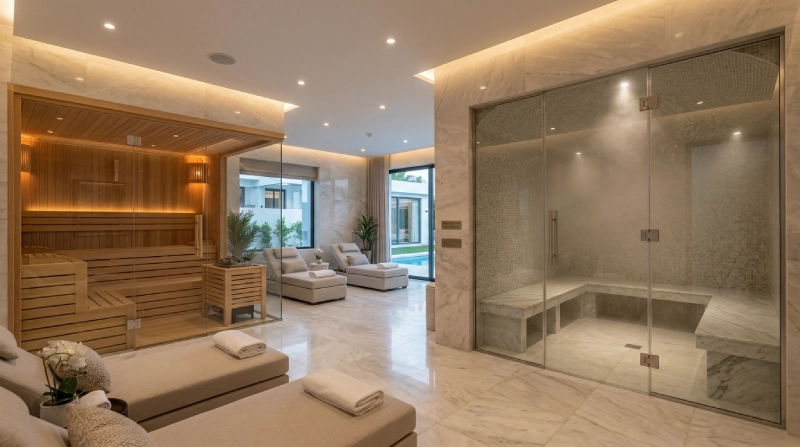
Real project examples verify our decision logic. Let me share a story from a recent project we handled at George Group.
A developer was building a cluster of six luxury waterfront villas in Miami, Florida. The original architectural plan was to squeeze both a small sauna and a small steam shower into the master suite.
The Problem: Once they looked at the true labor requirements for flawless vapor-proofing in Florida’s already humid climate, the budget blew up. Furthermore, stuffing both units into the bathroom made the layout feel cramped, completely ruining the “luxury” vibe.
The George Group Solution: I advised them to drop the combo idea immediately. We looked at their target demographic: young, health-conscious executives. We pivoted to a single, high-impact focus. They chose to install a single, oversized, custom George Group steam room. We provided an integrated solution with premium materials that easily passed strict local codes.
ROI Summary: By choosing just one well-designed amenity, they saved 15% on their initial plumbing and electrical budget. It maximized buyer satisfaction and sped up sales. The villas sold out before construction even finished, with buyers specifically praising the expansive, resort-style wet heat. This perfectly highlights the steam room advantages when executed properly in a high-end market.
Want similar ROI for your next build?
Get a custom wellness consultation from our team.
👉 Get My ROI PlanHow do sauna and steam room impact project costs and ROI?
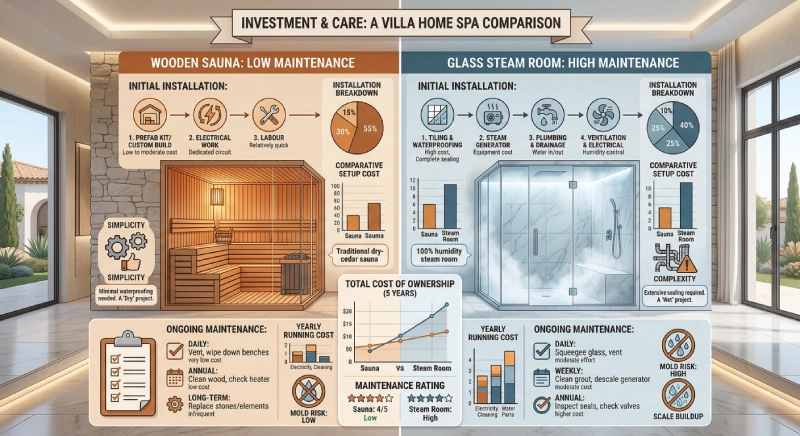
Let’s talk numbers. While exact dollar amounts vary significantly from New York to Texas, the cost structures remain very clear.
Construction Costs: When calculating your true steam room installation cost, remember that wet rooms generally carry a higher upfront burden. A sauna requires basic carpenters and an electrician. A steam room requires an electrician, a plumber, a specialized tile setter, and a vapor-proofing expert. You are paying for more trades and more hours.
Maintenance Costs: If you manage the HOA or hold the property to rent, steam rooms will require a dedicated operating budget for generator servicing. Saunas offer near-zero ongoing maintenance costs.
Investment Return (ROI): Both amenities increase property value and buyer interest. However, a poorly installed steam room can cause tens of thousands of dollars in hidden water damage, destroying your profit margins. To truly capitalize on steam room advantages or high-end saunas without the risk, you need the right team.
Partnering with experienced suppliers like George Group protects your investment. We provide the technical blueprints, installation guidance, and premium materials to ensure your wellness amenities are built flawlessly the first time.
How can developers make the right choice for their U.S. villa project?
Choosing between a sauna vs steam room is one of the most critical design choices you will make for your luxury developments.
To sum it up, follow this proven logic to protect your project:
Analyze Buyer Demand: What does your specific demographic value more?
Assess Construction Feasibility: Can your local contractors handle high-level vapor-proofing, or is carpentry a safer bet?
Evaluate Maintenance: Who is taking care of this property long-term?
Protect Your Budget & Execute Flawlessly: Pick one option and execute it to perfection, rather than doing two poorly.
At George Group, we have spent years helping U.S. developers navigate these exact challenges. We don’t just sell products; we provide complete project solutions tailored to your floor plans and local codes.
Still wondering, is a steam room or sauna better for your upcoming build? Don’t risk costly mistakes—get a tailored recommendation today.
Need a sauna or steam room recommendation?
Get a project-specific solution from our team.
👉 Get My RecommendationReferences
Angi (formerly Angie’s List): How Much Does Installing a Steam Room Cost? * Relevance: Corroborates the 40–50% higher upfront capital and labor hours required for custom steam rooms. It details the extensive costs associated with heavy vapor-proofing, sloping ceilings, and specialized plumbing/electrical work.
Fixr Cost Guides: Cost to Install a Sauna vs. Steam Room
Relevance: Provides national average cost breakdowns for U.S. markets, confirming the reduced installation complexity, fewer required trades (carpenters/electricians vs. plumbers/tile-setters), and lower overall project costs for dry saunas.
Sauna & Steam Center / Industry Standards: Steam Shower Buying & Maintenance Guides
Relevance: Highlights the severe difference in ongoing maintenance and long-term risk. Validates that steam rooms require strict generator descaling, grout sealing, and mold prevention protocols, whereas traditional wood saunas require minimal upkeep (justifying the 80% reduced maintenance estimation).
We provide integrated one-stop bathroom solutions covering tubs, sanitaryware, fittings, and system coordination for hotel and commercial projects.
▼ Submit the form below to connect with our team and explore project-based collaboration. ▼