
Direct Answer:
Bathroom faucet trends for 2026 in hotel projects focus on long-term durability, maintenance efficiency, and timeless design—rather than short-term aesthetics. Key shifts include the adoption of PVD finishes over chrome, warm minimalist geometries, and modular internal components to reduce operational costs.
Unlike residential trends, faucet choices must be evaluated as long-term operational assets within a 7–10 year hotel renovation cycle.
Table of Contents
Why Do Bathroom Faucet Trends Matter More in Hotel Projects Than in Residential Use?
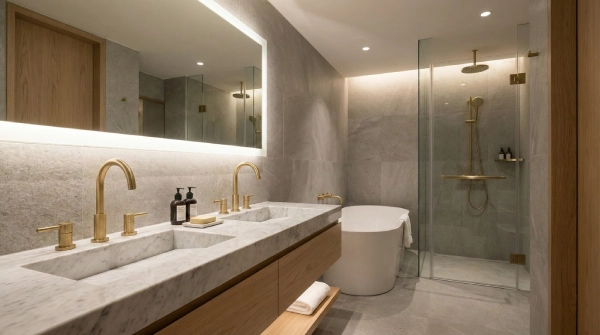
“A hotel is not a home.”
If you have worked in hospitality procurement for as long as I have, you know this is the fundamental truth of our industry. A faucet in a private residence is a lifestyle choice; a faucet in a hotel is a high-frequency machine. It faces hundreds of uses per day, aggressive chemical cleaning, and guests who often treat fixtures with indifference.
In many failed hotel renovation cases, the root cause was treating residential and commercial faucet trends as interchangeable.
When we talk about trends for the residential market, the focus is often on “Instagrammability.” But in the hotel sector, following those same trends without commercial filtering is a financial risk. A trendy, delicate faucet might look stunning on day one, but if it peels after six months or confuses guests, it becomes an operational liability.
Author Perspective Hi, I’m Helen. Over my decade in the sanitary ware industry, specifically working with hotel project managers at George Buildshop, I have reviewed faucet selections for over 100 hotel renovation and new-build projects. I have seen the same mistakes repeat themselves, and my goal is to help you avoid costly rework, reduce Out-of-Order (OFO) rooms, and unify brand standards across properties.
What You Will Get From This Guide: This is not a mood board. This is a strategic selection guide. We will analyze the bathroom faucet trends for 2026 through the lens of ROI (Return on Investment), risk management, and operational efficiency. Whether you are upgrading a boutique property or rolling out a chain standard, these insights will help you secure products that last.
How Should Hotels Evaluate Bathroom Faucet Trends from a Commercial Perspective?
What Do Hotel Procurement Teams Really Look For in 2026?
When I consult with hoteliers, the first thing we do is shift the conversation from “What is fashionable?” to “What is sustainable?” And I don’t just mean environmental sustainability; I mean operational sustainability.
The faucet trend landscape for 2026 is shifting away from ornate, delicate designs toward robust, high-performance fixtures. As a project manager, your evaluation criteria need to be radically different from a residential interior designer.
The Procurement Perspective:
Designers optimize for visual impact and “wow” factors.
Owners must optimize for 7–10 years of operation without failure.
To help you bridge this gap, I have developed this matrix.
At George Buildshop, this evaluation matrix is something we actively use during design coordination and value engineering meetings with hotel owners and operators.
Residential vs Hotel Faucet Priorities
Usage Volume
Cleaning
Trend Cycle
Maintenance
Primary Goal
Is this trend safe for long-term hotel use? That is the question you must ask. A trend is only valuable to a hotel if it reduces operational friction. If a bathroom faucet design idea looks beautiful but triples the time it takes for housekeeping to clean the room, it is a bad investment.
Why Is Warm Minimalism Becoming a Risk-Reducing Bathroom Faucet Trend?
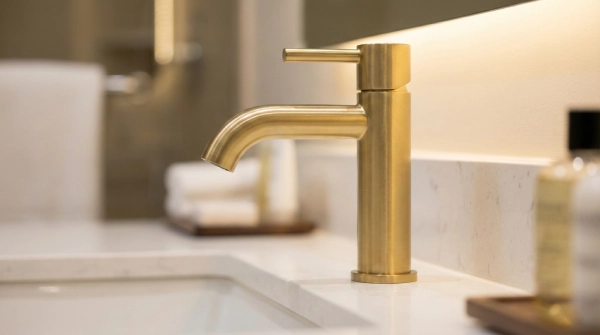
Will This Faucet Still Look Good in 5 Years?
You might hear the term “Warm Minimalism” and think it is just another style buzzword. However, from a hotel project perspective, these bathroom faucet design ideas are not driven by fashion cycles, but by risk reduction and long-term visual stability.
From a hotel perspective, Warm Minimalism is not a style—it is a hedge against design obsolescence.
The Failure of Sharp Angles: In the past few years, we saw many hotels adopt “Sharp Angular” designs—extremely square, flat spouts with razor-sharp edges.
The Problem: The water pooled on the flat surfaces, leaving permanent lime scale. The sharp corners chipped easily when housekeeping wiped them rapidly. Worst of all, they felt “aggressive” to the touch.
The Result: Those bathrooms looked dated and damaged within two years.
The shifting bathroom faucet trends toward Warm Minimalism involve softening those edges—using cylindrical bodies with slightly rounded spouts and reducing visual clutter.
Why is this winning in 2026? Warm Minimalism works not because it is fashionable, but because it reduces visual and operational risk across multiple hotel renovation cycles. By choosing a design that relies on proportion rather than decoration, you are protecting your asset against changing tastes. A warm, minimalist faucet acts as a chameleon. It fits perfectly in a luxury suite, a lifestyle boutique hotel, or a mid-scale business hotel.
Is this design suitable across different hotel brands? Yes. This is why major chains are standardizing on these profiles. If you are managing multiple properties, adopting a warm minimalist aesthetic allows you to streamline your supply chain. You can use the same base model across different locations, perhaps just changing the handle detail or finish, which significantly simplifies your inventory management at George Buildshop.
Which Bathroom Faucet Finish Trends Perform Better in Hotel Environments?
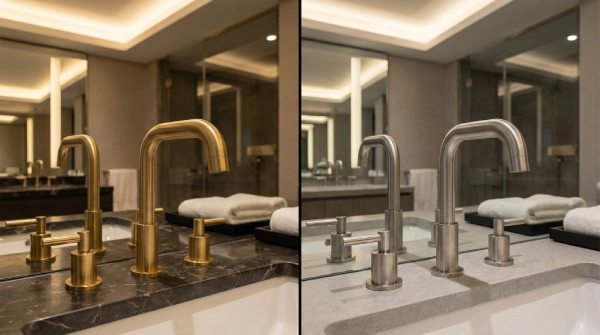
Which Faucet Finishes Age Best in Hotel Bathrooms?
If there is one piece of advice you take away from this article, let it be this: Be very strategic with Mirror Chrome in 2026.
I am not saying “never use Chrome.” For economy or back-of-house areas, Chrome can still be a rational and cost-effective choice. But in high-end or boutique hotel environments, Mirror Chrome is high-maintenance. It shows every fingerprint, every water spot, and every micro-scratch. I have spoken to executive housekeepers who estimate that polishing chrome fixtures takes up a significant portion of bathroom cleaning time.
The shifting bathroom faucet trends are moving aggressively toward soft metallic finishes, specifically PVD (Physical Vapor Deposition) coatings.
The Top Performers for 2026:
Brushed Brass: This adds warmth and luxury but hides water spots much better than polished gold.
Champagne Bronze: A sophisticated, muted tone that bridges the gap between modern and classic.
Satin Nickel: The workhorse. It hides scratches exceptionally well and fits almost any color palette.
Gunmetal / Warm Stainless: Excellent for urban or industrial-chic hotel themes.
Observed Procurement Shift: Based on aggregated internal hotel project order data from George Buildshop, we have tracked a 40% increase in orders for PVD Brushed Brass specifically for luxury boutique projects over the last 12 months. This isn’t just a style preference; it is a calculated operational decision based on maintenance feedback and housekeeping performance across multiple projects. PVD coatings are physically bonded to the metal, making them incredibly resistant to the harsh cleaning agents used in hotels.
Real-World Project Snapshot: The “Hidden” Cost of Chrome
Let me share a quick example from a recent consultation with a 150-room lifestyle hotel project in Manchester. The original specification called for Mirror Chrome faucets to save on upfront CAPEX.
During the mock-up room review, we asked the housekeeping supervisor to clean the chrome faucet versus a sample of our PVD Brushed Nickel faucet. The chrome required vigorous polishing to remove water spots, taking about 45 seconds per fixture. The PVD Brushed Nickel required only a simple wipe-down, taking less than 10 seconds.
When we calculated this across 150 rooms, cleaned daily for 5 years, the operational savings in labor hours were staggering. The owners realized that the slightly higher upfront cost of PVD would pay for itself within 14 months purely through housekeeping efficiency. They switched the specification to PVD Brushed Nickel immediately.
Which finishes reduce housekeeping complaints? Brushed and Satin finishes are the answer. Because the light is diffused across the surface, fingerprints and dried water droplets are less visible. This means the bathroom looks cleaner for the guest, even if it has been used. Ultimately, moving from high-maintenance Chrome to robust PVD is one of the most commercially effective bathroom faucet design ideas available to hoteliers.
Do Textured Finishes Offer Better Functionality for High-Traffic Bathrooms?
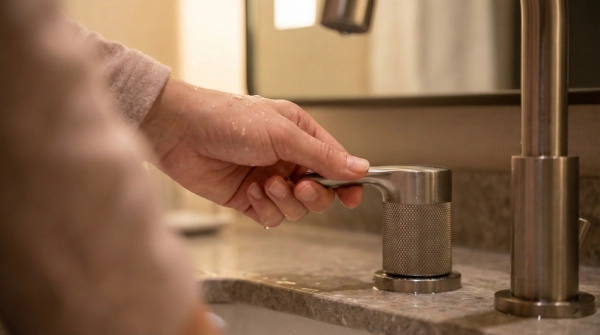
Why Is Texture Becoming a Functional Trend, Not Just a Design Choice?
One of the most commercially relevant faucet surface developments for 2026 is the use of controlled texture. We are seeing knurled handles, fine linear engravings, and micro-matte surfaces.
A Critical Warning for Procurement:
Before we discuss the benefits, we must address the risk: Hygiene. Not all textures are created equal.
Avoid: Deep, aggressive knurling. These deep grooves trap dirt, soap scum, and bacteria, becoming a nightmare for housekeeping to sanitize.
Choose: Micro-textures or fine linear brushing. These offer the visual benefit and grip without creating hygiene traps.
In the residential world, texture is about tactile luxury. In the hotel world, texture is camouflage.
Do textured finishes perform better in high-traffic bathrooms? Absolutely. Think about the wear and tear a faucet handle endures. It is grabbed by hands with rings, watches, and luggage being banged against it. A perfectly smooth, polished surface highlights every single scratch. A textured surface, however, absorbs these imperfections visually.
From a guest experience perspective, a textured handle provides a reassuring sense of control. Wet hands don’t slip. But for you, the project owner, the real value lies in the fact that the fixture will look brand new for years longer than a smooth polished counterpart. These textured solutions represent practical bathroom faucet design ideas that balance aesthetics with operational resilience.
How Do Faucet Handle Trends Directly Impact Guest Satisfaction?
What Handle Designs Work Best for Diverse Hotel Guest Groups?
I recall staying at a high-end design hotel in London last year. The faucet looked like a piece of abstract art—a joystick with no markings. It took me three minutes to figure out how to turn it on, and when I did, I scalded my hand.
The Hidden Cost of Confusion: In hotel bathrooms, the faucet handle is often the first physical interaction a guest has with the room. If a guest cannot figure out your faucet, three things happen:
They get frustrated (negative experience).
They force the handle, potentially breaking the cartridge.
They call the front desk. Every call to engineering to “fix” a working faucet is wasted labor cost.
Brand Perception Risk: Confusing controls subtly signal poor design discipline, which reflects negatively on brand standards. It tells the guest: “We care more about looking cool than your comfort.”
The bathroom faucet trends for 2026 are heavily focused on ergonomics and intuitive control. Ergonomic handles are one of the most important considerations in any bathroom faucet trend 2026 evaluation.
Current Winning Ergonomics:
Single-Lever Mixers: These remain the king of hospitality. They allow guests to adjust flow and temperature simultaneously with one hand.
Slim but Grippable Profiles: Designs are getting sleeker, but they retain enough surface area for a solid grip.
Smooth Damping: This is crucial. The cartridge should offer a smooth, fluid resistance (damping) when moved. It shouldn’t flop open, nor should it require force.
How Can Smart Water Efficiency Trends Save Costs Without Compromising Guest Experience?
How Can Hotels Save Water Without Guest Complaints?
Sustainability is no longer optional; water efficiency is now directly linked to corporate procurement policies and ESG compliance requirements. However, the “Low Flow” era of the early 2000s left a bad taste in everyone’s mouth—weak trickles of water that frustrated guests.
The defining faucet trend regarding sustainability is about “Calibrated Flow,” not just low flow.
Modern aerator technology allows us to mix air into the water stream, creating a voluminous, soft sensation on the skin while actually using less water.
Regional Differences Matter: When sourcing for global projects, you must consider local water pressure.
Europe/USA: Often have high, consistent pressure. Standard aerators work fine.
Middle East / Africa: Pressure can fluctuate wildly. Here, you need pressure-compensating aerators (PCA) to ensure the flow remains constant regardless of supply fluctuations.
When you source from George Buildshop, we specify and pre-test aerators based on local pressure conditions before mass production, not after complaints arise. This ensures that you get the maximum LEED or BREEAM points for your project without sacrificing that indulgent shower or hand-washing experience your guests expect. This approach exemplifies the most practical bathroom faucet trend 2026 application, combining sustainability with guest comfort.
Why Is Modular Design the Most Critical Commercial Faucet Trend for Maintenance?
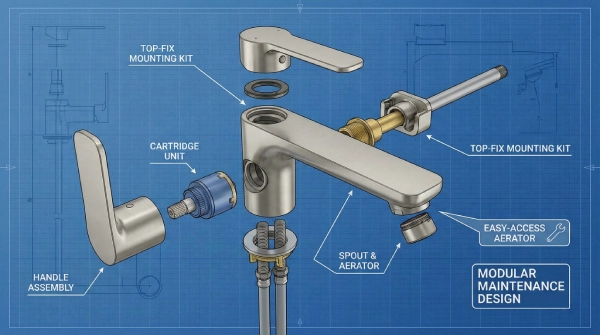
How Does Faucet Design Affect Maintenance Cost?
Among all faucet trends for 2026, modularity is the one that most directly impacts operational cost. In a hotel, time is money. If a faucet leaks and the room has to be taken out of inventory (OFO) for two days while you wait for a specific part, that is lost revenue (RevPAR impact).
The Maintenance Scenario:
Non-Service-Oriented Design: To fix a leak, the plumber must crawl under the sink, disconnect the pipes, and remove the whole faucet. Time: 2 Hours + Room OFO.
Modular Commercial Design: The cartridge is accessible from the top by removing a grub screw. The aerator is a coin-slot type. Time: 15 Minutes + Room stays active.
The bathroom faucet trends leading into 2026 are all about maintenance speed. We are seeing standardized cartridges, easy-access aerators, and quick-fix mounting systems.
What features reduce downtime during repairs? When selecting a bathroom faucet trend 2026, look for “Top-Fix” installation.
Definition: “Top-Fix” designs allow service access from above the countertop without removing the faucet body or crawling under the vanity.
This is why modular commercial platforms are increasingly prioritized in hotel projects—the internal engine is separate from the decorative shell. This means if the finish gets damaged, or the valve fails, you can replace specific components without ripping out the entire vanity unit.
Which Designs Survive Renovation Cycles Best?
How Do Hotels Avoid “Dated” Bathroom Fixtures?
These bathroom faucet design ideas prioritize geometry that survives multiple renovation cycles rather than reacting to short-lived design movements. Hotel renovation cycles are typically 7 to 10 years. A hyper-trendy faucet chosen today might look ridiculous by year 4.
The concept of “Timeless Geometry” is vital here. We are seeing a move away from extreme shapes—super sharp squares or weird organic blobs—toward “Soft Squares” or “Refined Cylinders.”
Why Extreme Shapes Fail: It is not just about aesthetics; it is about compatibility. When you do a “soft refurbishment” in 5 years (changing curtains, towels, wall paint), extreme faucet shapes often clash with the new soft goods.
Future-Proofing Your Brand: Neutral geometries also simplify future brand repositioning or upgrade strategies. If your property changes flags or moves up a star rating, a classic geometric faucet will likely still fit the new theme. This saves you a massive amount of CAPEX (Capital Expenditure).
Designs that respect basic geometry tend to age the best. Think of the classic Bauhaus principles: Form follows function.
What Should Hotels Ask Suppliers About Bathroom Faucet Trends in 2026?
A Practical, Copy-and-Use Procurement Checklist for Hotel Buyers
As we move toward 2026, don’t just buy a picture in a catalog. You need to interrogate the quality. If you are asking how to evaluate faucet trends beyond appearance, this checklist is designed for direct use in RFQs and tenders.
How do we evaluate faucet trends beyond appearance?
1. The Salt Spray Test: Ask your supplier for the salt spray test report (ASS). For commercial hotel projects, you should demand at least 48–72 hours ASS or 200+ hours NSS to ensure the finish won’t corrode in humid bathroom environments.
2. Cartridge Lifespan: Demand a cycle test report. Standard is 70,000 cycles. For hotels, ask for 500,000 cycles.
3. Spare Parts Availability: Will the supplier guarantee parts availability for 10 years? (At George Buildshop, we do).
4. Finish Consistency: If you order 500 faucets, will the Brushed Gold on faucet #1 match faucet #500? Batch consistency is a huge challenge in PVD finishes.
5. Compatibility: Does the collection have matching accessories (towel bars, robe hooks) and shower systems? You need a unified look.
What questions reduce long-term procurement risk? Always ask: “Can I replace the aerator without a special key?” and “Is the cartridge a standard size widely available in my country?” These two questions alone can save your maintenance team hundreds of hours of frustration.
Conclusion
Are You Ready to Implement These Trends in Your Next Project?
The bathroom faucet trends for 2026 are not about reinventing the wheel; they are about refining it for the demanding world of hospitality. These bathroom faucet trend 2026 insights are especially relevant for hotels planning mid-cycle upgrades or brand-wide standardization.
As we have discussed, the key takeaways for hotel projects are:
Prioritize Durability: Finishes like PVD Brushed Brass or Satin Nickel.
Focus on Ergonomics: Handles that feel good and work intuitively to reduce guest complaints.
Demand Efficiency: Water-saving tech that maintains pressure, and modular designs that speed up repairs.
True luxury in a hotel isn’t just about how a room looks; it’s about how it works. A beautiful faucet that leaks or peels is a liability. A well-engineered, timeless faucet is an asset.
At George Buildshop, we don’t just sell faucets; we support technical evaluation and compliance review to balance the aesthetic with the commercial ruggedness you need.
If you are currently evaluating suppliers for an upcoming project, let’s make it easier.
If you are preparing RFQs, mock-ups, or brand standard reviews for an upcoming hotel project, we are happy to support your internal technical evaluation with compliance-ready samples and specifications.
Let’s build something that lasts.
References
IVIGA Faucet. How to Test Faucet Finish Durability. Available at: https://www.ivigafaucet.com/how-to-test-faucet-finish-durability/
Aquacubic. PVD Faucet Finish: Are They Really Worth It? Available at: https://www.aquacubic.com/pvd-faucet-finish-are-they-really-worth-it/
Wenhai Wujin. Why PVD Finish Matters in Luxury Bath Fittings. Available at: https://www.wenhaiwujin.com/news/why-pvd-finish-matters-in-luxury-bath-fittings/
CN-AIM. PVD vs Chrome Plating vs Painted Finishes – Which Looks Best in High-End Hotels? Available at: https://www.cn-aim.com/news/industry-trends/PVD-vs-Chrome-Plating-vs-Painted-Finishes-%E2%80%93-Which-Looks-Best-in-High-End-Hotels.html
Wikipedia. Salt Spray Test. Available at: https://en.wikipedia.org/wiki/Salt_spray_test
Coloria Group. Salt Spray Test Standards & Corrosion Resistance Levels for Shower Hardware. Available at: https://www.coloriagroup.net/news/salt-spray-test-standards-corrosion-resistance-levels-for-shower-hardware.html
SH Pivot. 2024 Best Guide to Salt Spray Test. Available at: https://sh-pivot.com/2024-best-guide-to-salt-spray-test/
LinkedIn. PVD Coated Faucet: Real-World Uses in Hospitality. Available at: https://www.linkedin.com/pulse/pvd-coated-faucet-real-world-5-uses-youll-actually-see-2025-s9uje/
We support hotel and commercial projects with integrated solutions that reduce specification gaps and coordination risks.
▼ Contact us via the form below to evaluate your project and collaborate. ▼