
Imagine losing a $2 million hotel project simply because your bathroom vanities lacked verified environmental certifications. That’s not a hypothetical — it’s the reality I’ve witnessed firsthand in today’s B2B market.
I’m Helen, and after more than a decade in the custom bathroom vanity industry, I’ve seen the market transform completely. Environmental responsibility used to be a marketing buzzword; now it’s a non-negotiable business requirement — especially for wholesalers supplying to developers, hotel chains, and large contractors.
Every week, I work with wholesalers navigating new pressures from clients who demand not just durability and reliability, but also ESG compliance and verifiable green performance. According to Deloitte, 77% of companies are experiencing increased client demand for a sustainable supply chain. Meanwhile, PwC reports that 80% of consumers are willing to pay a premium for sustainably sourced products.
These numbers reveal one truth: Sustainability isn’t a marketing story anymore. It’s the foundation of market access and profitability.
Table of Contents
Unlocking Profitability Through Environmental Compliance
Ignoring environmental standards isn’t just an ethical issue — it’s a commercial risk.
Wholesalers who fail to adapt lose contracts, while those who integrate compliance win high-value clients.
A. Certifications Unlock Market Access
Developers and hotel groups now build green requirements into every major tender.
Generic vanities are being replaced by eco-certified, low-VOC, and recyclable products. Without proof, you simply can’t bid.
Case Study — The $400K Contract Win
One of my clients recently competed for a 400-unit apartment tower project.
The bid required third-party low-VOC certification, something their previous supplier couldn’t provide.
We delivered full documentation proving our finishes and adhesives met strict standards — and they won the contract immediately.
Lesson: Verified data is now your ticket to market participation.
B. Differentiating Through Environmental Stewardship
In a market dominated by price wars, sustainability becomes the ultimate differentiator.
It turns you from a commodity supplier into a strategic partner.
A wholesaler I work with once competed purely on low prices — and lost bids constantly.
After rebranding his line with certified sustainable materials, he slightly increased prices but gained long-term clients, including several hotel chains.
His brand now stands for reliability, not just affordability.
Environmental stewardship isn’t just a label — it’s how you build trust and repeat business in a competitive market.
C. From Initial Cost to Life-Cycle Value
Durable, low-impact materials might seem costly upfront, but the life-cycle ROI tells a different story.
Material Cost and Longevity Comparison
Cheap Particle Board
Marine-Grade Plywood
One of my developer clients saw a 60% drop in warranty claims after switching to sustainable materials.
This is why sophisticated buyers now measure value not by cost per unit — but by cost per year of performance.
Implementing a Responsible Supply Chain Strategy
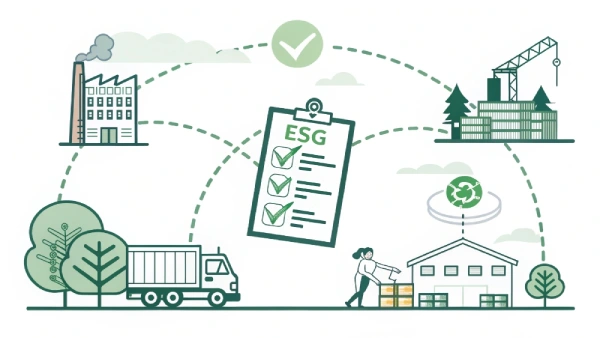
True sustainability isn’t a checkbox — it’s a system, woven into every link of the supply chain.
A. Material Efficiency and Carbon Reduction
Choosing efficient materials benefits both planet and profit.
Today, manufacturers are embracing recycled composites, water-based coatings, and FSC-certified wood.
These materials reduce regulatory risk and improve indoor air quality — two factors increasingly monitored by hospitality brands.
According to McKinsey, sustainable materials can cut a product’s carbon footprint by up to 30% over ten years.
By achieving near-zero scrap rates and optimizing material selection, wholesalers can simultaneously reduce waste and enhance margins.
B. Integrating Environmental Accountability
Your environmental credibility is only as strong as your weakest supplier.
That’s why leading wholesalers now require third-party audits and ESG alignment across all partners.
At my company, we vet every component supplier for ethical labor, waste management, and materials sourcing.
When a developer audits our supply chain, we present a fully traceable, transparent network — and it consistently passes with flying colors.
Deloitte confirms that companies implementing sustainability programs experience cost reductions and brand differentiation simultaneously.
In other words: doing the right thing pays off.
C. Custom Manufacturing Minimizes Waste
Custom manufacturing isn’t just about aesthetics — it’s the most efficient and responsible production method available.
For one large hotel project, we customized vanity sizes down to the millimeter.
Had we supplied standard dimensions, thousands of dollars in scrap would have been wasted.
Instead, our made-to-order process achieved 98% material utilization, cutting both environmental impact and total cost.
Customization turns sustainability from an abstract goal into a practical profit strategy.
Market Data Confirms Profitability
Sustainability is driving the fastest-growing segments in the global furniture industry.
Wholesalers who adapt now are securing long-term market dominance.
Market Growth Projections to 2030
Global Bath Vanity Market
Grand View Research
US Sustainable Furniture Market
Mordor Intelligence
US B2B / Project Channel
Case Example — Svedbergs Group: Leading with Transparency
The Svedbergs Group, a leading European bathroom brand, offers a model of transparent environmental practice:
Sustainability Credentials
100% FSC-Certified Wood
Validated Net-Zero Targets
Environmental Product Declarations (EPD)
This level of documentation and transparency represents the new standard for bathroom vanity supply — and wholesalers aligned with it gain instant trust from developers.
Conclusion — From Compliance to Competitive Edge

For wholesalers, environmental integrity is no longer a “nice to have.” It’s the foundation of long-term competitiveness, profitability, and resilience.
Key Takeaways:
Secure High-Value Clients — Verified certifications (EPD, FSC, Low-VOC) determine eligibility for large-scale projects.
Drive Efficiency & Profit — Sustainable materials reduce waste and long-term operational costs.
Future-Proof Your Business — Become a trusted partner helping clients achieve ESG targets.
The market’s trajectory confirms that this is the most astute investment available. The time for action is now. Start auditing your supply chain and collecting verifiable environmental certifications today to stay ahead of your competitors.
At George, we help global wholesalers and project buyers source certified, durable, and sustainable bathroom vanities that meet modern ESG requirements without compromising on design or efficiency. Partner with us to strengthen your supply chain and lead the next era of responsible B2B sourcing.
See more of our custom bathroom vanity series guide: Building Competitive Edge: Why Custom Bathroom Vanities Dominate the B2B Market.
Build Your Eco-Friendly Hospitality Project
Ready to upgrade your supply chain? Get a free quote on custom vanities and full bathroom sets.
✓ Response within 24 Hours | ✓ Factory Direct Pricing