Finding the right bathroom specs can feel like a headache, especially when lawsuits are a real risk. You want to design a beautiful space, but strict rules often get in the way of your creative vision.
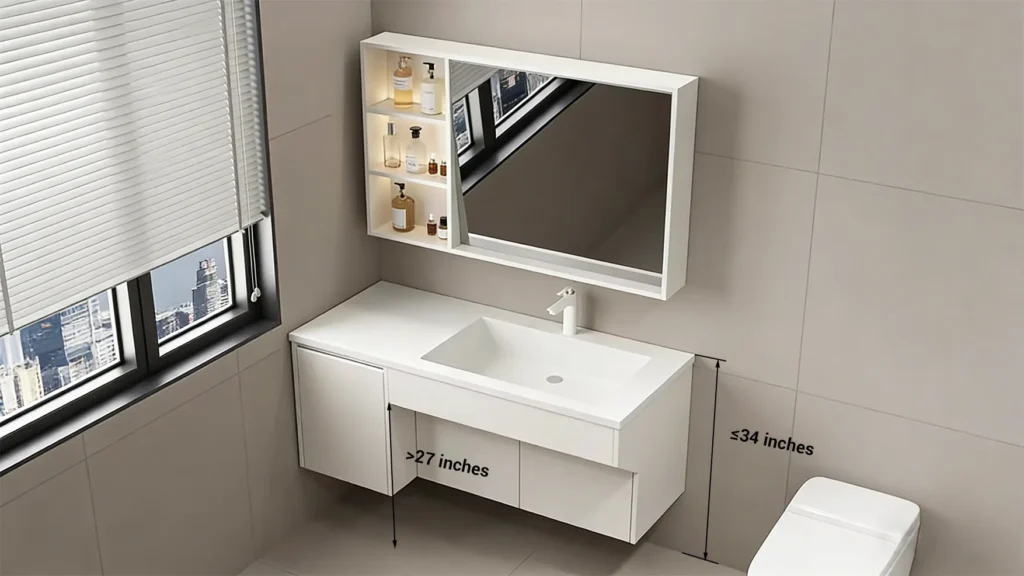
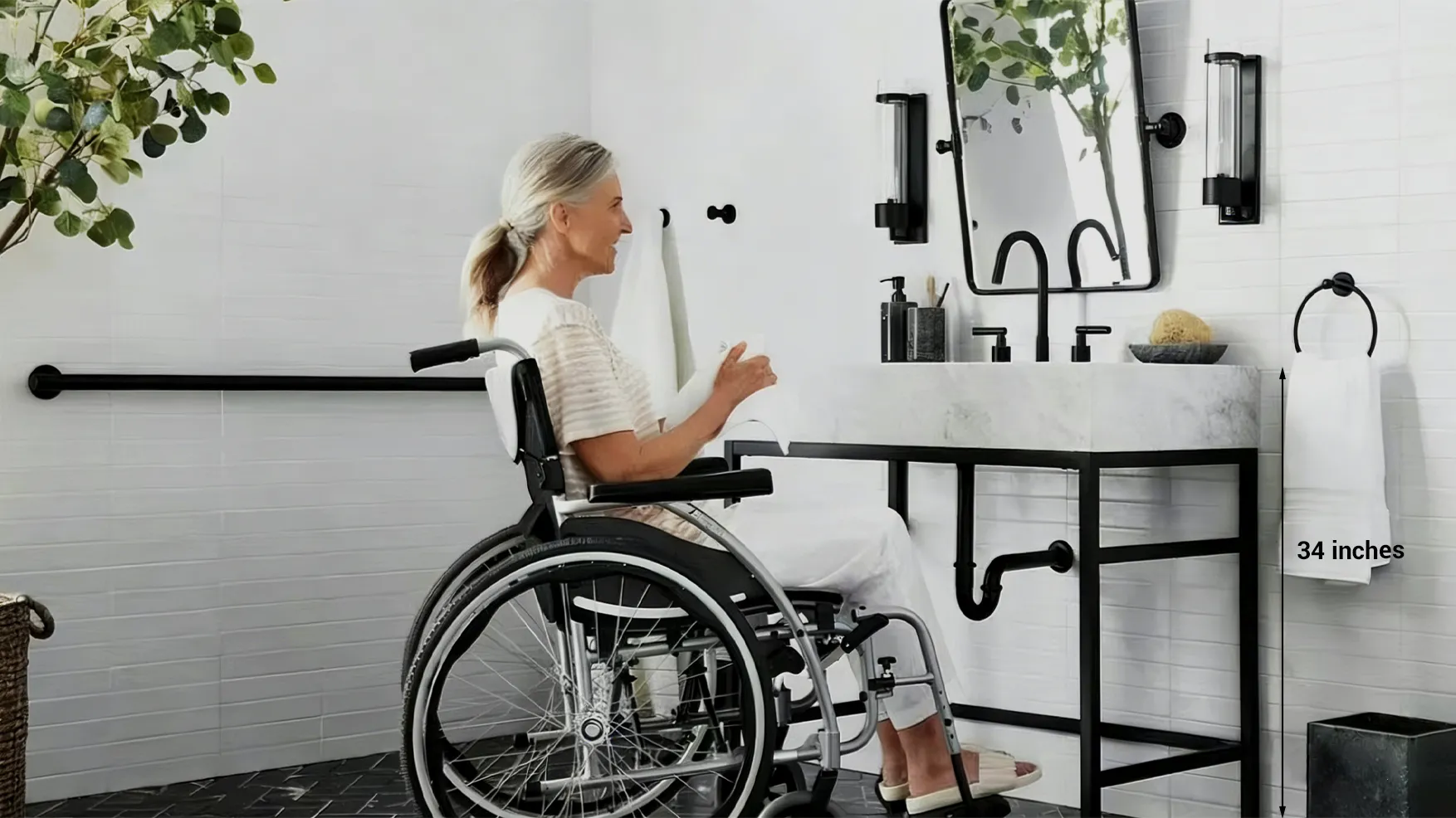
The standard ada bathroom sink height requires the rim or counter surface to be no higher than 34 inches above the finished floor. Additionally, you must provide at least 27 inches of vertical knee clearance underneath to ensure accessibility for wheelchair users.
I know that balancing strict compliance with high-end design is a major challenge for many of my clients. Let’s move past the basics and look at how we can solve these specific installation problems together.
Table of Contents
What is the trend height of a bathroom vanity now?
Many designers today prefer taller vanities for comfort, which confuses things when you need to meet access rules. This conflict often leads to expensive mistakes during final hotel inspections.
While the modern “comfort height” for residential vanities has risen to 36 inches, ada sink dimensions strictly cap the height at 34 inches. This 2-inch difference might seem small, but it is the dividing line between a compliant hotel room and a costly code violation.
Source:
- https://kitchencabinetkings.com/guides/bathroom-vanity-height
- https://www.access-board.gov/ada/guides/chapter-6-lavs-sinks/
Standard Residential Height
In private homes, 30 to 32 inches was the old standard. Now, people are taller, so builders often install vanities at 36 inches to reduce back strain.
The Commercial Limit
For public spaces and accessible hotel rooms, you cannot follow the residential trend. You must stick to the 34-inch maximum to accommodate seated users comfortably.
Mixing Heights
In large hotel bathrooms with dual vanities, I often suggest installing one at a standard height and one at the ADA height. This satisfies all guests without breaking any laws.
| Vanity Type | Height Standard | Primary User |
|---|---|---|
| Old Standard | 30-32 inches | Children/Avg Height |
| Comfort Height | 36 inches | Tall Adults |
| ADA Compliant | Max 34 inches | Wheelchair Users |
It is frustrating when luxury trends clash with legal safety codes in high-end hotel projects. As a procurement manager, you should look for “universal design” vanities that look modern but stay low. This approach allows you to keep a sleek look without risking a lawsuit. You do not have to sacrifice style for safety if you plan the height early in the design phase.
🏨 Project Snapshot: Oceanfront Resort Renovation
- 🔴 Pain: Custom marble tops were too thick, causing ADA knee-clearance failures 2 weeks before opening.
- 🟢 Solution: George's team supplied 150 pre-fabricated, shallow-apron ADA vanities within 5 days.
- 🏆 Result: Passed inspection instantly. Project opened on time.
What is the minimum height for a bathroom sink?
We talk a lot about the maximum height, but the space underneath the sink is actually just as important. If you mount the sink too low, a wheelchair user cannot pull up close enough to wash their hands.
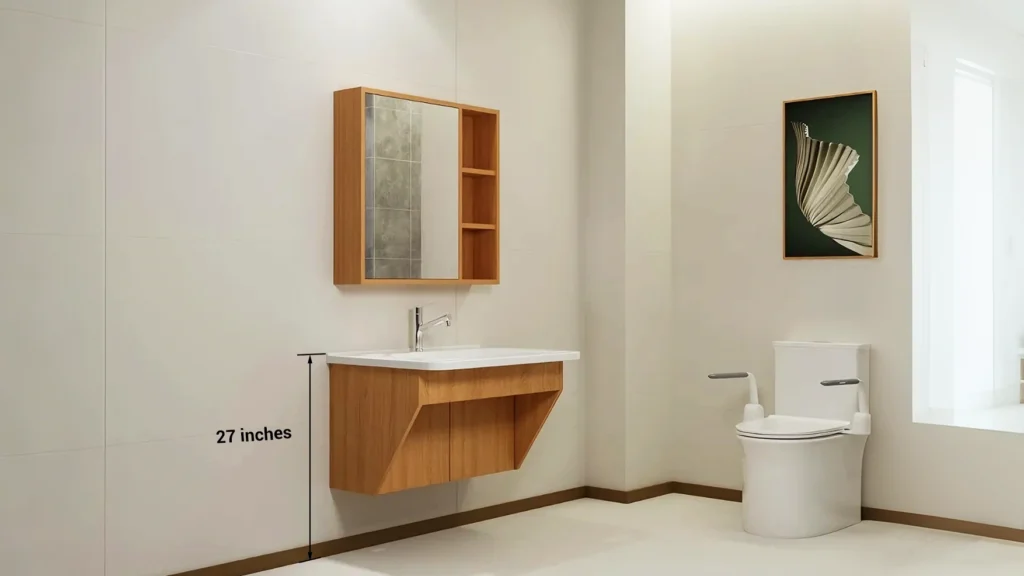
The minimum ada sink height for knee clearance is 27 inches from the floor to the bottom of the apron. This ensures that a person in a wheelchair has enough room for their knees without hitting the plumbing or the vanity structure.
Source:
- https://archive.ada.gov/reg3a.html#anchor31
- https://www.access-board.gov/ada/guides/chapter-3-clear-floor-or-ground-space-and-turning-space/
Knee Clearance
You need a clear space that is at least 27 inches high, 30 inches wide, and roughly 11 to 25 inches deep. This creates a safe “box” of air for legs.
Toe Clearance
Below the knee space, you also need toe clearance. This must be at least 9 inches high vertically from the floor, allowing footrests to slide under easily.
Depth Matters
The knee clearance must extend at least 8 inches back from the front edge of the sink. If the sink is too shallow, the user cannot reach the faucet.
When I worked in the factory, we often had to redesign cabinets because the apron was too thick. A thick countertop or a deep sink bowl eats up that critical 27-inch vertical space. You must choose shallow basins or wall-mounted sinks to keep this area open. If you ignore the thickness of the material, you will fail the inspection even if the rim height is correct.
What is the required ADA commercial bathroom sink height for hotels?
Hotels face a unique pressure because they must welcome every type of guest while looking luxurious. A single mistake in a renovation project can force you to rip out hundreds of brand-new units.
The ada commercial bathroom sink height must not exceed 34 inches, and this rule applies strictly to accessible guest rooms and lobby restrooms. This measurement includes the countertop and the sink rim, so vessel sinks often cause compliance failures.
Guest Room Standards
In dedicated accessible rooms, the sink must meet the 34-inch rule. It also needs clear floor space for a wheelchair to turn around, usually a 60-inch circle.
Lobby Restrooms
Public restrooms in the lobby are high-traffic areas. Here, durability is key, but the height limit remains the same. Wall-hung carriers are often best for these heavy-use spots.
Counter Thickness
If you choose a thick granite top, you must lower the cabinet box. I always tell my clients to subtract the countertop thickness before setting the wall brackets.
I know that exposed pipes in a hotel bathroom can look cheap and ruin the vibe. To fix this, use attractive chrome traps or wrap them in insulating covers that match the decor. This protects guests from burns on hot pipes and hides the ugly parts. It is a small detail that improves the guest experience and meets ada bathroom sink requirements without looking industrial.
How does ADA sink clearance from side wall ensure guest access?
Height is not the only dimension that matters; lateral space is vital for movement. If a sink is shoved into a corner, a person in a wheelchair cannot position their arms correctly to use it.
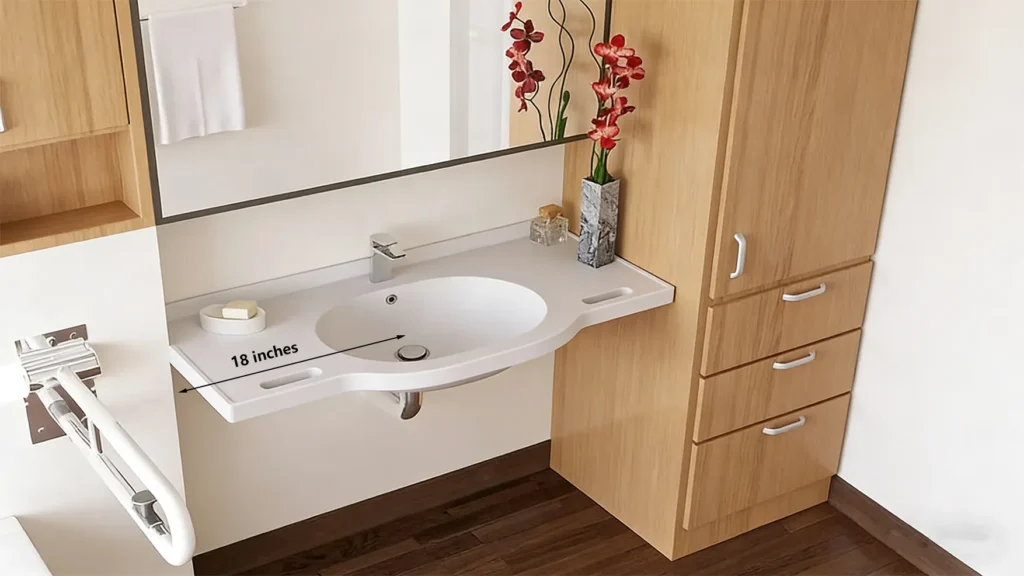
The ada sink clearance from side wall rule states that the centerline of the sink must be at least 15 inches from the wall. However, I recommend aiming for 18 inches to give guests more elbow room and comfort.
Centerline Rule
The distance is measured from the center of the basin to the finished wall surface. If you tile the wall later, you might lose half an inch, so plan for extra space.
Approach Space
There must be a clear floor space of 30 by 48 inches in front of the sink. This allows a wheelchair to roll right up to the front edge without obstruction.
Shared Counters
If you have a long counter with multiple sinks, ensure the accessible one is not crowded. Keep soap dispensers and towels within easy reach of that specific station.
In my experience, installers often center the cabinet on the wall without checking the sink centerline. This simple math error can make the sink unusable for someone with limited upper body mobility. I suggest marking the floor clearly before the plumbers arrive. Creating a checklist for your installation team helps avoid these silly spacing errors that can cost you time and money later.
📐 tricky Layout? We Customize for Hotels.
Standard sizes often fail side-wall clearance rules in compact hotel bathrooms.
Send us your floor plan. We provide custom sizing and 3D design services to ensure your bathroom vanities, showers, and toilets fit perfectly and meet all ADA codes before production.
What are the ADA rules for sinks?
Beyond simple measurements, there are operational rules that ensure true usability for everyone. Meeting the height requirement is only step one; the faucet and pipes must also be safe and easy to use.
A fully ada compliant bathroom sink height setup includes faucets that can be operated with one hand and require less than 5 pounds of force. You must also insulate all pipes under the sink to prevent contact injuries.
Source:
Faucet Controls
Lever-operated, push-type, or motion sensor faucets are best. The user should not have to twist their wrist or grip tightly to turn on the water.
Pipe Protection
Water supply and drain pipes under the sink must be insulated or enclosed. This prevents burns from hot water pipes and protects against sharp edges.
Reach Ranges
Soap dispensers and faucets must be within reach. The maximum high forward reach is 48 inches, and the maximum low reach is 15 inches from the floor.
| Component | Requirement | Goal |
|---|---|---|
| Faucet | Lever or Sensor | No twisting needed |
| Pipes | Insulated/Wrapped | Prevent burns/cuts |
| Operation Force | Max 5 lbs | Easy for weak hands |
I have seen many beautiful hotel bathrooms fail because the faucet knobs were too hard to turn. Think about a guest with arthritis; round knobs are painful for them. Using sensor faucets is a smart move for hotels because it is hygienic and always compliant. Also, covering those pipes is not just a rule; it shows you care about guest safety. These small details define quality service.
Conclusion
Understanding the standard ada bathroom sink height of 34 inches helps you build safer, more inclusive spaces for all guests. If you need help sourcing the right compliant vanities for your next hotel project, please contact us at georgebuildshop.
Ready to Source Your Hotel Bathrooms?
From ADA-compliant vanities to faucets and toilets, George Build Shop is your One-Stop Solution for hospitality projects.
Why choose us?
👇 Upload your project details below for a quote within 24 hours.