Why “Best Material for Bathroom Faucets” Depends on How and Where They’re Used
In my ten years in the sanitary ware industry, I’ve sat across the table from hundreds of hotel project managers. The conversation almost always starts with design—slick curves, matte black finishes, and modern aesthetics. However, in commercial bathrooms, material choice is rarely just a design decision—it is a risk decision. A wrong material choice can quietly multiply maintenance costs across hundreds of rooms.
When hotel buyers ask about the best material for bathroom faucets, they are rarely thinking about design longevity at first—until problems start appearing. As we get closer to signing the contract, the most critical question finally comes up:
“Helen, honestly, what is the best material for bathroom faucets if I don’t want to replace them in two years?”
This question usually arises when maintenance costs and guest complaints begin to surface in a project manager’s mind. In the hotel business, a leaking faucet isn’t just a plumbing issue; it creates a negative guest experience that impacts guest satisfaction scores, online reviews, and brand perception.
Here is the truth I tell all my clients at George Buildshop: There is no single “universal solution” that automatically qualifies as the best material for bathroom faucets in every hotel scenario. When buyers ask about the best material, they are often comparing upfront unit cost—rather than lifecycle performance and maintenance exposure. A faucet that works perfectly in a guest powder room might fail miserably in a high-traffic lobby restroom at a seaside resort.
In this guide, I’m going to set aside commercial considerations and focus on engineering reality. We’ll compare brass, stainless steel, and zinc alloy faucets, analyze durability and maintenance costs, and help you choose the best material based on real hotel project scenarios.
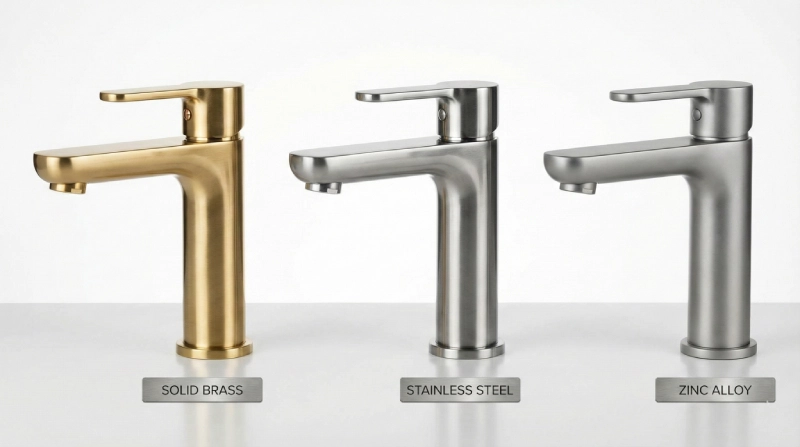
Table of Contents
What Is Considered the Best Material for Bathroom Faucets in Commercial Use?
Short Answer for Hotel Projects:
In hotel and commercial environments, solid brass is the most widely specified material for bathroom faucets by hotel consultants and project engineers due to its durability, corrosion resistance, and long-term repairability. Stainless steel (Grade 304) is a viable alternative in specific design-driven or coastal projects, while zinc alloy is generally limited to short-cycle, budget applications.
To define the best material for bathroom faucets, we first have to define what “best” means in a commercial hotel environment. Unlike a residential home, where a faucet might be turned on ten times a day, a hotel faucet can see hundreds of cycles daily.
From a specification standpoint, consultants and engineers typically evaluate faucet materials using the following criteria:
Durability: Can it withstand physical abuse and water pressure spikes?
Corrosion Resistance: Will it survive hard water and cleaning chemicals?
Repairability: Can the threads survive maintenance without stripping?
Compliance: Does it meet low-lead regulations?
The Industry Verdict
In hotel and commercial environments, brass remains the most widely accepted benchmark for the best material for bathroom faucets.
Why? Because it performs predictably across different water conditions and maintenance practices worldwide. Brass (specifically high-quality alloys like H59) offers the perfect balance of weight, structural integrity, and resistance to water damage. While stainless steel is a strong contender, and zinc serves a specific budget niche, brass is the workhorse of the luxury and mid-scale hotel industry.
What Are the Common Materials Used in Bathroom Faucets?
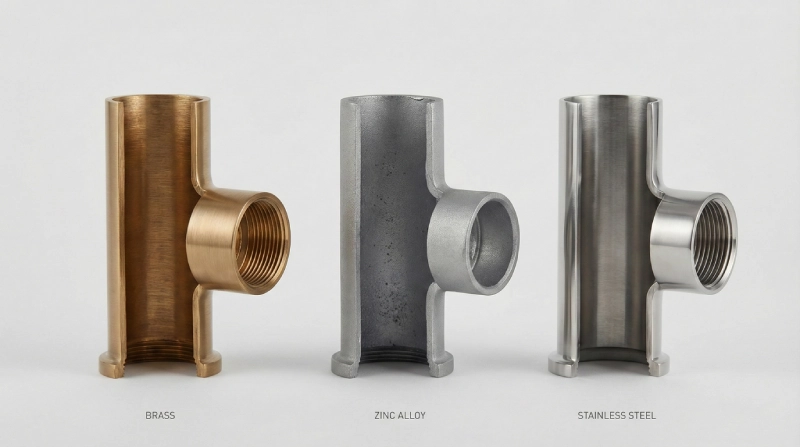
In most hotel tenders, bathroom faucets fall into three material categories. Understanding the raw materials is the first step to avoiding specification failures and long-term maintenance issues. Let’s break down the three contenders you will likely see in catalogs from George Buildshop and other suppliers.
Brass Bathroom Faucets
If you ask any veteran plumber what the best material for bathroom faucets in hotels and commercial buildings is, they will likely point you to solid brass. This preference is especially strong in mid-scale and luxury hotel projects.
Brass is an alloy of copper and zinc. The “sweet spot” for high-quality faucets is usually around 59-60% copper.
The Pro: It is antimicrobial and naturally resistant to corrosion. I have visited hotels renovated 15 years ago where the brass bodies are still structurally sound with minimal internal corrosion.
The Con: It is more expensive than zinc. However, this cost difference is often offset within the first maintenance cycle.
Expert Insight from George Buildshop Engineers: At George Buildshop, we ensure our brass faucets undergo a dezincification resistance process. This process is especially critical in regions with aggressive water chemistry, preventing the zinc from leaching out over time—one of the most common long-term failure mechanisms in cheaper brass units.
Zinc Alloy Bathroom Faucets
From a lifecycle and maintenance standpoint, zinc alloy is rarely considered the best material for bathroom faucets in high-traffic hotel bathrooms, but it may work in low-budget, short-term applications.
Zinc (often Zamak) is injected into molds. It is lightweight and significantly cheaper to produce.
The Reality: I have seen projects where zinc faucets were chosen to save budget, only to require total replacement within three years due to body pitting. The replacement frequency destroys the initial savings.
The Use Case: Use zinc only if you are building a budget motel where the renovation cycle is very short (3-4 years) or for low-use areas. Zinc faucets are typically selected to meet a short-term budget target, not a long-term lifecycle target.
Red Flag: If a supplier cannot clearly state the zinc alloy grade and expected service life, that is a red flag for hotel projects.
Comparison: When looking at brass vs zinc faucet options, remember: Zinc is a short-cycle installation; brass is a long-term asset. For hotel buyers focused on long-term reliability, zinc alloy is rarely the best material — it is a cost-saving compromise.
Stainless Steel Bathroom Faucets
This is the rising star. When discussing stainless steel bathroom faucet material in hotel projects, we are usually referring to Grade 304.
The Pro: It is lead-free by nature and extremely hard.
The Nuance: You must differentiate between 304 and 201 stainless steel. Grade 201 will rust. Grade 304 is excellent.
The Comparison: In the brass vs stainless steel faucet debate, stainless steel wins on hardness but loses on versatility of finish. However, for hotels requiring complex finishes or warm-toned aesthetics, brass often offers greater design flexibility.
Source: How to Choose the Best Faucet Material for Long-Term Durability (2026 Ultimate Guide)
How Do Faucet Materials Compare in Durability?
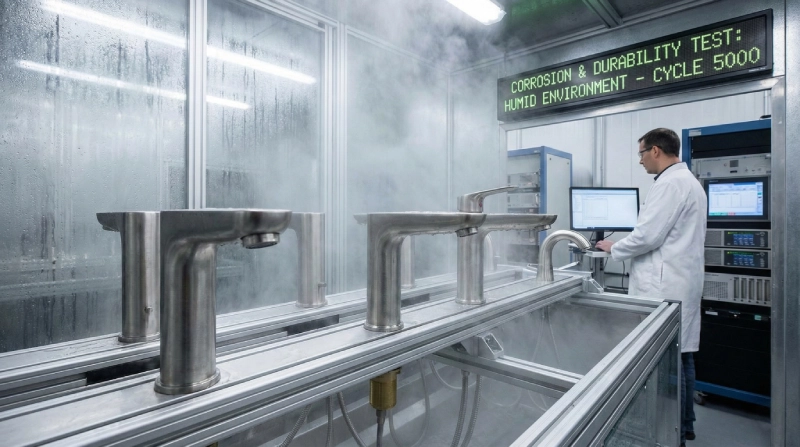
Durability is not just about whether a faucet breaks — it’s about how materials behave under real hotel conditions over time.
Corrosion Resistance in Humid Bathrooms
I recall a project in the Maldives where the air was salty, and the humidity was 90%. The client asked, “What is the best material for bathroom faucets in this coastal environment?”
In similar coastal projects, low-grade zinc and Grade 201 stainless steel consistently fail early. If we had used those materials, the salt air would have eaten the finish almost immediately.
The Winner: PVD-coated Solid Brass or Marine-grade 316 Stainless Steel.
Why: Corrosion starts from the inside out. High-quality brass creates a patina that actually protects the metal, whereas lower-quality metals simply oxidize and crumble.
Performance Under High Daily Usage
In a hotel, guests are not gentle. They slam handles and pull spouts. Hotel faucets experience far higher misuse than residential fixtures.
Metal Fatigue: Zinc alloy is brittle. If a guest drops a heavy perfume bottle on a zinc spout, it might crack. Brass and 304 Stainless Steel are ductile—they absorb impact rather than shattering.
The Verdict: For high-traffic durability, the best material for bathroom faucets is undoubtedly forged brass or heavy-gauge stainless steel. This is why material choice matters more in hotels than in residential bathrooms.
Why Is Maintenance the Overlooked Factor in Choosing Materials?
This is where the Operating Expenses (OPEX) come in. In hotel projects, maintenance directly impacts OPEX and staff workload. You aren’t just buying a faucet; you are buying future maintenance tasks.
Thread Strength and Structural Reliability
Maintenance teams frequently encounter stripped threads when trying to service cheaper faucets. When your staff tightens a nut, brass threads hold firm. Zinc threads often strip because the material is softer and more brittle.
If the threads strip, you can’t just fix a washer; you have to replace the whole unit. Suddenly, the question isn’t about repair, but full faucet replacement across multiple rooms. This frequent replacement quickly becomes a routine maintenance burden for hotel engineering teams.
Spare Parts Compatibility in Overseas Projects
One of the reasons clients love working with George Buildshop is that we standardize our internal components. Standardized tolerances reduce downtime and sourcing delays. However, the material dictates the repair.
Brass: Standard cartridges fit snugly. The metal doesn’t warp, ensuring a watertight seal for years.
Zinc: Over time, water pressure can slightly deform the housing. Even a new cartridge might leak because the body itself is no longer perfectly round.
Pro Tip: Bathroom faucet maintenance is 80% cheaper on brass faucets over 10 years because you are usually just changing a cartridge, not the faucet body — a key reason brass is often the best material for bathroom faucets in overseas hotel projects.
Is the Best Material Always the Most Expensive?
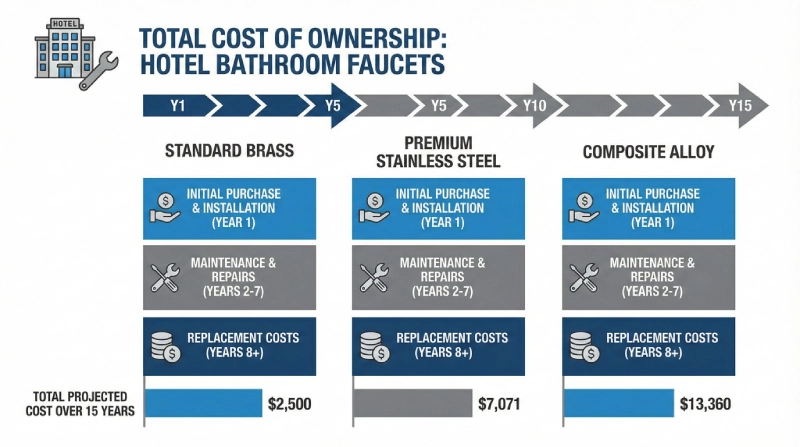
This is the SEO and business decision intersection. Let’s look at the numbers.
Initial Cost Comparison by Material
When evaluating the best material for bathroom faucets, initial cost alone can be misleading. Here is a rough index of what you might expect to pay (using Zinc as the baseline 1.0, though this varies by region):
Zinc Alloy: 1.0 (Cheapest)
Stainless Steel (304): 1.8 – 2.2
Solid Brass: 2.0 – 2.5
At first glance, Zinc looks like the winner. But wait.
Total Cost of Ownership (TCO) Over 5–10 Years
Let’s calculate the TCO. If you buy Zinc, you will likely replace the units in year 3 or 4 due to pitting or finish failure. Total cost includes replacement, labor, and operational disruption. If you buy Brass, the unit lasts 10+ years.
The Golden Rule: The best material for bathroom faucets is often the one that needs the fewest replacements. This is why many hotel procurement teams redefine “best material” as the one with the lowest lifecycle risk. When I run these numbers for my clients, George Buildshop almost always recommends investing in brass or high-grade steel to lower the TCO.
How to Choose the Best Material for Bathroom Faucets by Project Type?
Based on real hotel specifications and renovation cycles, the following material choices are commonly recommended:
Faucet Material Comparison for Hotel Projects
Brass (HPb59-1)
Stainless Steel (304)
Zinc Alloy
What Are the Common Myths About Faucet Materials?
To wrap up, I want to bust a few myths that I hear constantly.
Myth 1: “Stainless Steel Is Always the Best Material”
Not true. While stainless steel bathroom faucet material is excellent, cheap “stainless” (Grade 201) is worse than good brass. It spots easily and can rust. Takeaway: Material grade matters more than material name.
Myth 2: “Material Doesn’t Matter If the Cartridge Is Good”
This is a dangerous mindset. You can put a Ferrari engine in a cardboard box, but the box will still fall apart. A high-end ceramic cartridge cannot stop leaks if the zinc body around it has corroded or warped. Good bathroom faucet maintenance relies on both the cartridge and the body integrity. Takeaway: The body material is the foundation of the faucet’s lifespan.
Myth 3: “Zinc Faucets Are Just as Durable”
Suppliers pushing cheap products will tell you “modern zinc alloys are just as strong.” Physically, perhaps. Chemically? No. Zinc reacts with water much faster than copper-based alloys. For a hotel looking for the best material for bathroom faucets, believing this myth is an expensive mistake. Takeaway: Chemical durability is just as important as physical strength.
Conclusion

The Best Material for Bathroom Faucets Is a Strategic Choice, Not a Guess
Choosing the best material for bathroom faucets is ultimately a risk management decision.
As a project specifier or manager, you want to install it and forget it. If you are working on a luxury or mid-scale project, brass is undeniably the champion. It offers the weight, the finish options, and the longevity that hotel guests expect. If you are in a modern, industrial-style project, 304 Stainless Steel is a fantastic alternative.
At George Buildshop, we don’t just sell faucets; we sell peace of mind. We help you navigate the brass vs stainless steel faucet debate to find the exact spec that fits your budget and your lifespan requirements.
For hotel buyers, the best material for bathroom faucets is the one that balances durability, maintenance, and long-term cost — not just appearance or price.
Are you currently sourcing for a new hotel project?
If you are responsible for specifying or sourcing faucets for a hotel project and want to ensure your material specifications match your environment and usage, our team at George Buildshop can help validate your material specification before procurement.
Read more: How Can Hotel Project Managers & Developers Source the Best Bathroom Sink Faucets in 2026?