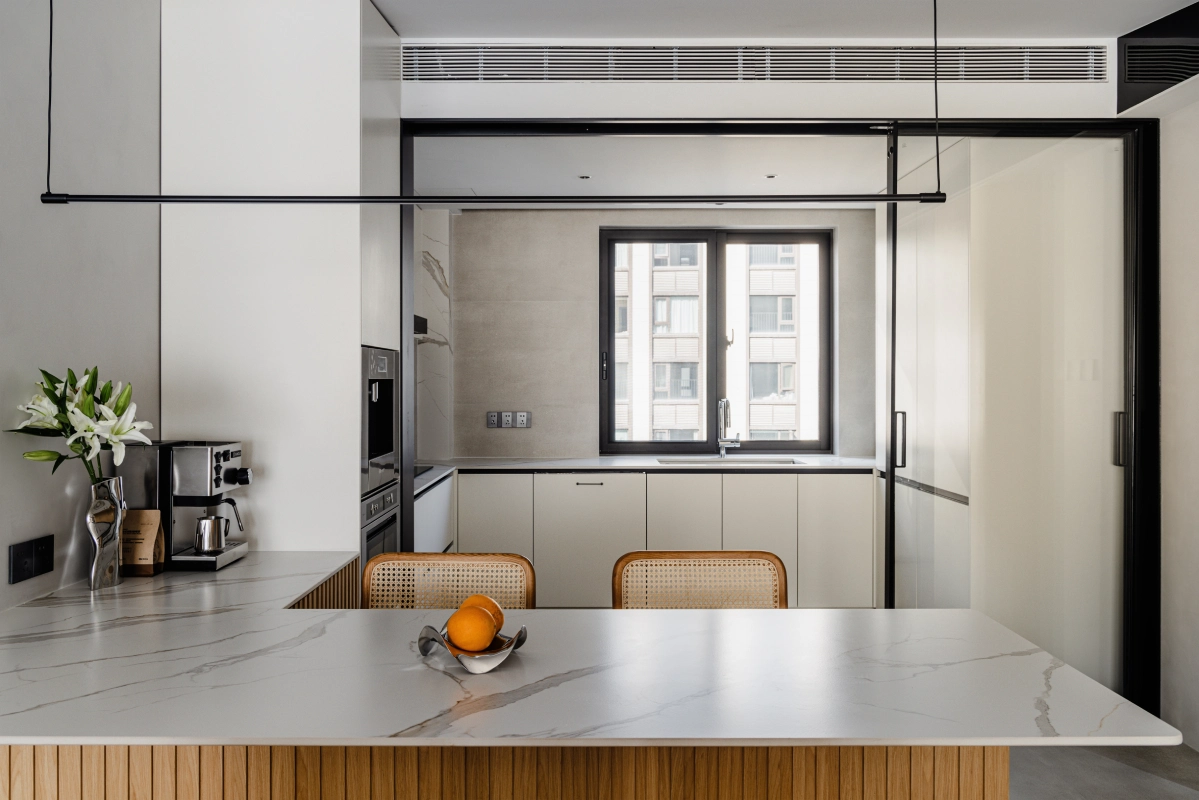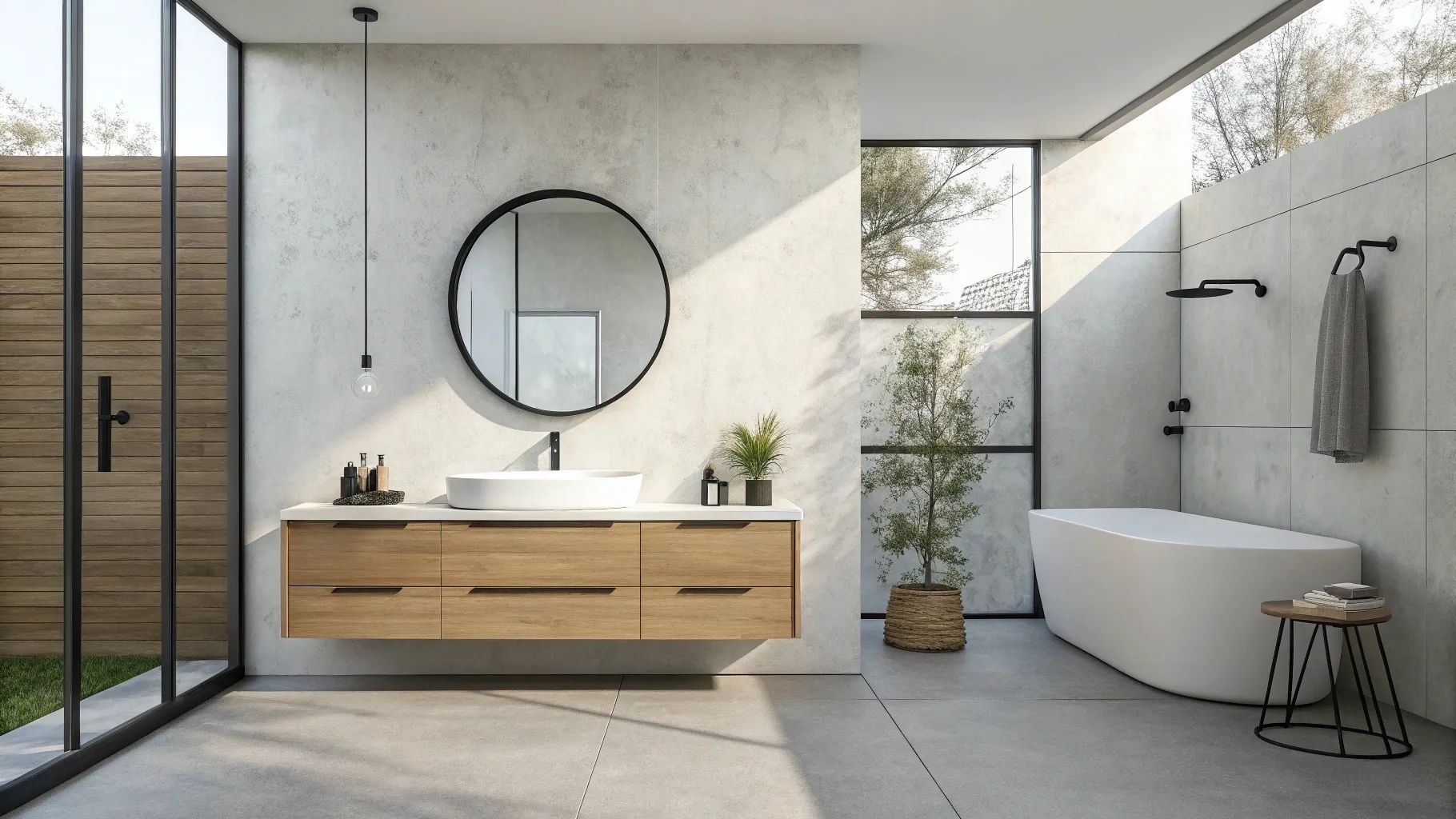
I see a problem: guests feel cramped at the sink. I know this hurts reviews and repeat stays. I will show clear width choices that fix this.
A properly sized vanity boosts comfort, storage, and function. For most hotel bathrooms, 60 inches for doubles and 36–48 inches for single-use rooms balance guest comfort and cost. I explain how to pick widths for room type, space, ADA needs, and maintenance.
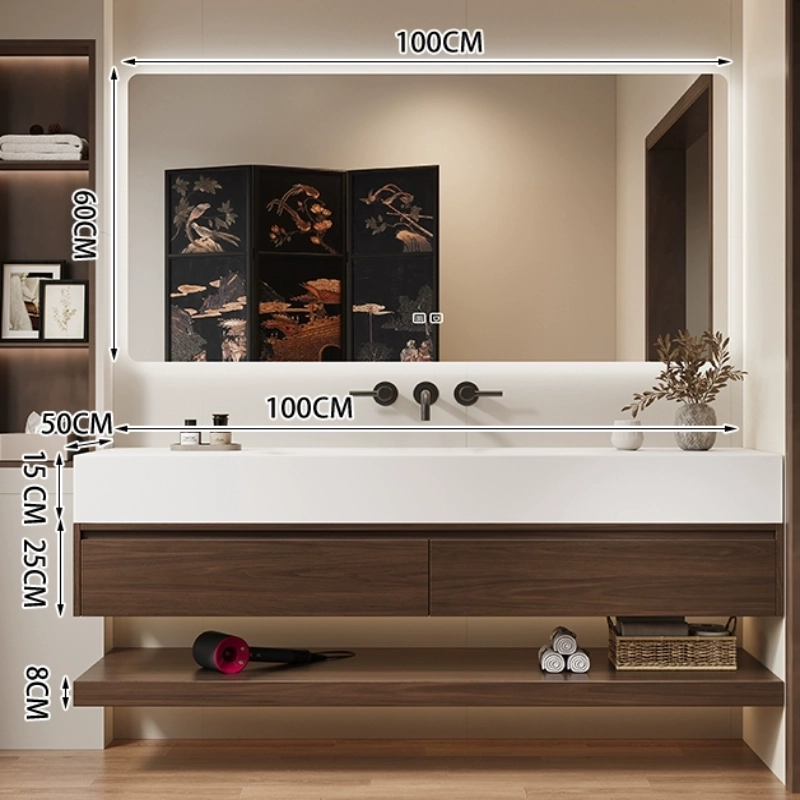
I want you to read on. A wrong vanity choice can cost you in guest satisfaction and repairs. I will make this simple and practical so you can act with confidence.
Table of Contents
Why does vanity width matter for guest satisfaction?
Small vanities feel crowded. Guests bump hips, spill toiletries, and complain. Give them space and storage.
A wider vanity gives guests elbow room, surface for toiletries, and better mirror access. It reduces accidental damage and improves perceived room value.
Aim for functional surface and clear approach space.
Key points:
- Comfort at the sink improves perceived room quality.
- The surface area lets guests place toiletries without clutter.
- Larger widths improve mirror use and two-guest simultaneous use.
- Wider vanities can add storage and reduce housekeeping calls.
I learned this on the factory floor and in hotel projects. Guests notice small things. If they can place a phone, a toiletry bag, and lean to the mirror, they feel cared for. A vanity’s width affects all that. Consider user flow: guest enters, approaches sink, sets down items, uses mirror, and leaves. Each step needs space. I use a simple table to compare outcomes by width.
| Vanity width | Typical use | Guest impact |
|---|---|---|
| 24–30 in | Compact rooms | Basic use, crowded for many guests |
| 36–48 in | Standard single | Comfortable for one guest |
| 60 in | Double/suite | Comfortable for two guests |
| 72+ in | Executive suites | Luxury, more storage, higher cost |
I recommend matching width to how guests will use the room. If the room targets couples, plan for 60 inches or twin basins.
What vanity widths do different project types prefer?
Procurement teams face mixed project specs. Inconsistent choices cause delays and mismatched rooms. Standardize widths by project type.
Hotels and resorts use standard widths by room tier. Economy rooms trend narrow. Upscale rooms use double vanities at 60–72 inches. Apartments and condos prefer compact, durable sizes.
Key points:
- Economy hotels: 24–36 inches for cost and space.
- Midscale: 36–48 inches for comfort and value.
- Upscale hotels/resorts: 60–72 inches for twin basins.
- Suites and villas: custom widths, 72+ inches for luxury.
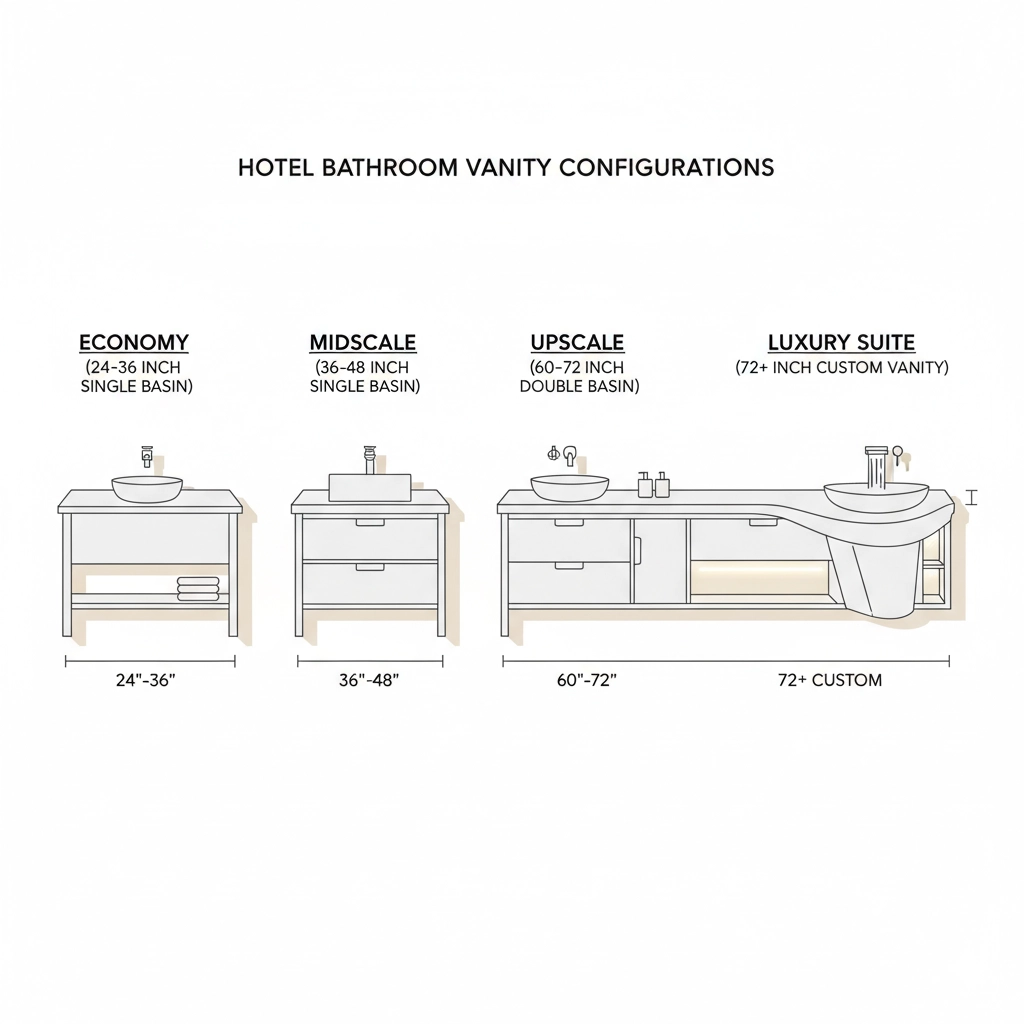
When I advise procurement managers like Emma, I start by asking for room mix and guest profile. For short-stay economy rooms, narrow vanities save footprint and cost. For business and upscale rooms, guests expect two sinks or larger surfaces. For resorts, wide counters improve family use and staging (luggage, toiletries). I also weigh lead times and finish consistency across lots. Standardizing a few widths reduces ordering errors and finishes mismatches. Use a small decision table to match room type to width and budget.
| Project type | Recommended width | Notes |
|---|---|---|
| Economy | 24–36 in | Cost first, durable materials |
| Midscale | 36–48 in | Balance comfort and cost |
| Upscale | 60–72 in | Twin basins common |
| Suites/Villas | 72+ in | Custom solutions, luxury finishes |
How should you choose vanity width based on bathroom size?
Space requirements vary. An oversized vanity may obstruct water flow. Adjust the vanity size according to water flow and fixtures.
Measure clearances first. Keep 30–36 inches of clear floor space in front. Allow 18–24 inches between the toilet and vanity edge. Choose vanity width that keeps circulation and storage balanced.
Key points:
- Measure clear floor space and fixture distances.
- Keep at least 30 inches clear in front of vanity.
- Maintain 18–24 inches between toilet and vanity.
- Factor door swing and shower entry into planning.
I always start with an on-site measure. I map door swing, toilet location, and shower entry. Then I place a virtual vanity. If a 60-inch vanity blocks a shower door, it’s the wrong choice even if attractive. Use simple rules: clear front space 30–36 inches; side clearance to toilet 18 inches minimum. For tight bathrooms, pick a shallower vanity (16–18 inches deep) to keep width but save depth. Shallow vanities reduce storage, so add drawers higher up. For modular projects, use repeatable widths to speed installs and reduce finish variance.
Expert Choice
| Bathroom width | Max recommended vanity width* |
|---|---|
| <5 ft (60 in) | 24–30 in |
| 5–7 ft | 30–48 in |
| 7–9 ft | 48–60 in |
| 9+ ft | 60+ in |
Assumes standard fixture layout and required clearances.
Is a 48 inch vanity too small?
Teams worry 48 in may limit guests. They fear lost perception of value. 48 in is often the sweet spot for many midscale rooms.
A 48-inch vanity works well for single-sink rooms needing extra surface and storage. It is not large enough for comfortable twin-sink use for most couples.
Key points:
- 48 in fits midscale single rooms with storage needs.
- It gives good surface but may not suit simultaneous use.
- Consider two sinks only at 60 in or wider.
- Use smart storage and mirror layout to maximize value.
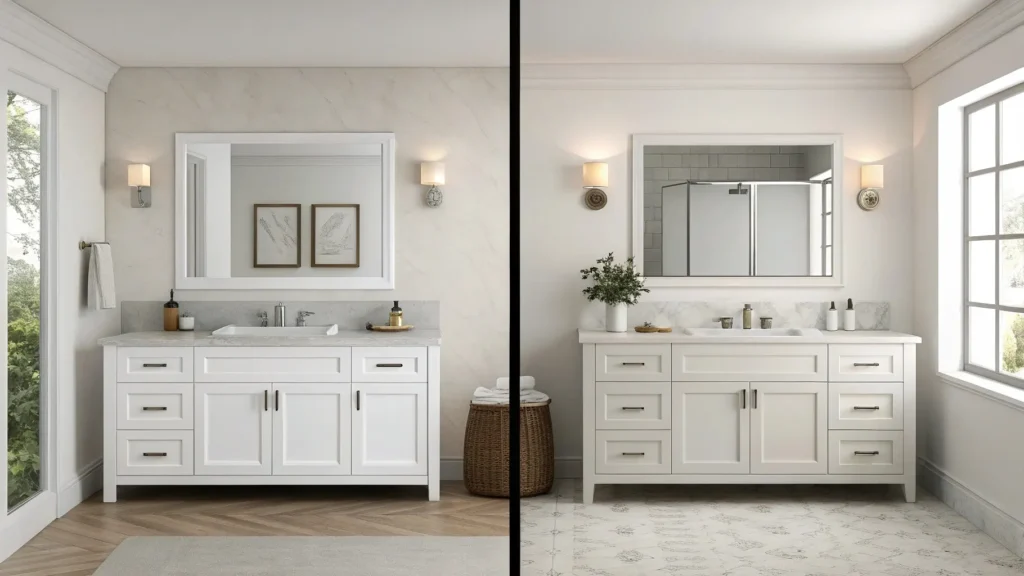
I once recommended 48 inches for a block of midscale rooms. The client wanted more surface without the cost of twin basins. Guests reported fewer complaints about clutter. Housekeeping liked the easy access. If you expect two adults to get ready at once, 48 inches can be tight. For solo travellers or business guests, it is excellent. Combine 48 inches with a wide mirror and good lighting. Add organized drawers for toiletries. That gives perceived luxury without higher cost and lead time of larger cabinets.
Project Case: Boutique Resort
A beach resort struggled with cramped bathrooms, leading to guest complaints about limited countertop space.
George Group designed 48" custom floating vanities with offset sinks to maximize usable surface and storage.
Guest satisfaction scores rose by 18%, and housekeeping reported 15% faster cleaning cycles due to the floating design.
Is a 72-inch vanity too big?
Big vanities look luxurious but can waste space. Oversized cabinets raise cost and complicate logistics. 72 fits high-end suites but needs the correct room size.
A 72-inch vanity is ideal in large suites and villas. It allows twin basins and generous storage. In smaller bathrooms it reduces circulation and adds cost with little guest benefit.
Key points:
- 72 in luxury suites and villas.
- It supports twin basins and vanity tasks.
- It increases material and shipping cost.
- Avoid in standard rooms smaller than 9 ft across.
In a resort project I designed, 72-inch vanities defined the suite experience. They held dual basins, cosmetics, and linen drawers. Guests loved the space. But the same unit in a standard room would block flow. Big cabinets can also complicate finish consistency across batches. When I propose 72 inches, I also set delivery windows and inspect factory batches. For procurement, balance guest impact with cost, lead time, and install complexity. If you need a luxury feel, consider a 60-inch vanity with premium materials before jumping to 72 inches.
What ADA and universal-design requirements must procurement decision-makers follow?
Non-compliance risks fines and lost bookings. ADA issues harm guests and brands. Follow minimum ADA clearances and reachable surfaces.
Key ADA notes: knee clearance 27 inches high under sink, 30×48 inch clear approach, maximum sink height 34 inches, controls within reach. Universal design adds lever faucets, non-slip surfaces, and reachable storage.
Key points:
- Provide 30×48 in clear floor space at accessible fixtures.
- Keep the sink rim no higher than 34 inches.
- Allow 27 inches knee clearance under sinks where required.
- Use lever or sensor faucets and reachable storage.
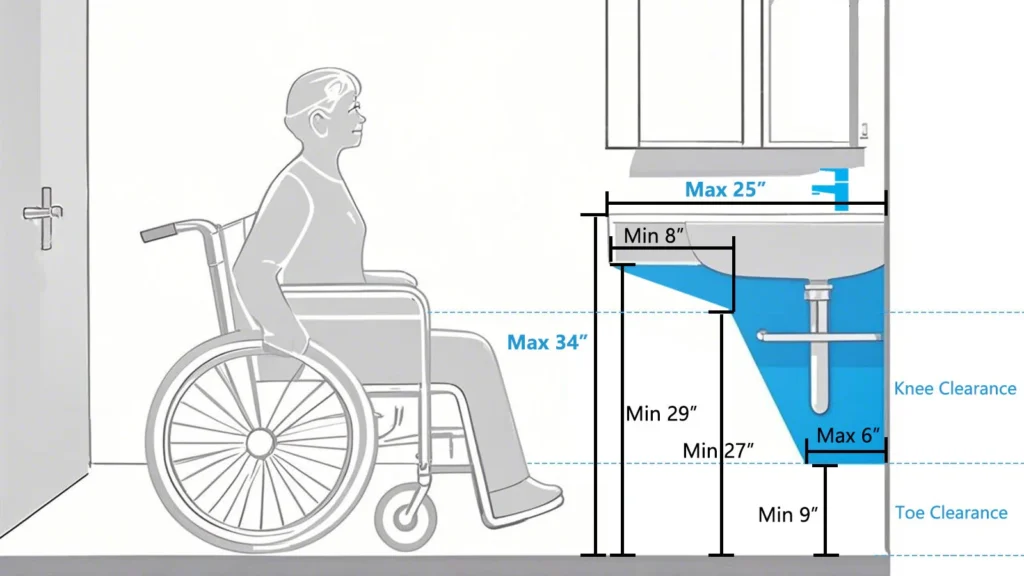
I worked with accessibility auditors on a hotel retrofit. They checked approach clearances, knee space, and control heights. I learned to include at least one universally accessible bathroom per floor for older hotels. For vanities, use removable panels or compliant open knee space options. Choose faucets and hardware that work for limited grip. Label accessible units in procurement specs to avoid accidental shipment of non-compliant vanities. Compliance protects guests and widens your market.
How can procurement decision-makers avoid common mistakes when selecting vanity width?
Teams choose by price or look alone. This causes rework, guest complaints, and warranty claims. Use a checklist and standard widths.
Common mistakes: ignoring clearances, over-customizing, skipping mockups, and not locking finishes per lot. Use sample units in rooms. Standardize finishes and widths. Build install tolerances into schedule.
Key points:
- Always measure circulation and door swings on-site.
- Order samples or mockups before full purchase.
- Standardize a few widths to reduce errors.
- Coordinate finish and batch numbers with the factory.
I advise Emma to run a small pilot before full rollouts. Install one mock vanity in a sample room. Test guest flow, housekeeping access, and maintenance. Track lead times and finish matches. Create a procurement checklist: space verification, ADA compliance, finish confirmation, sample approval, and delivery schedule. This simple routine cuts mistakes and improves guest satisfaction. I keep a shared spreadsheet with these checks. It saves time and money on every project.
Conclusion
A well-chosen vanity width improves comfort, reduces issues, and raises perceived value. Contact me at georgebuildshop for specs, mockups, and project advice.
Master Molding Right — georgebuildshop — https://georgebuildshop.com/
Ready to elevate your guest experience?
Building or renovating a hotel requires more than just buying furniture—it requires a partner who understands scale, durability, and design harmony.
Tell us about your project requirements below. Our hotel solution experts will provide a comprehensive quote and space design within 24 hours.