
Smart Toilet vs Traditional Toilet: How to Choose the Right Solution for Luxury Villa Projects
Hi! I am Helen. I have spent the last 10 years working deeply in the bathroom manufacturing and supply industry. Every single week, I sit down with overseas developers, architects, and project managers. We look at blueprints, we discuss budgets, and we plan beautiful spaces.
The question I hear more than almost any other is about the smart toilet vs traditional toilet. Developers constantly want to know which one they should buy to maximize their return on investment.
When comparing smart toilets vs traditional toilets, the right choice depends on the project—not the product itself.
Quick Answer: Smart toilets deliver the ultimate luxury experience and boost property value in master suites, while traditional toilets provide unmatched cost control and reliability in secondary spaces. The most profitable solution for villa projects is a strategic, hybrid combination of both.
For villa developments, you must evaluate project positioning, total cost, and maintenance capability rather than focusing only on features. You need the right toilet solution for villa projects, and today, I am going to share my insider knowledge to help you build it.
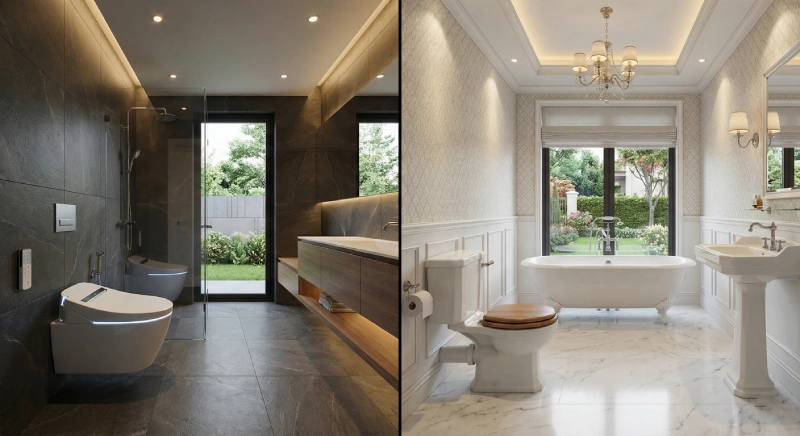
What Is the Best Hybrid Strategy for Smart Toilet Selection in Villa Projects?
Instead of treating this as an “either/or” debate, top-tier project managers approach this as a portfolio.
You do not need to install a high-tech electronic unit in every single bathroom. Doing so drains your procurement budget and unnecessarily increases your maintenance liability across the entire property. Instead, you should adopt a configuration mindset.
Table of Contents
Optimal Toilet Configuration by Project Type
Recommended toilet types by villa project tier to help developers quickly evaluate their options.
Villa Toilet Procurement Strategy by Project Type
👉 Swipe on mobile / View full grid on desktop
Why It Works: Maximizes perceived luxury and buyer appeal in key suites.
Why It Works: Balances modern aesthetics with strict budget control.
Why It Works: Delivers maximum cost-efficiency and easy maintenance.
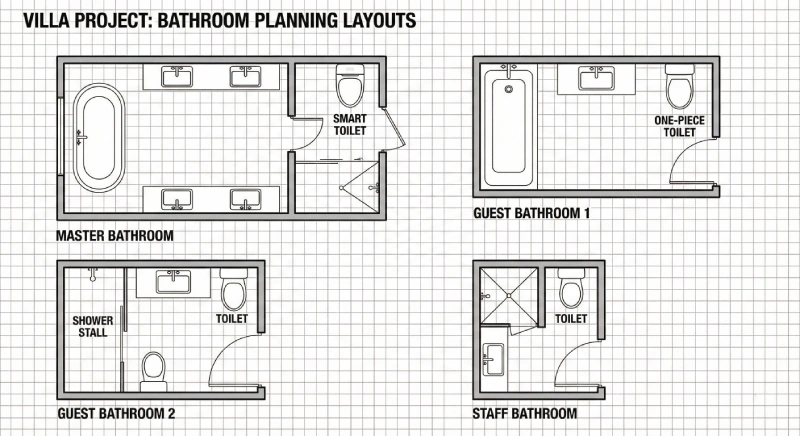
In short, smart toilets drive your high-end positioning, while traditional fixtures protect your bottom line. This approach shifts your focus from simply comparing product specs to making a strategic investment.
Need Help Sourcing?
Get a tailored toilet solution based on your villa layouts, budget, and target buyers.
👉 Get Your Custom Toilet PlanSmart Toilet vs Traditional Toilet: What Are the Key Differences?
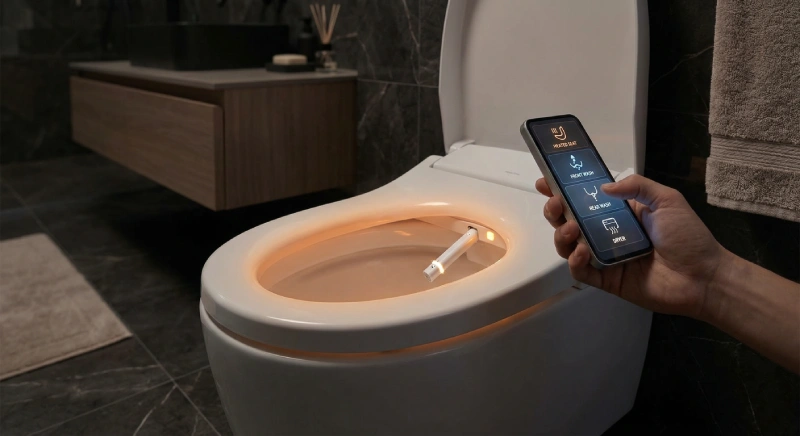
To make the right decision, you need to look beyond flashy features and understand how each option impacts the overall build. When clients ask me to compare a smart vs traditional toilet, I break it down into three core areas to form a complete commercial toilet selection guide.
1. User Experience
A smart toilet offers heated seats, automatic flushing, and integrated washing. If your property buyers are debating a bidet vs toilet, a smart unit gives them both in one sleek package.
👉 Project Impact: A smart toilet for luxury homes directly elevates your luxury villa bathroom design. It tells the buyer that your property is a premium, modern sanctuary.
2. Installation Requirements
A regular toilet simply needs a standard water line and a waste drain. A smart toilet requires a dedicated electrical outlet (typically 110V/220V) and sometimes specific water pressure ratings.
👉 Project Impact: This completely changes your construction complexity. Your electricians and plumbers must coordinate closely during the rough-in phase to ensure bathroom fixtures for construction projects are placed safely.
3. Maintenance Needs
A standard fixture will flush reliably for decades with minimal care. A smart unit contains motherboards, sensors, and motorized parts.
👉 Project Impact: This affects your long-term operations. If you are managing toilet supply for construction projects overseas, you must ensure you have access to technical support and replacement parts for years to come.
How Do Smart and Traditional Toilets Perform in Real Villa Projects?
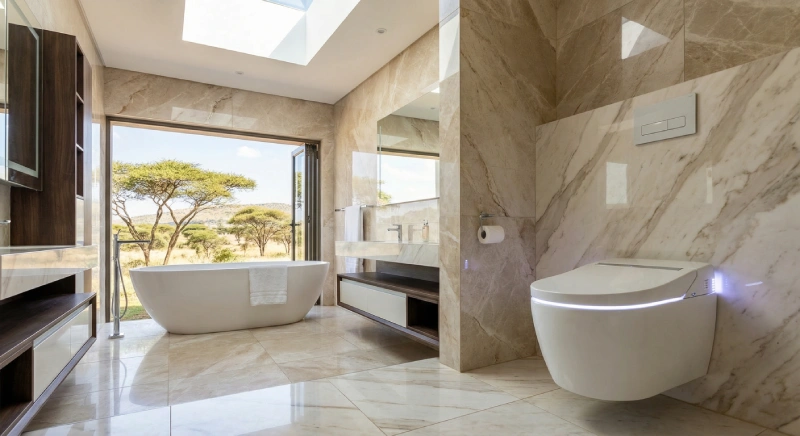
A direct feature comparison is not enough. What matters is how each option performs within a real project environment. Let’s look at a real-world example from my team at George Group.
Let me share a recent success story from my team at George Group. We recently provided a complete, end-to-end bathroom solution for the Cote D’Ivoire Luxury Villas, a massive high-end residential development in West Africa. The developer wanted a 5-star feel to attract elite buyers, but they also needed to maintain strict budget control and avoid power-related maintenance failures.
Instead of a blanket approach, we used a hybrid strategy. We installed our flagship smart toilets in the master suites to maximize buyer appeal. For the guest and secondary rooms, we supplied sleek, one-piece traditional units. The result? High buyer satisfaction, a luxurious aesthetic, and zero maintenance failures in the first year.
Project Snapshot: Cote D’Ivoire Luxury Villas
Location: Abidjan, Cote D’Ivoire
Project Type: High-end Residential Villa Development
Toilet Strategy: Hybrid Model (Smart toilets in master suites, sleek one-piece traditional units in guest rooms)
Result: High buyer satisfaction with a 5-star feel, while the developer maintained strict budget control and zero power-related maintenance failures in the first year.
What Is the Real-World Performance Comparison Between Smart and Traditional Toilets?
How smart and traditional toilets impact project execution and timelines.
Smart Toilet vs Traditional Toilet: Key Project Factors
👉 Swipe on mobile / Compare side-by-side on desktop
The key is not which toilet is better, but which option creates fewer risks and more value. There is no single best toilet—only the most suitable solution for each part of a project.
What Is the Quick Comparison of Smart vs Traditional Toilets for Developers?
Smart toilets = Positioning & premium experience.
Traditional toilets = Cost control & long-term reliability.
Best B2B strategy = Strategic combination based on room type.
How Should You Choose Toilets for Different Bathrooms in Villa Projects?
In practice, the best solution is rarely a single choice. Let’s design the best toilet for villa projects room by room.
Master Bathroom
This is your core selling point. Property buyers judge the luxury level of the whole house by the master suite. A smart toilet for master bathroom spaces is highly recommended. It matches your high-end positioning and delivers the ultimate luxury experience.
Here, you need a balance between cost and experience. The best toilet for guest bathroom use is often a premium traditional unit. You might read our guide on choosing a wall-hung toilet vs floor mounted design here. A wall-hung unit hides the tank inside the wall, saving space and looking incredibly architectural.
Staff or Secondary Bathroom
Durability and budget are your top priorities here. We often discuss a one-piece toilet vs two-piece toilet strategy with developers. One-piece is easier for housekeeping to clean, while a two-piece is highly budget-friendly.
Ultimately, choosing the right fixture means evaluating your specific project context rather than just looking at a spec sheet.
Are Smart Toilets Worth It for Villa Projects?
Before we look at the raw data, let’s address the elephant in the room: are these high-tech units actually worth the investment?
Yes, but it heavily depends on where you install them. Smart toilets are absolutely worth it for high-end villa projects where user experience and property positioning justify the investment. However, installing them in every single room is rarely a profitable move. A targeted combination is the best way to ensure a strong ROI without blowing your budget.
What Is the Real Cost of Smart Toilets vs Traditional Toilets?

Cost should not be evaluated as a single number, but as a long-term investment. If you want cost-effective toilet solutions, look at the complete lifecycle breakdown:
Initial Cost: A smart unit costs significantly more to purchase upfront than a standard gravity toilet.
Installation Cost: You must pay electricians to run wiring to every bathroom location and install waterproof outlets to meet safety codes.
Maintenance Cost: Electronic parts wear out faster than ceramic. If a water temperature sensor fails, you need a specialized technician.
Risk Cost: What happens if the local power grid fails? Does the toilet have a manual backup flush?
Common Misconception Developers Should Avoid Many developers assume that installing smart toilets in every bathroom automatically increases property value. In reality, over-specification often leads to higher maintenance costs without proportional returns.
What Hidden Risks Do Developers Often Overlook When Choosing Smart Toilets?
One common mistake we see is developers installing smart toilets across all units without considering maintenance capacity. When a motherboard fails in a secondary bathroom and the local property manager cannot fix it, the developer’s reputation suffers.
If you are sourcing toilet solutions for developing countries, you must manage these hidden risks:
Power Supply: Selling smart toilets in Africa market or other developing regions requires strict planning. You must ensure the units have built-in voltage protection.
Spare Parts Availability: Can your local property management team get a replacement bidet nozzle in 5 years?
Installer Capability: Do your local contractors know how to correctly install high-tech bathroom fixtures for overseas projects?
In many overseas projects, these environmental risks matter far more than individual product features.
How Should Developers Choose Between Smart and Traditional Toilets?
To simplify the decision, developers can evaluate toilet options based on three key factors.
Project Positioning: Are you building $5 million ultra-luxury homes or $500,000 premium mid-range houses?
Budget Structure: Do you have the electrical budget for widespread smart unit installation?
Maintenance Capability: Will your property management team be able to easily service high-tech electronic units?
Don’t forget design! Exploring our elongated vs round toilet guide can change the aesthetic of the room entirely.
Here is the ultimate rule for developers:
Toilet Selection Formula: Positioning + Budget + Maintenance Capability = Optimal Toilet Configuration
What Is the Recommended Toilet Configuration for Villa Projects?
Based on this formula, my ideal toilet solution for developers looks like this:
Master Suite: Fully integrated Smart Toilet for maximum luxury appeal.
Guest Suite: Premium One-piece Traditional Toilet for a sleek, reliable experience.
Staff Quarters: Durable Two-piece Traditional Toilet for ultimate cost-efficiency.
Helen’s Pro Tip: If you want to save money in the guest suites but still offer modern tech, read about a smart toilet seat vs smart toilet. Adding a smart bidet seat to a high-quality traditional bowl is a fantastic compromise. This hybrid solution is one of the most cost-effective upgrades for mid-range villa projects.
FAQ
1. Are smart toilets worth it for luxury villa projects?
Yes. They are worth it for high-end projects where the elevated user experience and premium property positioning easily justify the initial investment.
2. What are the disadvantages of smart toilets for developers?
The main drawbacks are higher upfront procurement costs, complex electrical wiring requirements during the rough-in phase, and the need for specialized long-term maintenance.
3. Which toilet is best for luxury villa projects?
A strategic hybrid approach is best. Use fully integrated smart toilets in the master bathrooms, and sleek, one-piece traditional toilets in guest and secondary bathrooms.
4. Do smart toilets require electricity to operate?
Yes. Functions like water heating, air drying, and automatic opening require a dedicated power source (usually 110V/220V).
5. Are smart toilets hard to maintain in commercial projects?
They require more specialized care than regular toilets. You must partner with a reliable manufacturer who guarantees spare parts and overseas after-sales support.
Let's Build Something Beautiful Together
Smart toilet vs traditional toilet decisions should always be made early in the design phase. There is no single “best” toilet for all villa projects. As we’ve seen, context is everything.
This is why toilet selection should always be treated as a comprehensive project decision, not a simple product comparison.
We have supported multiple overseas villa developments with tailored bathroom solutions based on real project conditions. If you’re planning a residential project, I can help you define the most cost-effective and low-risk toilet configuration based on your target market.
Many developers make this decision too late—after plumbing and electrical layouts are already fixed. Don’t make that mistake! We can review your floor plans together and recommend a complete toilet selection guide tailored to your exact needs. Or, if you prefer, I can simply recommend a standard configuration based on your project type.
Ready to Take the Next Step?
Would you like me to send you our latest B2B product catalog, or should we schedule a quick design review of your upcoming project to get started?
👉 Let's Get StartedReferences & Industry Data Sources
The cost estimates, market trends, and project strategies discussed in this guide are supported by George Group’s internal project data and leading industry authorities: