
Single vs Dual Flush Toilets: Which System Is Better for Luxury Villa Projects?
💡 Short Answer
Dual flush is the standard choice for most villa projects today — but the right decision depends on your project conditions. The wrong choice often leads to costly post-handover issues.
Hi there! I’m Helen, and I’ve spent over a decade in the sanitary ware industry, helping developers and project managers navigate the complex world of bathroom specifications. If there’s one thing I’ve learned after supplying thousands of units for high-end villa projects at George Group, it’s this: small specification decisions often become major post-handover problems.
When you are managing a multi-million dollar luxury villa development, the plumbing fixtures matter. Specifically, the flushing system. I often get asked by project leads: “Helen, should we stick to the classic single flush, or is the dual flush worth the extra hype — especially when this decision affects hundreds of units at once?”
In this comprehensive guide, we will analyze the single flush vs dual flush debate. We will explore the dual flush vs single flush toilet pros cons, break down the single flush vs dual flush cost, and share real-world data so you can make the best strategic decision for your development.
For a complete overview of toilet selection strategies, you can also read our developer guide to choosing toilets for luxury villa projects.
Table of Contents
Why Flush System Choice Matters More Than You Think?
I remember consulting on a boutique villa complex in Dubai a few years ago. The developer wanted to cut corners and save a few dollars per unit on the flushing mechanism. They skipped the technical review and went with a low-tier single flush system.
Fast forward six months after the handover. The developer was facing a massive headache. They dealt with constant post-sales complaints, running toilets, and unhappy luxury buyers complaining about poor scouring power and clogs. What started as a small cost-saving decision quickly turned into a project-wide maintenance issue, significantly increasing post-handover service costs and forcing additional budget allocation for ongoing repairs. In similar projects, we’ve seen maintenance requests increase by 20–30% due to poor flushing performance.
Choosing the wrong option directly triggers:
Customer Complaints: Poor flushing leads to clogs and bad reviews.
Maintenance Nightmares: Cheap valves lead to constant repair requests for your property management team.
Regulatory Roadblocks: Failing to meet strict water-saving standards can delay project approvals.
Brand Damage: Using low-end configurations in a high-end project lowers your property’s premium value.
The flush system is not a minor detail — it’s a strategic project decision. And in most cases, it’s a decision that only proves right or wrong after residents move in. For most developers evaluating single flush vs dual flush toilets, the real decision is not about features — but about cost, performance, and long-term project risk.
What Should Developers Consider Before Choosing a Flush System?
Before we look at the specs, you need to look at your project. Instead of just reading about features, ask yourself these three critical questions:
- What is the actual water pressure condition in your project location? High and stable pressure allows for different choices than low or fluctuating pressure.
- Who is your target buyer — cost-driven or sustainability-driven? Knowing what your buyer values makes the specification process much easier.
- Will your property management team handle maintenance easily? You must align your hardware choices with your team’s operational capacity.
If you can answer these three questions clearly, your decision becomes much easier and safer. If not, technical consultation is recommended before finalizing specifications.
What Is the Main Difference Between Single Flush and Dual Flush Toilets?
Let’s establish a quick baseline. I promise I won’t bore you with too many technical engineering details!
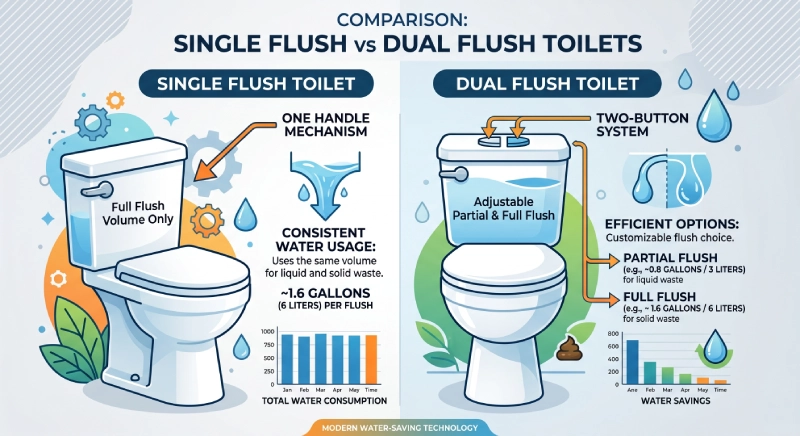
Single Flush Toilets: This is the traditional system. It uses a single lever or button. Every time you flush, it releases a fixed volume of water (usually around 1.28 to 1.6 gallons). It’s straightforward, familiar, and mechanical.
Dual Flush Toilets: This system features two buttons. The smaller button is for liquid waste (typically using 0.8 to 1.1 gallons), while the larger button is for solid waste (using the full 1.28 to 1.6 gallons). It offers active water volume control.
But the real question is not how they work — it’s how they perform under your actual project conditions.
Key Differences Between Single Flush and Dual Flush Toilets
When you’re looking at an Excel sheet for 100 luxury villas, you shouldn’t just look at standard specs. You need to understand the real-world implications. Here is a practical breakdown of the dual flush vs single flush toilet pros cons from a developer’s perspective.
1. Upfront Cost vs. Long-Term Value
Single flush mechanisms are generally simpler to manufacture, making their upfront procurement cost slightly lower. However, dual flush systems add perceived value to the bathroom, allowing developers to justify a higher overall property price point. In premium projects, this perception often outweighs the small difference in upfront cost.
2. Water Efficiency & Utility Savings
Dual flush systems dominate here. They can save up to 30% more water compared to traditional single flush units. While the developer doesn’t pay the long-term water bill, marketing a “high-efficiency, eco-friendly villa” is a massive selling point for today’s buyers. In many markets, this is no longer a selling point — it’s an expectation.
3. Buyer Perception & Market Positioning
Modern luxury buyers expect smart, sustainable features. A sleek dual-flush plate on a wall-hung toilet screams “premium.” A standard single-lever handle can sometimes feel dated in a high-end architectural design, which can subtly impact how buyers perceive the overall quality of your project.
4. Maintenance Complexity
Single flush systems have fewer moving parts, which traditionally means lower maintenance. However, high-quality dual flush valves (like the commercial-grade ones we engineer at George Group) have exceptional lifespans that rival single flush systems. The risk typically comes from non-certified or low-quality components, not the dual flush system itself.
Initial Cost → Winner: Dual Flush
Water Saving → Winner: Dual Flush
Mechanism Life → Winner: Single Flush
Ease of Use → Result: Tie
Project ROI → Winner: Dual Flush
There is no universal “better” option — only the one that aligns with your project strategy and market expectations.
Which Flush System Is Best for Different Types of Villa Projects?
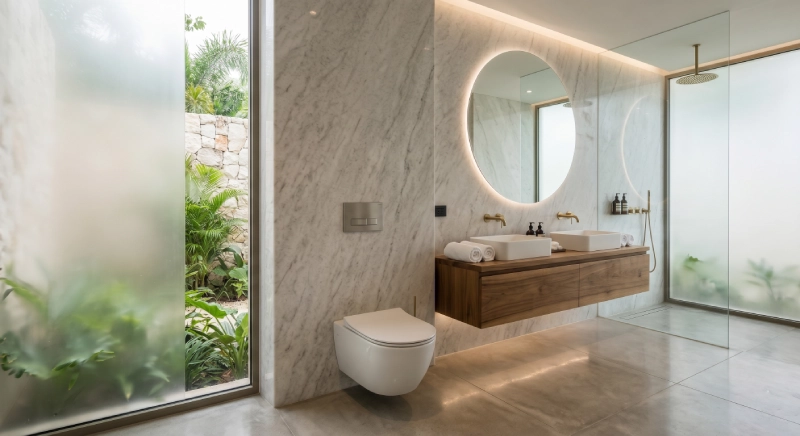
Most developers don’t make the wrong choice because of product knowledge — they make it because they apply the same solution to different project types. At George Group, we tailor our recommendations based on the precise positioning of your project.
Luxury & High-End Villa Developments
My Recommendation: Dual flush systems.
The “Why”: In the ultra-premium sector, sustainability and aesthetics go hand-in-hand. High-net-worth buyers expect premium positioning. They want eco-friendly features that don’t compromise on performance. A concealed dual-flush cistern perfectly matches modern, minimalist interior designs.
- Real-World Application: Look at our recent Qatar Luxury Villa Project in Doha. The developer of this 3,500+ sq.m ultra-luxury estate needed a solution for 14+ bespoke bathrooms that balanced extreme desert luxury with operational efficiency. By specifying high-efficiency smart toilets and advanced flush systems across all master suites and Majlis areas, we delivered a consistent premium experience while simplifying long-term property management. Partnering with George Group for a complete sanitary ecosystem enabled a 100% on-time handover and significantly elevated the property’s market value.
Cost-Controlled or Large-Scale Developments
My Recommendation: Single flush systems (with strict quality conditions).
The “Why”: If you are building 500 units of “attainable” suburban villas, budget control is critical. A high-quality single flush is much better than a cheap, easily broken dual flush. You get reliable, stable flushing power without the risk of widespread component failure. One poorly performing component can trigger hundreds of identical complaints in large-scale developments, which quickly turns into a management and reputation problem.
Rental, Hospitality, or Mixed-Use Projects
My Recommendation: It depends on the usage tier.
The Strategy: For high-end short-term luxury rentals, go with dual flush for the premium feel. However, for long-term lease residential projects where tenants might be rough on fixtures, a durable, idiot-proof single flush is often the safer, lower-maintenance choice.
Different project types require different specifications — applying a one-size-fits-all solution is where most specification mistakes occur.
What Is the Total Cost of Ownership for Single vs Dual Flush Toilets?
Many developers focus only on unit price — but the real impact appears at project scale. Evaluating the single flush vs dual flush cost requires looking past the initial invoice. You must consider the Total Cost of Ownership (TCO).
Here is what actually impacts your bottom line over a 5-year cycle:
Initial Procurement Cost: Dual flush is marginally more expensive upfront.
Water Savings Over Time: Dual flush generates measurable utility savings, which supports stronger project positioning and long-term value perception.
Maintenance & Replacement Cost: Cheap dual flush mechanisms break easily, leading to high labor costs for repairs.
Risk Cost: If a toilet doesn’t flush well, your team spends time and money handling resident complaints.
Operational Management Cost: Frequent maintenance issues increase workload for property management teams.
For developers, this is not a product decision — it’s a risk management decision.
For example, in a 100-unit villa project, saving $20 per unit means $2,000 upfront — but even a small increase in maintenance issues can easily exceed that within the first year. This is why experienced developers evaluate flush systems at project scale, not unit price.
Is Dual Flush Really Worth the Extra Cost?
If you are still looking at your budget and wondering if the upgrade makes sense, consider these three points:
The upfront cost difference is typically very small (often just $10 to $30 per unit).
Water efficiency supports long-term property value and compliance positioning and appeals to modern buyers.
It offers stronger positioning for marketing, allowing you to check the “eco-friendly” box.
The added value typically outweighs the additional cost in premium projects — which is why most new high-end developments default to dual flush systems.
Do Dual Flush Toilets Help Meet Water Regulations and Green Building Standards?
Water scarcity is a global issue, and building codes are getting stricter. In many markets, dual flush systems are required to meet standards such as WaterSense (US) or WELS (Australia).
Global Water-Saving Standards: Countries like Australia (WELS scheme), the US (WaterSense), and European nations have strict maximum limits on gallons per flush.
LEED Certification: To achieve high-tier LEED certification for your development, you must demonstrate significant indoor water use reduction. Dual flush toilets are the easiest way to secure these points.
In many major property markets today, dual flush is becoming a standard requirement in many regulated markets — failing to adopt it may limit your project’s approval or market appeal.
What Common Risks Should Developers Avoid When Choosing a Flush System?
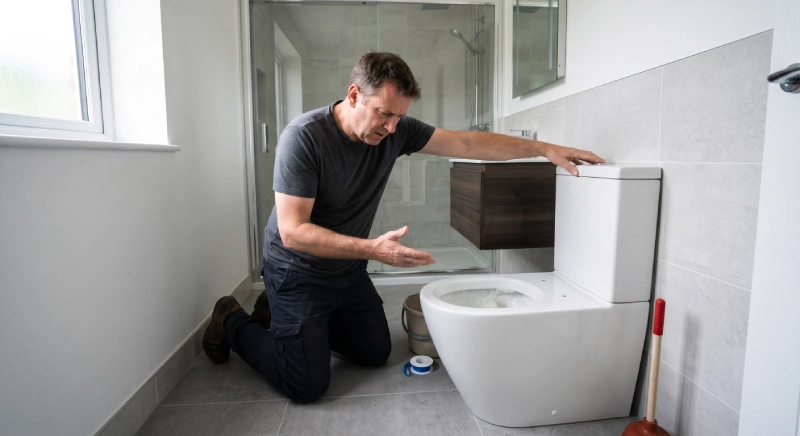
Whether you ultimately select single flush vs dual flush, you must avoid these common project pitfalls. I see these mistakes happen all the time:
Water Pressure Mismatch: A dual flush system’s “half flush” might not have enough gravity to clear the bowl in low-pressure setups.
Low-Quality Dual Flush Mechanisms: Buying unbranded, cheap dual-flush valves means a high failure rate.
User Misuse: If the flush plate isn’t clearly marked, users will press both buttons, resulting in zero water savings.
Spare Parts Availability: If your property management team can’t find replacement valves in 5 years, you have a massive maintenance issue.
Individually, these issues seem minor — but at scale, they become systemic problems affecting your entire development — and these are risks developers aim to eliminate at the specification stage.
How to Avoid Common Specification Mistakes?
Based on our experience across different regions and project types, here are the most effective ways to avoid specification mistakes:
Always test with actual water pressure: Don’t rely on lab numbers; test a sample unit under your site’s exact plumbing conditions.
Choose certified, proven mechanisms: Stick to reputable manufacturers who offer commercial-grade warranties.
Ensure spare parts availability: Ask your supplier for a guaranteed 5-to-10-year parts supply contract.
Avoid mixing incompatible systems: Ensure the bowl design perfectly matches the flushing mechanism (especially for wall-hung units).
How Do Regional Markets Affect Flush System Selection?
Having exported sanitary ware to over 120 countries with George Group, I can tell you that geography dictates strategy.
The Middle East: Luxury projects heavily favor high-end, wall-hung dual flush toilets due to high aesthetic standards and water conservation needs.
Africa: Reliable, durable single flush gravity toilets remain the mainstream choice for large-scale, cost-driven developments.
Europe & Australia: Dual flush is the undisputed standard for any new build due to strict environmental legislation.
Flush system selection should always align with local market expectations, infrastructure conditions, and legal requirements.
How Should Developers Choose the Right Flush System for Their Project?
Still trying to make the final call for your plumbing spec sheet? Use this simple, practical framework:
If your priority is the lowest upfront cost and easiest maintenance → Consider a high-quality single flush system.
If your priority is water efficiency, LEED compliance, and passing strict building codes → Choose a certified dual flush system.
If your priority is premium market positioning and appealing to high-net-worth buyers → A sleek, concealed dual flush system is the better investment.
This framework reflects how most experienced developers approach specification decisions today. If your project falls between two categories, it’s usually worth consulting a specialist before finalizing the specification — this can significantly reduce long-term project risks.
FAQ
1. Single Flush vs Dual Flush Toilets: Which is Better for Villa Projects?
In most cases, dual flush is the preferred choice due to its balance of water efficiency, compliance, and market positioning. However, the final decision should always consider project-specific factors such as water pressure and maintenance strategy.
2. Is dual flush always better for villa projects?
Not always. While dual flush is the standard for luxury and eco-friendly projects, single flush toilets remain a highly reliable, low-maintenance choice for cost-controlled, large-scale residential communities or heavy-use short-term rentals.
3. Do dual flush toilets require more maintenance?
Generally, low-quality dual flush mechanisms require more maintenance because they have more moving parts and delicate seals. However, if you specify high-quality, commercial-grade dual flush systems (like the ones from George Group), the maintenance frequency is nearly identical to single flush systems.
4. Which flush system works better in low water pressure areas?
Single flush systems tend to perform better in low water pressure scenarios because they utilize a larger volume of water at once to create a stronger siphon. The “half flush” on a dual system might struggle to clear the bowl completely if the incoming water pressure is too weak.
5. Are single flush toilets still used in modern developments?
Absolutely. While premium developments lean heavily toward dual flush, single flush units are still widely specified in regions with lower water costs, in projects prioritizing bullet-proof durability, and in markets where long-term maintenance simplicity outweighs environmental certifications.
6. What is the cost difference between single and dual flush toilets?
When comparing the single flush vs dual flush cost, the initial procurement difference is typically minimal — often ranging from just $10 to $30 per unit. However, developers must also factor in the total cost of ownership. Dual flush systems provide substantial long-term water savings and stronger marketing positioning, often making them the more cost-effective investment over the lifespan of a premium property.
Conclusion
At the end of the day, there is no absolute “good” or “bad” choice when comparing single flush vs dual flush. There is only what matches your project.
However, dual flush is undeniably more aligned with future trends, environmental standards, and luxury buyer expectations. Single flush systems still have their dedicated applications in specific environments.
Whatever you choose, remember that quality is paramount. A failing flush mechanism will quickly ruin the luxury experience of your carefully designed villa and create long-term operational issues that are difficult to reverse.
The risk is not choosing the wrong product — it’s choosing a system that doesn’t match your project strategy.
Need Help Choosing the Right Toilet System?
Send us your floor plans or project requirements — we’ll recommend the most suitable solution within 24 hours.
References
George Group Project Case Study: George Build Shop. (n.d.). Qatar Luxury Villa Bathroom Project by George Group.
US Water-Saving Standards: U.S. Environmental Protection Agency (EPA). WaterSense® Specifications for Residential Toilets. (Official standard for high-efficiency flushing systems).
Australian Water-Saving Standards: Australian Government. Water Efficiency Labelling and Standards (WELS) Scheme – Choose Products. (Official guide on how toilets are rated for water efficiency).
Green Building Certification: LEEDuser / U.S. Green Building Council (USGBC). LEED v4.1: Indoor Water Use Reduction Credit Guide. (Detailed technical requirements for securing LEED water efficiency points).
We provide integrated one-stop bathroom solutions covering tubs, sanitaryware, fittings, and system coordination for hotel and commercial projects.
▼ Submit the form below to connect with our team and explore project-based collaboration. ▼