Are you struggling to choose bathroom vanities for a hotel renovation? High costs and long delays can kill your ROI. I know the pressure you face.
Prefab bathroom vanities generally offer better ROI for most chain hotels and large-scale projects because they slash initial costs, minimize installation time to reduce lost room revenue, and ensure faster, more predictable delivery for managing tight renovation schedules. Custom vanities deliver value for unique boutique luxury designs.
When I worked on the factory floor, I saw firsthand how even a small delay in a large order could turn a profitable project into a logistical nightmare. For hotel procurement, the decision between prefab and custom is not just about price; it is about managing risk, timeline, and long-term operating costs. Let me break down the facts for you.
Table of Contents
What is a prefab bathroom vanity, and is it right for your project?
Are high upfront costs a constant budget killer for your hotel projects? You must understand how prefab vanities save you money.
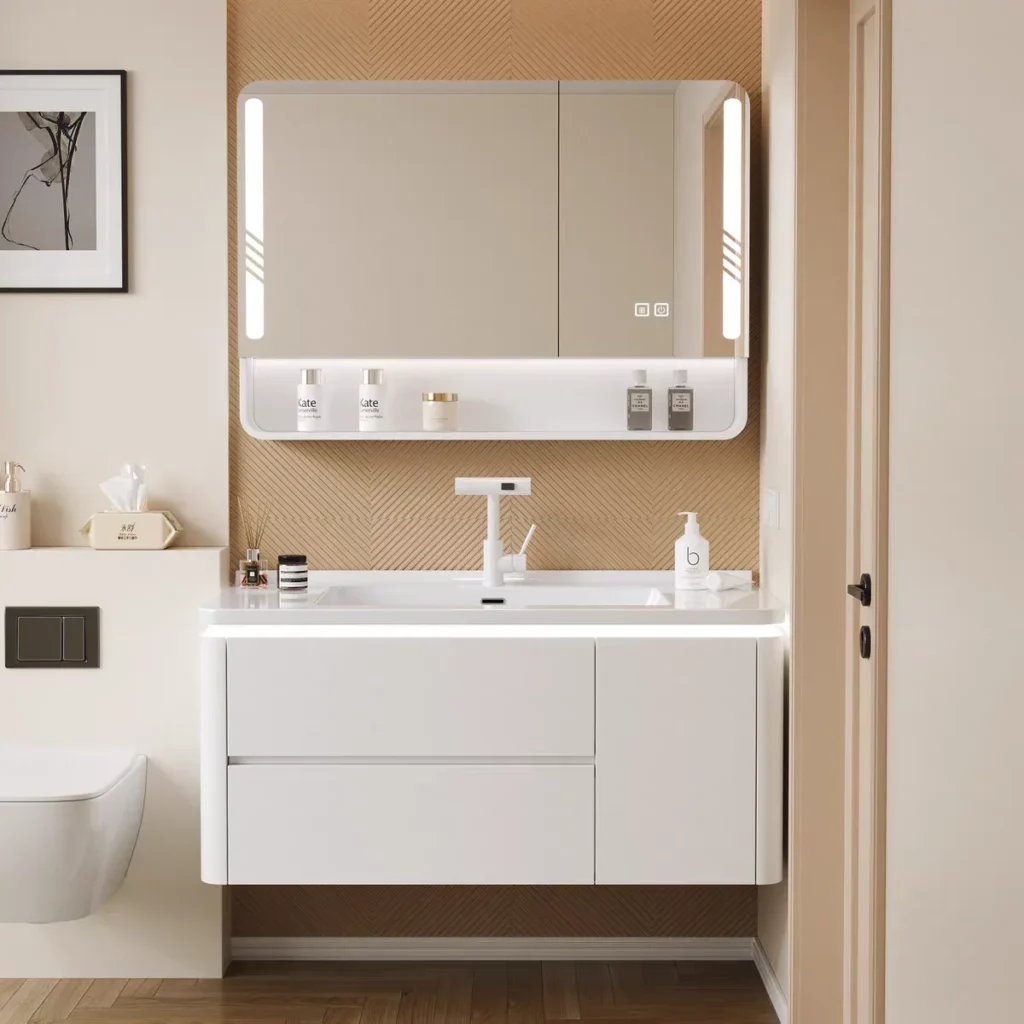
A prefab (prefabricated) bathroom vanity is a factory-made unit produced in high volume, following standard industry sizes and designs, and it comes ready-to-install with minimal onsite assembly. They are ideal for projects requiring uniformity, quick turnaround, and significant cost savings on materials and labor.
Standardized Sizes and Designs Offer Predictable Sourcing
Prefab vanities come in set sizes, like 30, 36, or 48 inches wide, and follow common design styles. This standardization makes the manufacturing process efficient, which lowers the unit cost for you. As I know from my factory experience, we can produce thousands of these units fast, which means we can stock them or deliver them quickly to meet tight deadlines.
Lower Initial Investment Reduces Procurement Risk
The high-volume production of prefab units significantly lowers the cost per unit compared to one-off custom work. For a hotel project with hundreds of rooms, choosing a prefab can cut your material budget by 50% or more. This lower initial investment is a direct boost to your project’s ROI from day one.
Faster Production and Delivery for Tight Schedules
Since the designs are already engineered and materials are often on hand, the lead time for prefab vanities is much shorter—sometimes just a few weeks. This speed is critical for hotel renovations where every day a room is out of service means lost revenue. My clients who focus on minimizing renovation windows always lean on the speed of prefab.
| Key Prefab Advantage | Description | Hotel Procurement Benefit |
|---|---|---|
| Cost-Efficiency | Mass production lowers unit price. | Better initial ROI and budget control. |
| Speed | Short lead times and quick installation. | Minimizes lost room revenue during renovation. |
| Consistency | Uniform product quality across all units. | Easier for large-scale, multi-room projects. |
As a procurement manager, you should see prefab as a supply chain solution, not just a product choice. I know from my experience that factory efficiency is your friend here. When you buy prefab, you buy a predictable schedule. We have standardized processes and QC checks for every unit. This means you get fewer defects and better consistency, which saves you the headaches of on-site rework that cause delays. This reliability, which includes quick parts replacement, directly supports your need for low operational expenditure and smooth guest service.
What is a custom bathroom vanity, and when does its cost pay off?
Do you believe your brand’s unique design requires a vanity no one else has? Custom vanities are the answer, but they cost more.
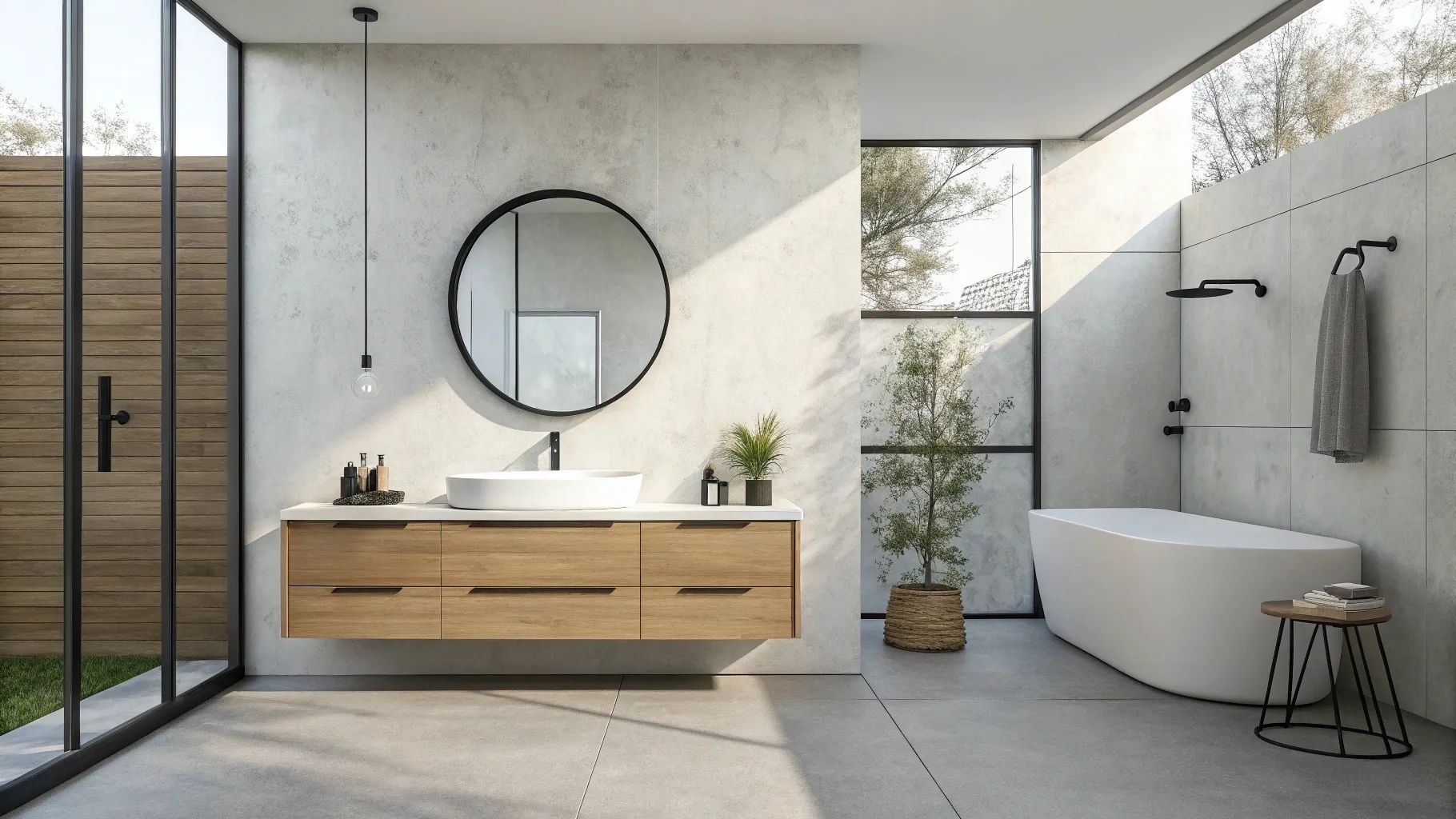
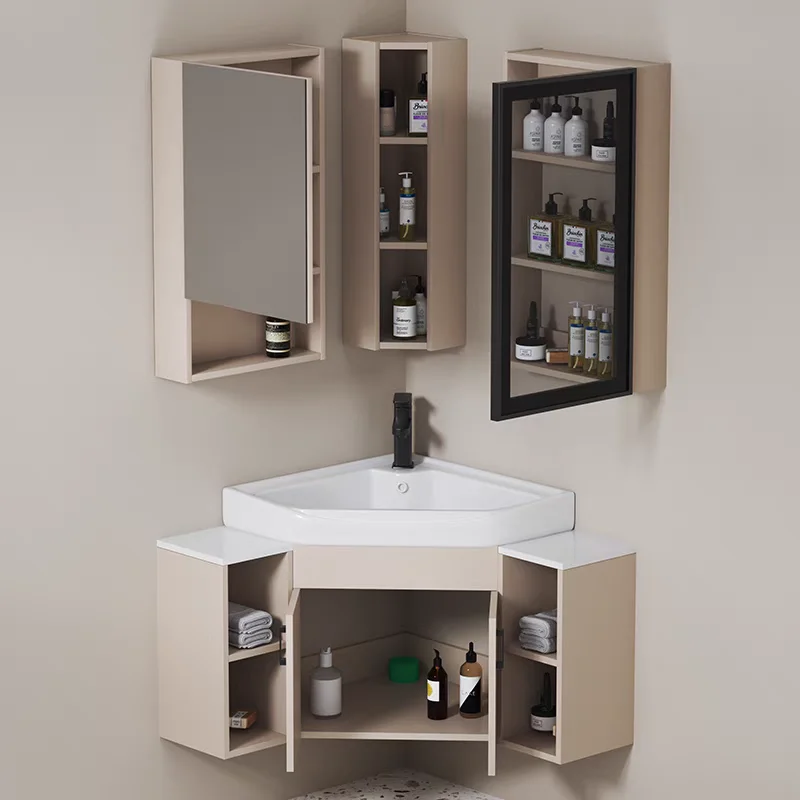
A custom bathroom vanity is a unit built-to-order, allowing for complete control over dimensions, materials, finishes, and hardware to match a specific design vision. They are best suited for high-end boutique hotels or luxury properties where a unique aesthetic is a direct part of the guest experience and justifies a significantly higher investment.
Unique Design and Branding Capability
The main benefit of a custom vanity is the ability to achieve a truly unique look that matches your brand’s luxury standard. You can specify exotic wood veneers, unique countertop shapes, or integrated power features that are not available in a standard line. For hotels where the design itself drives premium pricing, this level of personalization can be a strong ROI factor.
Optimized for Difficult or Specific Spaces
If your renovation involves historical buildings or rooms with unusual layouts, custom fabrication can perfectly fit those difficult spaces. I have worked on projects where custom sizing was the only way to maximize usable space in a small or oddly-shaped bathroom, improving guest functionality and comfort.
Higher Durability and Material Quality
You often specify higher-grade, more durable materials with custom work. This commitment to quality can mean less frequent replacement and lower maintenance costs over the vanity’s lifespan. I always tell my clients that better materials in a custom piece can be a long-term investment against operational expenses.
| Custom Advantage | Best For | ROI Impact |
|---|---|---|
| Unique Design | Boutique, 5-Star Properties | Boosts guest reviews and premium rate justification. |
| Specific Dimensions | Historic Buildings, Challenging Layouts | Maximizes usable space and solves design problems. |
| High-Grade Materials | Long-Term Investment Focus | Lowers lifecycle maintenance and replacement costs. |
Choosing custom is a decision to invest heavily in brand differentiation. The process, from design approval to delivery, typically takes 6 to 12 weeks. I saw this a lot: the extra time and cost are justified only when the unique design directly increases your occupancy or room rate. Custom gives you control over every detail, but it requires more coordination from your team, which increases soft costs. You must weigh the branding uplift against the risk of delays and the 2X or 3X higher price tag, which puts a significant strain on your initial ROI.
What’s the difference between prefab and custom cabinets, especially for hotel buyers?
Are you confused about which option truly manages the biggest risks in hotel procurement? The differences are clearest in delivery and cost control.
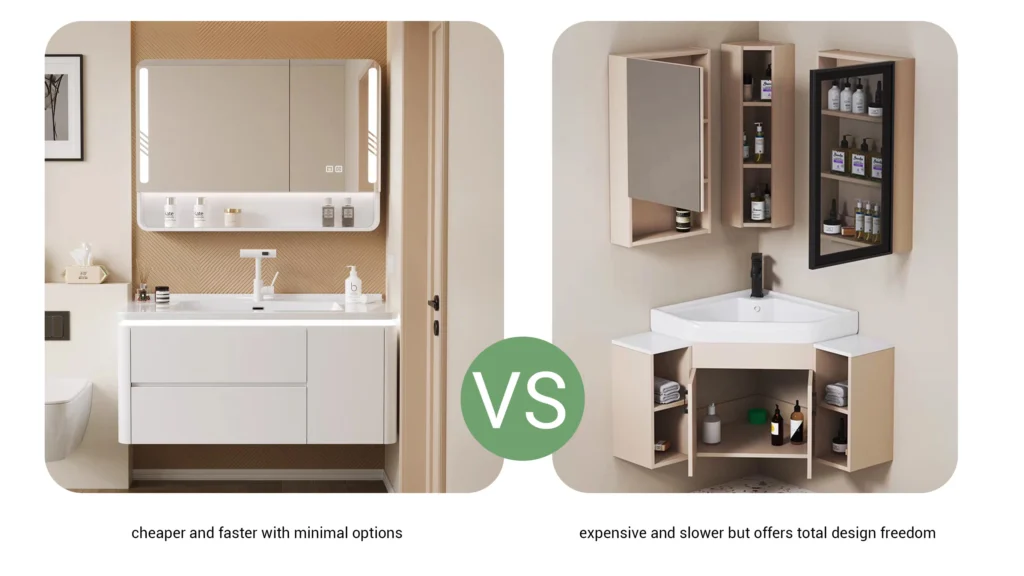
The key differences for hotel buyers are price, lead time, and customization: prefab is significantly cheaper and faster with minimal options, while custom is much more expensive and slower but offers total design freedom to match specific brand standards.

Cost Structure and Budget Impact
Prefab’s fixed pricing and lower labor costs simplify budgeting and drastically reduce the initial project expenditure. Custom work involves variable costs, design fees, and higher material waste, making the final price unpredictable until late in the process.
Lead Time and Schedule Risk
A prefab delivery timeline is reliable, usually a few weeks. Custom timelines are longer (months) and carry greater risk of production delays, which is a major concern for managing hotel renovation schedules and minimizing lost revenue.
Quality Control and Consistency
Prefab quality is factory-standardized and highly consistent across hundreds of units. Custom quality depends entirely on the specific workshop and materials, which can introduce inconsistency across multiple batches or rooms.
| Feature | Prefab Vanity (Better ROI) | Custom Vanity (Higher Cost/Risk) |
|---|---|---|
| Price | Low to Moderate | High to Premium (2-3X more) |
| Lead Time | Fast (Weeks) | Slow (Months), Higher delay risk |
| Customization | Limited to standard options | Full design freedom |
| Consistency | High, factory-controlled | Varies by artisan/shop |
In my time helping clients scale their businesses, I learned that for hotel projects, consistency and speed are the most important factors for procurement managers like you. Forum complaints often focus on coordination nightmares with custom work. Prefab removes much of that complexity. It is a known quantity. You should view the trade-off as choosing between design flair and operational efficiency. Prefab’s simplicity reduces procurement complexity, simplifies installation for your on-site team, and makes long-term parts replacement easy, all of which directly lower your total operating expense (OPEX) over the life of the vanity.
Which option offers a better initial cost advantage?
Is your CFO breathing down your neck about the project’s initial budget? You must know which vanity choice delivers the biggest savings now.
Prefab bathroom vanities offer a vastly superior initial cost advantage, typically cutting unit material costs by 50% or more compared to custom fabrication. This massive upfront saving is the primary reason it gives a better immediate return on investment for large-scale hotel projects.
The Power of Bulk Material Sourcing
Factory production for prefab involves buying materials like wood panels and hardware in massive quantities. This bulk purchasing power translates directly into a lower material cost for every single unit you order. Custom shops cannot compete with this economy of scale.
Reduced Design and Engineering Labor
The design for a prefab unit is a one-time cost, amortized over thousands of units. Custom vanities require unique design work, shop drawings, and engineering checks for every project, adding significant labor costs to your bill
Simpler Installation Saves Onsite Labor Costs
Prefab vanities arrive fully or mostly assembled. This “plug-and-play” installation is much faster than fitting and assembling a custom piece on-site. The reduced time your contractors spend in each room lowers your total project labor costs.
| Cost Factor | Prefab Advantage | Custom Disadvantage |
|---|---|---|
| Material Costs | Low: Bulk purchasing power. | High: Small-scale, specialized sourcing. |
| Labor Costs | Low: Factory efficiency, fast install. | High: Bespoke cutting, complex on-site assembly. |
| Design Costs | Negligible (already included). | High: Unique engineering and shop drawings. |
From a procurement perspective, I see initial cost as the single biggest driver of ROI. If your cost of goods is lower, your profit margin on the total project is higher. Custom work often involves hidden costs, such as design revisions, material overruns, and the expense of hiring specialized installers. Prefab’s fixed, clear price is a huge financial advantage. It allows you to commit to a budget without fear of the unexpected 20% to 30% overruns that are common with bespoke work, thereby protecting your budget and your project’s financial performance.
Which one is better for project timeline and schedule control?
Are project delays causing sleepless nights and budget overruns? You need a solution that guarantees delivery and fast installation.
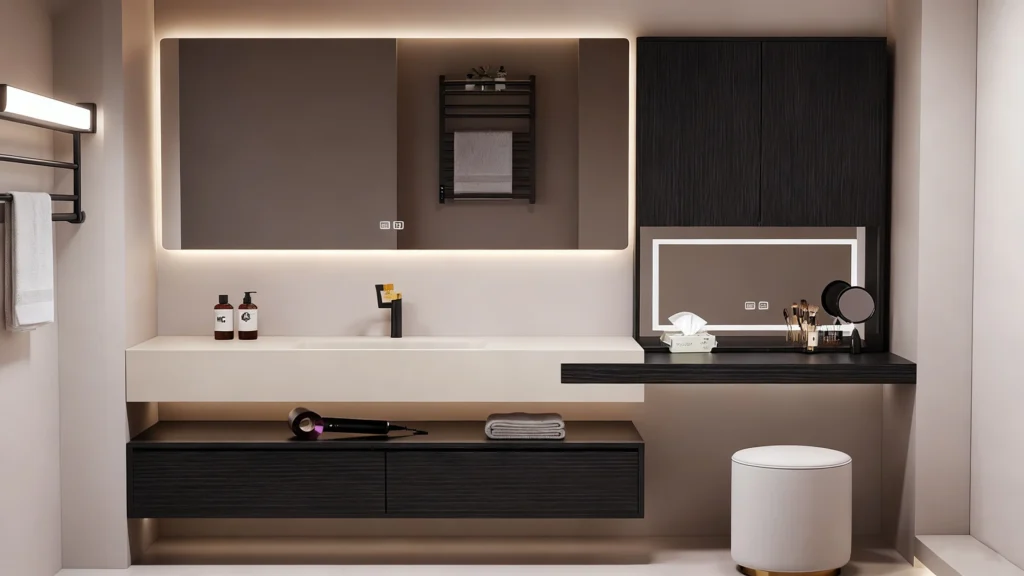
Prefab vanities are superior for timeline and schedule control because their short, predictable lead times (weeks vs. months) and simple, fast installation process minimize room downtime, which is the most critical factor for hotel ROI.
Short and Reliable Lead Times
A key lesson from my factory background: a standardized product has a guaranteed production process. We can quote an exact ship date for prefab units and hit it almost every time. Custom production is always at the mercy of specialized material lead times and complex fabrication, making its timeline risky.
Reduced Onsite Installation Window
Installing a pre-assembled vanity takes hours, not days. This means your construction crew can move on to the next task faster. The speed of installation is a direct correlation to how quickly you can get a room back online and generating revenue.
Simpler Logistics and Fewer Reworks
Shipping hundreds of identical, well-packed units is simpler than shipping complex, custom pieces that are prone to damage or fit issues. Fewer shipping errors and fewer on-site modifications mean your schedule stays on track.
| Timeline Factor | Prefab (Schedule Control) | Custom (Schedule Risk) |
|---|---|---|
| Lead Time | Reliable, short (4–6 weeks) | Unreliable, long (8–12+ weeks) |
| Installation | Fast, simple, “plug-and-play” | Slow, complex, requires specialized fitting |
| Risk of Delay | Low, due to standardized process | High, due to design changes and fabrication complexity |
I’ve seen multi-million dollar projects get derailed because a six-week custom vanity order turned into a ten-week crisis. For a hotel, this means thousands of dollars in lost room revenue. Your ultimate ROI depends on rooms being rentable. Prefab vanities allow for just-in-time delivery coordination, which is a key logistic advantage. By choosing a product that is faster to deliver and install, you are mitigating the single biggest financial risk in hotel renovation: downtime. This efficiency is a tangible, reliable boost to your overall project profitability and is why I recommend prefab for most large-scale renovations.
Which option provides more reliable quality and consistency?
Does maintaining a consistent guest experience across 300 rooms worry you? Product quality must be the same from room 1 to room 300.
Prefab vanities provide significantly more reliable quality and consistency because they are manufactured using automated processes and strict, repeatable factory-level quality control (QC) checks on a mass scale.
Automated Production for Uniformity
The automated machinery used for high-volume prefab production ensures that every cut, edge band, and drill hole is identical across all units. This standardization eliminates the human error that can occur in custom, hand-built production.
Consistent Materials and Finishes
Because prefab uses the same material batch for a large order, the color, finish, and texture are perfectly consistent. I have seen custom jobs where the wood tone varied slightly between two units because the materials came from different small-batch suppliers.
Reliable Parts Replacement
If a unit is damaged years down the line, a prefab model ensures that an exact replacement component (a drawer slide or door) is easily available from stock, making maintenance simple. Custom parts, in contrast, may require a new, expensive fabrication process.
| Quality Factor | Prefab (High Consistency) | Custom (Variable Quality) |
|---|---|---|
| Manufacturing | Automated, robotic precision | Manual, artisan skill |
| Finish Match | Perfect, single-batch consistency | Potential variation from batch to batch |
| Long-Term Parts | Easily available from stock | Requires re-fabrication or custom sourcing |
For hotel chains, consistency is a brand promise. A guest in room 101 should have the exact same experience as a guest in room 501. Prefab vanities deliver that manufacturing certainty. My factory experience taught me that a reliable QC process is the foundation of mass production. It is a non-negotiable for large procurement needs. While custom can use higher-grade materials, the consistency of execution is a major variable. I advise choosing the certainty of prefab’s standardized quality over the potential variability of bespoke craftsmanship, especially when coordinating deliveries to fit renovation windows is a core challenge.
From a long-term maintenance and operation (OPEX) view, which saves more money?
Are you focused on minimizing the total cost of ownership over the next decade? Long-term maintenance costs are the hidden killers of ROI.
Prefab vanities typically save more money in long-term maintenance (OPEX) because their standardized parts are easy and cheap to replace, and their consistent construction simplifies troubleshooting for hotel engineering teams.
Simple Maintenance and Repair
When a small piece of hardware fails on a prefab unit, your maintenance team can order a standard replacement part from a supplier catalog and fix it quickly. Custom units often require a specialized carpenter or unique hardware, driving up labor and material costs.
Durability vs. Replaceability
While custom units can use higher-end materials, the long-term cost-benefit often favors the easy replacement of a standardized prefab unit. If a guest severely damages a prefab vanity, replacing the entire unit is fast and inexpensive compared to the time and cost required to repair a bespoke piece.
Easier Staff Training
Hotel maintenance staff can be quickly trained to maintain a standardized prefab unit across all rooms. The variability of custom units means more complex training and more time spent troubleshooting unique issues.
| OPEX Factor | Prefab (Low OPEX) | Custom (Higher OPEX) |
|---|---|---|
| Part Replacement | Easy, cheap, standard stock | Hard, expensive, custom fabrication |
| Maintenance Labor | Simple, fast repairs, low skill needed | Complex, slow, requires specialized knowledge |
| Troubleshooting | Uniform process across all units | Unique issues per custom design |
As a procurement expert focused on lifecycle costs, you should prioritize low OPEX. The initial savings of prefab vanities continue to pay off for years after installation. I know the forums are full of maintenance team complaints about custom pieces that cannot be easily fixed. Prefab’s simplicity means your engineering team saves time, and time is money. This long-term, predictable cost of ownership is a significant, quiet driver of better overall ROI, protecting you from the in-service failures that affect guest experience.
Which solution enhances guest experience and indirectly increases ROI?
Is the vanity just a piece of furniture, or is it a tool to drive better guest reviews? Your choice impacts customer satisfaction directly.
Custom vanities enhance guest experience through unique, memorable design, indirectly boosting ROI via premium reviews and higher occupancy rates, while high-quality prefab units enhance experience through reliable function and consistency.
The "Wow" Factor of Custom Design
A beautifully designed custom vanity can be a centerpiece that contributes to a luxury feel, leading to better guest photos and positive online reviews. This unique aesthetic is a direct marketing tool that supports higher room rates and occupancy.
The Reliability of Prefab Function
Guests value a bathroom that works flawlessly. A high-quality prefab unit, while not unique, provides reliable storage, consistent water pressure, and a functional space. Consistent, reliable function across every room prevents the negative reviews caused by maintenance failures.
Durability and Aesthetic Longevity
When selecting a custom piece, you can choose materials that age better and resist wear longer than standard prefab options. This material durability ensures the vanity looks new for more years, maintaining the room’s appeal to the guest.
| Guest Factor | Prefab Advantage | Custom Advantage |
|---|---|---|
| Function | High reliability and consistency | High material quality for long-term wear |
| Aesthetics | Clean, modern, and standard look | Unique, luxurious, and memorable design |
| ROI Impact | Reduced negative reviews from failure | Increased positive reviews and premium rate support |
I believe the best ROI comes from the fewest guest complaints. A standard prefab vanity that works every day is better than a stunning custom vanity that breaks often. For most chain hotels, consistency is the key to a good experience. The design uplift of a custom piece is only worth the cost if your hotel brand is premium enough to charge a rate that covers the massive expense. For everyone else, investing in high-quality, reliable prefab that supports quick maintenance and never impacts guest stay is the smarter, more risk-averse path to long-term profitability.
Conclusion
For most of your projects, prefab vanities offer the best ROI by cutting initial costs, guaranteeing fast installation, and simplifying long-term maintenance. Custom is for unique luxury that directly drives revenue. Visit georgebuildshop today for insights that help you Master Molding Right on your next procurement challenge.