In a market where margins are tightening and ESG accountability is rising, every design decision now carries financial weight. The shift isn’t theoretical — it’s reshaping how developers specify, source, and measure materials in every project stage. For years, developers treated sustainability as a design add-on — but today, it’s becoming a profit strategy.
Sustainable bathtub materials directly support long-term ROI by reducing operational expenses, driving ESG compliance, and meeting rising tenant expectations. High-grade options like solid surface or cast iron offer superior durability and lower maintenance needs compared to thin acrylic, ensuring a lower Total Lifecycle Cost and strengthening a project’s long-term market value. Integrating these eco-friendly bathtub materials is now a critical specification decision.
So, is sustainability a cost center—or a long-term financial shield? The era of viewing it as a mere “green buzzword” is over. For today’s developers, sustainability means spending smarter—not more. The right bathtub material can save operational costs, simplify long-term maintenance, and strengthen overall ESG performance, which is why a clear, data-informed specification process is non-negotiable before procurement begins. Let’s look deeper into how smarter material selection directly translates to profitability.

Table of Contents
Is Short-Term Material Savings an Illusion That Undermines ROI?
It’s tempting to save on unit cost during large-scale procurement. But in high-turnover spaces like hotels or apartments, that decision often backfires.
Yes, short-term savings on low-end materials often lead to significant long-term losses. Low-cost acrylic or thin resin tubs are prone to cracking and staining, demanding frequent repairs. According to the NAHB’s 2024 Cost Survey — one of the most cited benchmarks in North American construction — maintenance and replacement now account for up to 25% of long-term bathroom expenses. Smart developers invest in longevity, not quick wins.
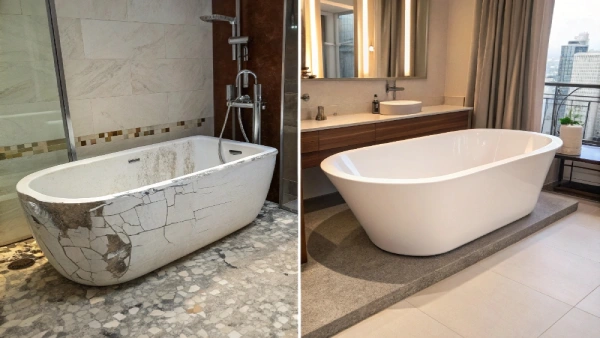
To fully understand this tradeoff, let’s break down the hidden cost layers developers often overlook. Understanding the Total Lifecycle Cost (TLC) reveals the critical flaw in budget-first procurement. While a thin acrylic tub might save $150 per unit initially, its susceptibility to damage—especially in high-occupancy environments like hotels or multi-family residences—guarantees costly disruptions. Higher-grade options, such as durable solid surface or robust cast iron, eliminate these recurring pain points. They withstand harsh cleaning agents, resist structural flexing, and retain their aesthetic finish, resulting in predictable, minimal maintenance schedules over a 15-to-20-year span. This stability mitigates risk and simplifies asset management for your clients. Beyond replacement costs, poor material choices erode tenant trust and brand credibility—two factors far harder to rebuild. Short-term savings often turn into long-term liabilities.
Beyond these immediate financial risks, the decision to invest in durable, responsible bathware extends far into a project’s long-term market valuation and regulatory standing.
Assessing Material Durability and TLC
| Material Type | Initial Cost (Relative) | Durability Score (1–5) | TLC Impact |
|---|---|---|---|
| Thin Acrylic | Low | 2 | High maintenance, frequent replacement risk. |
| Cast Iron | High | 5 | Low maintenance, near-permanent lifespan. |
| Artificial Stone | Medium–High | 4 | Repairable surface, excellent longevity. |
Durability isn’t just a technical metric—it’s an economic moat against market volatility. 📊
Beyond cost performance, material selection now plays a central role in meeting sustainability targets and certification benchmarks.
How Does Bathtub Selection Directly Impact a Project’s ESG Compliance?
Are regulatory pressures driving your material selection yet? ESG mandates and market demand are reshaping building certification. Sustainability is now a competitive advantage.
Understanding the longevity metrics is the first step. But to capture true market premium, developers must also strategically align material choices with tightening ESG and certification standards.
Bathtub material selection is vital for ESG goals. Using recyclable or low-emission materials, like certain eco-resins or solid surface composites, helps projects earn LEED credits and appeal to eco-conscious tenants. Over 550,000 housing units in North America achieved LEED certification by 2024, demonstrating that developers using sustainable LEED bathroom fixtures not only meet compliance goals but attract tenants willing to pay a premium for certified sustainability. ESG compliance is no longer optional; it’s a differentiator your next project can’t afford to ignore.
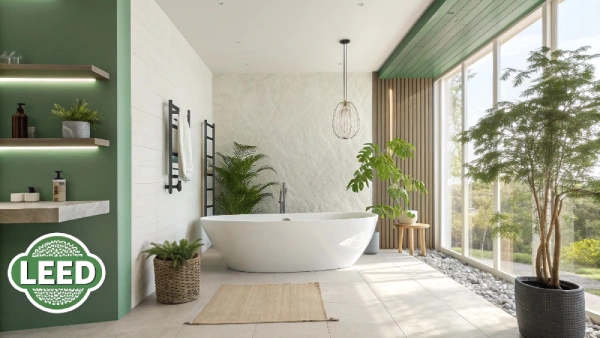
Most developers already track carbon credits and energy metrics. But ESG compliance now extends to the materials themselves—from embodied carbon to end-of-life recyclability. The shift toward certified buildings is accelerating, with LEED and other green standards becoming baseline requirements for institutional investors. For bathtubs, this means critically evaluating the manufacturing process, embodied energy, and recycled content. Low-VOC (Volatile Organic Compound) materials are essential for Indoor Environmental Quality (IEQ) credits, a growing priority. Choosing recycled stone resin or low-VOC composite bathtubs can earn LEED points while cutting future retrofit costs. For developers, choosing certified materials is not just about compliance — it’s a market signal of quality and long-term reliability. Sustainable options demonstrate that a project prioritizes long-term environmental stewardship, a key factor in attracting high-value, eco-conscious clientele in both hotel and multi-family markets. Ultimately, ESG compliance is not just an environmental statement — it’s a financial risk mitigation tool.
Key Sustainable Bathtub Material Profiles
| Material | Key Sustainability Feature | Primary Durability Benefit | Aesthetic Alignment |
|---|---|---|---|
| Cast Iron | Maximum recycled content (70%+), long lifespan | Maximum chip/scratch resistance | Traditional, high-end, classic luxury |
| Artificial Stone | Repairable, low-emission production | Non-porous, stain-resistant, fully seamless | Modern, tactile, matte luxury design |
| Eco-Resin | Lightweight, energy-efficient transport/install | Excellent thermal retention, color stability | Contemporary, minimalist, versatile finishes |
Smart Supply Chain Partnerships — Where Sustainability Meets Reliability
A material’s sustainability means little if its supply chain collapses. Volatility requires a strategic shift from procurement to partnership. Control your project’s predictability.
Achieving both sustainability and project predictability requires partnering with manufacturers that embrace digitalized, efficient logistics. Construction Dive’s 2024 insights show that digitalized supply chains and modular delivery reduce on-site waste and carbon footprint while mitigating material instability. A bathtub made from recycled resin and delivered through a digital supply chain reduces not just carbon footprint but project risk. Partnering with sustainable manufacturers ensures your project stays on budget — and ahead of regulation.
Developers should assess not only green credentials but also logistics resilience—JIT delivery, modular production, and verified sourcing. After all, a bathtub that arrives late or damaged undermines even the most sustainable design. The most sustainable material selection loses its advantage if the supply chain is fragile or inefficient. Procurement teams must now evaluate a supplier’s logistical footprint. Look for partners who utilize lean manufacturing, just-in-time delivery, and modularity, which reduces packing waste and on-site labor time. A supplier with robust eco-certifications (e.g., ISO 14001) that also offers transparent, trackable B2B logistics readiness provides a dual benefit: it minimizes environmental impact while maximizing project predictability. This strategic sourcing approach transforms a potential liability (supply chain instability) into a reliable competitive asset. In today’s market, sustainability isn’t just about what you build—it’s about how you build it.
Key Considerations for Sustainable Bathware Sourcing
- ✅ Manufacturing Transparency: Demand clear data on embodied carbon and material origins.
- ✅ Logistics Efficiency: Prioritize suppliers using modular packaging and direct-to-site delivery.
- ✅ Certifications: Verify third-party eco-certifications beyond basic compliance.
Conclusion
In today’s ESG-driven market, the right material choice is both a design decision and a business safeguard. Material choices underpin the value proposition in modern construction. By focusing on sustainable bathtub options, you address the twin demands of compliance and durability. Sustainable bathtub materials are more than a design choice — they are a business strategy. Choosing sustainable bathtub materials today means securing long-term profitability, brand credibility, and compliance readiness. Partner with George Build Shop to access proven, eco-friendly bathtub solutions that transform sustainability into measurable ROI.
Want to know more about bathtub market trend? Please click here: How Can the Right Bathtub Choice Boost ROI for Developers?
We provide integrated one-stop bathroom solutions covering tubs, sanitaryware, fittings, and system coordination for hotel and commercial projects.
▼ Submit the form below to connect with our team and explore project-based collaboration. ▼