How a Sanitary Ware Manufacturer Delivered SBC-Compliant Hospital Bathroom Solutions in Jeddah, Saudi Arabia
Technical Standards, Environmental Adaptation, and Compliance Strategy for Medical and Elderly Care Bathroom Projects
A professional sanitary ware manufacturer delivered SBC-compliant hospital bathroom solutions in Jeddah, Saudi Arabia by combining accessible design standards, anti-slip safety materials, corrosion-resistant components, and medical-grade antibacterial surfaces.
The project integrated R11 anti-slip flooring, 316 stainless steel grab bars, ISO 22196 antibacterial surfaces, and modular bathroom systems to meet Saudi Building Code (SBC) regulations and CBAHI healthcare facility requirements.
The hospital project included more than 420 bathroom units covering 18,500 square meters, designed for elderly and patient safety in high-humidity coastal environments.
Verification: Direct communication with Saudi contractors & factory-to-site QC.
Zero-Distance Communication: Ensuring SBC Compliance from Factory to Jeddah Site
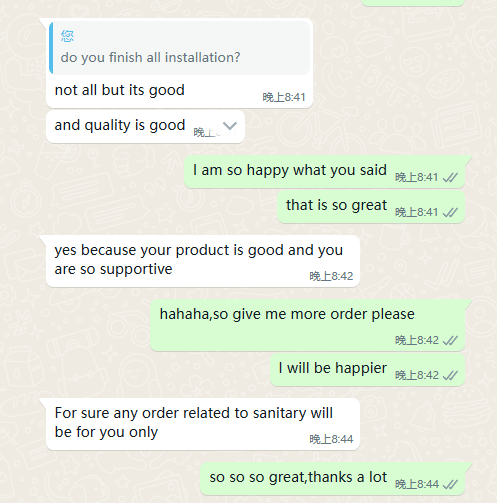
"Your product is good and you are so supportive."
— Major Saudi Contractors trust George Sanitary Ware. We don’t just ship products; we provide 24/7 technical support and real-time QC to ensure your CBAHI inspection is successful.| Project Item | Technical Data |
|---|---|
| Project Type | Medical & Elderly Care Hospital |
| Location | Jeddah, Saudi Arabia (SBC Compliant) |
| Scale | 420 Sets / 18,500 m² |
| Delivery Time | 65 Days (Full Customization) |
| Quality Standard | 100% Factory QC Inspection Process |
| Compliance | SBC / CBAHI / SASO Certified |
| ⭐ Client Satisfaction | 100% Approval on First Inspection |
Project Guide & Technical Standards
SBC Compliance Requirements for Hospital Bathrooms in Saudi Arabia
For healthcare projects in Saudi Arabia, hospital bathrooms must comply with the Saudi Building Code (SBC) to ensure accessibility, plumbing safety, fire protection, and water efficiency. These standards are also closely linked to CBAHI (Saudi Central Board for Accreditation of Healthcare Institutions) accreditation, which is required for medical facilities operating in the Kingdom.
For hospital developers, contractors, and procurement teams, working with an experienced hospital bathroom supplier or Sanitary Ware Manufacturer that understands SBC requirements can significantly reduce inspection risks and avoid costly redesign during construction.
Manufacturer Response Matrix for SBC Hospital Standards
| SBC Code | Regulation Area | Engineering Implementation |
|---|---|---|
| SBC 201 | General Building Code | Bathroom layouts and accessibility features are pre-calculated in shop drawings, ensuring the required 900 mm door clearance and proper grab bar positioning for patient safety. |
| SBC 601 / 1001 | Energy & Green Building | Faucets and flushing systems are equipped with low-flow aerators and dual-flush mechanisms to meet water efficiency standards required for modern healthcare buildings. |
| SBC 701 | Plumbing Code | Critical fixtures use 316 stainless steel components and corrosion-resistant piping systems, preventing leakage and odor backflow in high-humidity environments. |
| SBC 801 | Fire Safety Code | Bathroom wall panels and door systems use B-s1, d0 fire-rated materials and certified assemblies to meet strict fire safety requirements in hospital wards. |
At George Sanitary Ware, SBC requirements are integrated into the engineering, shop drawing, and manufacturing stages. By integrating compliance into manufacturing rather than relying on on-site adjustments, each bathroom system arrives on site prepared for inspection by project engineers and regulatory authorities.
For hospital construction projects, selecting an experienced healthcare bathroom supplier can significantly reduce compliance risks during project handover and certification audits.
In coastal Saudi cities such as Jeddah, high humidity and chloride exposure can accelerate corrosion on standard metals. While many suppliers use 304 stainless steel, we recommend 316-grade stainless steel. Its molybdenum content improves resistance to chloride corrosion, extending the lifespan of safety fixtures and reducing the risk of failing CBAHI or JCI compliance inspections.
Passing CBAHI Audits: How the Right Hospital Bathroom Supplier Reduces Compliance Risk
For healthcare construction projects in Saudi Arabia, CBAHI accreditation is a critical requirement before hospitals can begin operations. CBAHI inspections do not focus only on the appearance of sanitary fixtures; they evaluate infection control, material safety, installation standards, and documented test reports.
For hospital developers and contractors, working with a specialized Hospital Bathroom Supplier ensures that compliance requirements are addressed during the design stage, rather than discovered during the final audit. In the Jeddah Hospital project, we aligned the manufacturing process with the Facility Management and Safety (FMS) framework.
CBAHI Bathroom Safety and Compliance Matrix
| CBAHI Standard | Engineering Implementation | Compliance Documentation |
|---|---|---|
| FMS 8.1.1 | Installation of R11 slip-resistant tiles with non-porous surfaces designed for frequent hospital sanitation. | DIN 51130 slip-resistance test report and friction coefficient certification. |
| FMS 8.1.2 | 316 stainless steel grab bars with reinforced mounting systems designed to support high dynamic loads. | AISI 316 material mill certificate and load-testing documentation. |
| IPC 15 | Use of non-porous antibacterial surfaces and coved-base structures to reduce bacterial accumulation. | ISO 22196 antibacterial testing results showing reduction of MRSA and E. coli. |
🔍 What Hospital Procurement Teams Often Verify Before a CBAHI Inspection:
- Whether grab bars and safety fixtures include 316-grade stainless steel certification, especially for coastal environments such as Jeddah.
- Whether antibacterial surfaces are tested according to ISO 22196 standards for common healthcare pathogens.
- Whether Material Safety Data Sheets (MSDS) and technical documentation are available for each batch of materials.
Having these documents prepared in advance can help reduce delays during final safety and accreditation inspections.
Case Reference: Jeddah Hospital Bathroom Project
In the Jeddah Hospital project, the bathroom systems were manufactured with compliance documentation prepared alongside production. The project required 420 hospital bathroom units, delivered within 65 days, with documentation packages supporting inspection for CBAHI safety and infection-control standards.
SBC 201 & ADA Compliant Grab Bars for Hospital and Senior Care Bathrooms
In healthcare and senior care environments, grab bars are critical safety components designed to reduce fall risk and support patient mobility. Hospital bathrooms and elderly care facilities in Saudi Arabia must comply with safety requirements defined in SBC 201 (Saudi Building Code) and international accessibility guidelines such as the Americans with Disabilities Act (ADA).
For hospital developers and senior care operators, selecting a reliable Sanitary Ware Manufacturer ensures that grab bars are engineered not only for appearance but also for structural safety, durability, and regulatory compliance.
Grab Bar Technical Specifications for Medical and Senior Care Facilities
| Specification | Engineering Standard | Safety Benefit |
|---|---|---|
| Diameter | 32–38 mm ergonomic profile | Designed to support a secure “power grip”, particularly for users with reduced hand strength. |
| Load Capacity | 200 kg (440 lbs) load rating | High load tolerance helps absorb sudden impact during accidental slips or falls. |
| Material Grade | 316 Stainless Steel | High resistance to pitting corrosion in humid or coastal environments such as Jeddah. |
| Wall Clearance | 38 mm safety gap | Prevents arm entrapment while allowing proper leverage for patient transfers. |
These design parameters ensure that safety bars remain stable under repeated daily use in hospitals, rehabilitation centers, and elderly care facilities.
In coastal regions of Saudi Arabia, environmental conditions such as high humidity and saline air can accelerate corrosion on standard metal fixtures. While many suppliers use 304 stainless steel to reduce costs, under saline conditions common in cities like Jeddah, it may develop pitting corrosion, which weakens structural integrity over time.
For hospital and senior care projects, 316 stainless steel is typically preferred because it contains molybdenum, extending the service life of safety fixtures and reducing risks during CBAHI safety inspections.
Knurled surface textures increase friction, helping users maintain grip even when hands are wet or soapy—particularly important in hospital shower areas.
Multi-hole flange mounting systems distribute load more evenly, ensuring stability on lightweight partition walls commonly used in modular hospital construction.
Technical Documentation for Project Submittals
For hospital construction projects, engineers require technical drawings and compliance documentation for approval. Our submittal package includes:
- Grab bar installation & clearance drawings
- Material certification (316L Stainless Steel)
- Certified load testing documentation
- Product technical data sheets (TDS)
Engineered Hygiene: How a Specialized Sanitary Ware Manufacturer Controls Infection & Fire Risk
In clinical environments, bathrooms are high-risk zones for infection transmission and fire safety. At George Sanitary Ware, our hospital-grade materials act as a barrier against both flames and superbugs, ensuring full compliance with SBC 801 and CBAHI standards.
Fire Resistance & Life Safety (SBC 801)
| Standard | Rating | Safety Management Result |
|---|---|---|
| EN 13501-1 | B-s1, d0 | Limited flame spread with zero toxic smoke emission. |
| ASTM E84 | Class A | Slows flame propagation, providing critical evacuation time. |
By meeting ASTM E84 Class A, our bathroom systems provide medical staff critical extra minutes for patient evacuation—a mandatory requirement for hospital compartmentalization planning.
Antibacterial Surface Efficacy (ISO 22196)
| Pathogen | Reduction | Impact for Hospital Admins |
|---|---|---|
| MRSA | 99.9% | Outbreak prevention in surgical and isolation wards. |
| E. coli | 99.9% | Maintains strict hygiene in pediatric and shared facilities. |
Data verified through 24-hour incubation testing, measuring real-world bacterial reduction on treated surfaces.
Unlike standard products that rely on surface coatings which degrade over time, George Medical solutions utilize Silver-Ion Embedded Technology. Antimicrobial agents are incorporated into the material matrix during manufacturing, ensuring performance remains effective even after thousands of hospital deep-cleaning cycles.
To support your CBAHI accreditation and facility management review, we provide a complete technical package with every project shipment, including:
- ISO 22196 Antibacterial Laboratory Reports
- Fire Resistance Test Certificates (EN 13501-1 / ASTM E84)
- Complete Material Safety Data Sheets (MSDS)
R11 Slip-Resistant Tiles for Hospital Bathrooms and Wet Areas
Slip resistance is a critical safety requirement in hospital bathrooms, shower areas, and patient care zones, where water and cleaning solutions can create hazardous surfaces. For healthcare facilities, selecting the correct anti-slip floor tiles helps reduce fall risks for patients, visitors, and medical staff while supporting building safety compliance.
DIN 51130 Slip Resistance Classification for Healthcare
| Rating | Inclined Angle | Typical Healthcare Application |
|---|---|---|
| R9 | 6° – 10° | Dry indoor areas: Reception halls and admin spaces. |
| R10 | 10° – 19° | General corridors and standard patient rooms. |
| R11 | 19° – 27° | Recommended: Hospital bathrooms, showers, and wet zones. |
| R12 | 27° – 35° | Industrial zones: High traction but harder to sanitize. |
R11 tiles are considered the most balanced option, offering enhanced safety while remaining compatible with hospital sanitation protocols.
Why R11? The Safety & Hygiene Balance
In wet environments like patient bathrooms, flooring must provide reliable grip even with soapy water. Our R11 tiles feature a Micro-Textured Surface designed to improve friction without trapping contaminants.
Surfaces that are too rough (R12+) may compromise Infection Control (IPC) by making disinfection more difficult. R11 provides the exact threshold required for hospital safety audits.
Ratings are determined using the industrial Inclined Ramp Test, where subjects walk on oil-coated tiles as the platform angle increases. The angle at which slipping begins determines the R-rating. We verify every batch at our factory lab to ensure consistent performance across your entire project.
📄 Supporting Documentation for Project Approval
We provide a comprehensive technical package to help project teams evaluate compliance:
Coastal Durability: Selecting Corrosion-Resistant Materials for Hospital Projects in Jeddah
Coastal cities such as Jeddah present unique challenges for construction materials used in healthcare facilities. High humidity combined with salt carried from the Red Sea can accelerate corrosion on metal fixtures, including grab bars, shower frames, and sanitary hardware.
For hospital projects, selecting corrosion-resistant materials is vital not only for durability but also for maintaining hygiene standards and structural safety over long periods of clinical use.
Environmental Conditions in Jeddah
| Environmental Factor | Typical Data |
|---|---|
| Average Humidity | ~65% |
| Summer Humidity Peaks | 85–90% |
| Coastal Influence | High chloride exposure from Red Sea air |
High chloride exposure can cause pitting corrosion, a localized metal degradation that may weaken components over time.
Material Selection for Coastal Hospital Bathrooms
| Material Type | Resistance | Typical Application Consideration |
|---|---|---|
| Chrome-Plated Brass | Low | May experience rapid corrosion in coastal environments. |
| 304 Stainless Steel | Moderate | Surface corrosion risk in high-salinity conditions. |
| 316 Stainless Steel | High | Commonly selected for safety fixtures in coastal projects. |
| GRP Composite | Excellent | Ideal for enclosures requiring high moisture resistance. |
Beyond grade selection, George Sanitary Ware applies Stainless Steel Passivation. This process enhances the natural protective oxide layer on the metal, significantly improving resistance to chloride-induced pitting corrosion. Combining 316-grade steel with proper passivation treatment extends product lifespan and reduces long-term maintenance cycles.
🛡️ Material Verification for Hospital Construction Projects
Engineering teams typically review the following points during project approval:
Modular Bathroom Pods for Hospitals: Reducing Construction Time and On-Site Complexity
Hospital construction projects often face strict timelines and coordination challenges, particularly when multiple trades must complete installations within limited space. At George Sanitary Ware, we utilize off-site modular construction to manufacture and test complete units in a controlled environment before delivery.
In the Jeddah Hospital project, this approach supported the delivery of 420 bathroom units within a 65-day production schedule, ensuring consistent SBC compliance and high-speed installation.
Traditional Construction vs. Modular Bathroom Pods
| Performance Indicator | Traditional Site Construction | Off-Site Modular Production |
|---|---|---|
| Installation Timeline | Multiple trade stages on-site. | Preassembled units installed in sequence. |
| Compliance Verification | Inspections performed after installation. | Factory testing completed before delivery. |
| Defect Risk | Potential rework due to trade coordination. | Systems tested during manufacturing. |
| On-Site Labor | Multiple specialized trades required. | Smaller installation team required. |
Factory Testing & Plug-and-Play
Units are delivered as preassembled MEP modules. We perform water pressure testing and leak detection before shipment, ensuring units connect on-site with zero adjustments.
Precision Manufacturing
Components are produced using CNC cutting and robotic welding. This ensures dimensional consistency across hundreds of units, fitting perfectly into the building’s structural grid.
Project Benefits of Modular Bathroom Construction:
SABER & SASO Certification for Sanitary Ware Imported into Saudi Arabia
For construction projects in Saudi Arabia, imported sanitary ware must comply with several national certification systems before customs release. These requirements are managed through the SABER platform under the supervision of the Saudi Standards, Metrology and Quality Organization (SASO).
For hospital and large construction projects in cities such as Jeddah, proper documentation is essential to avoid shipment delays or rejection at the port.
Key Import Certifications Required in Saudi Arabia
| Certification | Full Name | Purpose in Construction Projects |
|---|---|---|
| SASO | Saudi Standards, Metrology and Quality Org | Defines mandatory safety and quality standards for imported fixtures. |
| SABER | Saudi Electronic Conformity Platform | Digital system used to register products and obtain legal certification. |
| PCoC | Product Certificate of Conformity | Confirms that a product complies with specific Saudi technical regulations. |
| SCoC | Shipment Certificate of Conformity | Required for each batch/shipment before customs clearance. |
| WEL | Water Efficiency Label | Mandatory for faucets and flush valves under SBC 1001 regulations. |
For faucets, flush valves, and fixtures, these certifications confirm compliance with Saudi building regulations and environmental standards.
Understanding the SABER Workflow
The system links two key documents: The Product Certificate (PCoC), issued after technical verification, and the Shipment Certificate (SCoC), issued for each batch before export. Both must be registered to allow clearance through the Zakat, Tax and Customs Authority.
Water Efficiency (WEL) & SBC 1001
Aligning with Saudi Vision 2030, SBC 1001 requires flow rate testing for all plumbing products. We verify flow consumption levels to ensure your hospital project meets Saudi green building targets effortlessly.
📦 Typical Documentation Provided for Saudi Shipments:
Proper preparation of these documents ensures compliance and reduces the risk of port rejection.
> Accessibility Requirements for Hospitals Under JCI and CBAHI Standards
Hospital bathrooms must be designed to support patient safety, mobility assistance, and infection control, particularly in facilities serving elderly or mobility-impaired patients. International healthcare accreditation systems such as Joint Commission International (JCI) and CBAHI require hospitals to follow safety guidelines that align with ADA requirements and Saudi Building Code (SBC) regulations.
For healthcare projects in cities such as Jeddah, bathroom fixtures must also withstand high humidity and saline conditions while maintaining hygienic surfaces.
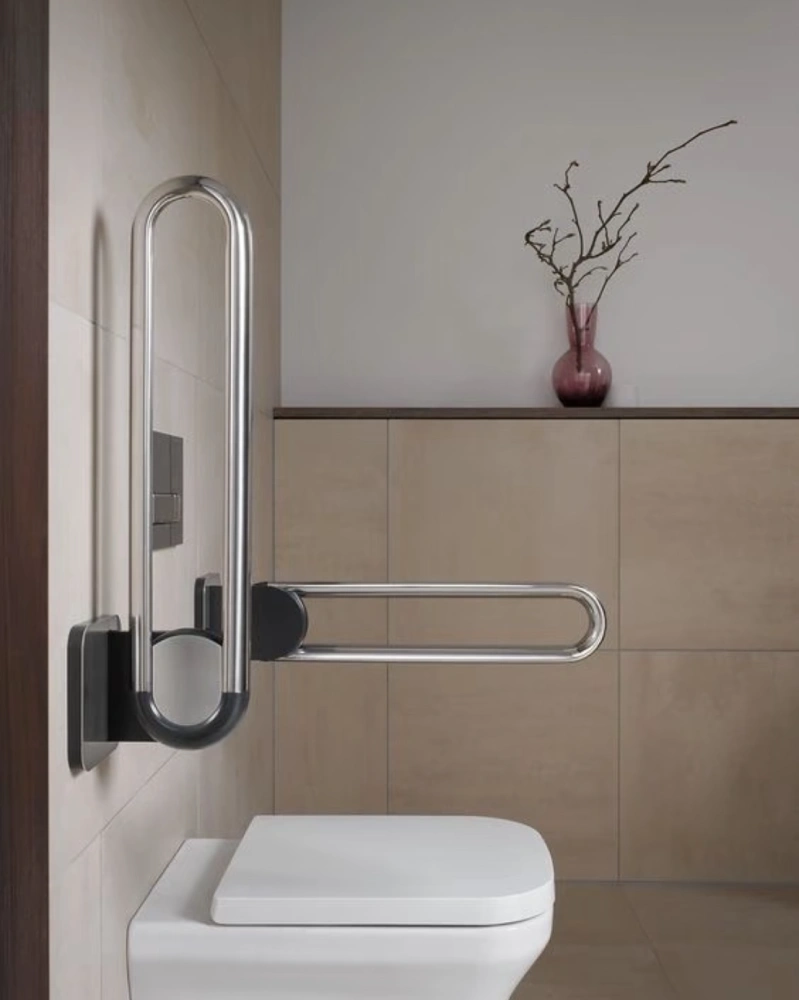
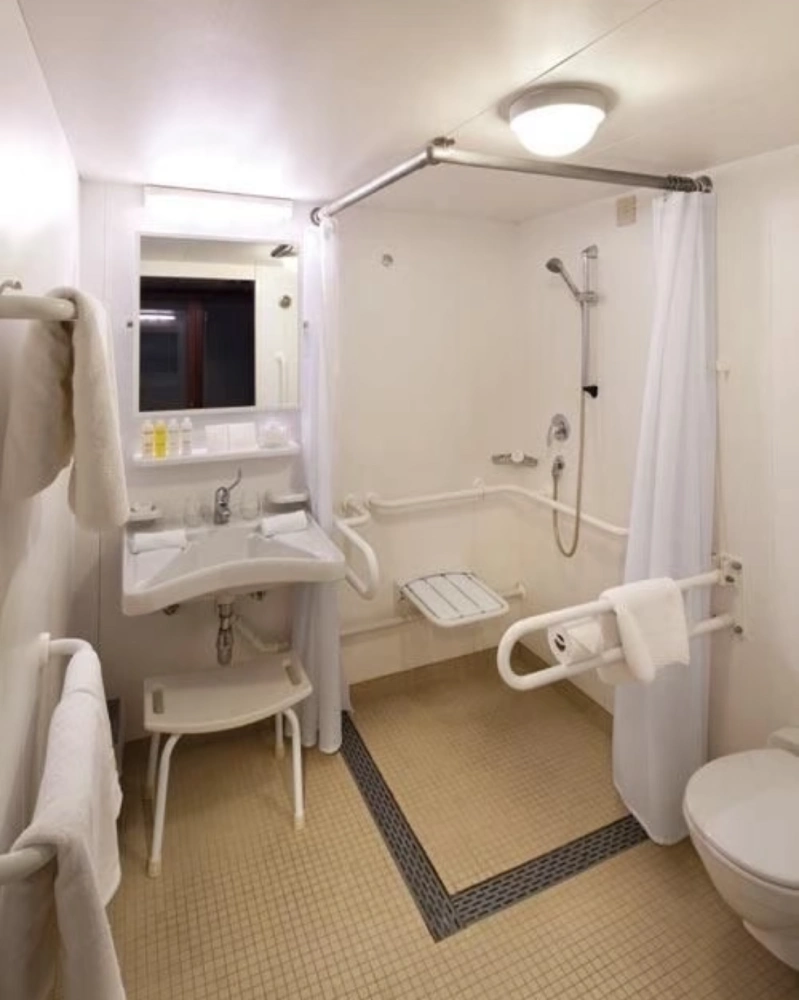
1. Mobility Support Systems for Hospital Bathrooms
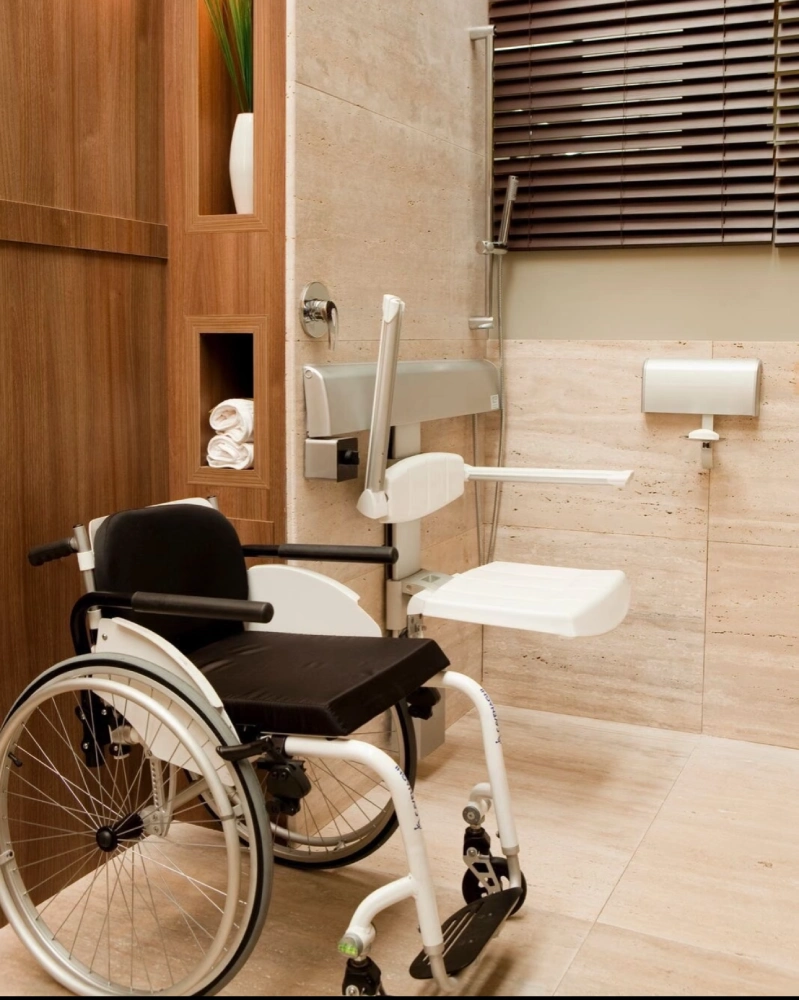
Grab bars and mobility supports are essential components of accessible hospital bathrooms, helping patients maintain balance and reducing fall risks in wet environments.
| Technical Specification | Relevant Standards | Typical Engineering Approach |
|---|---|---|
| Material | SBC 701 / AISI 316 | Corrosion-resistant stainless steel suitable for humid environments. |
| Load Capacity | ADA / SBC 201 | Designed to support dynamic loads for patient stability. |
| Surface Texture | Anti-Slip Grip | Brushed or knurled surfaces to improve grip in wet conditions. |
Jeddah Adaptation: Using 316 stainless steel grab bars significantly improves corrosion resistance in coastal environments where humidity and chloride exposure are high.
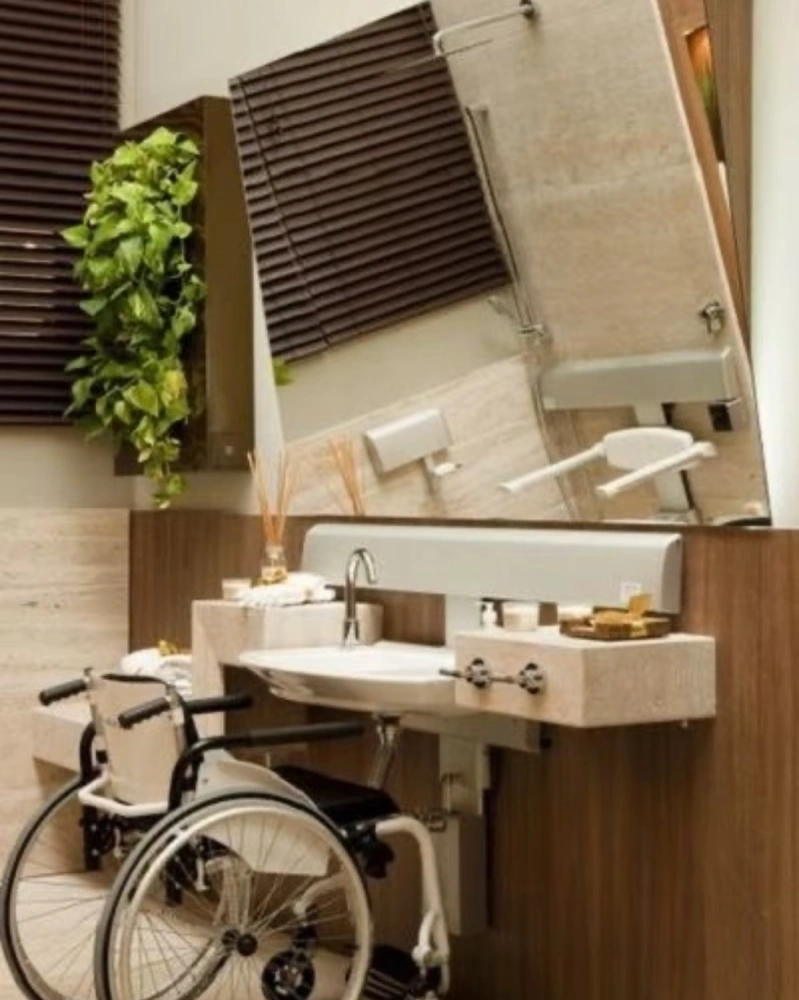
2. Wheelchair-Accessible Vanity Systems
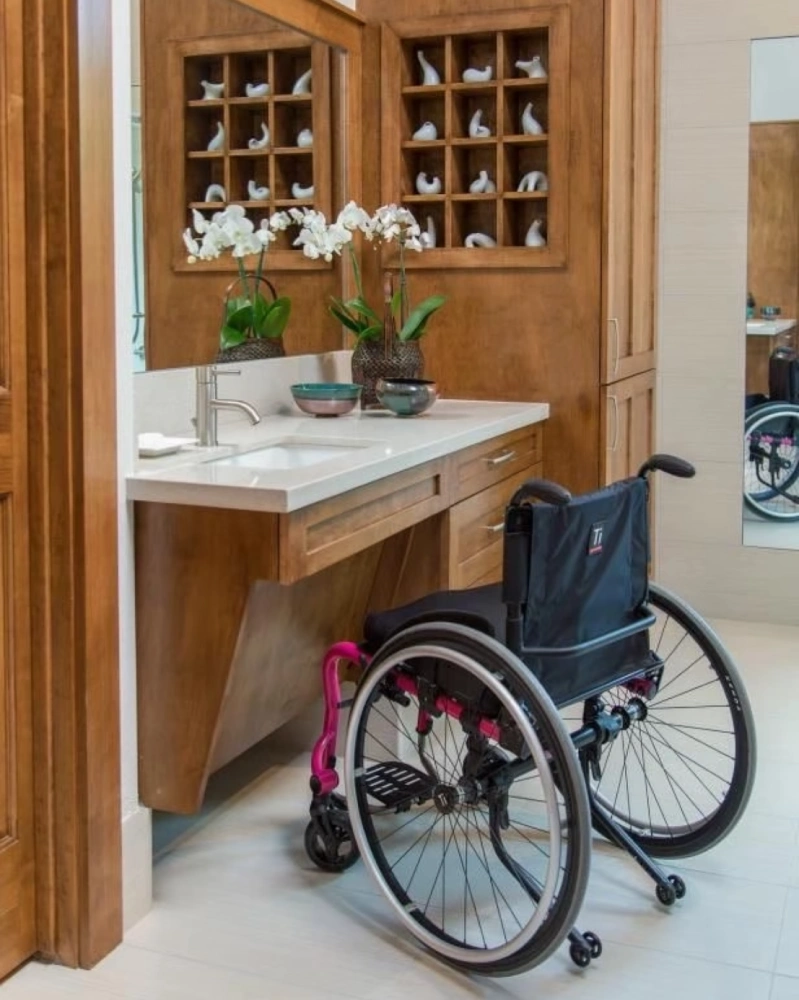
Accessible bathroom vanities must provide sufficient knee clearance and reachable fixtures for wheelchair users.
| Technical Specification | Standard Reference | Typical Requirement |
|---|---|---|
| Mounting Height | SBC 201 / ADA | Approximately 670 mm – 860 mm. |
| Hygiene Surface | ISO 22196 | Antibacterial surfaces to support infection control. |
| Fire Safety | EN 13501-1 | Low smoke emission materials for safety compliance. |
Planning Note: Proper installation planning ensures that vanities align with wall structures and plumbing systems while maintaining strict accessibility requirements.
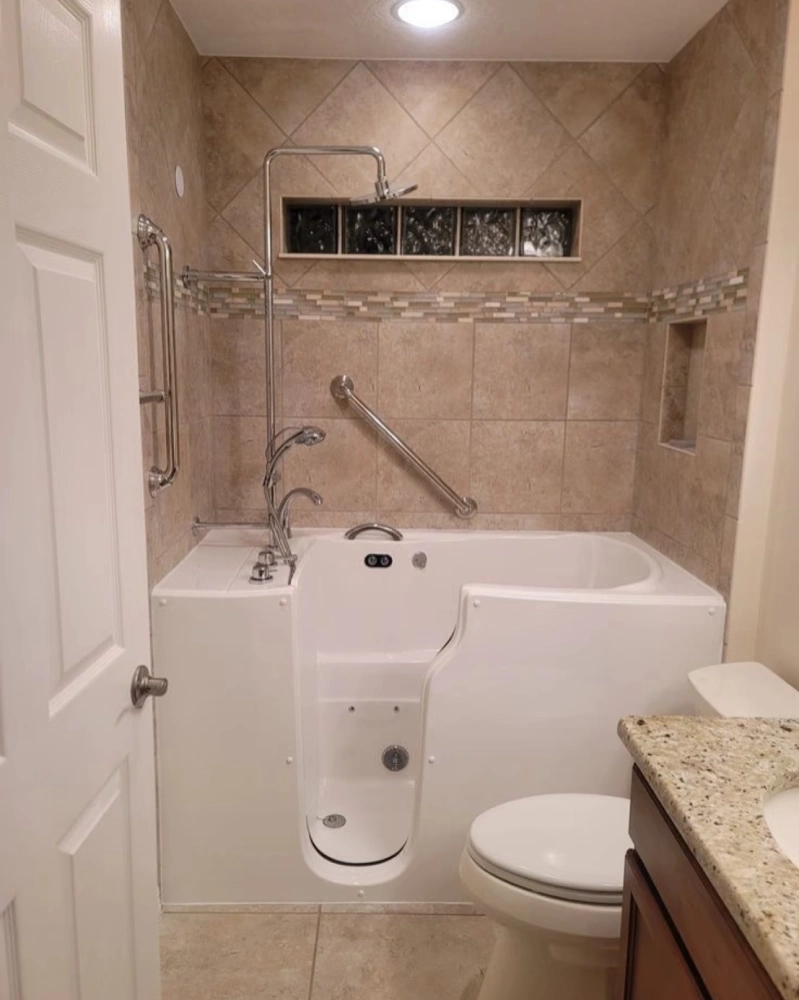
3. Clinical Bathing and Assisted Shower Systems
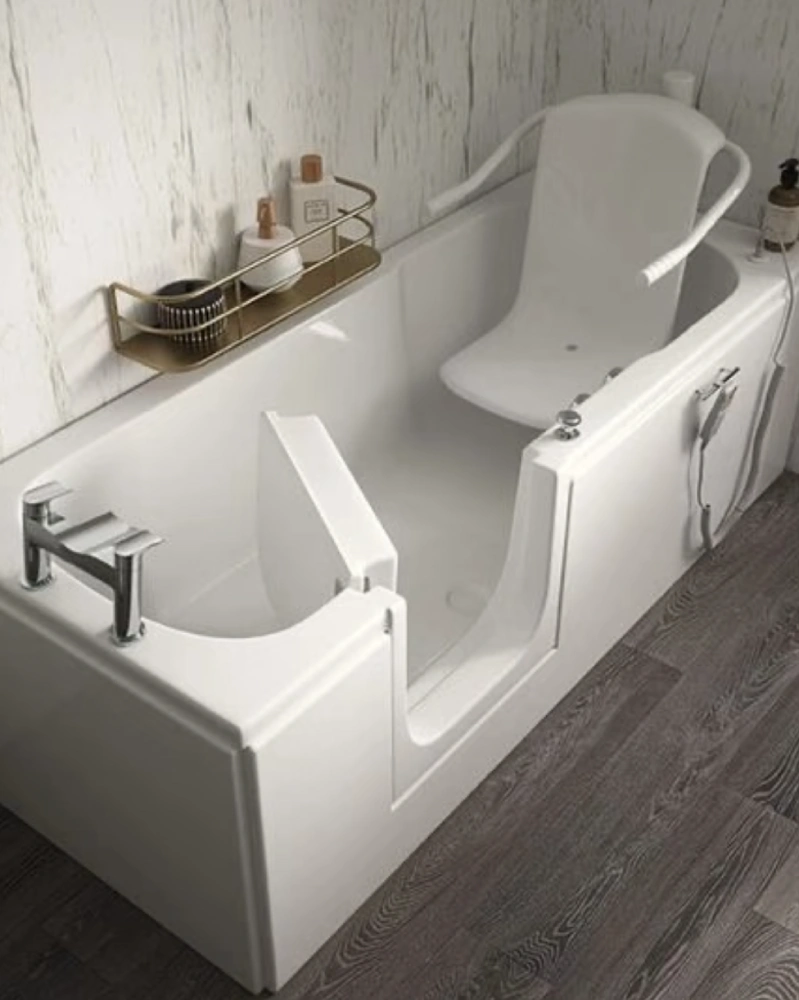
For elderly care wards and rehabilitation units, bathing areas are designed to reduce fall risks and simplify assisted care.
| Performance Indicator | Standard Reference | Engineering Consideration |
|---|---|---|
| Slip Resistance | DIN 51130 | R11 rating commonly used in hospital wet areas. |
| Sealing System | Moisture Control | Waterproof sealing to reduce mold risk in humid environments. |
| Installation Method | Modular Systems | Prefabricated units reduce on-site trade complexity. |
In large healthcare projects, Modular Bathroom Systems simplify installation by integrating plumbing and fixtures in preassembled units.
Key Design Goals for JCI / CBAHI Hospital Bathrooms:
- Fall Prevention: Strategic placement of mobility support fixtures.
- Infection Control: Utilization of silver-ion embedded antibacterial surfaces.
- Corrosion Resistance: Marine-grade materials for high-salinity Jeddah climates.
- Universal Accessibility: Ergonomic designs for wheelchair users and elderly patients.
Partnering with a Specialized Sanitary Ware Manufacturer for Global Projects
Large-scale construction demands more than just a vendor; it requires a manufacturing partner who understands the friction between high-volume delivery and rigid regulatory compliance.
100,000m² Direct Factory
Unlike trading firms, we own the entire production cycle in Foshan, ensuring Zero Finish Mismatch and absolute cost control for 50–5,000+ units.
Project Engineering Lead
Our team translates your 2D blueprints into production-ready 3D shop drawings, resolving MEP conflicts before the materials reach the Jeddah site.
Audit-Ready Compliance
We provide full SASO, SABER, and CBAHI documentation. Every batch is QC-certified, eliminating the risk of regulatory rejection at the port.
Single Point of Accountability
From custom cabinetry to medical-grade porcelain, you get one invoice, one dedicated engineering contact, and a unified project warranty.
Ready to secure your project's supply chain?
Visit our manufacturing hub in China or schedule a technical consultation with our engineering team.
Frequently Asked Questions: Hospital Sanitary Ware Solutions
Hospital bathrooms in Saudi Arabia must comply with the Saudi Building Code (SBC), particularly SBC 201 for accessibility, SBC 701 for plumbing, and SBC 801 for fire safety. Medical facilities are also required to meet CBAHI standards, including anti-slip flooring, accessible grab bars, and infection control surfaces.
For hospitals and elderly care facilities, flooring with R11 slip resistance according to DIN 51130 is recommended. This rating ensures safe traction even when surfaces are wet with soap or water, typical in patient shower areas.
316 stainless steel contains molybdenum, improving resistance to chloride corrosion. In coastal cities like Jeddah, where humidity can exceed 85%, 316 stainless steel offers far better durability than standard 304 stainless steel.
Materials are typically tested under ISO 22196. Laboratory tests show that these surfaces reduce bacteria like MRSA and E.coli by more than 99.99% within 24 hours, significantly lowering cross-infection risks.
Traditional construction takes about 45 days. Prefabricated bathroom pods manufactured in factories reduce this to around 19 days, improving efficiency by over 50% for large-scale projects.
Products must comply with SASO regulations and be registered via the SABER system. Required documents include PCoC, SCoC, and mandatory Water Efficiency Labels (WEL).
Elderly patients have higher fall risks. Design elements like grab bars, anti-slip floors, and wheelchair-accessible wash basins with outward-opening doors are critical for safety and SBC compliance.
Manufacturers use 316 stainless steel, PVD-coated fixtures, and non-porous composite surfaces to withstand high salinity and humidity, preventing rust and degradation.
Ideal materials include waterproof PVC boards, aluminum structures, or medical-grade compact laminate (HPL) for moisture resistance and sterilization compatibility.
Large manufacturers with integrated production lines can supply hundreds to thousands of units per project. Factory-based production ensures unified QC and faster lead times (e.g., 65 days for 420 units).