How a Sanitary Ware Manufacturer Delivered SBC-Compliant Hospital Bathroom Solutions in Jeddah, Saudi Arabia
Technical Standards, Environmental Adaptation, and Compliance Strategy for Medical and Elderly Care Bathroom Projects
A professional sanitary ware manufacturer delivered SBC-compliant hospital bathroom solutions in Jeddah, Saudi Arabia by combining accessible design standards, anti-slip safety materials, corrosion-resistant components, and medical-grade antibacterial surfaces.
The project integrated R11 anti-slip flooring, 316 stainless steel grab bars, ISO 22196 antibacterial surfaces, and modular bathroom systems to meet Saudi Building Code (SBC) regulations and CBAHI healthcare facility requirements.
The hospital project included more than 420 bathroom units covering 18,500 square meters, designed for elderly and patient safety in high-humidity coastal environments.
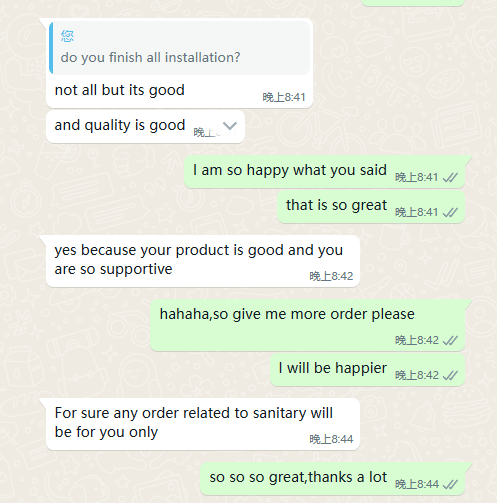
Verification: Real-time coordination with Saudi clients & factory-to-site QC.
Project Specifications: Jeddah Hospital
| Project Item | Technical Data |
|---|---|
| Project Type | Medical & Elderly Care Hospital |
| Location | Jeddah, Saudi Arabia (SBC Compliant) |
| Scale | 420 Sets / 18,500 m² |
| Delivery Time | 65 Days (Full Customization) |
| Quality Standard | 100% Factory QC Inspection Process |
| Compliance | SBC / CBAHI / SASO Certified |
Project Guide & Technical Standards
What Bathroom Standards Must Hospitals in Saudi Arabia Follow?
For any healthcare facility in the Kingdom, compliance with the Saudi Building Code (SBC) is non-negotiable. At George Sanitary Ware, our manufacturing process is strictly aligned with the latest SBC regulations and CBAHI (Saudi Central Board for Accreditation of Healthcare Institutions) requirements to ensure patient safety and operational approval.
Saudi Building Code (SBC) Matrix for Hospital Bathrooms
| Code | Regulation | Key Requirement for Manufacturers |
|---|---|---|
| SBC 201 | General Building Code | Accessible bathroom layout, minimum 900mm door width, and ergonomic grab bar positioning. |
| SBC 601 | Energy Conservation | High-efficiency water heating systems and heat-retaining pipe insulation. |
| SBC 701 | Plumbing Code | Use of corrosion-resistant pipes (316L SS/PPR) and advanced drainage designs to prevent odors. |
| SBC 801 | Fire Safety Code | Flame-retardant bathroom wall materials and fire-rated door assemblies. |
| SBC 1001 | Green Building Code | Mandatory water-saving sanitary ware with dual-flush systems and low-flow faucets. |
How Do Sanitary Ware Manufacturers Meet CBAHI Hospital Certification?
CBAHI accreditation requires more than just high-quality products; it demands specific safety and infection control protocols. As a specialized manufacturer, we align our production lines with Facility Management and Safety (FMS) standards to ensure your hospital project passes national audits smoothly.
CBAHI Bathroom Safety & Technical Compliance Matrix
| Standard | Requirement | Manufacturer Technical Response |
|---|---|---|
| FMS 8.1.1 | Anti-Slip Floors | Installation of R11 Slip Resistance tiles (DIN 51130) with non-porous textures for easy cleaning. |
| FMS 8.1.2 | Grab Bar Strength | 316 Grade Stainless Steel bars with a reinforced mounting system supporting up to 250 lbs (113 kg) dynamic load. |
| FMS 8.1.3 | Emergency Call System | Pre-drilled modular panels for seamless Nurse Call System integration in accessible units. |
| FMS 8.1.4 | Emergency Door Unlock | Supply of External Emergency Unlock mechanisms and outward-opening door configurations for patient safety. |
| IPC 15 | Infection Control | Non-porous antibacterial surfaces (ISO 22196) and coved-base designs to eliminate bacterial growth in corners. |
What Grab Bar Standards Are Required for Elderly Care Bathrooms?
In elderly care environments, grab bars are not just accessories—they are life-saving safety features. To comply with SBC 201 and international ADA accessibility guidelines, our grab bars are engineered to provide maximum grip stability and structural integrity under extreme conditions.
Grab Bar Technical Specification (Medical & Senior Care)
| Specification | Standard Requirement | George Medical Compliance |
|---|---|---|
| Diameter | 32 - 38 mm | Optimized for ergonomic grip and geriatric hand strength. |
| Wall Clearance | 38 mm (Fixed) | Prevents arm entrapment while ensuring a secure grasp. |
| Installation Height | 840 - 915 mm | Calculated for patient transfer from wheelchair to toilet/shower. |
| Load Capacity | 113 kg (250 lbs) | Tested for 4x safety factor to handle sudden dynamic impact. |
| Material | 316 Stainless Steel | Superior salt-spray resistance for coastal Jeddah environments. |
What Fire Resistance & Antibacterial Standards Are Required for Hospital Bathrooms?
In a high-density clinical environment, the bathroom is a critical zone for both fire containment and infection control. Our hospital-grade solutions are tested under international protocols to ensure they act as a barrier against both flames and superbugs.
Fire Resistance Standards
| Standard | Rating / Class |
|---|---|
| EN 13501-1 | B-s1, d0 |
| ASTM E84 | Class A |
Ensures zero flame spread and minimal smoke toxicity in medical wards.
Antibacterial Surface Efficacy (ISO 22196)
| Pathogen (Bacteria) | Reduction Rate |
|---|---|
| MRSA (Staphylococcus aureus) | 99.999% |
| E. coli (Escherichia coli) | 99.99% |
| Klebsiella (Pneumoniae) | 99.999% |
| Pseudomonas (Aeruginosa) | 99.999% |
Data verified through 24-hour incubation testing protocols.
Why this matters for CBAHI: Certification requires evidence of "Infection Prevention and Control (IPC)". Using ISO 22196 compliant surfaces significantly reduces the risk of Hospital-Acquired Infections (HAIs), a key KPI for hospital administrators in Saudi Arabia.
Why R11 Slip Resistance Is Essential for Hospital Bathrooms?
Patient falls in wet areas are a major liability for healthcare providers. According to DIN 51130 standards, hospital bathrooms require a specific level of frictional resistance to ensure safety for patients with limited mobility or those using walking aids.
DIN 51130 Slip Resistance Classification
| Rating | Inclined Angle (°) | Recommended Application |
|---|---|---|
| R9 | 6° - 10° | Dry areas, reception halls |
| R10 | 10° - 19° | Patient rooms, general corridors |
| R11 | 19° - 27° | Hospital Bathrooms & Showers |
| R12 | 27° - 35° | Industrial kitchens, specialized clinics |
The R11 Advantage
For hospital engineering in Jeddah, R11 rating provides the optimal balance: high enough to prevent slips on soapy surfaces, yet smooth enough to meet Infection Control (IPC) requirements for daily deep cleaning.
Why Bathroom Materials Must Resist Salt Corrosion in Jeddah?
The coastal city of Jeddah presents one of the most aggressive environments for building materials. High humidity combined with saline air leads to rapid oxidation of inferior metals, causing structural failure in hospital safety systems within months if the wrong materials are specified.
Jeddah Climate Profile: The Corrosion Risk
| Factor | Measured Data |
|---|---|
| Average Humidity | 65% |
| Summer Peak Humidity | 85-90% |
| Salt Content | High Chloride (Red Sea Proximity) |
Material Longevity in Saline Environments
| Material Type | Corrosion Resistance |
|---|---|
| Chrome Plated Brass | Low (Pitting Risk) |
| 304 Stainless Steel | Medium (Surface Rusting) |
| 316 Stainless Steel | High (Recommended) |
| GRP Composite | Excellent (Marine Grade) |
How Prefabricated Bathroom Pods Reduce Hospital Construction Time?
For the Jeddah Hospital Project, delivering 420 units within a tight 65-day window was only possible through Off-site Prefabricated Modular Solutions. By shifting 80% of the construction work to our controlled factory environment, we eliminated site-based delays and ensured consistent SBC compliance.
Traditional Construction vs. Modular Bathroom Pods
| Performance Indicator | Traditional Site-Built | George Modular Pods |
|---|---|---|
| Installation Time | 45 Days / Unit Avg. | 19 Days / Total Project Phase |
| Defect Rate (Rework) | 4% - 10% | < 0.2% (Factory Tested) |
| Maintenance Cost (Yearly) | 410 SAR | 290 SAR |
| On-site Construction Teams | 10+ Specialized Trades | 1 Multi-skilled Team |
Plug-and-Play Integration
All MEP (Mechanical, Electrical, Plumbing) connections are pre-fitted and pressure-tested before shipping to Jeddah.
Millimeter Precision
Laser-cutting technology ensures 100% accuracy, fitting perfectly into the hospital's structural grid.
What Certifications Are Required to Export Sanitary Ware to Saudi Arabia?
Navigating the Saudi Customs (Al-Zakat, Tax and Customs Authority) requires a deep understanding of the SABER platform and SASO technical regulations. At George Sanitary Ware, we handle the entire documentation process to ensure your hospital project materials arrive on time without regulatory delays.
Mandatory Certification Checklist
| Certification | Full Name / Purpose | George Compliance Status |
|---|---|---|
| SASO | Saudi Standards, Metrology and Quality Org | ✔ Fully Compliant |
| SABER | Electronic Portal for Import Clearance | ✔ Registered Supplier |
| PCoC | Product Certificate of Conformity | ✔ Valid for 1 Year |
| SCoC | Shipment Certificate of Conformity | ✔ Issued per Batch |
| WEL | Water Efficiency Label (Water Saving) | ✔ High Efficiency Rating |
The SABER Workflow
We manage the link between the Product Certificate (PCoC) and the Shipment Certificate (SCoC) via the SABER system. Our team ensures that all medical basins and grab bars have the mandatory G-Mark or SASO mark where applicable.
Water Efficiency Labeling (WEL)
Crucial for SBC 1001 (Green Building) compliance. All our faucets and flush valves are tested for flow rates to meet Saudi Arabia's strict water conservation targets.
Looking for a Reliable Sanitary Ware Manufacturer for Your Hospital Projects in Saudi Arabia?
Whether you are in the Tendering Phase or Site Construction, our technical team (led by Helen) is ready to help you optimize your bathroom solutions for SBC compliance and project budget.
BOM Optimization: We review your bill of materials to find cost-effective SBC alternatives.
Shop Drawings: Detailed 2D/3D layouts tailored for your specific hospital floor plans.
SABER Support: Full assistance with PCoC/SCoC registration and Saudi customs clearance.
QC Assurance: 100% factory inspection with real-time video verification for project managers.
Ready to start? Send us your project drawings or BOQ for a professional assessment.
Frequently Asked Questions: Hospital Sanitary Ware Solutions
Hospital bathrooms in Saudi Arabia must comply with the Saudi Building Code (SBC), particularly SBC 201 for accessibility, SBC 701 for plumbing, and SBC 801 for fire safety. Medical facilities are also required to meet CBAHI standards, including anti-slip flooring, accessible grab bars, and infection control surfaces.
For hospitals and elderly care facilities, flooring with R11 slip resistance according to DIN 51130 is recommended. This rating ensures safe traction even when surfaces are wet with soap or water, typical in patient shower areas.
316 stainless steel contains molybdenum, improving resistance to chloride corrosion. In coastal cities like Jeddah, where humidity can exceed 85%, 316 stainless steel offers far better durability than standard 304 stainless steel.
Materials are typically tested under ISO 22196. Laboratory tests show that these surfaces reduce bacteria like MRSA and E.coli by more than 99.99% within 24 hours, significantly lowering cross-infection risks.
Traditional construction takes about 45 days. Prefabricated bathroom pods manufactured in factories reduce this to around 19 days, improving efficiency by over 50% for large-scale projects.
Products must comply with SASO regulations and be registered via the SABER system. Required documents include PCoC, SCoC, and mandatory Water Efficiency Labels (WEL).
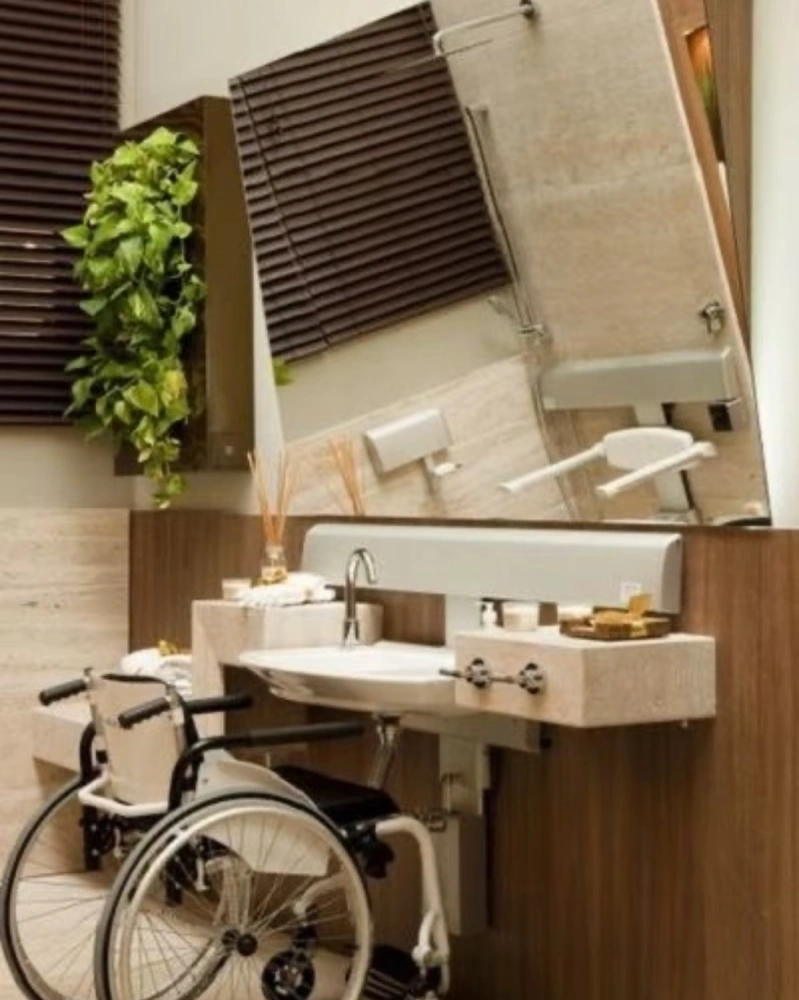
Elderly patients have higher fall risks. Design elements like grab bars, anti-slip floors, and wheelchair-accessible wash basins with outward-opening doors are critical for safety and SBC compliance.
Manufacturers use 316 stainless steel, PVD-coated fixtures, and non-porous composite surfaces to withstand high salinity and humidity, preventing rust and degradation.
Ideal materials include waterproof PVC boards, aluminum structures, or medical-grade compact laminate (HPL) for moisture resistance and sterilization compatibility.
Large manufacturers with integrated production lines can supply hundreds to thousands of units per project. Factory-based production ensures unified QC and faster lead times (e.g., 65 days for 420 units).