Project delays, unforeseen rework, and inconsistent installation outcomes crush developer profitability. Most developers I work with still assume product pricing defines ROI—but it’s process control that really does. For example, large-scale residential and hotel projects implementing modular bathroom systems report installation time reductions of 60–85%. Matching the bathtub’s design to the project’s positioning isn’t just smart—it’s essential to protect both schedule and return.
ROI in modern construction is now determined by operational control over the entire supply chain, not just the unit price of the materials. This shift to an industrialized supply chain is necessary to ensure financial stability and predictable performance across all multi-project portfolios. For bathtub packages—one of the most logistics-intensive components in large multi-unit and hospitality developments—this matters more than ever.
You need a reliable process. Research Gate shows why: studies of off-site modular construction report schedule compression and cost savings when compared with traditional onsite methods. This reliance on traditional craftsmanship and manual tracking creates systemic risk. Moving forward, industrialized sourcing of sustainable bathtub material dramatically cuts coordination waste and schedule uncertainty. The profitability of your assets depends on how well you control the execution.
Table of Contents
Does Your One-Size-Fits-All Spec Mismatched for Project Positioning?
Do you realize how one bathtub specification can jeopardize your entire project’s stability? When procurement relies on multiple vendors and reused specs across property types, accountability disappears—every delay or mismatch becomes a shared problem, and your project bears the cost. Using residential-grade bathware in hospitality environments invites costly maintenance and guest complaints before building opening.
Reusing identical bathtub specifications across varied projects—residential to hospitality—is a major source of project-spec mismatches. According to MDPI, Many developers report design revisions and procurement delays because a single spec cannot meet differing aesthetic, durability, and installation requirements across a mixed portfolio. The core solution lies in developing modular bathtub platforms that allow plumbing consistency while adjusting finishes per project type.
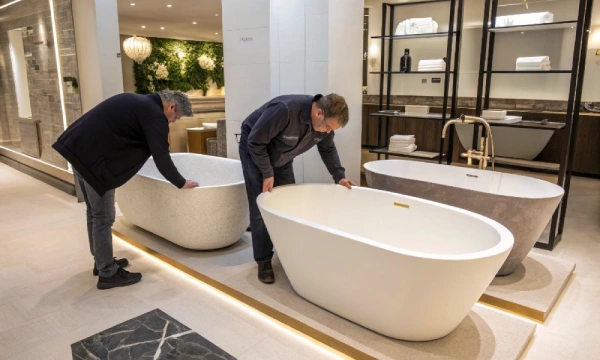
My experience mirrors what modular construction research shows—substantial risk reduction and schedule gains when a platform-based approach is adopted. Early alignment with design teams to fix plumbing and structure, while tailoring visible finishes per project type, has saved clients weeks of coordination time. This kind of modular ‘platform’ design system minimizes technical risk while delivering necessary design flexibility.
Calibrating Bathtub Specs for Portfolio Diversity
Tip: Aligning specs to portfolio diversity ensures both brand consistency and operational efficiency.
Bathtub Design Strategies by Project Type
| Project Type | Primary Need | Design Metric | Strategic Goal |
|---|---|---|---|
| Luxury Residential | High-end aesthetics, deep soaking | Deep sump, premium finish (solid surface/stone resin) | Maximizing long-term asset value |
| Mid-Scale Hotel | Durability, rapid turnover/cleaning | Robust acrylic/gelcoat, easy plumbing access | Protecting NOI by minimizing downtime |
| Serviced Apartment | Flexibility, easy maintenance | Standardized footprint, integrated shower option | Reducing labor costs & improving speed to market |
Are Coordination Gaps Jeopardizing Your Installation Timeline?
I’ve watched site teams stare at 2D drawings, trying to guess installation points—a guaranteed way to lose days. Poor communication between the design vision and the on-site reality leads to installation headaches, delays, and budget creep. That’s why we now integrate every bathtub model directly into the BIM environment to keep design, engineering, and installation teams aligned from day one. Research into digital and modular workflows confirms meaningful time and cost savings through such alignment.
Fragmented coordination—where design intent fails to translate into the installation outcome—creates significant cost overruns and delays. To counter this, suppliers must provide BIM-compatible bathtub models that allow all teams—design, engineering, and construction—to align digitally. When everyone uses the same visual language and data from the start, errors disappear.
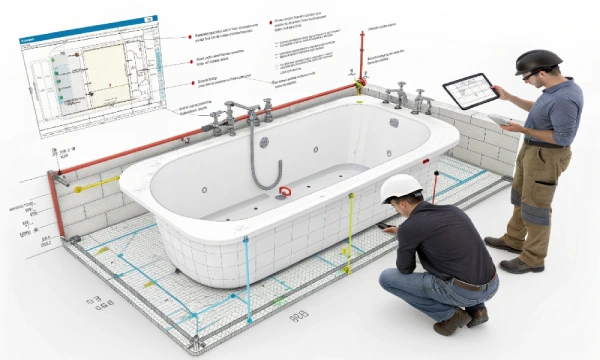
I’ve seen the difference firsthand: once we switched from 2D drawings to BIM-integrated specs, errors virtually disappeared. The era of passing a 2D drawing to a contractor and hoping for the best is over, especially in complex multi-family and hospitality fit-outs. When a specific bathtub model, with its precise technical needs, is modeled digitally, everyone—from designers to plumbers—finally spoke the same visual language. The digital alignment we gain upfront pays off tenfold on-site.
Bridging the Design-to-Installation Gap
Reducing Coordination Challenges in Bathtub Installation
| Coordination Challenge | Traditional Approach (High Risk) | Flexible/Integrated Solution (Low Risk) |
|---|---|---|
| Visual Alignment | Separate 2D drawings/specs | BIM-compatible digital models |
| Technical Errors | Field interpretation | Pre-engineered installation templates/guides |
| Logistics | Fragmented vendor delivery | Just-in-time delivery from an integrated supplier |
Can You Balance High Aesthetics with Long-Term Durability?
I’ve seen beautiful bathtubs lose their shine within a year because of poor material choices. Developers often chase visual appeal, but it’s durability that protects your brand reputation and keeps OpEx down. Materials must satisfy both aesthetics and heavy commercial use.
Finding materials that satisfy aesthetic demands while withstanding intense usage cycles is challenging. Recent industry reports on modular bathroom systems emphasize the shift toward lifecycle thinking and factory-controlled quality. The solution involves rigorous material benchmarking (e.g., robust acrylic for hotels vs. refined cast stone for luxury residential) and mock-up validation to ensure that the finish your designer loves can actually survive real-world use and significantly lower long-term replacement costs.
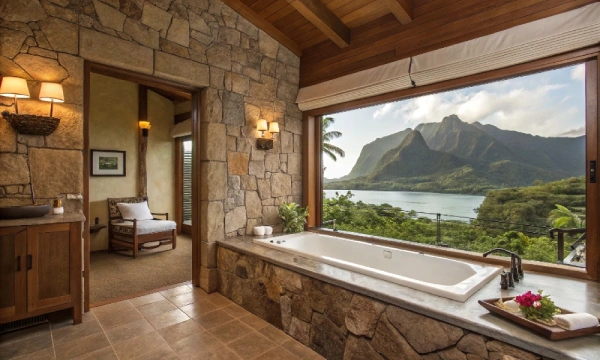
In high-end residential projects, I always advise mock-up validation before finalizing materials. A luxury apartment bathtub serves as a sculptural centerpiece, while a mid-scale hotel bathtub must withstand harsh cleaning chemicals and heavy turnover. This simple step has saved my clients from countless costly replacements and ensures their brand promise remains intact.
Conclusion
After years of working across residential and hospitality projects, one lesson stands firm—flexible bathtub design isn’t a luxury; it’s a business strategy. The more adaptable your specs, the smoother your projects run and the stronger your ROI. Begin by auditing your bathtub supply chain and partnering with suppliers that offer transparent logistics and modular bathtub-installation solutions. The sooner your bathtub systems become industrialized, the sooner ROI stops being unpredictable.
If you want to dive deeper into bathtub market trend, please see How Can the Right Bathtub Choice Boost ROI for Developers?
We provide integrated one-stop bathroom solutions covering tubs, sanitaryware, fittings, and system coordination for hotel and commercial projects.
▼ Submit the form below to connect with our team and explore project-based collaboration. ▼