Dealing with constant bathroom sink smells is a headache for hotel managers like you. When your bathroom sink smells like rotten eggs, guests will certainly complain. Let’s see how smart choices can reduce this issue.
Premium sinks can significantly reduce the potential for bathroom sink smells but are not a complete solution alone. High-quality materials resist bacteria growth, making cleaning easier and reducing odors at the source. The best results require pairing premium sinks with excellent plumbing maintenance.
When I first started in the factory, I learned that a product’s success is not just about its look. It is often about the hidden issues that cause long-term pain, like a drain in bathroom sink smells bad. We must look at the common causes of odors to truly understand the fix. I will share my industry insights on how to handle this issue.
Table of Contents
Why does a bathroom sink smell like rotten eggs, and is the sink to blame?
That foul odor makes people think something is rotting in the drain. Is the sink itself really the reason for the bathroom sink smells like rotten eggs? This question has a simple answer.
The sink basin is rarely the sole cause of the rotten egg smell. The true culprits are usually the P-trap, bio-film buildup inside the drain pipes, or vent issues. We need to check all components of the system for a complete diagnosis.
Source:
- https://www.oatey.com/faqs-blog-videos-case-studies/blog/what-p-trap-and-how-does-it-work
- https://www.reddit.com/r/HomeImprovement/comments/169buov/cleaning_bathroom_sink_drain_pipes_biofilm/
It is important to know the three main odor sources when troubleshooting. These sources include the P-trap going dry, the organic matter inside the pipes, and a faulty vent system. We will now look closer at each of these key odor points.
Dry P-Traps 💧
The P-trap holds water that acts as a seal against sewer gases. If the water evaporates, sewer gases, which often contain hydrogen sulfide, escape. This is why the bathroom sink smells like sulfur. Simply run the water for a minute to test this cause.
In hotel rooms that are vacant for a long time, the P-trap can easily dry out. For managers like Emma, this means rooms must be flushed before a guest checks in. This is a common maintenance issue that is easy to fix.
Bio-film and Organic Matter 🦠
The dark, slimy buildup inside the pipes is bio-film, a mix of bacteria, soap scum, and hair. This film breaks down and causes the drain in bathroom sink smells bad. Regular cleaning is essential to remove this film from the drain walls.
This problem is common in high-traffic commercial bathrooms. The organic matter feeds the bacteria, making the odor worse over time. Ignoring this issue can lead to clogs and expensive pipe repairs later on.
Faulty Venting Systems 💨
The vent pipe lets fresh air into the system and removes stinky sewer gases. A clogged or damaged vent allows gas into the room or pulls water out of the P-trap. This issue requires professional plumbing attention for a proper repair.
I have seen this cause the worst odors in old buildings. The vent stack on the roof can become blocked by leaves or even birds’ nests. Checking the vent is the last step when basic cleaning does not solve the smell.
⚠️ Tired of plumbing hassles? Shop Antibacterial Vanities >
The key takeaway is that the smell starts in the plumbing, not the sink’s surface. A cracked or poor-quality sink bowl, however, can provide a place for water to pool underneath. This standing water creates the perfect spot for mildew, causing a bathroom sink smells like mildew problem over time.
Why does my bathroom drain smell like sewer, how does material quality change the risk?
The smell of sewage is an immediate red flag in any hotel or home. Why does my bathroom drain smell like sewer, making the whole room unusable for guests? The material quality does play a part in this smell.
The sink material itself affects how quickly bio-film develops around the drain flange and overflow. Smooth, non-porous materials slow the growth of odor-causing bacteria and organic buildup. This makes it easier to prevent the problem before the odor hits the P-trap.

Different materials have varying degrees of resistance to bacteria and staining. Materials with a high porosity hold more water and organic matter, increasing the risk of odor. We need to compare some common sink materials now.
Porosity and Odor Resistance 🔬
Porosity is a key factor in material quality and odor risk. Highly porous materials like natural stone can absorb tiny amounts of water, soap, and residue. This trapped residue will break down slowly and contribute to the overall poor air quality.
I have seen many cheap ceramic sinks that develop tiny cracks in the glaze after some years of hard use. These micro-cracks allow water to seep in, and the sink material itself begins to smell. This is why high-end materials are crucial for long-term use.
Antimicrobial Properties 🛡️
Some premium materials, like certain copper and stainless steel alloys, naturally resist bacteria growth. This is a huge benefit for commercial settings, like a busy hotel bathroom. These properties keep the sink surface cleaner between daily housekeeping visits.
While the P-trap is the main odor source, a sink with antimicrobial properties means fewer bacteria enter the drain line in the first place. This layered defense is very important for maintaining hygiene standards for a hotel’s brand reputation.
For Emma, ensuring consistent finishes across many rooms is vital. Choosing a high-quality material guarantees a durable and uniform product, resisting the wear that causes porous surfaces to fail. This investment reduces the long-term lifecycle costs by requiring less frequent replacement and intensive deep cleaning.
How to quickly eliminate bathroom sink odor?
A guest has just complained that their water from bathroom sink smells bad. How can housekeeping provide a quick and effective remedy right now? There is a simple three-step process to follow for a quick fix.
The fastest solution is to pour one cup of baking soda into the drain, followed by one cup of vinegar. After 15 minutes, flush with hot water to clear the residue. This bubbly reaction is a quick smelly bathroom sink drain remedy for minor bio-film clogs.
Source:
- https://www.balkanplumbing.com/cleaning-drains-with-baking-soda-and-vinegar/
- https://www.reddit.com/r/CleaningTips/comments/11s6hyi/can_i_use_baking_soda_and_vinegar_to_unclog_a/
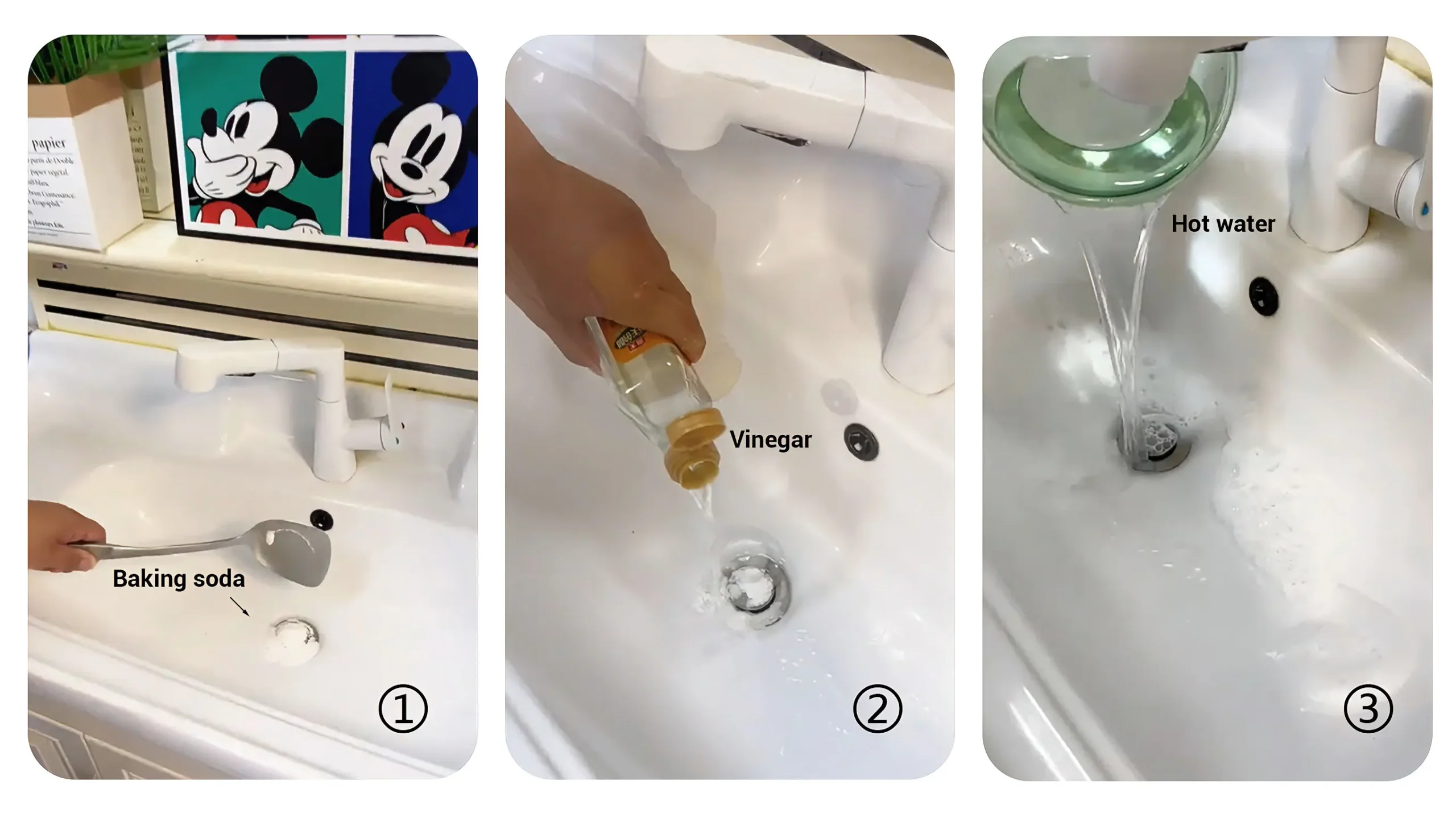
We use simple, non-toxic products to break down the organic matter inside the drain. This process helps to disinfect the pipe walls and restores the P-trap seal. The three steps are simple to teach any housekeeping staff member.
Baking Soda and Vinegar Mix 🧪
This natural mixture creates a fizzing action that safely scrubs the drain line. The mix helps to lift the greasy buildup and hair that traps bacteria and odors. It is a much safer option than using harsh, chemical drain cleaners.
I have seen how quickly chemical cleaners can damage pipe seals and even some high-end sink finishes. Always use the gentler baking soda and vinegar mix for quick maintenance. This simple remedy protects the plumbing system and the sink’s surface.
Hot Water Flush 🌡️
After the fizzing stops, pour a kettle of very hot water slowly down the drain. The heat helps to melt away any leftover soap scum and grease that the baking soda loosened. This hot flush ensures the odor-causing material is completely washed away.
Make sure the water is hot but not boiling, especially if the sink uses plastic piping. Too much heat can warp or loosen the seals, creating a new problem. A safe hot flush completes this quick and easy cleaning process.
While this method provides a great temporary fix, it does not fix a faulty vent or a dry P-trap. If the odor returns quickly, it signals a deeper plumbing issue that needs professional attention. For hotel operations, staff must report recurring odors for a full maintenance check.
How do premium sinks reduce the risk of “bathroom sinks smelling like rotten eggs”?
The core of our discussion is whether better materials can fight the awful odor. Can a premium sink stop the risk of bathroom sink smells like rotten eggs? The answer is a clear yes, but only in certain areas.
Premium sinks reduce risk by offering smooth, highly durable finishes that are simple to clean and resist scratching. These non-porous surfaces prevent bacteria from taking hold around the drain opening and overflow area. This surface hygiene reduces the source of organic breakdown odors.
Source:
- https://georgebuildshop.com/which-bathroom-sink-materials-improve-long-term-roi/
- https://pmc.ncbi.nlm.nih.gov/articles/PMC5100818/
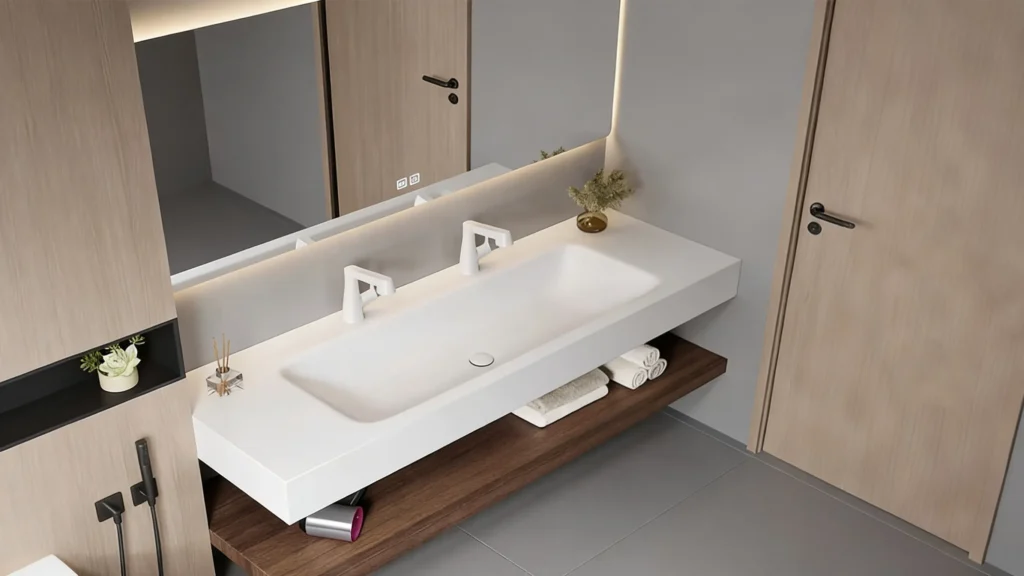
High-end sinks use better manufacturing to eliminate gaps and porous spots. This high quality directly supports the maintenance goals of any commercial setting. Let’s look at the three main benefits of using premium sinks.
Non-Porous Finishes 🚫
The best sinks feature a finish that is completely non-porous, meaning nothing can soak into the material. This makes it impossible for the material itself to host bacteria or mildew, protecting against a primary cause of odor. This feature is vital for long-term hygiene.
I learned in the factory that perfect glazing is hard to achieve on cheap sinks. Even a tiny pinhole can trap water and soap, which is a big headache for cleaning crews. A true premium finish eliminates this concern completely.
Seamless Drain Integration 🕳️
Premium models often feature a better design where the drain connects with the sink bowl. This design minimizes the small gaps and seams where bio-film and hair love to collect. Fewer gaps mean less trapped material and an easier cleaning process.
The area right under the drain stopper is a huge problem spot for odors. Premium sinks often have a simpler, cleaner drain assembly that reduces the surfaces where scum can build up. This design choice directly supports easy onsite maintenance for Emma
For hotel projects, the long-term durability of the finish is the most important factor. Constant, harsh commercial cleaning chemicals can quickly damage a cheap finish. A premium sink maintains its non-porous nature for years, truly reducing the lifecycle cost and risk of recurring odor issues.
Which high-end bathroom sinks truly prevent these odor issues?
We now know that a quality material helps stop the problem. Which specific high-end bathroom sinks offer the best defense against bathroom sink smells? Let’s explore the materials that offer the most proven success.
Vitreous china with a flawless, thick glaze is the industry standard for hygiene and durability. Solid surface materials like cast resin are also excellent because they have no seams or pores. Copper and high-grade stainless steel are good choices too.
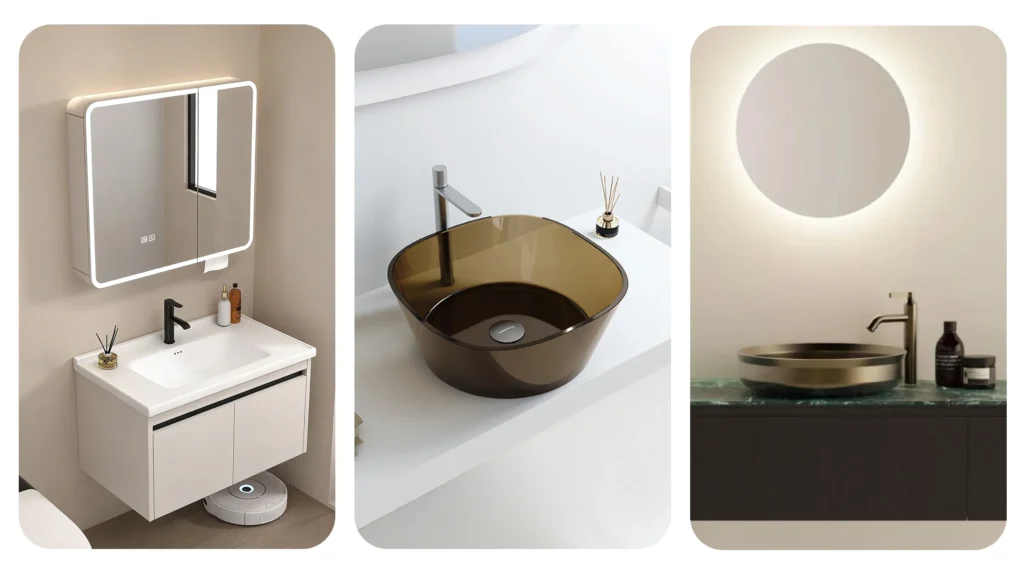
Buyers should look for materials that prioritize a smooth, non-reactive surface. This surface must also be strong enough to resist the everyday wear and tear of hotel use. We should compare the top three choices for durability and maintenance.
High-Quality Vitreous China (Ceramic) 🍶
This material is the most common and is excellent when the glaze is perfectly applied. The glaze must be fully non-porous and fused properly to the ceramic body. Look for a brand that offers a long-term warranty on the glaze finish.
In my experience, quality control is everything with ceramic. A high-end manufacturer ensures the consistency and thickness of the glaze across the whole batch. This quality ensures the surface will not fail, preventing the core cause of the odor risk.
Solid Surface or Cast Resin Sinks 💎
These sinks are made from non-porous compounds and molded into a seamless piece, often integrated with the countertop. The lack of seams eliminates one of the biggest breeding grounds for bacteria and mildew. They are simple to repair if they get scratched.
Solid surface materials offer the best defense against standing water. There is nowhere for water to wick away and sit underneath the sink or behind the joints. This design reduces the risk of long-term odors starting from dampness.
The ability to source consistent finishes and colors is critical for a procurement manager like Emma. High-end suppliers of vitreous china and solid surface materials can provide batch consistency for large projects. This consistency prevents the visual discrepancies that affect the guest experience in a large hotel chain.
Client Success Snapshot
The "Odor-Free" Upgrade for a Coastal Resort
🔴 Pain Point: A 200-room resort faced recurring "sewer smell" complaints despite daily cleaning, tracing back to micro-cracks in aging ceramic sinks.
🟢 Solution: Replaced all units with George Build Shop's Seamless Solid Surface Vanities, eliminating porous joints where bacteria hide.
🚀 Result: 0 Odor Complaints in 12 months. Housekeeping time reduced by 25% per room.
What aspects should buyers focus on when selecting premium sinks?
The number of choices on the market can feel overwhelming. What important aspects should we focus on when selecting premium sinks to stop the potential for a bathroom sink smells bad complaint? We need to look beyond the basic appearance.
Buyers should prioritize the warranty, maintenance guides, and the quality of the overflow design. A strong warranty proves the manufacturer trusts their product’s durability. Clear maintenance guidelines help staff properly care for the new sink.
Source:
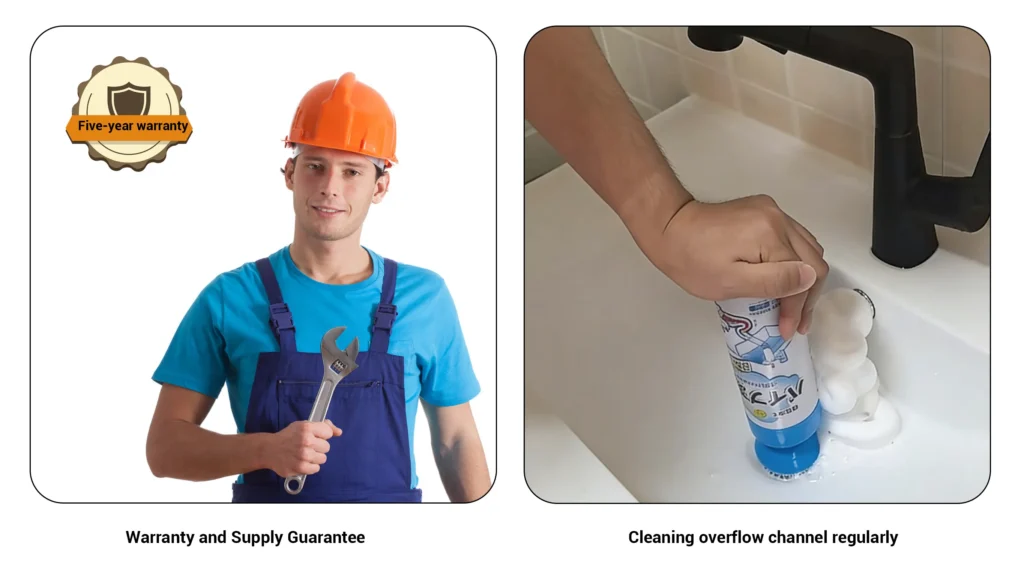
Buyers should focus on factors that protect the hotel’s investment and long-term reputation. These key points all relate to reducing the risk of failures that impact the guest experience. Let’s cover the three most important selection criteria.
Warranty and Supply Guarantee 📜
A long-term product and finish warranty is crucial for commercial projects. It proves the manufacturer stands behind the material’s ability to withstand heavy use and cleaning. Also, confirm a supply guarantee for future replacements during renovations.
I always advise my clients to focus on the company’s commitment to post-sale service. For a manager facing a tight renovation window, knowing that replacement parts are guaranteed and available is non-negotiable. This is business planning at its best.
Overflow and Drain Design 🧼
Check the overflow channel design closely. A poorly designed overflow is very difficult to clean and easily traps sludge and bacteria. Look for sinks with a wide, glazed, and accessible overflow channel that can be easily flushed during cleaning.
The overflow channel can become a major contributor to the bathroom sink smells if it is ignored. Even the best sinks require a deep cleaning of this channel regularly. A simple, well-designed channel makes this job much faster and easier for maintenance staff.
Ultimately, a premium sink is an investment in durability and easier maintenance, which directly lowers the lifecycle costs. However, no sink can overcome a dry P-trap or a completely blocked vent. Smart purchasing should always be paired with a robust and mandatory plumbing maintenance schedule to eliminate all recurring odors.
Conclusion
Premium sinks drastically reduce odor risk through superior materials and design, but they need proper plumbing maintenance. We offer deep knowledge on selecting the right products for your business. Contact georgebuildshop now.
Ready to "Future-Proof" Your Hotel Bathrooms?
Premium sinks are an investment in lower maintenance costs and happier guests. As a factory-direct supplier, George Build Shop helps you balance luxury aesthetics with commercial durability.
👇 Fill out the form below to get our latest 2026 Catalog and a Custom Proposal for your project.