
Key Insights for Faster, Lower-Risk Bath-Fitouts
Lightweight or pod-ready bathtubs may cost slightly more upfront, but they deliver major payback through lower labour, faster installation, and earlier room readiness.
In a 200-room hotel, optimised bathtub design saves 20–40 minutes per room, totalling 67–133 labour hours — plus significantly fewer reworks.
You don’t need full prefab pods. A well-designed bathtub alone captures most installation efficiency, making it the most cost-effective upgrade for high-density projects.
Key on-site risks remain: waterproofing, tiling, and plumbing still require tight sequencing and QA to avoid delays.
These advantages are strongest in high-rise, high-density hotels where logistics, access, and labour efficiency directly affect project timelines and profitability.
Table of Contents
Introduction: The Tub Is Not Just a Fixture — It’s a Business Decision
When I visit a hotel under construction or renovation, I tell the procurement or operations team this: “The bathtub will pay its price back many times over — or cost you many times that.” I learned this the hard way.
At one Melbourne hotel project, they chose standard domestic tubs to save cost. Within two years of opening, twelve tubs needed replacement — some due to cracks, some due to staining and cleaning damage. The management told me they spent more on repairs, room closures, and guest compensation than they saved on initial purchase.
That hotel learned the hard lesson: a bathtub affects your cost, your guest experience, and your brand image every single day. That insight guides everything I recommend today.
Guest Experience & Cleanliness — Why the Bathtub Sets the Tone for the Entire Stay?
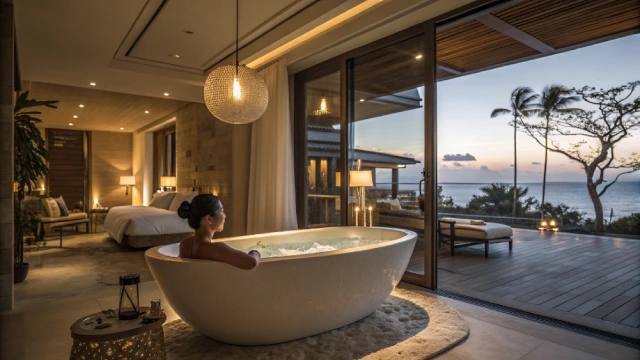
What Makes Guests Lose Trust When They See a Cheap or Worn Bathtub?
Multiple surveys show: bathroom cleanliness and condition strongly influence guest reviews and booking decisions. For example, one survey finds that 95% of guests would avoid rebooking a hotel if they encountered an unhygienic bathtub. 21% admitted they once gave a poor online review because of bathroom issues; over one-third said they decided against a hotel based on negative bathroom reviews. (Source: SMART TIPS FOR HOTELIERS – HOTEL GUESTS AVOID DIRTY BATHROOMS)
In another study, about 40% of guest complaints about hotel stays involved bathroom issues — broken equipment, poor cleaning, narrow or badly maintained bathrooms. ed or low-grade bathtub becomes a negative highlight in guest feedback. (Source: RTR)
Solution: Use Commercial-Grade Tubs + Anti-Stain, Easy-Clean Surfaces
| Material Choice | Choose non-porous materials (high-grade composites, enamelled or solid surfaces) that resist stains, water marks, and cleaning chemicals. |
| Surface Coating | Ensure coatings withstand hotel-grade cleaning agents and repeated wiping. |
| Finish Consistency | Demand consistent finish across batches to avoid visible differences between rooms. |
| Quality Check | Inspect final bathrooms as mock-ups before bulk acceptance, ensuring finishing, drainage, and cleanliness meet guest standards. |
When I helped a 200-room Sydney hotel switch from basic acrylic tubs to commercial-grade composite tubs with high-gloss, non-porous surfaces, they reported a noticeable drop in bathroom-related guest complaints within three months, especially complaints about stubborn stains or bathtub discoloration.
Safety & Liability — How the Wrong Bathtub Creates Real Risk for Hotels?
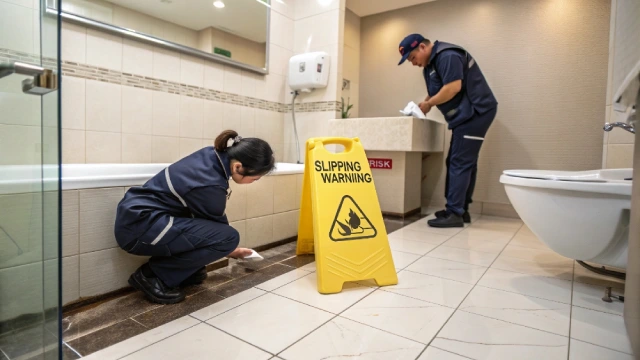
How Can a Slippery or Unreinforced Bathtub Put Your Hotel at Legal Risk?
In the hospitality industry, slips, trips, and falls are among the leading causes of serious injury claims. According to a national report, around 23% of all serious workers’ compensation claims come from slips, trips, and falls. (Source: Key work health and safety statistics Australia 2022)
For hotels, a bathtub with a glossy, smooth surface can become dangerously slippery when wet. If a guest slips, the hotel risks not only injury claims but also reputational damage, negative reviews, and increased insurance premiums.
I once consulted for a Perth hotel after a guest slipped in the tub. The tub looked elegant, but was not rated for slip-resistance. The hotel had to replace 92 tubs to meet safe-use standards.
Solution: Require Anti-Slip Finish + Structural Strength + Inspection
| Slip Resistance | Specify slip-resistant surface compliance (e.g., Australian slip-safe ratings) in tender documents. |
| Structural Strength | Choose tubs with reinforced structure — thick walls, stable bases, good load-bearing design to prevent flexing or breakage. |
| On-site Inspection | During acceptance, perform slip-test (wet barefoot), load-test, and visual inspection for edges and rounded corners. |
| Documentation | Record all compliance results to support insurer requirements and due diligence. |
This approach avoids accidents, insurance issues, and protects brand integrity. A safe bathtub is not optional — it is a necessary safeguard for your hotel.
Durability & Maintenance — Why Domestic Tubs Fail Faster in Hotels?

Why Do Hotel Environments Destroy Standard Household Tubs So Quickly?
Hotel bathrooms operate under harsh conditions: frequent cleaning with strong chemicals, daily high humidity, and heavy usage. A research review of guest complaints across many hotels showed that bathing-related issues (broken tubs/showers, poor drainage, stains) are among the most common. (Source: RTR)
I visited a Brisbane hotel where 50 tubs needed replacement in just three years. Many had surface discoloration, micro-cracks, or soft bottoms. Each replacement meant re-waterproofing, tile work, plumber call-outs, and unavoidable room shutdowns. The management calculated that each failure cost them AUD 1,500–2,200 in combined direct and indirect costs — far more than the price difference to a commercial-grade tub.
Solution: Use Reinforced Materials, Demand Extended Lifespan, Monitor Maintenance
| Material Choice | Require tubs made from heavy-duty resin composites, solid surface, or cast materials. |
| Support Structure | Ensure full-base support (not just edge support) to prevent flexing and stress on the shell. |
| Warranty | Confirm a multi-year commercial warranty (e.g., 8–12 years) with the manufacturer. |
| Maintenance | Establish preventive maintenance: avoid harsh chemicals, use gentle cleaning agents, and schedule regular inspections for sealant, drainage, and integrity. |
By doing so, you minimize disruptions, avoid repeated room downtime, and stabilize your maintenance budget. A tub that lasts decade instead of a couple years saves far more than you spend.
Total Cost & ROI — Are Cheaper Bathtubs Actually More Expensive?
How Do You Calculate the True 10-Year Cost of a Bathtub Decision?
Many procurement teams aim to reduce CapEx upfront by picking cheapest tubs. That saves a small amount initially. But they often ignore the full lifecycle cost — maintenance, room downtime, reputational damage, guest complaints, and higher insurance. (Source: RTR)
Industry sources note that bathroom maintenance and failures are among the highest recurring costs in hotels over their life.
Solution: Evaluate Bathtub Purchase as Long-Term Investment — Not Just Upfront Cost
| Lifetime Cost Model | Include maintenance, cleaning, repair, room closure loss, and guest dissatisfaction cost when selecting tubs. |
| Historical Data | Use past hotel operations data to estimate average closure days per tub failure, cost per closed night, and labor/materials for replacement. |
| Cost Comparison | Compare lifetime cost of cheap domestic tubs vs commercial-grade tubs over 8–12 years; higher-quality tubs often prove cheaper long-term. |
| Stakeholder Communication | Present this model in proposals and meetings to justify higher-quality baths to owners and investors. |
I’ve done this calculation for multiple projects. In one 300-room hotel, choosing commercial tubs saved the hotel roughly 25% over 10 years, compared to domestic tubs. That’s real money flowing to the bottom line, not just a feature on a spec list.
Conclusion
After a decade helping hotels across Australia, I learned this: the bathtub you choose is not a detail — it is a strategic asset.
A commercial-grade bathtub affects your cleaning workload, maintenance cycles, guest satisfaction, hotel safety, brand reputation, and long-term costs. Every cheap bathtub you install adds risk: risk of failure, guest complaints, legal exposure, room shutdowns — and invisible long-term cost that erodes profit.
For hotels pursuing high guest satisfaction, smooth operations, and long-term brand strength, commercial-grade bathtubs aren’t just fixtures—they’re strategic assets.
And if you’re looking for guidance in choosing reliable, hotel-ready bathtub solutions that reduce risk and enhance the guest journey, our team would be glad to support your next project.
For hotels aiming to make the right bathtub decisions from day one, our main guide offers a practical, step-by-step framework to avoid costly construction and installation pitfalls.
One-Stop Bathroom Solutions for Commercial Projects
We provide integrated one-stop bathroom solutions for hotel and commercial projects, supporting coordinated specifications and project execution.
▼ Submit the form below to connect with our team and explore project cooperation. ▼