
Hotel renovations are stressful enough without the added worry of potential legal trouble down the road. Do your current design choices actually meet strict ada bathroom sink requirements, or are you unknowingly risking a lawsuit from a simple oversight?
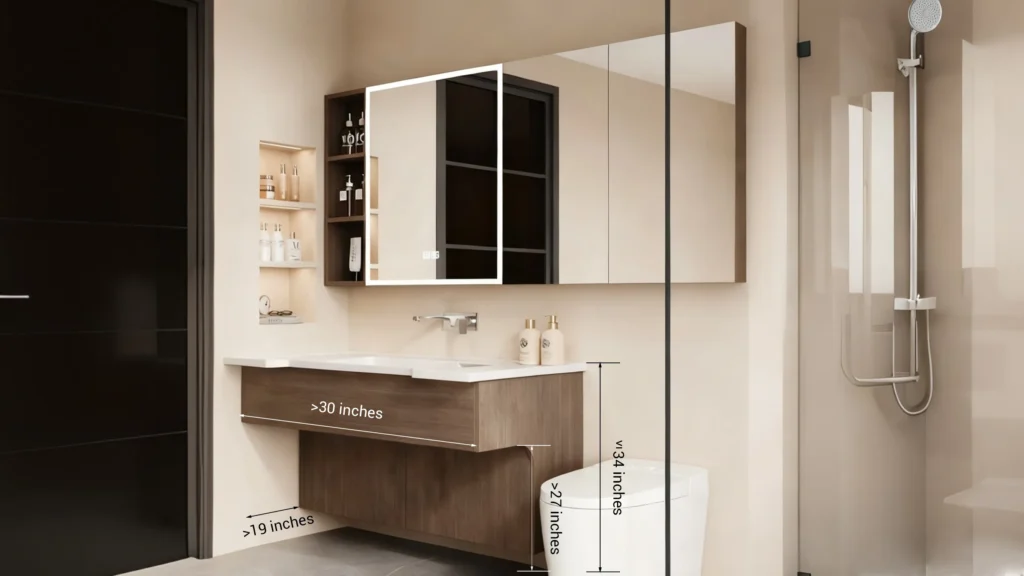
To meet ada bathroom sink requirements, you must install sinks with a rim height no higher than 34 inches from the floor. You also need to ensure knee clearance is at least 27 inches high, 30 inches wide, and 19 inches deep. Always insulate exposed pipes to prevent burns and protect guests with disabilities.
I remember my early days on the factory floor, seeing beautiful sinks that just would not pass inspection. It was heartbreaking to see them rejected. Let’s make sure your hotel bathrooms are both stylish and compliant, so you can focus on guest satisfaction.
Table of Contents
What are the ADA requirements for a bathroom sink?
Confusion about compliance details can lead to costly tear-outs and project delays later on. Do you know exactly what the law demands for ada bathroom sinks in your specific guest rooms to avoid fines?
The core ada bathroom sink requirements mandate a maximum rim height of 34 inches above the finish floor. You also need a clear floor space of 30 by 48 inches for a forward approach. Knee clearance must be at least 27 inches high to accommodate wheelchair users comfortably.
Height Standards
The most critical number to remember is 34 inches for the rim height. This is the absolute maximum height for the top of the sink or counter. In my experience, setting it slightly lower, around 33 inches, provides a safety buffer during installation.
Floor Clearance
You must provide a clear floor space of 30 inches by 48 inches. This space allows a person in a wheelchair to roll up to the sink. It is vital that this space remains clear of any other fixtures, doors, or bathroom accessories.
Knee Space
Underneath the sink, there must be space for knees. This space needs to be at least 27 inches high from the floor. It should extend at least 8 inches back at this height. This ensures a guest can sit comfortably at the basin.
Ada commercial bathroom sink requirements are strict about approachability for a good reason. The 30 by 48 inch clear floor space is non-negotiable for accessibility. This allows a forward approach for wheelchairs, which is different from a side approach. In my trading company, I often see designs fail here because they crowd the toilet.
| Feature | Requirement | Notes |
|---|---|---|
| Max Rim Height | 34 inches | Measured from the finish floor |
| Knee Clearance | 27 inches high | Minimum height required |
| Clear Floor Space | 30" x 48" | For forward approach |
| Knee Depth | 8 inches | At the top 27" height |
The knee space must also be carefully measured to ensure it is usable. It needs to be 8 inches deep at the top, extending down to 11 inches. I have seen many hotels fail inspections because they installed a vanity cabinet that blocked this specific zone.
📉 Worried about failing ADA inspections?
Standard vanities often fail in unique hotel layouts. We support custom dimensions and spatial design to ensure your resort bathrooms are 100% compliant and stylish.
Get A Free ADA Design ProposalWhich faucet and piping protection details are often overlooked by buyers?
Focusing only on the basin size is a common trap that many procurement managers fall into. Have you considered the operational parts like faucets and pipes that actually dictate ada compliant bathroom sink requirements?
Faucets must be operable with one hand and require less than 5 pounds of force to turn on. They should not require tight grasping, pinching, or twisting of the wrist. Furthermore, exposed hot water pipes must be insulated to prevent contact burns on legs.

Lever Operation
You should always choose lever-operated handles or touchless faucets for your projects. These are the easiest for people with limited hand dexterity to use. I always tell my clients to avoid round knobs because they can be very difficult to grip and turn.
Force Limits
The mechanism inside the faucet must be smooth and easy to move. The standard requires that it takes less than 5 pounds of force to activate. This is something you should test personally on samples before you commit to a large order for your hotel.
Pipe Insulation
Any water supply pipes or drain pipes under the sink must be covered. This protects the user’s legs from contact with hot pipes or sharp edges. It is a simple detail that prevents injuries and protects your hotel from liability claims.
I see many complaints on forums like Reddit about stiff handles in hotels. Ada bathroom sink requirements prioritize ease of use for everyone, not just those with disabilities. Lever-operated or touchless faucets are the best solution. They also look modern and sleek in a hotel bathroom.
| Component | Standard | Benefit |
|---|---|---|
| Faucet Type | Lever or Touchless | No tight grasping |
| Activation Force | < 5 lbs | Easy one-hand use |
| Pipe Protection | Insulated/Wrapped | Prevents burns |
Wrapping pipes is essential and often missed during the final punch list. It protects users from heat and sharp edges under the sink. This small detail saves you from significant liability and improves guest comfort. You do not want a guest to burn their legs while washing their hands.
Why source from multiple suppliers?
From compliant sinks and faucets to safety pipe wraps, George Build Shop offers One-Stop Bathroom Supply for hotels. Save shipping costs and coordination time.
View Complete Product Catalog →How far off the wall for ADA sink?
Placement errors are much harder to fix than simple product swaps after the tiles are set. Is your sink installation planned too close to the side wall to pass a strict ada sink clearance from side wall inspection?
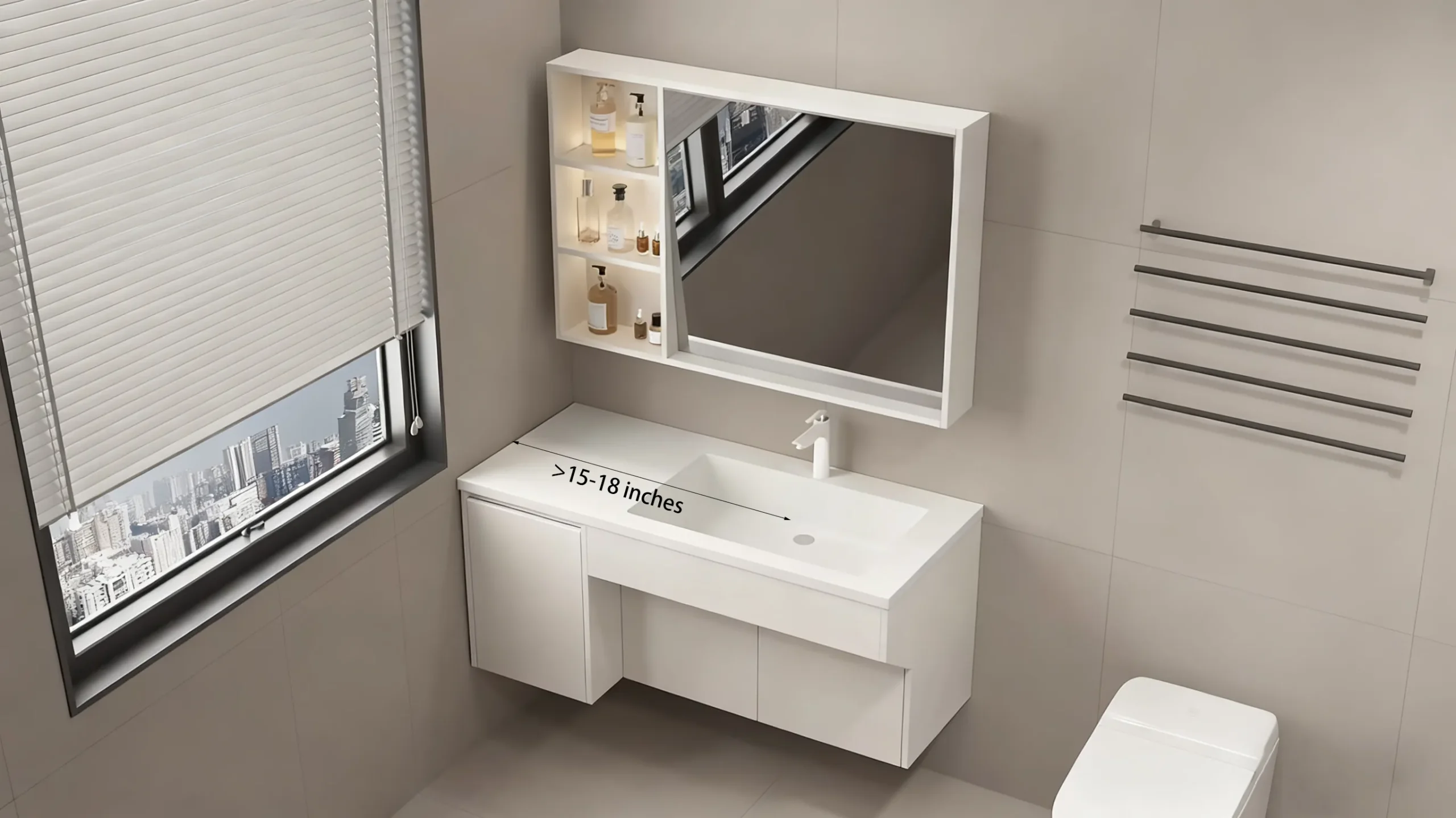
Ada sink clearance from side wall generally requires the centerline of the sink to be at least 15 to 18 inches from the wall. This ensures the required 30-inch wide clear floor space is centered on the fixture, allowing proper arm movement.
Source:
- https://cms6.revize.com/revize/waterloo/Forms/ADARestroom.pdf
- https://georgebuildshop.com/what-is-the-ideal-bathroom-vanity-height-for-guests/
Centerline Spacing
You need to measure from the center of the basin to the nearest side wall. This distance should be a minimum of 15 inches. This spacing ensures that a person has enough room to move their elbows and arms freely while using the sink.
Wall Clearance
If the sink is placed in a corner, this clearance becomes even more critical. Tight corners can trap a wheelchair user or make it impossible to reach the faucet. I always recommend adding a few extra inches if your floor plan allows it.
Maneuvering Space
The position of the sink affects the overall maneuvering clearance in the room. You must ensure that the sink placement does not cut into the turning radius required for a wheelchair. It is all about how the fixtures relate to each other in the space.
| Measurement | Minimum Distance | Purpose |
|---|---|---|
| Center to Wall | 15 inches | Elbow room |
| Clear Width | 30 inches | Wheelchair fit |
| Approach Path | Unobstructed | Easy access |
While ada sink clearance requirements focus heavily on the floor space, the sink position matters immensely. If you place it too close to a corner, a wheelchair cannot approach straight on. In my factory days, we used templates to ensure the sink center was perfect.
I have seen projects where the sink was just an inch too close to the wall. They had to rip out the vanity and move the plumbing, which cost a fortune. It is much cheaper to check your drawings twice against these spacing rules before you start construction.
What type of sink is best for ADA compliance?
Choosing the wrong style can make compliance almost impossible regardless of how you install it. Are you struggling to find a sink that balances ada sink depth requirements with the luxury style your brand requires?
Wall-mounted sinks are generally the best choice for meeting ada bathroom sinks standards. They naturally provide the necessary open knee space underneath without cabinets getting in the way. Undermount sinks in a specialized vanity can also work well if designed correctly.
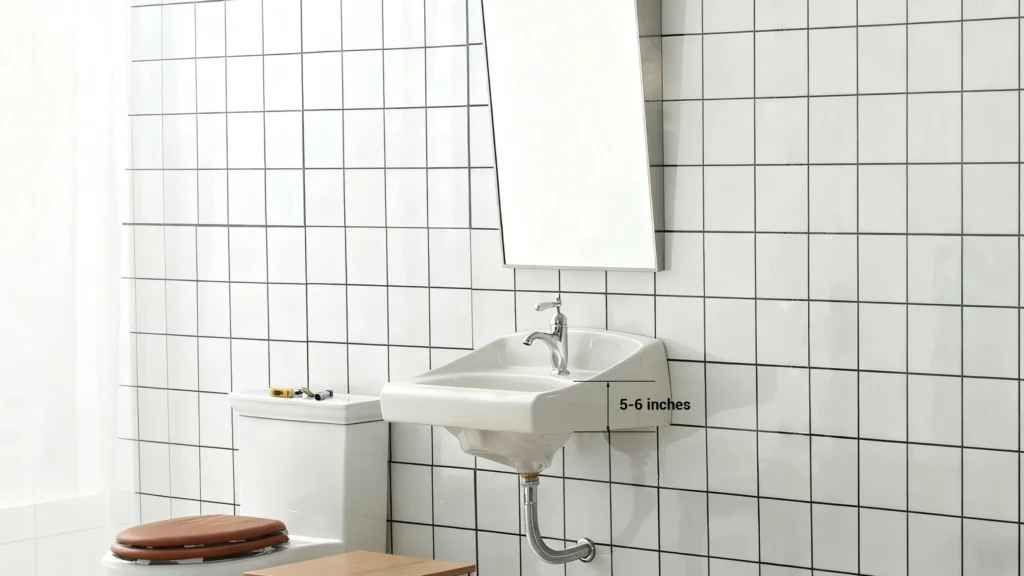
Wall-Mounted Sinks
These are the gold standard for accessibility because they are open underneath. They eliminate the bulk of a cabinet and make it easy to meet knee clearance rules. I love them because they also make a small hotel bathroom feel much larger and more open.
Shallow Basins
You should look for sinks that have a shallow basin depth. A deep vessel sink will push the bottom of the sink too low, violating knee space rules. A basin depth of around 5 to 6 inches is usually ideal for compliance.
Need ADA Vanities? We Custom. View Collection →
Vanity Cutouts
If you must use a vanity for storage, it needs a cutout. The cabinet doors must open to reveal the required knee space, or the cabinet must be built without a base. This is a trickier route but can work if you need the counter space.
Ada sink depth requirements suggest shallow basins, usually less than 6.5 inches deep. This allows for the required knee clearance below while keeping the rim at 34 inches. Deep vessels often fail this test because they eat up the space needed for legs.
| Measurement | Minimum Distance | Purpose |
|---|---|---|
| Center to Wall | 15 inches | Elbow room |
| Clear Width | 30 inches | Wheelchair fit |
| Approach Path | Unobstructed | Easy access |
I always recommend shallow, wall-hung models for the easiest path to compliance. They reduce the risk of errors significantly. Plus, they are easier for your housekeeping staff to clean around. This keeps your maintenance costs down while ensuring you pass every inspection.
What are the common ADA sink mistakes?
Even experienced managers miss subtle details during complex hotel renovations. Are you making simple errors regarding ada bathroom sink height requirements that inspectors will catch immediately upon their visit?
The most common mistake is mounting the sink too high for a seated user. Ada bathroom sink height requirements cap the rim at 34 inches, not the cabinet top. Another frequent error is blocking the knee space with storage or failing to insulate the drain trap.
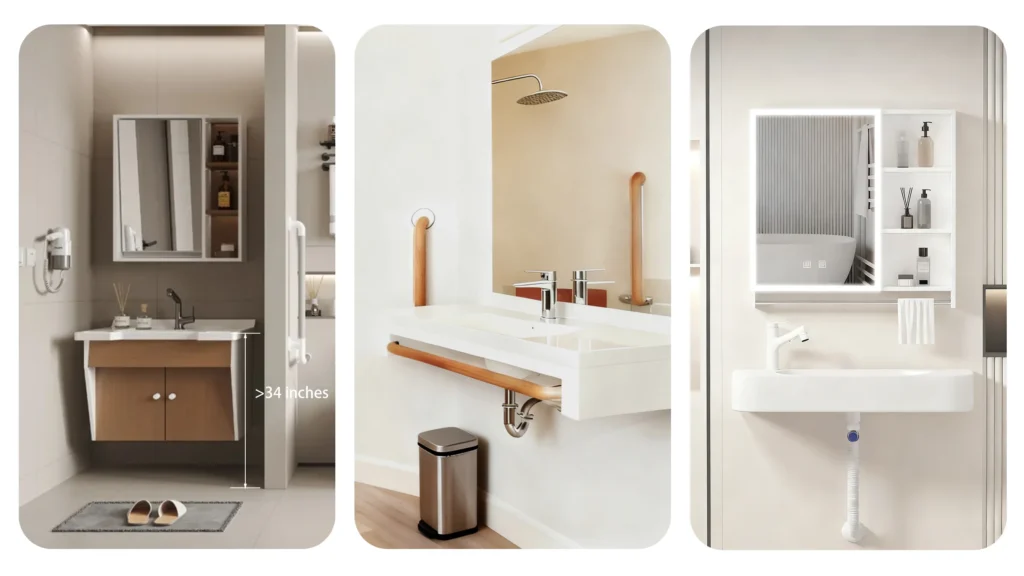
Rim vs. Cabinet
Builders often set the vanity cabinet at 34 inches, then add a countertop and sink. This pushes the actual rim height over the limit. You must account for the thickness of the counter and the sink profile when calculating your installation height.
Storage Blockage
I often see housekeeping staff place trash cans or extra towels under the sink. This blocks the required knee clearance and renders the sink non-compliant. You must educate your staff to keep this space completely clear for guests who use wheelchairs.
Mirror Height
Do not forget the mirror that sits above the sink. The bottom edge of the reflecting surface must be no higher than 40 inches from the floor. I see many hotels get the sink right but fail the mirror check, which is just as important.
Don’t forget the mirror when you are checking your measurements. The bottom edge of the reflecting surface above the sink must be no higher than 40 inches. I see hotels get the sink right but fail the mirror check all the time.
| Common Error | Correct Spec | Consequence |
|---|---|---|
| Sink Too High | Max 34" Rim | Non-compliant |
| Blocked Space | Clear Zone | Unusable |
| High Mirror | Max 40" Bottom | Not visible |
Ensure your ada bathroom sinks have clear space underneath at all times. No trash cans, plungers, or storage boxes should ever block the legs. It is a management issue as much as a design issue. Clear communication with your team prevents these daily compliance failures.
What retrofit solutions work best for non-compliant sinks?
Ripping out everything is expensive and time-consuming for an operating hotel. Can you fix your current setup to meet ada compliant bathroom sink requirements without doing a full remodel of the bathroom?
If the sink is too high, you can often lower the mounting brackets. If knee space is blocked, remove the vanity doors or base. Install offset drain tailpieces to push piping back. These changes can often satisfy ada bathroom sink requirements without buying new ceramic.
Source:
- https://www.facebook.com/groups/971068814531343/posts/1348630270108527/
- https://georgebuildshop.com/can-ada-bathroom-vanity-designs-boost-hotel-guest-comfort/
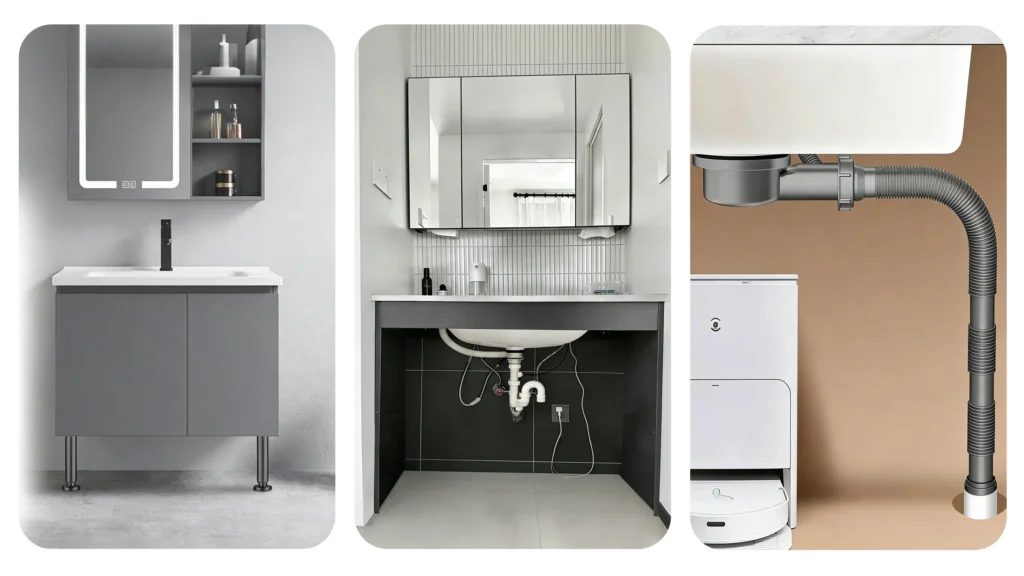
Lowering Brackets
For wall-mounted sinks, you can simply unbolt them and lower the brackets. You may need to adjust the drain pipe slightly, but it is a quick fix. This brings the rim height down to the compliant 34-inch level without buying new fixtures.
Removing Cabinetry
If you have a vanity that blocks knees, consider modifying the cabinet. You can remove the doors and the bottom shelf to create an open space. With a nice finish on the exposed wood, this can look intentional and meet the code.
Offset Drains
Standard drains often come straight down and hit the knees of a wheelchair user. An offset grid drain pushes the pipe back toward the wall immediately. This creates more open space directly under the drain and solves a major clearance issue.
Retrofitting saves money and reduces room downtime. In one project, we cut the bottom out of existing vanities to create knee space. We then added pipe covers to hide the plumbing. This met ada commercial bathroom sink requirements quickly and effectively.
| Solution | Problem Solved | Cost Impact |
|---|---|---|
| Lower Bracket | Rim Too High | Low |
| Open Cabinet | No Knee Space | Medium |
| Offset Drain | Pipe Barrier | Low |
It is a smart move for hotels needing a quick fix before an inspection or guest arrival. You do not always need to buy new products. Sometimes, a little creativity with what you have is enough. This approach keeps your renovation budget in check while solving the problem.
Project Snapshot: Hotel Renovation, FL
- ⚠️ Pain Point: A resort faced a lawsuit risk due to non-compliant vanity depths preventing wheelchair access.
- 🛠️ Solution: George Group provided custom 18-inch depth wall-hung vanities with offset drains within 15 days.
- ✅ Result: The resort passed the ADA inspection immediately and saved 20% on re-plumbing costs.
Conclusion
Meeting ada bathroom sink requirements is about safety and inclusivity. Remember to keep rim heights at 34 inches, ensure 27 inches of knee clearance, and insulate those pipes. If you need help selecting compliant fixtures, contact us at georgebuildshop for expert advice.
Ready to Equip Your Hotel Project?
Stop guessing with ADA regulations. Upload your floor plan or leave your requirements below. Our engineering team will provide a compliant layout solution and bulk project quote within 24 hours.