

In the luxury projects I’ve managed over the past decade, the freestanding bathtub is often the soul of the space. Yet behind the elegance lies chaos — unclear sourcing, vague production schedules, and uncertain delivery dates. These invisible risks quietly drain budgets and erode trust between suppliers and developers.
I still remember a hotel project in Miami where a cracked stone tub during transport triggered two weeks of finger-pointing. No one knew whether the fault came from the quarry, the factory, or the shipping line. The loss in time, penalties, and brand credibility far exceeded the tub’s actual cost. That moment made me realize that the real fragility in luxury isn’t in the material — it’s in the information gap.

That’s why I now tell my clients: true luxury isn’t just how a bathtub looks, but how predictable its journey is. Digital transparency turns every hidden risk — from quarry to installation — into traceable data. It transforms uncertainty into control, and control into profit. In today’s high-end bathtub market, certainty itself has become the ultimate form of luxury.
Digital transparency is the real luxury because it transforms the high-end bathtub supply chain from a “black box” into a predictable, traceable, and trustworthy asset. It uses real-time data to lower the risks of delays, errors, and rework. It ensures stability in project ROI (Return on Investment) and consistency in design execution. This is how it protects a client’s most valuable assets: their time and their reputation.
Table of Contents
What Is “Digital Transparency” in Bathtub Supply Chains?
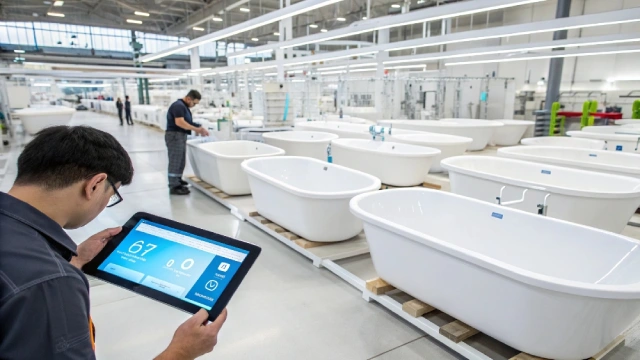
In the bathware industry, “Digital Transparency” means more than a basic order tracking number. It means using advanced technologies such as Blockchain, IoT sensors, and integrated digital platforms [3]. These tools create an end-to-end, immutable stream of information, from raw material procurement all the way to final installation.
It involves connecting every single bathtub with a unique Digital Identity linked to a shared, real-time digital record. This record includes the certificate of origin, raw material batch number, quality control checkpoints during production, storage temperature and humidity, logistics location, and Estimated Time of Arrival (ETA). This setup ensures all project stakeholders collaborate using a “Single Source of Truth.”
I handled a high-volume project for a multi-family development in San Francisco that required certified materials. The digital system recorded the exact material batch and mixing date at the supplier, tracked the curing and finishing stages, and linked the digital signature of the Quality Control (QC) team. Once this data was locked on our platform, no one could change it. It increased the client’s confidence in the product’s authenticity and sustainability claims. Meanwhile, IoT sensors monitored humidity and shocks during transport, ensuring the tubs arrived in perfect condition. This eliminated the headache of discovering damage only upon arrival and made accountability immediate. Transparency here isn’t abstract — it’s a tangible risk shield.

How Supply-Chain Blind Spots Erode ROI in Luxury Bathtub Projects?
Supply Chain Blind Spots caused by a lack of digital transparency are the largest cost leaks in high-end projects. These blind spots typically exist deep in the Tier 2 and Tier 3 supplier networks and directly erode the ROI my clients care most about.
Blind spots create unpredictable delays, hidden defects, and unplanned shipping costs. When the project team cannot see a material shortage or a logistics disruption, they can only react passively — increasing site idle time and contract penalties.
One of my hardest lessons came from an ultra-luxury condo project in Los Angeles. The custom bathtub was a long-lead item critical to the schedule. We had great visibility into the main manufacturer, but not the Tier 2 pigment supplier overseas. That supplier suddenly shut down for three weeks for maintenance. The result: our production line stopped cold. The delay cost four full weeks — and the developer told me, “Helen, I’d rather pay 5% more per tub than lose a single day of rent.” Since then, I’ve built my digital platform to monitor not just Tier 1 vendors, but every sub-supplier and their production readiness. It’s not about collecting data for its own sake — it’s about seeing tomorrow’s problem today.

How Digital Platforms Create Predictable Delivery and Installation?
The core value of a digital platform is turning uncertainty into predictability. This is especially crucial for the delivery and installation of custom luxury bathtubs.
Digital platforms achieve predictable delivery using AI-driven ETAs, Geofencing, and coordinated installation scheduling. They sync logistics data with the real-time construction schedule so that the bathtub arrives Just-In-Time for installation — eliminating waiting time and double-handling costs.
I used this system in a Chicago hotel renovation that required phased bathtub deliveries floor-by-floor. Our platform integrated GPS data, traffic conditions, and even winter weather forecasts. The ETA was accurate to the hour. On delivery day, Geofencing automatically alerted the foreman as the truck entered the site area. The crew prepped immediately, saving hours of idle labor. The system also shared installation instructions, weight, and lift requirements with the team in advance. This orchestration saved labor costs and, more importantly, guaranteed the on-time reopening of the hotel. Predictability is not just efficiency — it’s brand protection.

What Are the Metrics That Matter for ROI When You Digitize Bath-fixtures?
The ROI from digitizing bathware isn’t just about saving on product price. It’s about optimizing project efficiency and risk capital.
The key metrics I track include:
Key ROI Performance Metrics in Bathtub Supply
| Metric | Definition | ROI Impact |
|---|---|---|
| Perfect Order Rate | Orders delivered undamaged, complete, and on time | +1% improvement saves large claim costs |
| Supply Chain Cost % of Project Value | Total logistics & admin cost as % of total project | ↓ up to 15% via reduced safety stock & rush fees |
| On-Time Delivery Rate | Deliveries arriving within committed window | Directly tied to ROI through reduced idle time |
| Rework Rate | Quality defects requiring reinstallation | Lowered through traceable QC data |
Conclusion
Digital transparency is the risk hedge and efficiency engine for high-end bathtub projects. It transforms uncontrollable anxiety into predictable confidence — turning information into power and precision into profit.
Digital transparency is not just a luxury—it’s a strategic tool that ensures precision, minimizes risk, and maximizes ROI in high-end bathtub projects. To see how these principles fit into the broader picture of project predictability and long-term value, explore our comprehensive guide in How Predictability Defines ROI in the High‑End Bathtub Market, which covers standardization, design predictability, and operational strategies for developers.