
When luxury turns into liability — I’ve seen too many developers lose margins chasing one-off bathtub designs that slow projects and inflate costs. What starts as a design ambition often ends as a financial headache.
Custom bathtubs often increase delays and budget risk because they multiply tooling, sourcing, and coordination complexity. The solution? Standardize the unseen structure while customizing only the visible finishes. This hybrid strategy protects Return on Investment (ROI) and preserves design intent without compromising the luxury feel.

I remember a luxury developer, Sarah, who wanted every bathroom to feel “bespoke.” Her vision was stunning — marble panels, sculpted tubs, and signature lighting. But halfway through construction, the plumbing schedule slipped by three weeks. The issue wasn’t design quality, it was the chaos of non-standard internal structures. If you’ve ever faced this tension between visual exclusivity and project control, you’re not alone. Here’s how to achieve both.
Table of Contents
Does Design Complexity Always Mean Higher Execution Risk?
A beautiful bathtub mold may impress clients but strain your project’s timeline and tolerance for error. Every deviation from standard dimensions adds layers of uncertainty and approval delays.
No, design complexity doesn’t have to mean higher risk—if you standardize the technical foundation. Each unique bathtub mold or interface multiplies coordination points and raises rework rates. McKinsey’s 2023 Construction Productivity Report noted that excessive design variation can reduce manufacturing efficiency by up to 25%. The key is to simplify what’s hidden and standardize what connects.
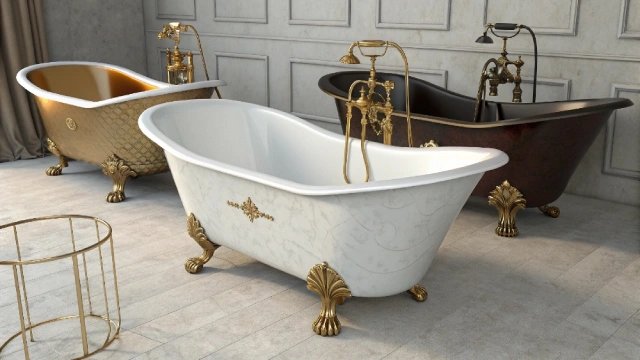
I learned this lesson in a five-star hotel project where the client requested three different custom tub sizes across 280 rooms. Tooling and sign-offs alone added three weeks to production. Early installations had a 12% rework rate because every drain and support frame differed slightly. Once we standardized the internal frame and drain placement, keeping only the visible bowl design unique, installation time dropped by half. (See McKinsey & Company, “Making Modular Construction Fit” (2023))
The insight was clear: standardization beneath the surface enables creativity above it. True luxury doesn’t rely on chaos—it’s engineered precision that performs beautifully every time.
Why Do Bespoke Bathtub Specs Create Supply Chain Blind Spots?
Even when designs are approved, bespoke bathtubs can still derail your schedule. Fragmented procurement makes real-time tracking almost impossible and increases exposure to supplier errors.
Bespoke specifications fragment production and create visibility gaps between factories, logistics teams, and site coordinators. McKinsey and Bain have both found that such blind spots can extend delivery timelines by up to 30%. Standardized modules, on the other hand, allow digital QR traceability and predictable delivery windows. This transparency reduces uncertainty and strengthens ROI.
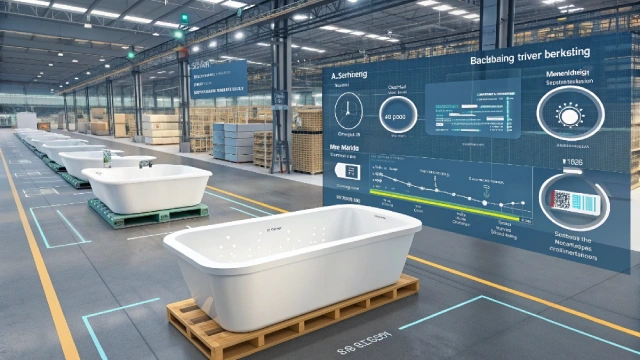
On one Miami high-rise project, the architect wanted each unit to feature a different bathtub texture. That meant 150 unique SKUs sourced from three factories. Tracking was chaos. We couldn’t tell when specific tubs would arrive or which supplier had shipped what. After introducing a digital dashboard with QR-based shipment tracing, delay time fell by nearly 50%.
Visibility drives trust. Digital transparency doesn’t just manage risk—it builds confidence among developers, designers, and investors. In today’s luxury construction, predictability itself has become a premium feature.
Visibility Level vs. Delivery Risk
| Visibility Level | Impact on Delivery Variance | Risk Profile | Example Solution |
|---|---|---|---|
| Low (Bespoke) | Up to 30% higher | High, Uncontrolled | Manual tracking, fragmented orders |
| High (Standardized) | Reduced by 50% | Low, Data-Driven | Real-time dashboards, QR traceability |
Does Over-Customization Increase My Lifetime Maintenance Cost?
Beautiful custom tubs often hide ugly maintenance problems. Spare parts are rare, repairs take longer, and total lifecycle costs rise—turning luxury into liability.
Yes, full customization raises lifecycle costs by 20–40%, as sourcing unique replacements and managing warranties becomes complicated. NKBA’s Sustainability in Kitchen & Bath Design report also found that 70% of professionals expect long-term demand for sustainable, repairable materials to grow. Standardizing replaceable components—like frames, drains, and understructures—keeps maintenance predictable and affordable.
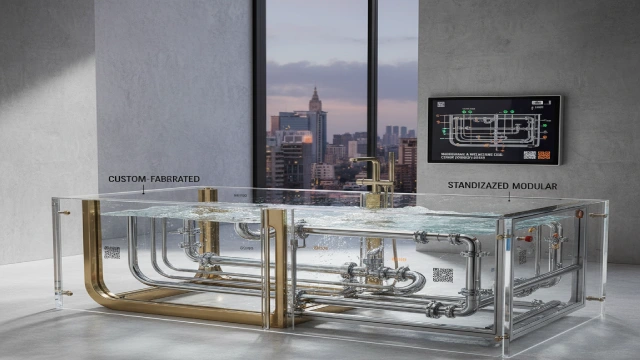
A client once insisted on custom resin bathtubs with blue marble effects. Two years later, small cracks appeared. Because the mold and pigment were unique, the manufacturer had already retired the design. Reproducing it required reopening the mold and ordering 50 units. The repair took months and cost far more than planned.
My rule is simple: curate, don’t over-customize. Keep the structural base identical and focus creative energy on visible surfaces—color, texture, rim details. This way, your project stays maintainable, sustainable, and compliant with ESG goals.
How Can I Maintain Brand Identity While Reducing My SKU Count?
Developers often equate “more options” with “more luxury.” But the truth is, complexity is the enemy of consistency and profit.
You can maintain brand identity through curated customization. Limit variations to visible design layers while standardizing the internal structure. One luxury hotel reduced bathtub SKUs from 40 to 12 and shortened installation time by 20%, according to project documentation. It kept its signature look while gaining operational control.
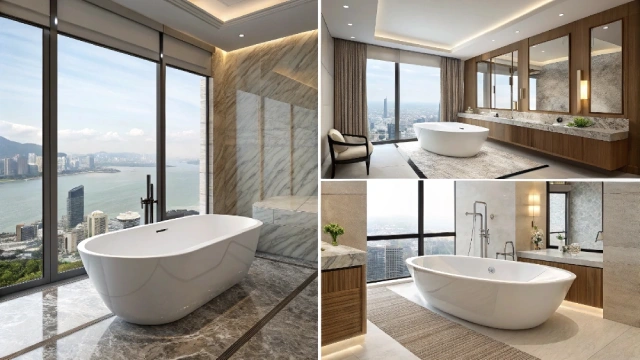
I worked with a residential developer named John who struggled with too many bathtub variations. His design vision was clean, minimalist, and natural. By consolidating to two structural shapes and five high-impact finishes, we preserved his design DNA while cutting procurement confusion. Installers became faster, and his project finished ahead of schedule.
Controlled variation is intelligent luxury. It’s about designing with purpose—where every variation has meaning, and every piece fits seamlessly into the bigger system. When your tubs are predictable to build, install, and maintain, your brand earns trust not just for beauty, but for performance.
Conclusion
Over-customization drains ROI through hidden complexity, rework, and unpredictable maintenance. Luxury bathtub ROI is built on predictable performance—through structural standardization, digital transparency, and curated customization. In today’s high-end market, true luxury isn’t defined by how unique your tubs look, but by how reliably they perform for years to come.
To see how this critical design‑decision fits into the broader framework of project predictability and long‑term return, explore our in‑depth analysis in How Predictability Defines ROI in the High‑End Bathtub Market — where we uncover how standardization, digital transparency and lifecycle strategies combine to protect and enhance developer returns.
We provide integrated one-stop bathroom solutions covering tubs, sanitaryware, fittings, and system coordination for hotel and commercial projects.
▼ Submit the form below to connect with our team and explore project-based collaboration. ▼