
Luxury bathrooms tell a story—but the countertop material you choose decides what kind of story guests will remember.
Quartz bathroom countertops are usually the better choice for hotels because they resist stains, need less maintenance, and look consistent. Marble suits high-end rooms where design and prestige outweigh upkeep costs.
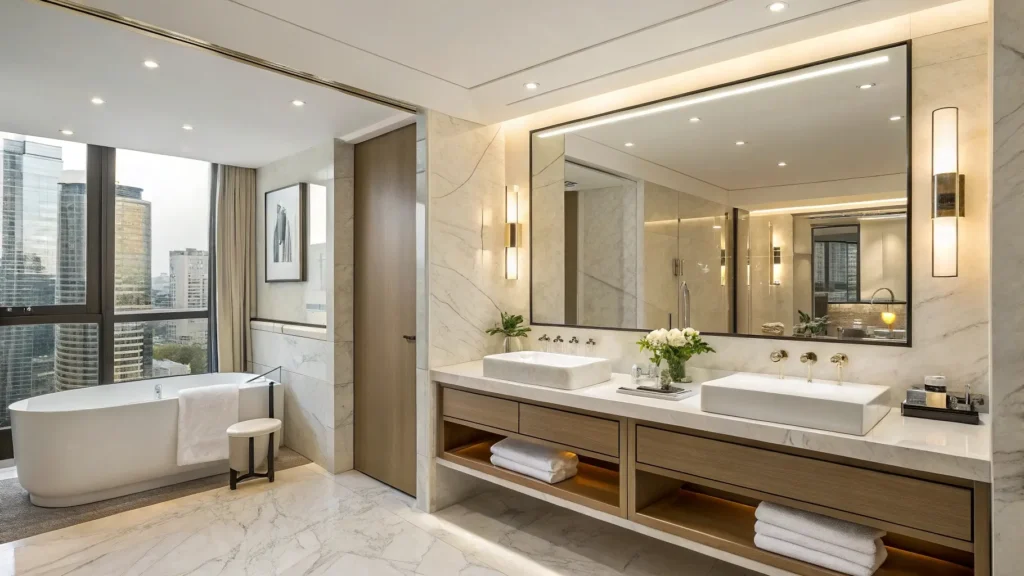
When I help hotel clients choose between marble and quartz, I start with how they want guests to feel. Is the goal long-term durability or a natural luxury look? Understanding this sets the tone for all other decisions.
Table of Contents
How do quartz or marble bathroom countertops affect guest perception and brand image?
Bathrooms shape a guest’s first and last impression. Countertops often speak louder than décor or fixtures.
Quartz gives a clean, modern image that signals efficiency and reliability. Marble conveys elegance and exclusivity, but demands more care to keep that image consistent.
Guest Perception: The Visual and Emotional Impact
Quartz offers uniform patterns, which create a polished, dependable atmosphere—ideal for business or family-friendly hotels. Marble’s veining gives each room a unique character, appealing to luxury travelers who value craftsmanship and natural beauty.
Brand Image: Consistency vs. Exclusivity
Quartz helps maintain brand consistency across multiple properties. Its uniform surface ensures each room looks identical. Marble supports boutique or five-star hotels that want individuality and handcrafted appeal.
Maintenance and Presentation
A worn or stained marble surface quickly affects guest perception. Quartz, being nonporous, stays bright longer with less maintenance. This supports a clean, fresh brand impression throughout the product lifecycle.
From my work with hotel brands, I see that quartz appeals to chain hotels that value predictable quality. Marble appeals to brands selling emotion and exclusivity. In the hospitality sector, emotion drives perception, but performance protects reputation. A single stained marble top in a guest suite can shift online reviews. This is why many premium resorts use marble only in suites, while quartz dominates standard rooms.
Is marble or quartz better for bathroom countertops?
Hotel designers often struggle between beauty and practicality when choosing surfaces.
Quartz is generally better for hotel bathrooms because it offers strength, uniformity, and low upkeep. Marble offers timeless appeal but needs regular sealing and careful handling.
Durability
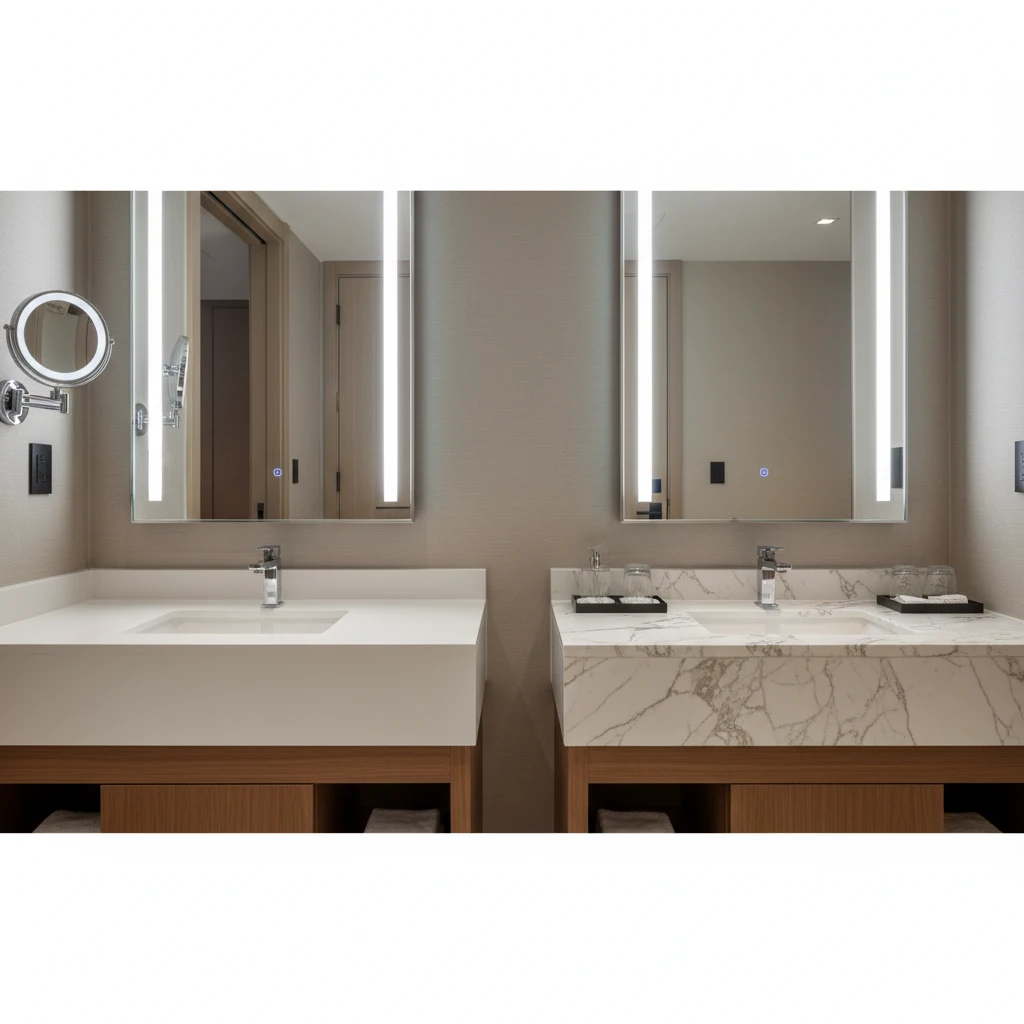
Quartz is engineered from crushed stone and resin, making it more resistant to cracks, stains, and scratches. Marble is softer and can etch easily when exposed to cleaning chemicals or cosmetics.
Upkeep and Cost of Care
Quartz needs only regular wiping. Marble requires sealing every few months, especially in humid bathrooms. Over time, this increases maintenance costs.
Design and Feel
Porcelain sinks are cheap to buy but costly to maintain. Their brittleness leads to early cracks. Over time, replacements and downtime reduce ROI sharply.
| Feature | Quartz | Marble |
|---|---|---|
| Durability | High, resists scratches and stains | Medium, scratches and etches easily |
| Maintenance | Low, wipe clean | High, requires sealing |
| Look | Uniform and modern | Natural and luxurious |
| Cost Range | $$ | $$$–$$$$ |
In practice, I recommend quartz for most hotels because it performs better under constant guest turnover. However, marble remains unmatched for penthouse suites or spa bathrooms where aesthetics lead. Combining both materials—quartz for vanities, marble for accents—often achieves the best balance between performance and prestige.
What stains more, quartz or marble bathroom countertops?
In busy hotels, stains can mean costly replacements and poor reviews.
Marble stains more easily than quartz because it’s porous and reacts to acids and oils. Quartz is nonporous and resists common bathroom spills.
Common Stain Sources
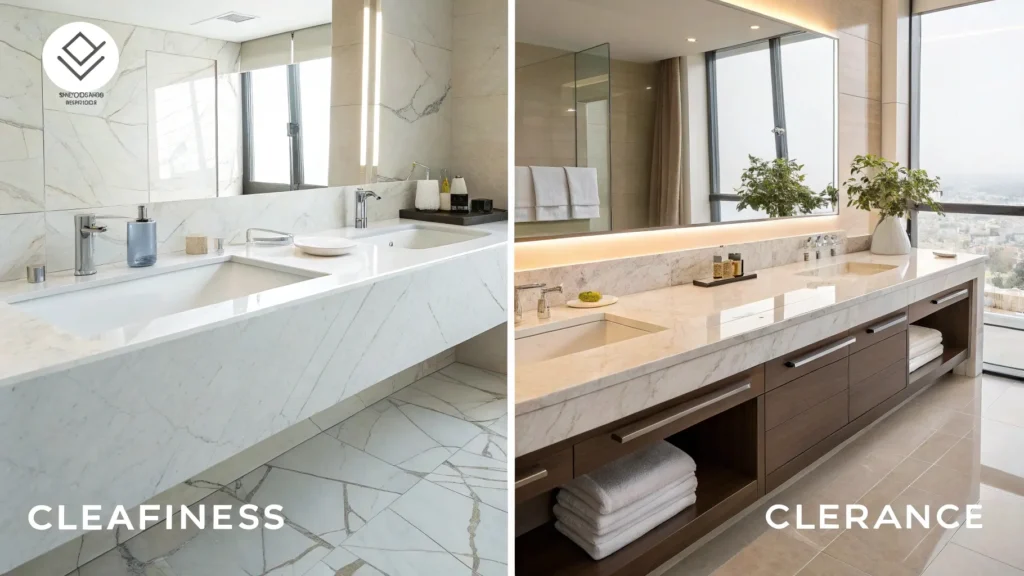
Makeup, toothpaste, and cleaning products often cause dull spots on marble. Quartz surfaces resist these thanks to their resin composition.
Cleaning and Longevity
Quartz can be cleaned with mild soap and water. Marble requires pH-neutral cleaners and immediate wiping to avoid etching.
Visual Impact
Even small stains on marble stand out against its light veining. Quartz hides minor blemishes better and keeps its sheen longer.
Once, a resort I worked with replaced 30% of its marble vanities within three years due to stains from toiletries. After switching to quartz, replacement rates dropped dramatically. Over time, the lower maintenance costs offset quartz’s slightly higher upfront price. This shows that stain resistance directly links to lower lifecycle costs and guest satisfaction.
Which is more expensive — marble or quartz bathroom countertops?
Budget often decides more than style in hotel projects.
Marble is usually more expensive than quartz because of quarrying, transport, and polishing. Quartz offers similar looks at a lower total cost.
For Mid-Range Hotels
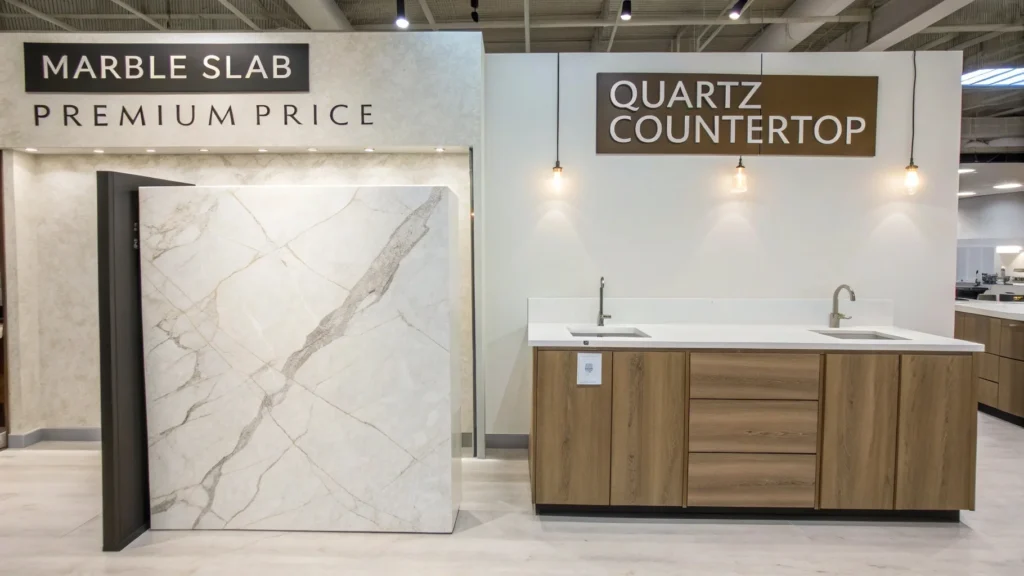
Quartz costs around $70–$120 per square foot installed. Marble ranges from $100–$200 depending on rarity and origin.
Initial Material Cost
Quartz costs around $70–$120 per square foot installed. Marble ranges from $100–$200 depending on rarity and origin.
Lifecycle Cost
Marble’s maintenance and replacement costs add up. Quartz, with minimal upkeep, stays cost-efficient long-term.
In large-scale hotel projects, procurement teams prioritize predictability. Quartz allows precise budgeting and synchronized deliveries. Marble involves more variables—color variation, shipping damage, or customs delay. For luxury brands with flexible budgets, marble still fits the image, but quartz dominates most modern renovations for financial control.
B2B Project Solution
Project-Grade Custom Vanity Kits
One-stop supply with anti-stain tech for high-traffic hotels.
EXPLORE COLLECTIONSWhich material performs better for heavy-use hotel bathrooms?
Daily wear tests countertop performance more than design.
Quartz performs better for heavy-use hotel bathrooms due to its strength, water resistance, and easy cleaning.
Heat and Humidity Resistance
Quartz tolerates high humidity and temperature changes without warping or discoloring. Marble absorbs moisture and may develop mildew if not sealed.
Guest Turnover Durability
Quartz handles repeated wiping, chemical cleaners, and luggage impact without visible wear. Marble shows dull spots faster.
Long-Term Stability
Hotels with quartz tops report fewer repairs and smoother cleaning cycles, saving time for housekeeping.
I once inspected a coastal resort where humidity and salt air caused marble tops to dull within months. After switching to quartz, they saw zero discoloration even after two years. For tropical or busy city hotels, quartz is the smarter choice because it resists moisture, impact, and constant cleaning chemicals.
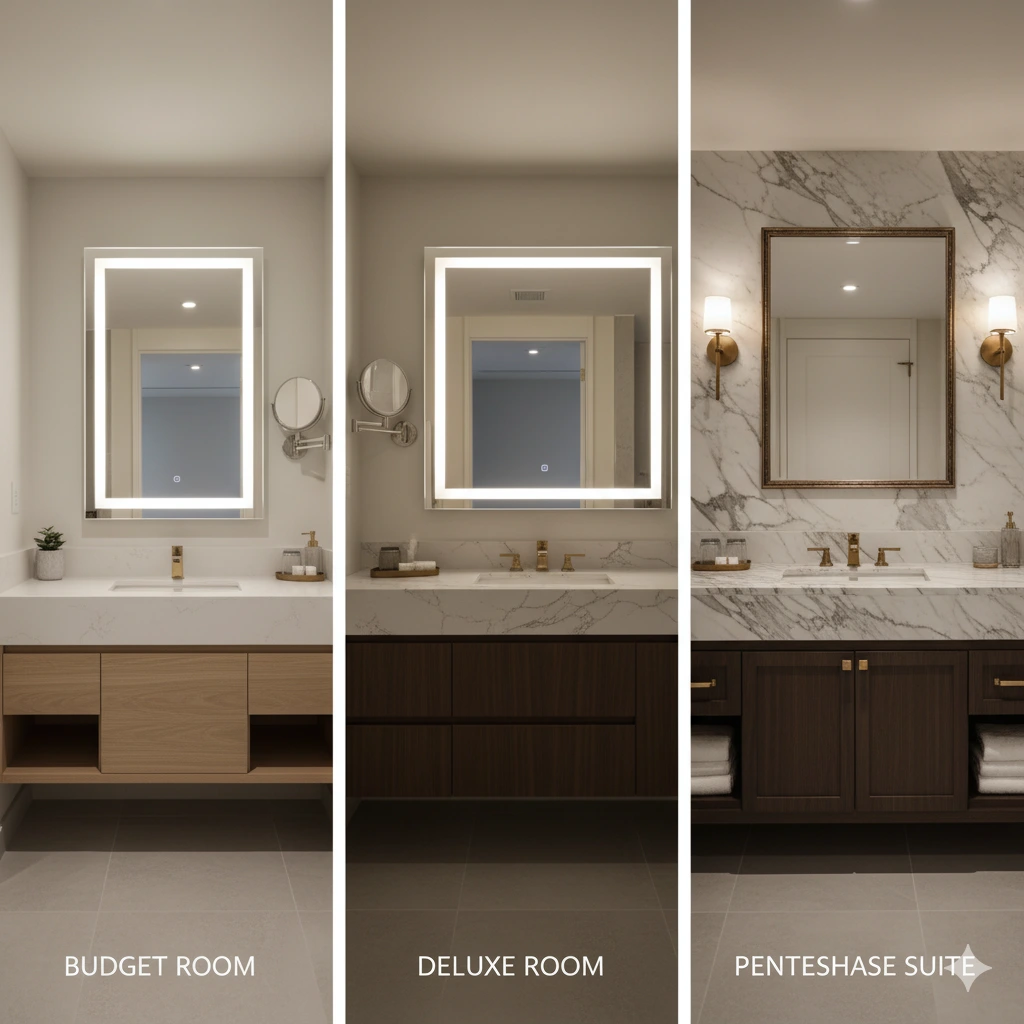
How should different hotel room types choose between marble and quartz bathroom countertops?
Not all rooms serve the same purpose or guest type.
Standard rooms should use quartz for reliability, while suites and VIP rooms can use marble for impact and prestige.
Standard and Business Rooms
Quartz supports fast turnovers, easy maintenance, and consistent appearance across hundreds of units.
Suites and Premium Rooms
Marble fits high-end or boutique suites where guests expect unique, natural textures and luxury design.
Public Areas
A mix of both works well—quartz for public restrooms and bars, marble for lobbies or spa vanities.
When planning hotel renovations, I suggest mixing materials by room category. Quartz should dominate where durability and uniformity matter. Marble can highlight brand prestige in limited, high-visibility spaces. This tiered design strategy meets both functional and emotional goals while controlling cost and maintenance.
Case Snapshot: Luxury Resort Reno
PAIN: A 200-room coastal resort faced 30% annual marble vanity etching and high maintenance costs.
SOLUTION: We provided custom project-grade quartz vanities with integrated sinks and space-saving designs.
RESULT: Maintenance calls dropped by 85%, and the ROI was achieved 12 months earlier than projected.
Conclusion
Choosing between marble and quartz is a balance between beauty and practicality. For hotels, quartz delivers consistency; marble adds prestige. Contact us to explore tailored countertop solutions for your project.
Ready to Scale Your Hotel Project?
From custom vanity tops to full bathroom space design, George Buildshop provides a one-stop solution tailored for hospitality developers. Avoid the headache of managing multiple vendors and ensure consistent quality across every room.
Please fill out the form below to receive our B2B project catalog and wholesale pricing.