Are you tired of constant bathroom vanity repairs hurting your guest reviews? Premium materials are the simple answer to this frustrating cycle.
Yes, high-end bathroom cabinet materials significantly improve guest stays by boosting durability, easing maintenance, and elevating aesthetics. This leads to fewer in-service failures, higher guest satisfaction, and ultimately a better return on investment (ROI) for your hotel properties.
The wrong materials mean endless headaches and upset guests; I know this from my years in the factory and trading. But, if you pick the right, durable materials, you can solve your biggest procurement challenges and deliver the “wow” factor your brand needs.
Table of Contents
Why do bathroom cabinet materials matter for the guest experience?
Do budget vanities secretly cost you more in the long run? Yes, cheap materials are a false economy that risks your reputation.
Bathroom cabinet materials matter because they directly affect durability, hygiene, and the overall perception of luxury. Durable materials prevent unsightly wear and tear, minimize maintenance downtime, and ensure guests experience a consistently fresh, high-quality environment.
The material of a bathroom cabinet directly impacts several key areas of the guest experience:
- Aesthetics and First Impression: A solid wood or high-grade veneer finish looks and feels premium right away.
- Durability: Materials like solid surface or marine-grade plywood resist water damage and chipping better than particleboard.
- Maintenance: Non-porous materials, like quartz countertops, are easier to clean and keep germ-free, which is vital for guest comfort.
Recommended for High-Humidity Hotels
Eliminate swelling issues with our marine-grade solutions.
Shop Durable Hotel Vanities →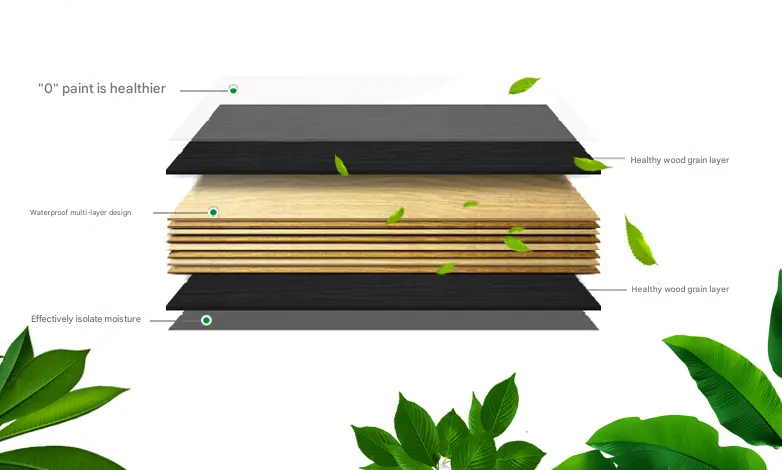
When I first started in the factory, I saw how quickly low-grade Melamine Faced Chipboard (MFC) would swell and chip in humid hotel settings, causing guest complaints. High-end materials prevent this. They ensure your cabinet maintains a flawless look throughout its lifecycle. For a Hotel Procurement Manager like Emma, choosing materials that resist common wear and tear—like scratches from cleaning staff or water damage near the sink—is critical. This choice directly reduces the need for frequent room shutdowns and protects the guest’s perception of quality. I always advise my clients to look at the “hidden costs” of cheap materials. These costs include lost revenue from out-of-service rooms and negative reviews. You are not just buying a cabinet; you are buying a promise of quality. The table below shows the trade-offs:
| Material Type | Initial Cost | Durability/Maintenance | Guest Perception |
|---|---|---|---|
| High-End (Solid Wood/Quartz) | High | Excellent/Low Maintenance | Premium, Luxury |
| Budget (Particleboard/Laminate) | Low | Fair/High Maintenance | Basic, Less Durable |
Which cabinet materials can actually enhance comfort and stay quality?
Are you wondering which materials truly make a difference in a hotel room? The best materials combine beauty with superior performance, offering immediate value.
Materials like solid teak or marine-grade plywood for the frame and quartz or solid surface for the countertop enhance comfort and stay quality. These options offer superior water resistance, tactile warmth, and a luxurious feel that guests immediately notice and appreciate.
Choosing the right material means focusing on both look and function to genuinely enhance the guest stay:
- Solid Wood (Teak, Oak): This offers a warm, high-end aesthetic, though it requires specific finishes to resist humidity.
- Marine-Grade Plywood: This is an excellent core material that resists water swelling far better than standard MDF or particleboard.
- Quartz Countertops: Highly non-porous and incredibly hard, they resist staining and bacterial growth, promoting a clean environment.
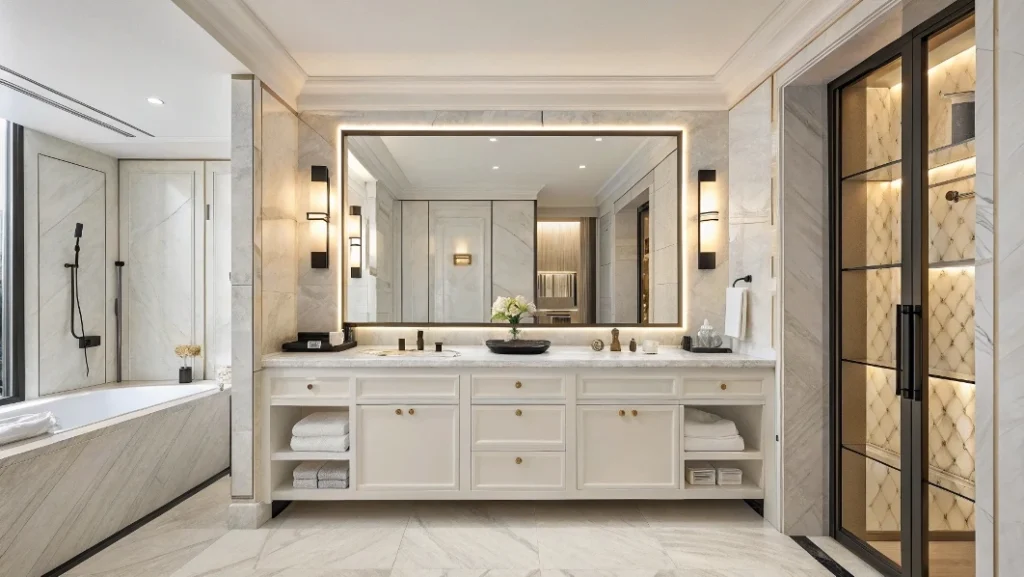
I remember one resort manager who switched from standard MDF to FSC-certified teak vanities for their luxury suites. They shared with me that guests specifically mentioned the “premium, spa-like feel” in their reviews. This is proof that material choice is a guest-facing feature. For Emma, focusing on materials that minimize the risk of mold or mildew—a common problem in humid climates like the UAE—is a must. Solid surface is a smart choice for commercial use because any scratches are repairable onsite, which is a major benefit for quick room turnaround. When evaluating options, you need to consider the climate of your properties. A material that works well in a dry climate may fail quickly in a humid coastal location. I always push for materials that are proven to stand up to commercial cleaning products and heavy daily use.
| Cabinet Component | High-End Material Choice | Key Benefit for Guest |
|---|---|---|
| Cabinet Box | Marine-Grade Plywood | No swelling, long-term integrity |
| Countertop | Quartz or Solid Surface | Stain-free, easy to sanitize, sleek look |
| Finish | Multi-layer PU/UV Paint | Resists scratches and fading from light |
How to choose the right vanity material based on your project and budget?
Is it possible to achieve a premium look without breaking the bank? Yes, strategic material pairing is the key to balancing budget and quality.
To choose the right material, you must prioritize the core material’s durability (like marine-grade plywood) over the finish in high-traffic areas, while saving the most luxurious materials (like marble) for high-end suites. Balance the material cost with its expected lifecycle and maintenance cost.
Your choice should always be a function of your hotel brand’s standard and the expected lifespan:
- Luxury Tier (5-Star): Focus on solid wood, natural stone (marble, granite), and high-end hardware for maximum impact.
- Mid-Tier (4-Star): Use marine-grade plywood or quality particleboard with a high-pressure laminate (HPL) finish, and quartz countertops for durability.
- Extended Stay/Budget: Choose quality HPL finishes over water-resistant MDF or particleboard to get the most life out of a lower-cost option.
In my experience, many clients in procurement, face the challenge of making the budget stretch without sacrificing brand image. My trade secret is to invest heavily in the unseen core. For example, use marine-grade plywood for the cabinet box because it prevents swelling and failure. Then, you can choose a high-quality wood veneer or HPL for the exterior look, which saves money compared to solid wood but still looks premium. For projects with tight renovation windows, like those Emma manages, I recommend standardized sizes and easily sourced materials. This strategy makes future repairs simpler and faster, keeping rooms in service. Always ask your supplier for the material’s water absorption rate; this is a clear measure of its commercial suitability and its long-term ROI. The better the water resistance, the less money you will spend on replacements.
| Hotel Tier | Recommended Cabinet Core | Recommended Countertop | Cost/Durability Balance |
|---|---|---|---|
| Luxury | Solid Wood or Marine Plywood | Natural Stone/Quartz | Highest Durability, High Aesthetics |
| Mid-Range | Marine Plywood/Water-Resistant MDF | Quartz/Cultured Marble | Excellent Durability, Good Aesthetics |
| Budget | Water-Resistant Particleboard/MDF | Cultured Marble/Laminate | Acceptable Durability, Low Initial Cost |
How do eco-friendly and sustainable materials shape your brand image and guest choices?
Are modern travelers choosing hotels based on sustainability? Absolutely, green materials are now a major deciding factor, not just a marketing point.
Eco-friendly and sustainable materials, such as FSC-certified wood and low-VOC finishes, shape a positive brand image by appealing to the growing segment of environmentally conscious guests. These choices communicate corporate responsibility, often resulting in higher occupancy and better public relations.
Integrating sustainable materials into your bathroom vanities offers clear benefits:
- Guest Appeal: Modern guests look for green certifications (like LEED, FSC) and prefer brands that align with their values.
- Health and Safety: Low-VOC (Volatile Organic Compounds) finishes ensure better indoor air quality, which is vital for guest health.
- Brand Value: It provides a strong, positive narrative for your marketing team and improves your eligibility for green building certifications.
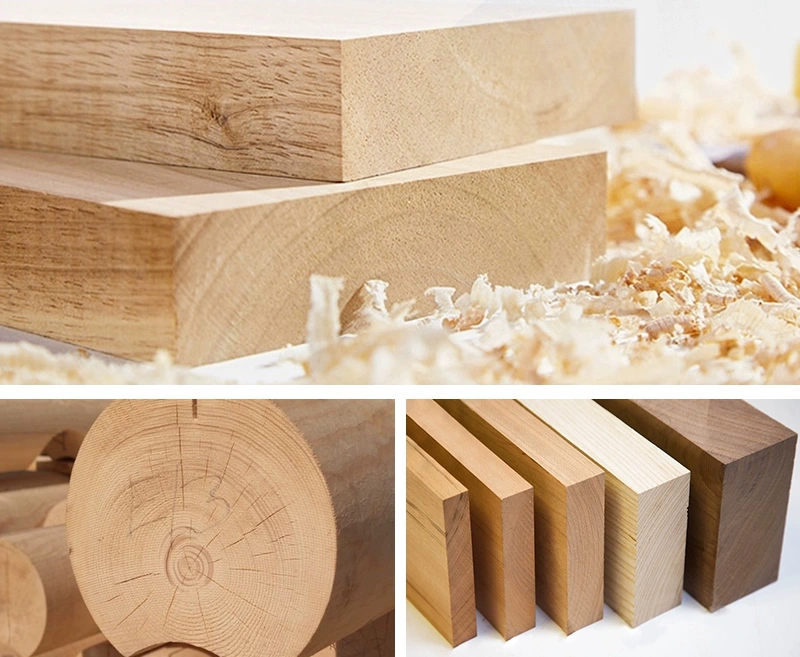
I have seen a major shift in the market; what was once a niche request is now a standard expectation. Emma, as a Hotel Procurement Manager, must factor in the “green score” of a product. Using FSC-certified wood is one of the simplest ways to show this commitment. This certification ensures the wood is sourced responsibly. Also, I always make sure the adhesives and paints used in our cabinets are low-formaldehyde and low-VOC. This is not just a regulatory compliance issue; it’s a guest comfort issue. No guest wants to smell strong chemical odors when they enter a newly renovated room. Prioritize suppliers who provide full material traceability. This helps you manage your supply chain risk and gives you a strong, provable story to share with guests about your brand’s commitment to the environment. Sustainability is not just about the planet; it is about building a future-proof brand that guests trust.
| Sustainability Feature | Material Example | Direct Guest Benefit |
|---|---|---|
| Responsible Sourcing | FSC-Certified Wood | Peace of mind, positive brand association |
| Air Quality | Low-VOC Paint/Adhesives | Better indoor air quality, no harsh odors |
| Resource Efficiency | Recycled Glass/Solid Surface | Less waste, modern look |
What measurable ROI can high-end bathroom cabinets deliver?
Are you looking for proof that premium materials pay for themselves? Yes, the ROI is measurable, showing up in your operational budget and guest ratings.
High-end bathroom cabinets deliver a measurable return on investment (ROI) through significantly reduced maintenance costs, fewer in-service failures, and higher guest satisfaction scores. This ROI is seen in lower lifecycle costs, less room downtime, and higher average daily rates (ADR).
The return on investment for choosing higher-quality materials comes in several forms:
- Extended Lifecycle: Premium cabinets last two to three times longer than budget options, delaying costly replacements.
- Lower Maintenance: Durable materials require fewer repairs, which lowers labor costs and minimizes room closures.
- Reputation Boost: Better quality leads to better guest reviews, which directly affects your property’s visibility and booking rates.
I remember one thread where a resort procurement manager shared: “We switched to teak vanities; guests rave about the ‘premium feel,’ and we’ve cut replacement costs in half.” This is the kind of hard data that makes the case for a higher initial investment. High-quality cabinets from a reliable supplier are less likely to have defects upon arrival, reducing the chance of project delays. The true ROI is the lifecycle cost. A budget cabinet might save you $100 today, but if it needs a full replacement in five years instead of fifteen, you lose money. You must calculate the Total Cost of Ownership (TCO), factoring in maintenance, room downtime, and replacement frequency. The upfront investment in quality is simply a down payment on long-term profit and a strong brand reputation.
Client Success Snapshot
Luxury Resort Renovation
- ❌ Pain: Standard MDF vanities swelled after 18 months.
- 🛠️ Solution: Switched to George’s Marine-Grade Teak Series.
- ✅ Result: 50% drop in replacement costs & 5-star guest reviews.
| ROI Driver | Budget Cabinet (5-year life) | High-End Cabinet (15-year life) | Financial Impact |
|---|---|---|---|
| Replacements in 15 Years | 3 (Every 5 years) | 1 (Every 15 years) | Massive savings on purchase and installation |
| Maintenance Cost (Annual) | High (Constant minor repairs) | Low (Infrequent repairs) | Reduced labor and parts expenses |
| Room Downtime | High | Low | Increased booking availability/revenue |
Which high-end bathroom vanity brands are best for hotels?
Are you wondering which suppliers deliver true commercial-grade quality? The best brands are those built for performance, not just residential style, focusing on your long-term needs.
The best high-end bathroom vanity brands for hotels are those with a proven track record of commercial-grade durability, strong post-sale service, and the ability to offer long-term supply guarantees. These suppliers typically focus on customization, marine-grade materials, and robust hardware to meet the demands of hotel projects.
When evaluating potential brands for your hotel projects, focus on these supplier qualities:
- Commercial Focus: Choose brands that specialize in FF&E (Furniture, Fixtures, and Equipment) for hotels, as they understand durability and compliance needs.
- Material Certification: They must provide clear documentation on materials (FSC, low-VOC, water resistance ratings).
- Customization and Scale: They need to handle large-scale orders and provide consistent finishes across hundreds of rooms.
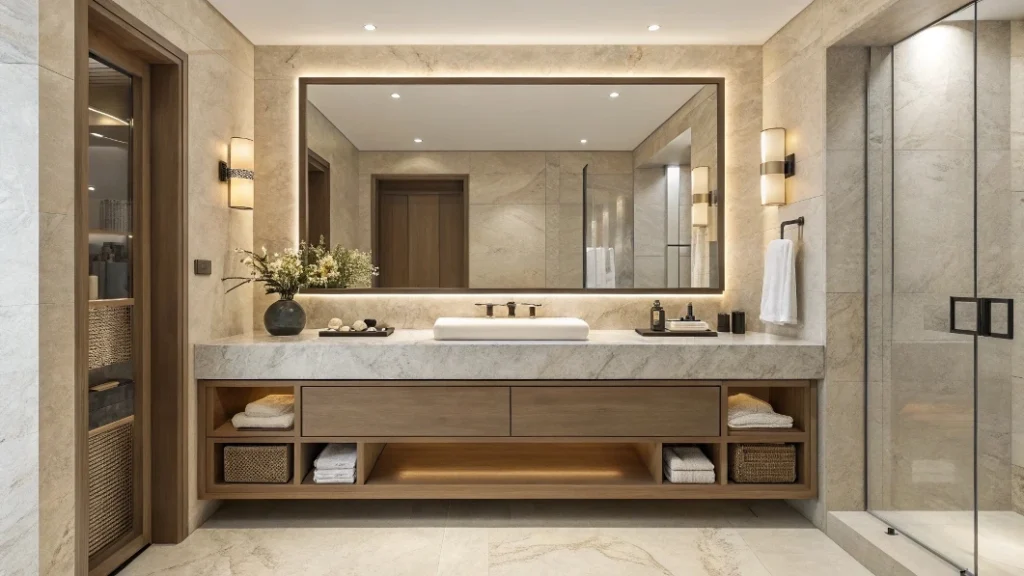
I have worked with many suppliers globally, and what sets the best apart is their transparency and willingness to provide a long-term supply guarantee. For Emma, this is non-negotiable; she needs to ensure consistent finishes for future renovations. Look for suppliers who offer a dedicated project manager and can provide detailed maintenance guides for your onsite team. I remember when I founded my trading company, I only worked with factories that used Dovetail construction and robust Blum or Hettich hardware for the drawers. These small details ensure the vanity survives constant commercial use. You need a partner who sees your project through the entire lifecycle, not just the delivery phase. A strong brand is not just about the name; it is about the systematic quality control and logistics support that they provide to minimize your procurement headaches.
| Supplier Quality | Why it Matters to Emma (Procurement Manager) |
|---|---|
| Long-Term Guarantee | Minimizes risk; ensures consistency for future phases |
| Robust Hardware | Prevents in-service failures; reduces maintenance calls |
| Detailed Maintenance Guides | Enables quick, effective onsite fixes by staff |
Conclusion
High-end materials are a smart investment, not an expense, improving guest stays by ensuring durability and luxury. I am Helen, the founder of georgebuildshop, and I want to help you Master Molding Right by sharing my deep factory and trading insights.
Get Your Project Quote & Free Material Samples
Ready to upgrade your guest experience? Fill out the form below. Our project specialists will analyze your floor plans and provide a competitive proposal within 24 hours.
👇 ENTER YOUR PROJECT DETAILS BELOW