Hotel procurement managers like you constantly battle unexpected repair costs and early cabinet failures in high-humidity areas. Warped wood and mold ruin guest experiences and slash your budget.
I can show you the materials that truly deliver long-term value. The best waterproof material for hotel bathroom cabinets that offers the highest return on investment (ROI) is Polyvinyl Chloride (PVC). PVC is 100% waterproof, mold-proof, and can last 15-25 years with minimal maintenance, dramatically reducing your lifecycle costs compared to wood-based or even sealed alternatives.
I’ve spent over a decade in the bathroom cabinet industry, from factory floors to leading expert teams, and I’ve seen firsthand how a cabinet’s material choice can make or break a hotel’s budget. Procurement managers need more than just a low price; they need durability and a guaranteed return on investment—let’s dive into how to secure that.
Table of Contents
Why is a waterproof bathroom cabinet crucial for maximizing ROI?
In a hotel bathroom, moisture and steam are constant, which causes non-waterproof materials to swell, warp, and grow mold very fast. This leads to costly, unplanned replacements every few years that destroy your project’s budget.
A truly waterproof cabinet is key because it protects your investment from moisture damage, keeping guest rooms operational and avoiding renovation delays. A truly waterproof bathroom cabinet is crucial for maximizing your return on investment (ROI) because it prevents the single biggest cause of premature failure in hotel settings: water damage. Avoiding swelling, warping, and mold growth means your cabinets last longer, guest rooms stay in service, and you significantly reduce high, unplanned maintenance and replacement costs. The key reasons a waterproof cabinet drives better ROI are simple:
- Longer Service Life: It resists moisture, lasting 2 to 5 times longer than non-waterproof options.
- Zero Mold/Mildew: It prevents mold, which eliminates health risks and major deep-cleaning costs.
- Reduced Maintenance: It needs almost no maintenance outside of basic wiping.
- Consistent Aesthetics: It retains its look, which keeps your brand standards high for the full life of the product.
I have personally overseen projects where buyers lamented frequent wood replacements, saying, “Our oak vanities mold in 18 months—it’s an ROI killer!” This is why you must think about the material’s total lifespan. Poor quality means buying two or three times over a 10-year period. A great material means buying once. It’s a simple calculation, but many miss it. The primary challenge for you is minimizing those in-service failures that affect your guest experience. The initial small saving on a cheaper, less-waterproof material never pays off. I recommend focusing on materials that offer a verifiable 15-25 year lifespan in a high-humidity environment.
Understanding the True Lifecycle Cost
We must think past the initial purchase price. The real cost is the sum of purchase, installation, and all future maintenance and replacement costs over the unit’s lifespan.
| Material Type | Estimated Lifespan (Hotel Use) | Typical Maintenance Cost (5 Yrs) | Risk of Premature Failure |
|---|---|---|---|
| Waterproof PVC | 15 - 25 Years | Very Low (Wipe-down only) | Minimal |
| Sealed Plywood | 8 - 12 Years | Moderate (Requires re-sealing checks) | Medium-High (If seals fail) |
| MDF / Particle Board | 2 - 5 Years | High (Frequent repairs / swelling) | Very High |
I’ve personally overseen projects where switching to PVC slashed long-term costs by 25-30% compared to repeatedly replacing sealed plywood. This means more money stays in your budget.
What is the best waterproof material for bathroom cabinets?
With so many materials claiming to be “water-resistant,” choosing the truly best option for a demanding hotel environment is tough. Making the wrong choice means you buy cabinets twice or face mold issues.
The best material is one that is inherently non-porous and will never swell or degrade when wet. The best material for hotel bathroom cabinets, hands down, is solid-sheet PVC (Polyvinyl Chloride). Unlike wood-based options that only have a waterproof coating, solid PVC material itself is 100% waterproof, mold-proof, corrosion-resistant, and requires zero resealing, making it an excellent investment for maximum longevity and minimal lifecycle cost. The best materials are:
- 100% Waterproof: Solid PVC sheet.
- High Water Resistance: Marine-grade plywood or solid wood (teak, cherry).
- Moderate Water Resistance: Multi-layer plywood.
- Poor Water Resistance: MDF (Medium Density Fiberboard) or Particle Board.
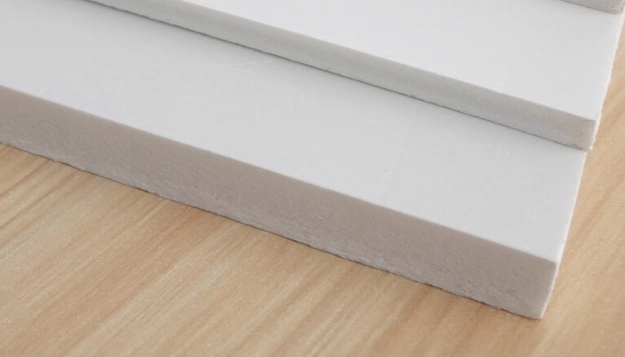
My journey from the factory floor showed me how wood-based products, even with good seals, have weak points. A single scratch or a failing edge band lets water in, and the material starts to fail. Buyers often praise PVC for zero upkeep and quick swaps.
Why PVC is the Hotel Procurement MVP
PVC delivers the best ROI. Its non-porous surface is impervious to water and humidity. In one humid resort project I managed, the constant warping of the existing cabinets stopped completely after we installed PVC units. The minimal upkeep translates directly into saved labor costs.
| Material Feature | PVC (Best ROI) | Sealed Plywood (Good) | Stainless Steel (High Cost) |
|---|---|---|---|
| Core Material Water Resistance | 100% Waterproof | Only Resistant (If Sealed) | 100% Waterproof (But can rust) |
| Mold Resistance | Excellent (Will not support mold) | Medium (Dependent on coating) | Excellent |
| Upfront Cost | Low (~$400/Unit) | Medium | High |
| Long-Term ROI | Excellent (15-25 year lifespan) | Good (8-12 year lifespan) | Good (High initial cost offsets savings) |
For high-traffic hotels, the low upfront cost and exceptional durability of PVC mean you keep your operations running smoothly.
Are PVC cabinets waterproof?
You need to know if PVC cabinets are truly waterproof, not just water-resistant, to meet your hotel’s strict durability standards. Claims of “water-resistance” on other materials have led to costly failures for you before.
Understanding that the core material is non-porous plastic removes all doubt about its water safety. Yes, PVC (Polyvinyl Chloride) cabinets are 100% waterproof because the core material is a solid, non-porous plastic sheet. Unlike wood-based cabinets, which use a waterproof surface coating that can fail, PVC itself cannot absorb water, swell, or rot, making it a reliable, long-term solution for demanding hotel bathrooms and high-humidity areas. The key facts about PVC are:
- Non-Porous: Water cannot penetrate the material’s solid structure.
- No Swelling: It will not expand or warp, even when submerged.
- Chemical Resistance: It holds up well against common cleaning products used in hotels.
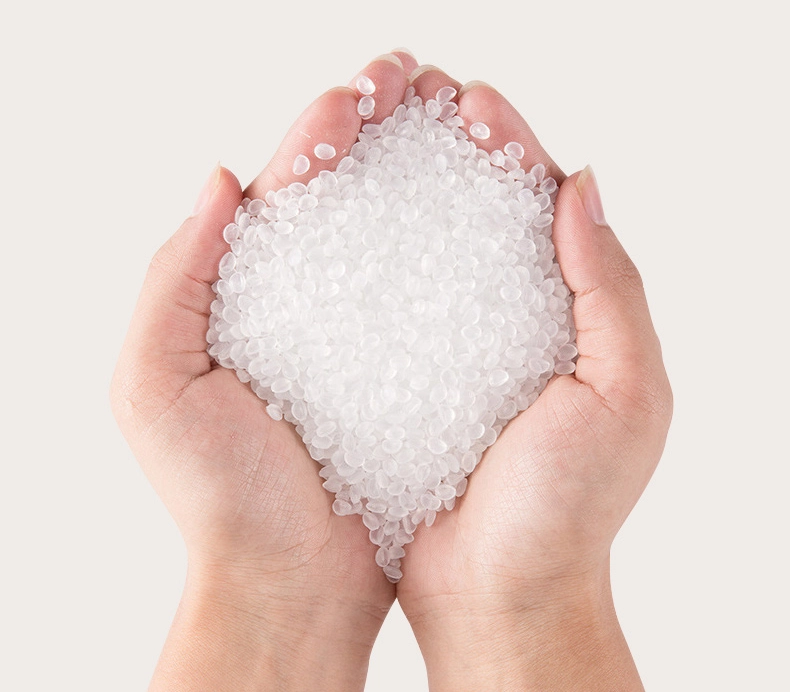
I began working in a bathroom cabinet factory, and I watched how wood-based products were assembled. Even the smallest gap in the protective laminate became a weak spot. PVC is different; I have seen it withstand direct moisture exposure for years without any change.
Why PVC Eliminates the Failure Point
The failure point for most cabinets is the edge banding or the surface where a cut was made. When that seal breaks, the wood-based core drinks water and swells. PVC has no core to fail. This is why it is perfect for hotel procurement, where guest misuse can lead to unexpected water exposure.
| Material | Core Material | Water Barrier | Failure Risk |
|---|---|---|---|
| Solid PVC | Non-porous plastic | Core itself | Minimal to None |
| Melamine / Laminate | Particle board / MDF | Surface coating only | High (If coating is scratched / compromised) |
| Plywood | Wood veneers | Paint / Sealer | Medium (If seal is not maintained) |
For busy hotels, choosing a material like PVC means you can cross “water damage” off your list of worries.
George's 100% Waterproof PVC
Engineered specifically for high-humidity hotel environments. Zero swelling, zero maintenance.
Explore Hotel Collection →What is the best water-resistant wood for bathrooms?
You may prefer a natural wood look for certain high-end guest areas but need to minimize the water-related failure risk. Most solid wood warps or rots when not kept perfectly dry, wasting your luxury budget.
Marine-grade plywood is the best compromise, offering a wood substrate with improved water tolerance and durability. The best water-resistant wood-based material for hotel bathrooms is marine-grade plywood. This material uses water-resistant glue and a less porous core that resists delamination better than standard plywood or solid wood. However, it still requires proper sealing, lamination, or paint on all surfaces and edges to achieve the necessary durability for constant hotel moisture exposure. The most resistant woods are:
- Marine-Grade Plywood: Best balance of strength and water tolerance.
- Teak and Cherry (Solid Wood): Naturally oily woods that resist moisture, but they are very high-cost.
- Multi-layer Plywood: Better than MDF, but the quality of the glue is a risk factor.
- High-Density Plywood: This is a step down but still significantly better than standard plywood or particle board. Look for a high-quality phenolic resin coating.
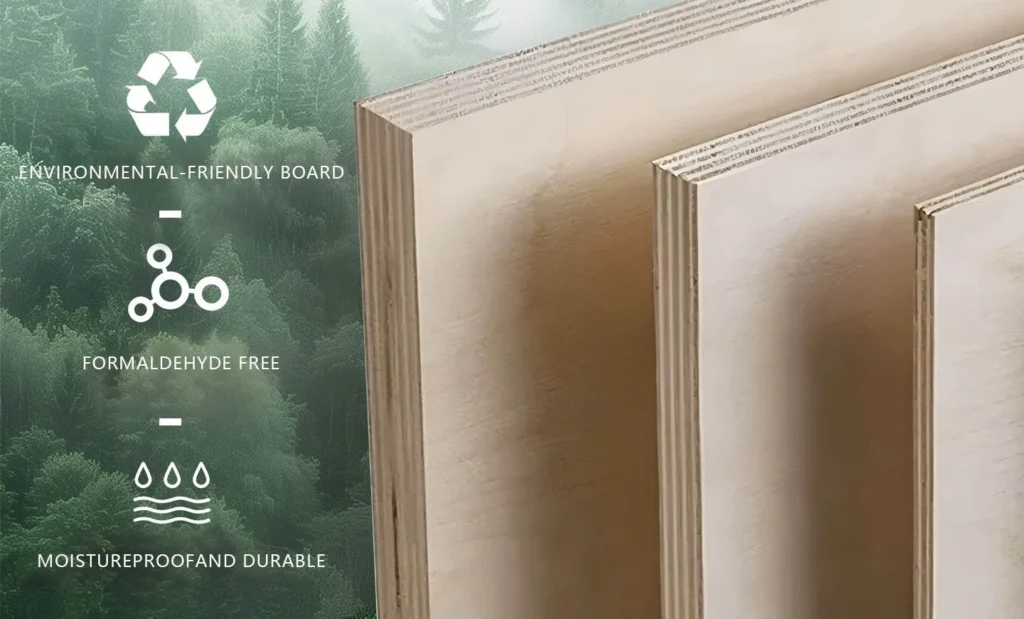
I have aided many clients in growing their businesses, and in luxury hotel segments, they often demand a wood look. We must manage their expectations. Even the best wood needs care.A small, unsealed scratch on plywood can lead to a full cabinet replacement in under a year in a humid climate like the UAE. This is why I stress that water-resistant is not the same as waterproof.
Comparing Wood-Based Options
While beautiful, wood-based bathroom cabinets always come with a lifespan-shortening risk in wet areas. The key is in the finishing. A strong, fully sealed lacquer is essential.
| Wood-Based Material | Pros | Cons | Best Use Case |
|---|---|---|---|
| Marine-Grade Plywood | Strong, resists delamination well | Requires full, meticulous sealing | High-end look where budget allows |
| Solid Teak / Cherry | Naturally resistant, long-lasting | Very expensive, requires oiling / sealing | Ultra-luxury suites only |
| Standard Plywood | Affordable wood option | Prone to delamination if cut edges exposed | Low-traffic, dry areas (not recommended) |
If you must choose wood, always specify the use of waterproof polyurethane glue and request a detailed maintenance guide for re-sealing.
Which waterproof cabinet and countertop materials offer the best ROI for different rooms?
Your hotel portfolio includes diverse property types—from budget-friendly to luxury suites—meaning one material won’t fit all rooms and budgets. Over-specifying cabinets in economy rooms wastes money, while under-specifying in luxury rooms risks guest issues.
Matching the material to the room’s expected traffic and brand standard is the key to maximizing ROI. To maximize your ROI across a diverse hotel portfolio, you should match the cabinet material to the room’s traffic and aesthetic needs. For high-traffic standard rooms, 100% waterproof PVC cabinets with an engineered stone countertop offer the best long-term value. For low-traffic luxury suites, a fully sealed marine-grade plywood with a natural stone countertop is a justifiable investment in guest experience. The ideal pairings for ROI are:
- Standard/Economy Rooms: PVC Cabinet + Engineered Stone (e.g., Quartz).
- Mid-Range/Boutique: High-Density Multi-Layer Plywood + Solid Surface (e.g., Corian).
- Luxury Suites: Fully Sealed Marine-Grade Plywood + Natural Stone (e.g., Granite).
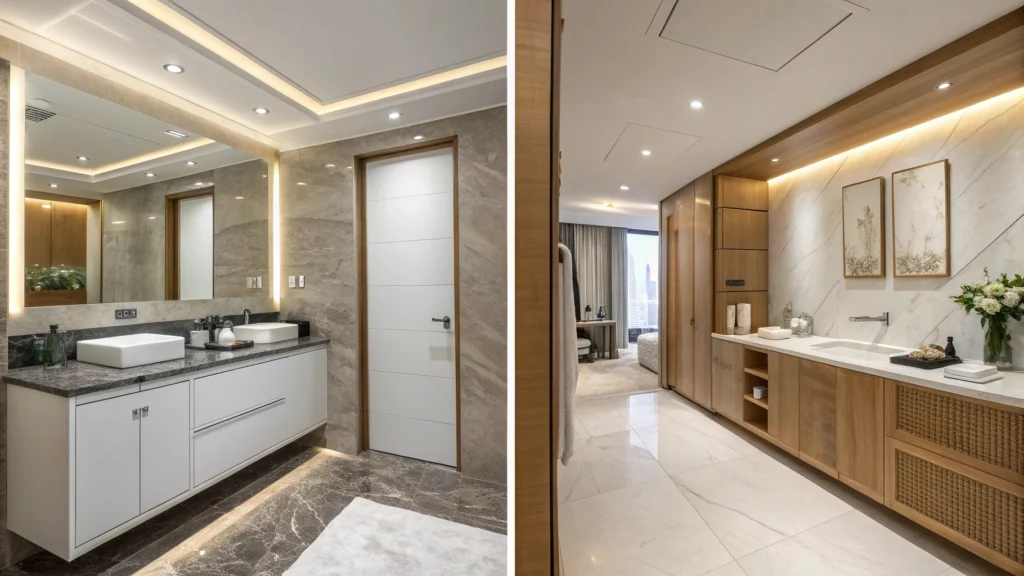
When I founded my successful bathroom cabinet trading company, I saw that successful clients had a tiered material strategy. You cannot afford to put high-maintenance, costly materials in rooms that see heavy turnover. You need to control lifecycle costs, which means using high-durability, low-maintenance materials where the use is highest.I recommend pairing the low-upfront cost and high durability of PVC cabinets with non-porous countertops. This combination is a no-brainer for maximizing your investment. This is a crucial strategy to ensure consistent finishes across rooms without compromising the quality your brand demands.
The Best ROI Material Pairings
The choice of countertop material is just as important as the cabinet, as it handles the most direct water and impact. Engineered stone (quartz) is often a fantastic choice, as it is non-porous, highly durable, and cost-effective.
| Room Type | Cabinet Material (ROI Focus) | Countertop Material (ROI Focus) | Justification |
|---|---|---|---|
| Standard/High-Traffic | PVC (Durability, Low Cost) | Quartz/Engineered Stone (Non-Porous, Low Maintenance) | Lowest lifecycle cost, highest resistance to guest damage. |
| Luxury Suites/Villas | Marine Plywood (Aesthetic, Durability) | Granite/Marble (High Aesthetic Value, High Durability) | Higher upfront cost justified by premium guest experience. |
Choosing the right partner is also vital. Pairing your materials with one-stop suppliers, as I’ve proven in my projects, helps nix logistics pains and boosts overall efficiency.
How to make a bathroom cabinet waterproof?
Even if you choose a water-resistant material like plywood, you must know the proper manufacturing and installation steps to ensure it becomes truly “waterproof” for the long run. Poor sealing or cheap edge banding can make even good materials fail fast.
To make any wood-based bathroom cabinet as waterproof as possible, you must ensure all six sides, including all edges, are perfectly sealed with a durable, commercial-grade moisture-resistant paint or lacquer finish. Edge banding must use a strong, water-resistant PUR (Polyurethane) glue.
Properly waterproofing a cabinet is an industrial process, but you should check that your supplier adheres to these points:
- High-Quality Sealer Application: Every surface must be coated with at least three layers of a high-quality polyurethane or moisture-resistant lacquer.
- PUR Edge Banding: This glue is essential. It provides a highly water-resistant bond between the edge band and the core material, preventing moisture from entering the core.
Caulking and Sealing During Install: All seams where the cabinet meets the wall, floor, and countertop must be sealed with a commercial-grade, anti-mold silicone caulk on-site.
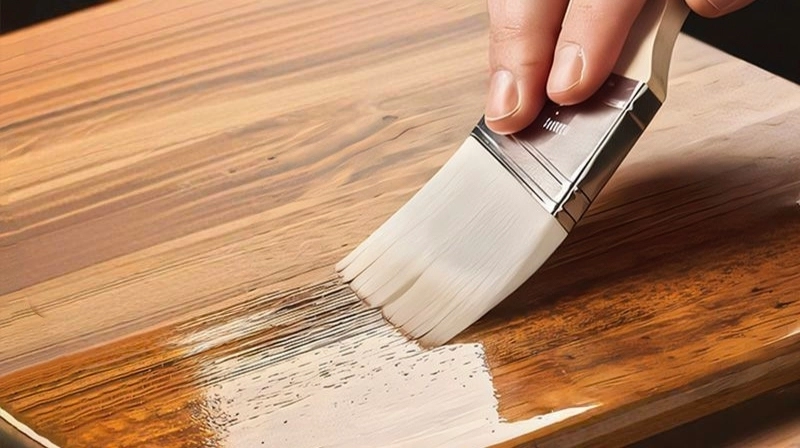
I know the importance of a perfect seal from my experience in the factory. A pinhole in the finish or a poorly applied edge band is all it takes for a cabinet to fail in a humid hotel room. I have seen repair bills skyrocket from simple poor seals. If you are retrofitting existing cabinets, you must inspect the base of the vanity, as this is the most common failure point from floor splashes or cleaning. I always advise that the best way to save money on this process is to pair the low-maintenance PVC with one-stop suppliers. This combination cuts out logistics pains, allowing you to streamline your procurement process and focus on timely delivery to fit your renovation windows.
Crucial Manufacturing Steps for Waterproofing
When dealing with wood-based products, the manufacturer must use high-quality materials and precise techniques to prevent water ingress. If you are procuring for a hotel, ask for a cross-section sample of the edge banding to verify the quality.
| Waterproofing Step | Description | Risk of Skipping |
|---|---|---|
| Use of PUR Glue | Polyurethane Reactive (PUR) glue is waterproof and far superior to EVA for edge banding. | Edge banding will lift, allowing water into the core. |
| Full Sealing | The manufacturer must coat all six sides of every panel (top, bottom, front, back, two sides). | Uncoated backside allows moisture from the wall to cause mold and swelling. |
| Sealing Cutouts | All holes for pipes or fittings must be sealed with a waterproofing resin or sealant. | Water leaks through the pipe hole, damaging the sink base. |
My experience is that PVC eliminates most of these risks, which is a major factor in its excellent ROI for high-volume procurement.
How to calculate ROI based on cabinet materials?
You need a clear, actionable formula to quantify the long-term value of a cabinet material, moving beyond simple sticker price comparisons.Without a formula, you risk approving a “cheap” cabinet that costs a fortune in the long run.
To calculate ROI, you must use the Total Cost of Ownership (TCO) formula, which is: Purchase Price + (Maintenance Cost x Lifespan) + (Replacement Cost x Replacement Cycles). A higher-durability material like PVC will significantly lower the TCO, yielding a better long-term ROI.
Here is a simplified breakdown of the key variables in your ROI calculation:
- Lifespan (L): How many years will the product last before it needs replacement? (PVC: 15-25 years; MDF: 1-3 years).
- Annual Maintenance Cost (AMC): Includes cleaning, repairs, and preventative sealing. (PVC: Very Low; Plywood: Medium; Natural Stone Countertop: High).
- Lost Revenue Cost (LRC): The money lost when a room is out of service for repair. This is your biggest hidden cost.
Let’s use a real-world example from my past projects. A client bought cheap MDF cabinets for $250/unit that failed in 2 years. They replaced the unit 4 times over 10 years, costing $1,250 plus labor and lost revenue. A PVC unit for $400 lasted the whole 10 years with zero maintenance. The ROI for the PVC unit was vastly superior. Your main challenge is minimizing those in-service failures that affect your guest experience. The total cost of replacing and reinstalling a unit is far more than just the material cost. Focusing on lifecycle costs, as you do, is the single most important step in smart procurement.
The High Cost of "Cheap" Cabinets
- ⚠️ The Pain: Client's $250 MDF units swelled & molded in < 2 years.
- 🛡️ Our Solution: Replaced with George's Solid Waterproof PVC Cabinets.
- 💰 The Result: 10 years service lifespan, $0 maintenance costs.
Conclusion
The best ROI for hotel cabinets comes from prioritizing 100% waterproof materials, particularly PVC, over cheaper, water-resistant wood alternatives. By focusing on the Total Cost of Ownership, you can drastically cut future maintenance and replacement costs, keeping your rooms open and profitable—contact us today to find the perfect waterproof solution for your next project.
Ready to Upgrade Your Hotel Bathrooms?
Get a Free Project Quote within 24 hours. Tell us about your project requirements (Size, Style, Quantity), and our engineers will calculate the best ROI solution for you.
👇 Fill out the form below to get started