
Poor material choices in hotel bathroom vanity design cause costly failures fast. Swollen cabinets, stained countertops, and surfaces that cannot be cleaned easily ruin guest experience and drain maintenance budgets.
The best materials for hotel bathroom vanity design combine moisture resistance, durability, and easy cleaning. Quartz or solid surface countertops paired with moisture-resistant plywood or engineered cabinet bodies give hotels the longest service life and the lowest repair risk across high-traffic rooms.
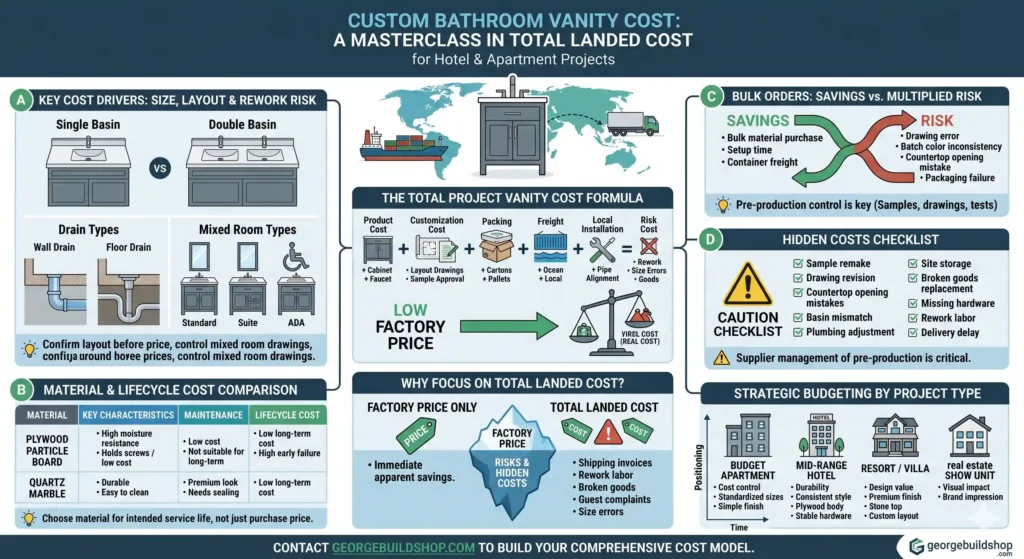
I have worked on vanity projects for hotels, resorts, and serviced apartments for years. The questions that come up most often are not about looks. They are about which materials last, which ones are easy to clean, and which ones survive bulk production without quality gaps. The sections below answer each of those questions directly.
Table of Contents
Why Do Materials Matter in Hotel Bathroom Vanity Design?
Most people assume a vanity either looks good or it does not. But in hotels, that thinking leads to expensive problems. The wrong material fails fast, and replacement costs multiply across hundreds of rooms.
Materials in hotel bathroom vanity design affect durability, cleaning ease, maintenance cost, and guest comfort. A vanity that looks great in a showroom but swells, stains, or chips within months creates real problems for housekeeping teams and procurement budgets.
Durability Under Daily Use
Hotel bathrooms are used by different guests every day. Surfaces face water splashes, cosmetics, cleaning chemicals, and physical contact constantly. Materials that work well in residential settings often fail in this environment within the first year.
Cleaning and Housekeeping Compatibility
Housekeeping teams need surfaces they can wipe down quickly with standard cleaners. Porous materials, rough textures, or finishes that degrade with chemical contact slow down room turnover and increase labor costs. I have seen properties switch materials mid-project because their original choice could not handle daily disinfection.
Lifecycle Cost and Maintenance Risk
The purchase price of a material is only part of the cost. Swollen cabinet bodies, peeling finishes, and cracked countertops require repairs or replacements. Across a large hotel, those costs add up fast. Choosing the right material from the start reduces that risk significantly.
Appearance is a starting point, not a final answer. When I evaluate materials for a hotel vanity project, I think about how a surface will perform after 500 cleaning cycles, not just how it photographs on day one. That shift in thinking changes which materials make the final list every time.
Which Countertop Materials Work Best for Hotel Vanities?
Countertops take the most direct abuse in any bathroom. Water sits on them, products spill on them, and guests lean on them. Not every countertop material handles that equally well.
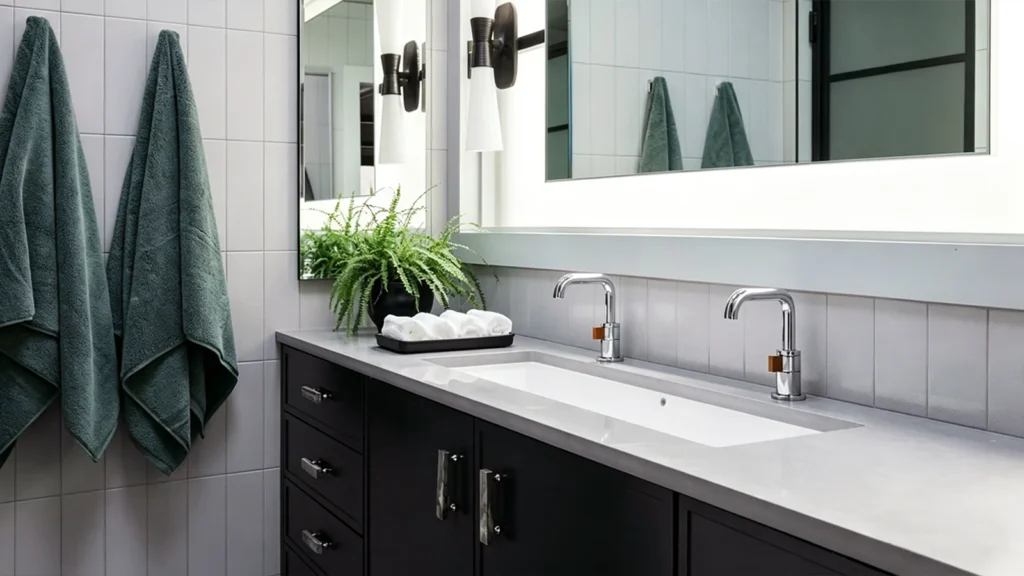
Quartz, solid surface, sintered stone, and vitrified ceramic tile are the most practical countertop choices for hotel bathroom vanity units. Each offers strong stain resistance and durability, though they differ in cost, repairability, and design flexibility.
Source:
https://studio.caesarstoneus.com/comparing-quartz-and-porcelain-which-is-best-for-your-project/
Quartz
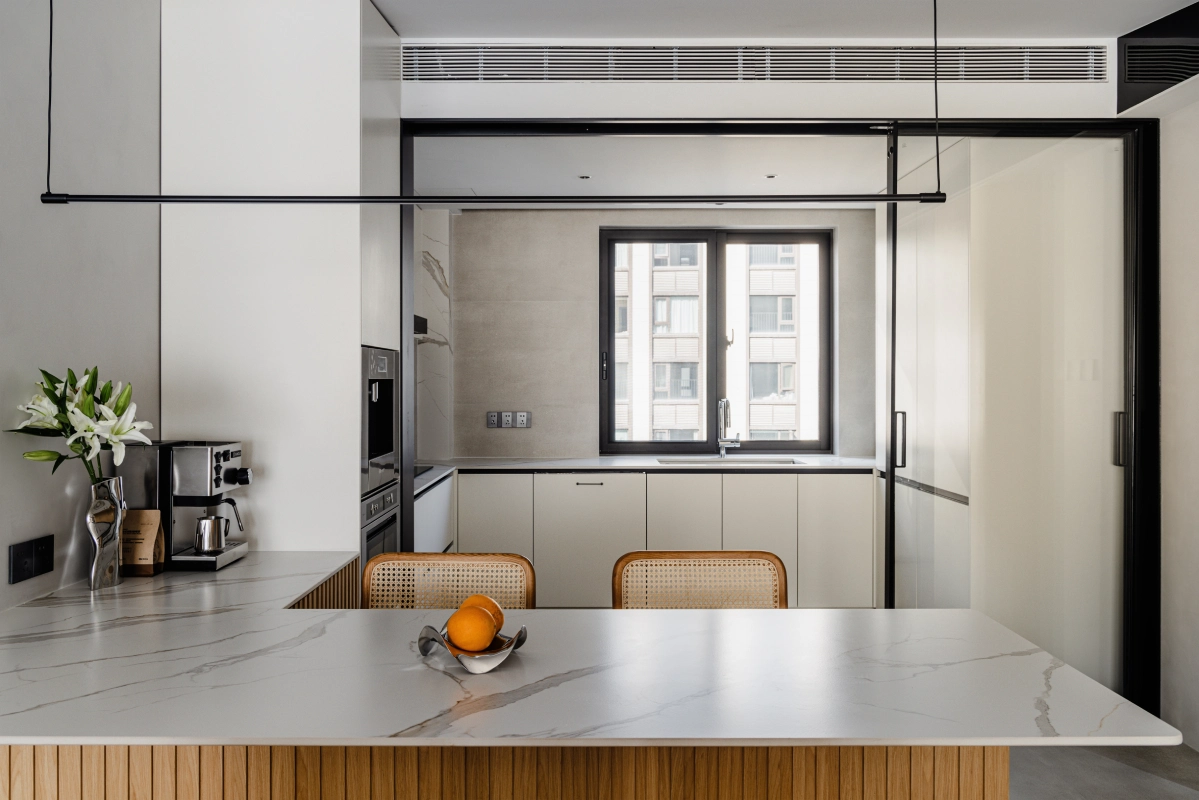
Quartz is dense, non-porous, and highly resistant to staining. It does not need sealing and handles daily cleaning chemicals without degrading. It is one of the most consistent choices for mid-range to luxury hotel projects because it performs reliably and looks good across many finishes.
Solid Surface
Solid surface materials like Corian can be shaped into seamless countertops with integrated sinks. That eliminates grout lines and seams where bacteria or moisture can collect. Minor scratches can be sanded out on-site, which is a real advantage for high-turnover hotel environments.
Sintered Stone
Sintered stone is extremely hard and heat resistant. It handles heavy use well and resists scratches better than most other countertop options. The main limitation is cost and the need for experienced fabricators, which matters when ordering at scale.
Ceramic and Porcelain Tile
Ceramic and large-format porcelain are lower in cost and widely available. They work well for budget hotel projects. Grout lines require more maintenance attention, but choosing larger tile formats and epoxy grout reduces that issue significantly.
Natural Stone
Marble and granite look premium but require sealing and careful maintenance. Marble stains from acidic products like lemon juice or perfume, which are common in bathrooms. I only recommend natural stone for luxury hotels with strong housekeeping programs and a clear maintenance protocol in place.
| Material | Stain Resistance | Repairability | Cost Range | Best For |
|---|---|---|---|---|
| Quartz | High | Low | Mid–High | Most hotel tiers |
| Solid Surface | High | High | Mid | High-traffic rooms |
| Sintered Stone | Very High | Low | High | Luxury projects |
| Ceramic/Porcelain | Medium | Low | Low–Mid | Budget hotels |
| Natural Stone | Low–Medium | Low | High | Luxury with maintenance plan |
Countertop material selection depends on the hotel tier, the housekeeping capacity, and the budget available for long-term maintenance. In most projects I work on, quartz is the default recommendation because it balances performance, consistency, and cost better than the alternatives. Solid surface becomes the preference when integrated sinks and seamless design are a priority.
What Cabinet Materials Are Suitable for Hotel Vanities?
The cabinet body is the structural foundation of the vanity. It holds weight, resists humidity, and needs to look consistent across every room in the building. Material choice here affects both longevity and bulk production reliability.
Moisture-resistant plywood, moisture-resistant MDF, PVC foam board, and HPL-faced panels are the most suitable cabinet materials for hotel bathroom vanity units. Each has different strengths in terms of moisture resistance, weight, cost, and surface finish compatibility.
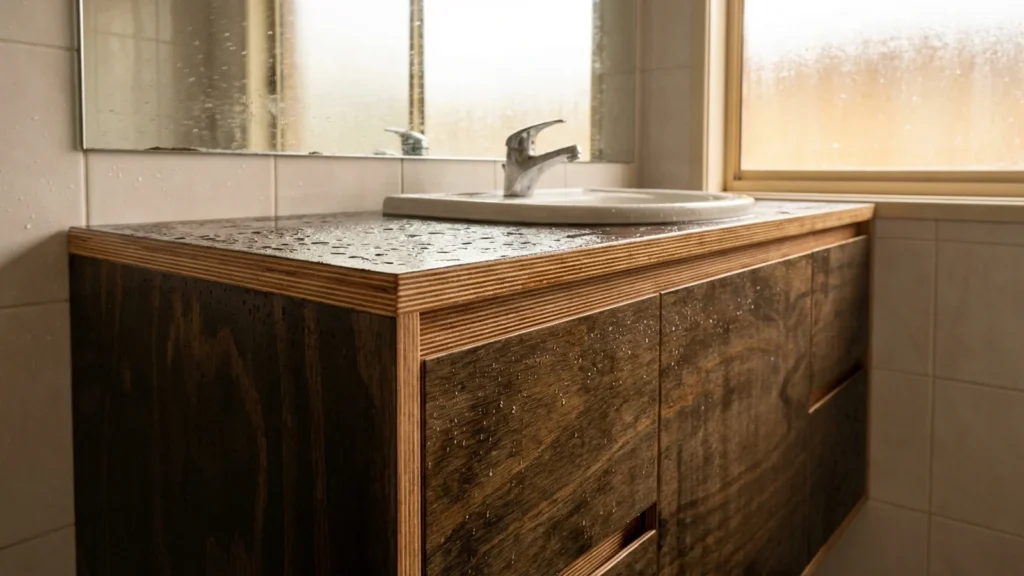
Moisture-Resistant Plywood
Plywood with moisture-resistant glue is strong, stable, and holds screws well. It does not swell as easily as standard board under high humidity. For mid-range and upscale hotels, it is one of the most dependable cabinet body options available.
Moisture-Resistant MDF
MDF with moisture-resistant treatment offers a smoother surface for painted finishes. It machines cleanly and produces consistent results in factory production. The main risk is that it is heavier than plywood and less forgiving if water gets inside through damaged edges or joints.
PVC Foam Board
PVC foam board does not absorb moisture at all. It is lightweight and easy to machine. It works well in small hotel bathrooms where weight and space are concerns. Surface finishing options are more limited, but it is a reliable choice for budget and mid-range projects.
HPL (High-Pressure Laminate)
HPL is applied as a surface finish over a cabinet substrate. It is extremely durable, scratch resistant, and available in many textures and colors. For large hotel projects, HPL offers consistent appearance across high volumes, which matters a lot when you are finishing hundreds of rooms.
Painted Finish
A high-quality baked paint finish on MDF or plywood can look clean and premium. It requires careful edge sealing and quality primer coats to stay durable in humid conditions. I have seen painted cabinets perform well for five or more years when the finishing process is done correctly at the factory level.
The cabinet body rarely gets attention during the design presentation, but it is where most long-term failures start. I always ask clients to confirm the board specification, edge banding quality, and joint sealing method before approving samples. A cabinet that looks perfect in photos but uses standard MDF with unsealed edges will not survive a hotel bathroom environment for long.
What Materials Are Best for Small or High-Traffic Hotel Bathrooms?
Small bathrooms and high-traffic rooms share the same core problem. There is less room for error in both space and durability. Material choices need to work harder in these conditions.
For small or high-traffic hotel bathrooms, wall-mounted vanity units with compact footprints, non-porous countertops, and sealed cabinet bodies perform best. These combinations maximize floor space, resist moisture damage, and hold up under frequent cleaning without visible wear.
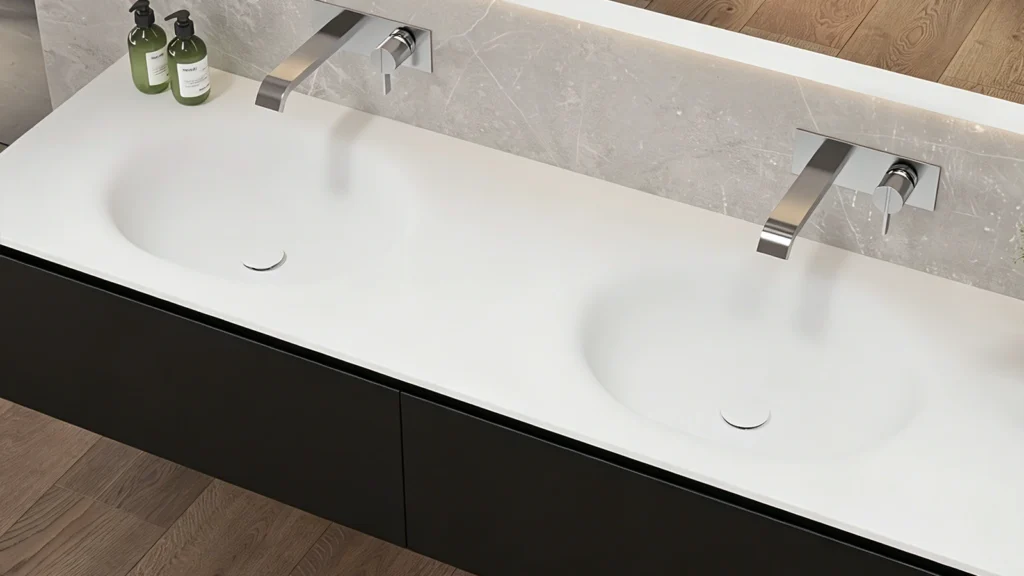
Wall-Mounted Designs and Space Efficiency
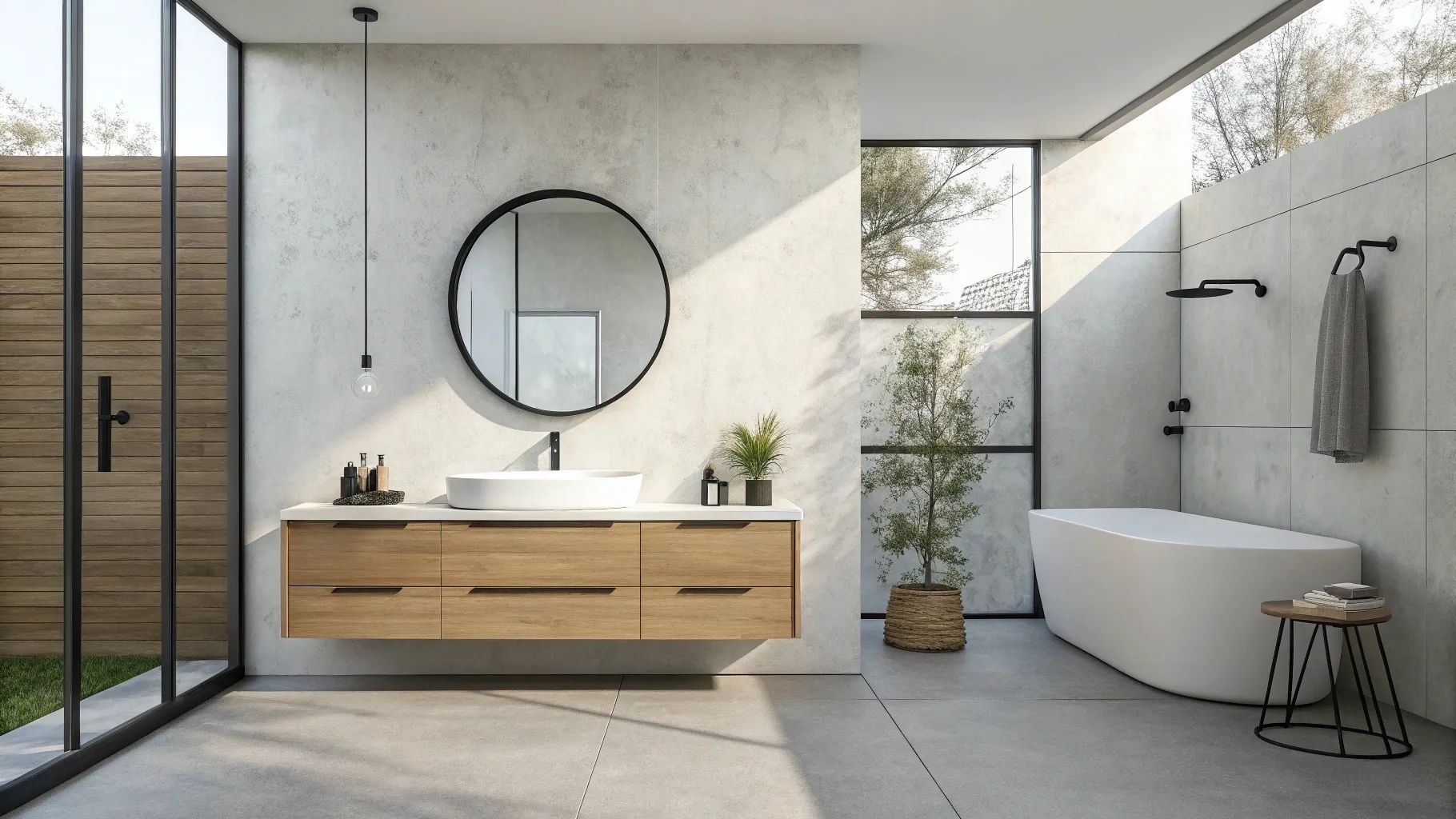
Wall-mounted vanity units free up floor space and make cleaning easier. In small hotel bathrooms, this matters for both the guest experience and the housekeeping team. Choosing a floating design also reduces the chance of water pooling around the cabinet base.
Non-Porous Surfaces for Frequent Cleaning
High-traffic rooms get cleaned multiple times a day. Porous surfaces collect bacteria, absorb cleaning chemicals, and degrade faster under repeated wiping. Solid surface, quartz, and vitrified porcelain all hold up well under this kind of pressure without showing wear quickly.
Durable Hardware and Edge Details
In small bathrooms, guests are physically closer to every surface. Drawer pulls, door edges, and hinges get more contact. Choosing soft-close hinges, recessed handles, and rounded countertop edges reduces visible wear and minor injury risk in tight spaces.
High-traffic bathrooms expose every material weakness faster than standard rooms. I have learned to treat these rooms as stress tests when specifying materials. If a material choice cannot survive the demands of a high-turnover room, it is not the right choice for any room in the property.
What Material Standards Are Required for Accessible (ADA) Hotel Vanities?
ADA compliance is a legal requirement for hotels operating in the United States and a baseline reference for accessibility standards globally. Getting this wrong creates liability risk and costly renovations after the fact.
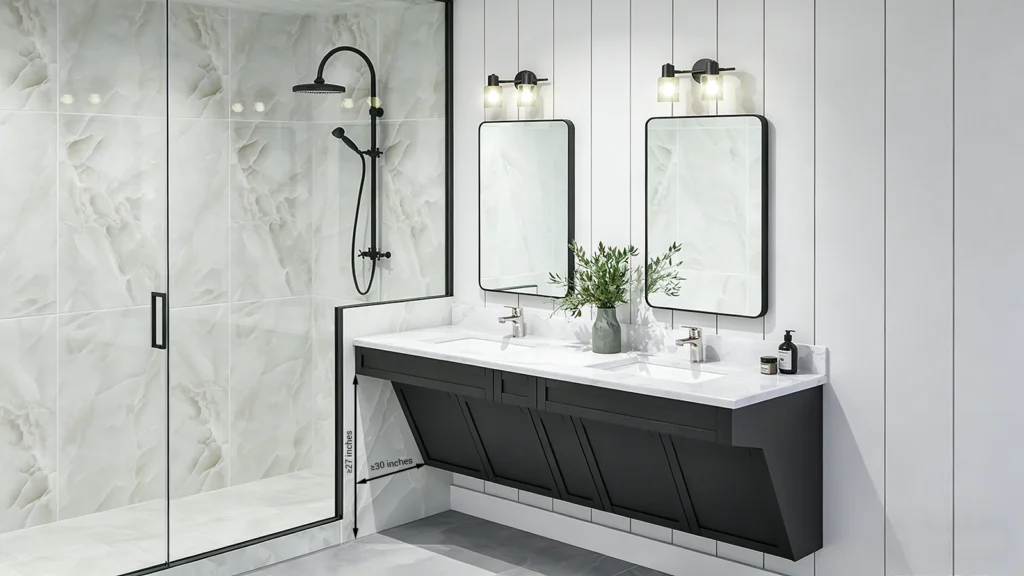
ADA-compliant hotel bathroom vanity units require knee clearance of at least 27 inches high and 30 inches wide beneath the countertop, insulated pipe covers to protect users from burns, and rounded countertop edges to prevent injury. Non-compliant vanities expose hotels to legal risk and renovation costs.
Knee Clearance and Counter Height
The ADA requires that accessible vanities allow a wheelchair user to approach and use the sink comfortably. That means open space beneath the countertop with specific height and depth requirements. Cabinet bodies must be designed without a toe kick or lower drawer unit in the accessible zone.
Insulated Pipe Covers
Exposed pipes under a wall-mounted accessible vanity can cause burns for users with limited sensation. Insulated pipe covers or pre-formed wraps are required. These can be specified in materials that match or complement the vanity finish, which avoids the clinical, institutional look that many designers try to avoid.
Rounded Edges and Surface Safety
Sharp countertop edges are a hazard for users at wheelchair height. ADA guidelines and good design practice both point toward eased or bullnose edge profiles. These details also improve the overall look of the vanity and are easy to specify when ordering from a manufacturer familiar with accessibility requirements.
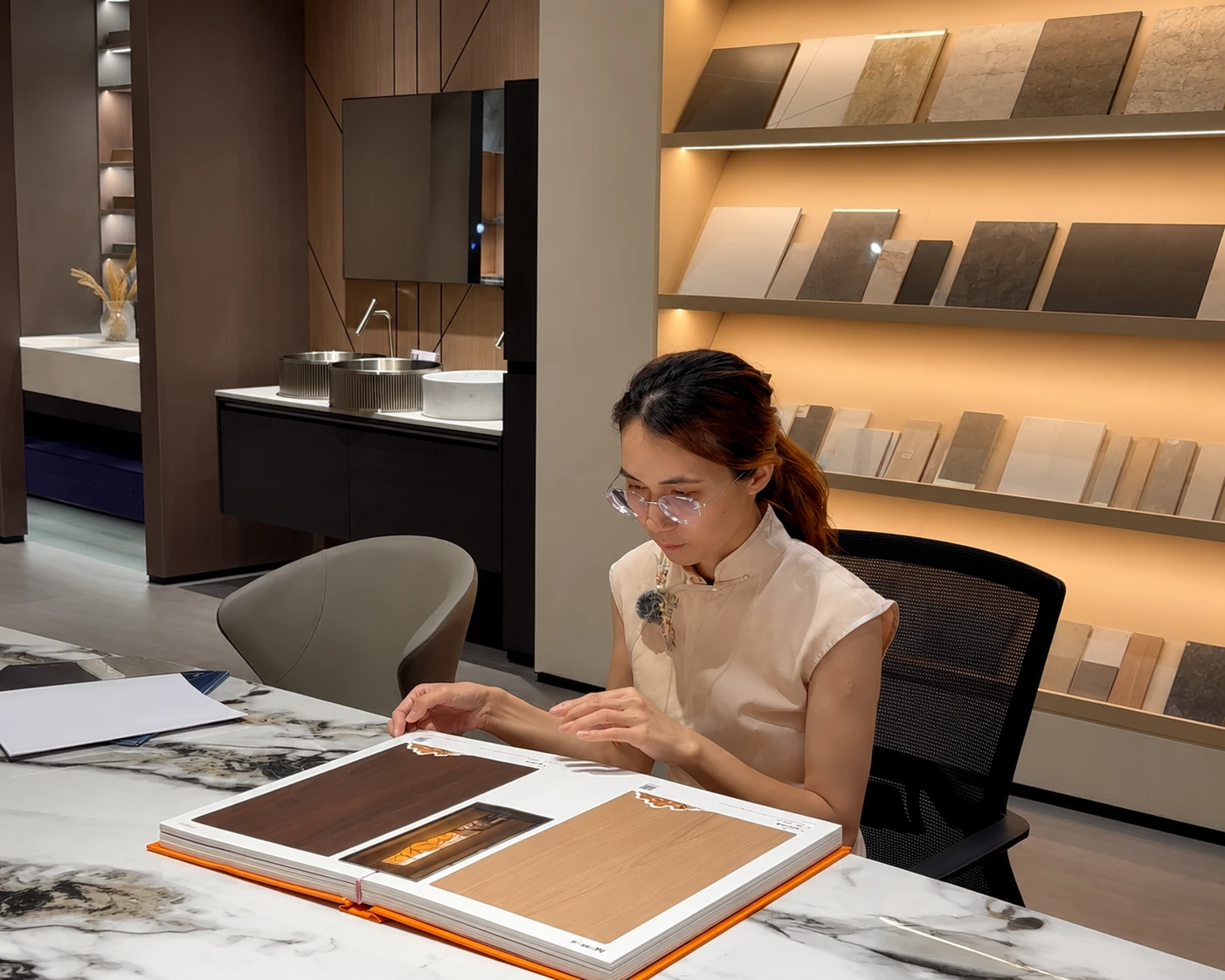
Maintaining Design Consistency
One concern I hear often is that accessible vanities look like hospital equipment. That does not have to be the case. When the knee clearance zone is integrated cleanly into the cabinet design, and the pipe cover matches the finish, the accessible unit can look nearly identical to the standard rooms. Good planning at the specification stage makes this possible.
ADA compliance is not just about avoiding lawsuits. It is about designing spaces that work for every guest. I recommend that hotels treat accessible room vanities as part of the same design system, not as a separate specification. That consistency improves the guest experience and simplifies the production process for the manufacturer.
How Can Hotels Keep Vanity Materials Consistent in Bulk Orders?
Consistency across hundreds of rooms is one of the hardest problems in hotel procurement. Color variation, texture mismatch, and hardware differences between batches create visible inconsistencies that affect brand perception.
Hotels can maintain material consistency in bulk vanity orders by requiring batch color standards, matched texture samples, numbered hardware sets, and pre-approved replacement part lists before production begins. Clear factory documentation and pre-shipment inspection reduce variation between rooms.

Batch Color and Finish Standards
Color variation between production batches is a real problem with painted finishes and some laminates. I recommend that clients request a sealed physical color sample approved before the first production run and reference that sample for every subsequent batch. Digital color codes alone are not sufficient for surface finishes.
Texture and Grain Matching
For wood-grain laminates or textured HPL surfaces, direction and texture repeat need to be consistent across panels. Factories should receive clear instructions on panel orientation and pattern matching. This is easy to miss when ordering large quantities and very visible when rooms are compared side by side.
Hardware and Fitting Consistency
Handles, hinges, drawer slides, and faucet holes need to match exactly across all units. I recommend specifying hardware by model number and requiring the same supplier for all batches. Even small hardware variations become noticeable when a guest moves between rooms.
Packaging, Numbering, and Replacement Parts
Each unit should be labeled with a room number or production batch number. That makes on-site installation tracking easier and helps identify which batch a unit came from if a quality issue appears later. Replacement panels, doors, and hardware should be included in the order or guaranteed as available for at least five years.
Bulk orders reward detailed upfront planning. I have seen projects where a small specification gap—like an unspecified edge banding color—resulted in two different finishes across floors. That kind of mismatch is expensive to fix and impossible to fully hide. The solution is always the same: document everything before production starts and inspect samples before approving the full run.
250-Room Coastal Resort Bulk Order
⚠️ Pain Point: The client faced a 3-month project delay because their previous supplier delivered mismatched wood-grain textures and hardware variations across different batches.
💡 Solution: As a one-stop supplier, we implemented strict batch color standards, pre-approved all hardware sets, and provided customized 3D bathroom space designs to ensure total uniformity.
✅ Result: 100% texture consistency across all 250 rooms, zero installation delays, and reduced total procurement costs by unifying their sanitary ware purchases.
Conclusion
Material choices define how a hotel bathroom vanity performs for years, not just on opening day. If you are planning a hotel vanity project and want guidance on materials, specifications, or bulk ordering, contact georgebuildshop at georgebuildshop.com for direct support.
Ready to Eliminate Bulk-Order Risks?
Inconsistent textures and mismatched hardware can ruin a multi-million dollar resort project. As a true one-stop manufacturer, we guarantee 100% batch consistency across your custom vanities, shower doors, and sanitary ware. Fill out the form below with your project details, and our B2B procurement specialists will provide a customized solution within 24 hours.