
Many buyers in framed vs frameless American bathroom vanity projects make the same mistake: they choose by photo, not by structure. The wrong choice leads to installation problems, door gaps, and maintenance calls that hurt your project budget.
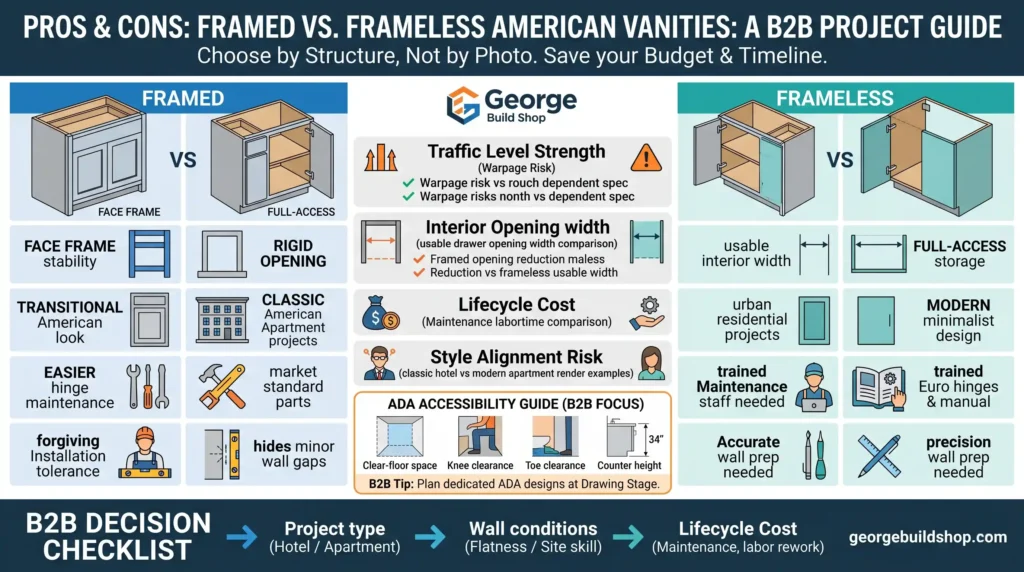
A framed vanity has a face frame on the front. Doors and drawers attach to that frame. A frameless vanity has no face frame. Doors cover the full cabinet opening directly. For American projects, framed fits classic styles, and frameless fits modern ones.
I have worked in bathroom vanity manufacturing and hotel project supply for years. From what I have seen, the framed vs frameless cabinets pros and cons debate is rarely about looks alone. For B2B buyers, the right answer depends on your project type, wall conditions, traffic level, and long-term maintenance plan.
Table of Contents
What Is the Main Difference Between a Framed and Frameless American Vanity?
If you are comparing framed cabinet vs frameless for the first time, the structure difference can be easy to miss in product photos. But it changes how the whole cabinet works. Understanding this early saves you from specification mistakes later.
A framed vanity uses a face frame attached to the front of the cabinet box. Doors and drawers sit in front of that frame. A frameless vanity has no face frame. Doors mount directly to the cabinet sides, covering the full opening. This is why frameless is often called a full-access cabinet.
Framed Vanity Structure
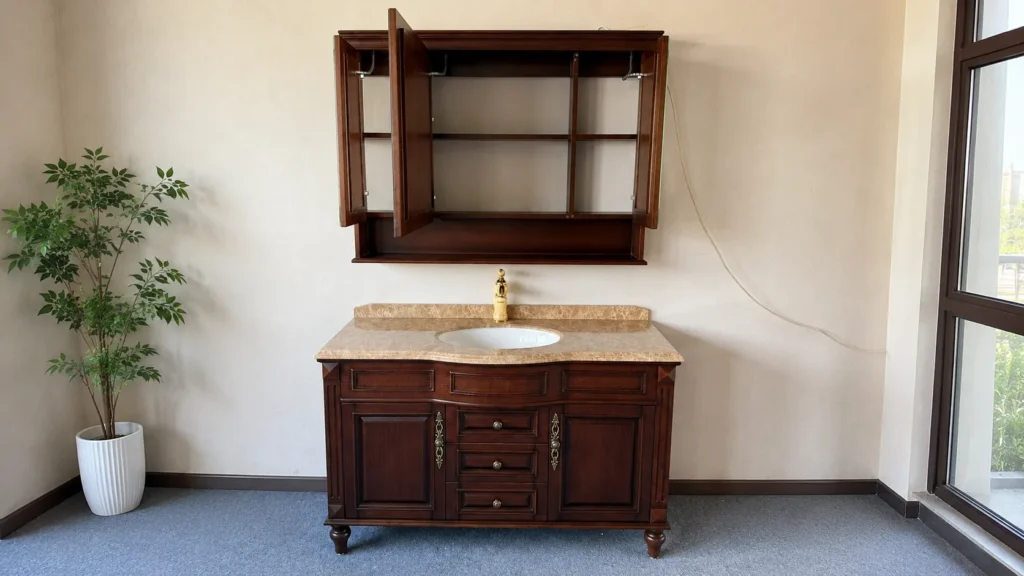
The face frame acts as the front edge of the cabinet. Doors and drawer fronts overlap or fit inside this frame. This is the traditional American cabinet style. It gives the vanity a more built-in, furniture-like appearance.
Frameless Vanity Structure
There is no frame at the front. The cabinet box itself carries all the structural load. Doors are mounted with European-style hinges directly to the cabinet panels. This gives a cleaner front face and a wider opening for access.
The face frame is not just a design detail. It affects door gap control, hinge placement, drawer width, and how forgiving the cabinet is during site installation. When I review project drawings with procurement managers, this is always the first structural point I walk them through.
Which Vanity Is Stronger for High-Traffic Bathrooms?
Hotel rooms and service apartments get used hundreds of times a year. A vanity that looks fine in a showroom can develop loose doors, misaligned drawers, and swollen panels after two years of daily use. Durability here is about long-term stability, not just initial quality.
A framed vanity offers better front-edge stability. The face frame reinforces the cabinet opening, supports hinge mounting, and helps control door gaps over time. A frameless vanity can also be durable, but it depends entirely on board thickness, connector quality, and hinge specification.
Face Frame Stability
The face frame adds rigidity to the front of the cabinet. In high-traffic use, this reduces the chance of the cabinet opening warping or shifting. It also gives hinges a wider surface to mount on, which reduces hinge pull-out risk.
Board and Hardware Requirements for Frameless
Frameless cabinets carry all stress through the box panels. Thinner or lower-density boards will flex over time. For hotel and apartment projects, frameless vanities need at least 18mm thick boards with quality edge banding and full-extension, soft-close drawer slides rated for daily commercial use.
Long-Term Risk
The real question is not whether the vanity works on day one. It is whether it stays tight after three years of guests pulling doors, slamming drawers, and humid air cycling daily. Framed vanities are more forgiving here for most standard hotel project specs.
I always tell procurement managers: when you are ordering for 200 rooms, a 2% failure rate is still four vanities showing problems. That means maintenance calls, spare parts, and guest complaints. Structure choice at the start controls that risk later. Frameless can work well in high-traffic settings, but only when the full specification is controlled tightly — not just the unit price.
Expert Specification Support
Get Custom Project SpecsWhich Vanity Gives Better Storage and Daily Access?
Storage is not just about total interior volume. It is about how easily someone can reach inside every day. In hotel rooms and serviced apartments, guests often have limited counter space. The vanity cabinet needs to work hard.
A framed vanity loses some interior opening width to the face frame. For narrow drawers or small under-sink cabinets, this reduces usable access. A frameless vanity has no frame blocking the opening, so the full interior width is accessible. This is the core full-access advantage.
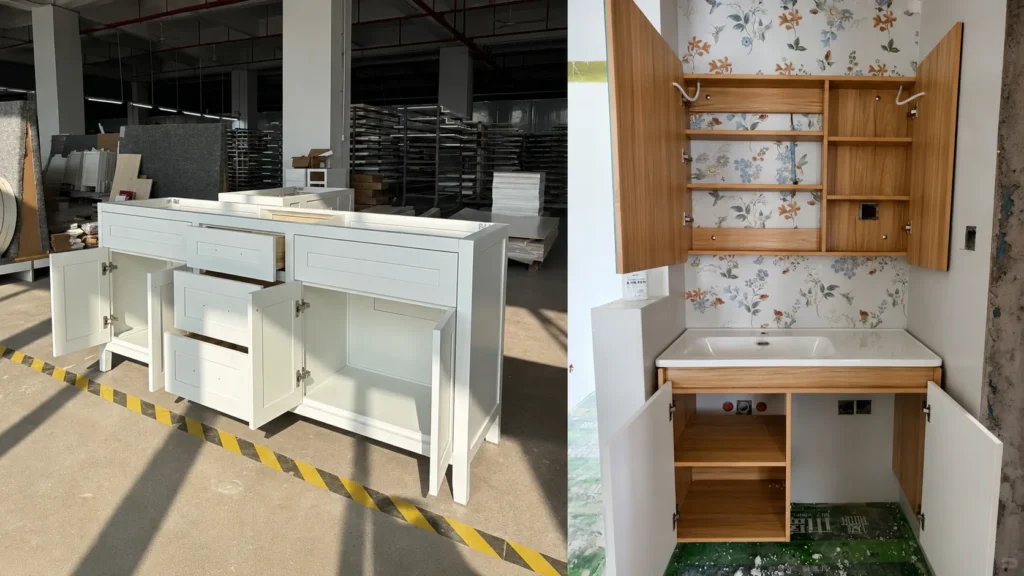
Framed Vanity Interior Access
The face frame sits at the front of the cabinet. On a 600mm wide vanity, the face frame can reduce the usable drawer opening by 25mm to 50mm per side. For wide double vanities, this matters less. For narrow single vanities under 750mm, it can affect how practical the storage feels.
Frameless Vanity Full-Access Advantage
Without a front frame, the entire cabinet opening is usable. Drawers can be built to the full interior width. Doors open to the full box width. For small hotel rooms, compact serviced apartments, or long-stay units where guests store more items, this advantage is real and practical.
Where It Matters Most
For standard hotel rooms with 900mm or wider double vanities, the framed access difference is minor. For studio apartments, compact guest bathrooms, or ADA-compliant rooms with specific clear-floor and reach requirements, frameless storage access becomes a stronger reason to choose it.
From a project supply perspective, storage access complaints are rare at handover but common after six months of occupancy. Guests and residents notice tight drawer openings only after they try to store full-sized toiletries. When I help buyers spec compact units, I usually recommend frameless for any vanity under 800mm wide, unless the design style specifically requires a framed shaker door look.
Which Vanity Is Easier to Install Across Many Rooms?
When you are fitting 150 identical rooms, small installation errors add up fast. A vanity that requires precise wall prep and perfect leveling on every unit adds labor time, rework, and stress during your renovation window.
A framed vanity is more forgiving during installation. The face frame hides minor wall gaps and allows easier door gap adjustment on site. A frameless vanity needs accurate measurements, level walls, and precise drilling. Any error is visible on the finished front face.
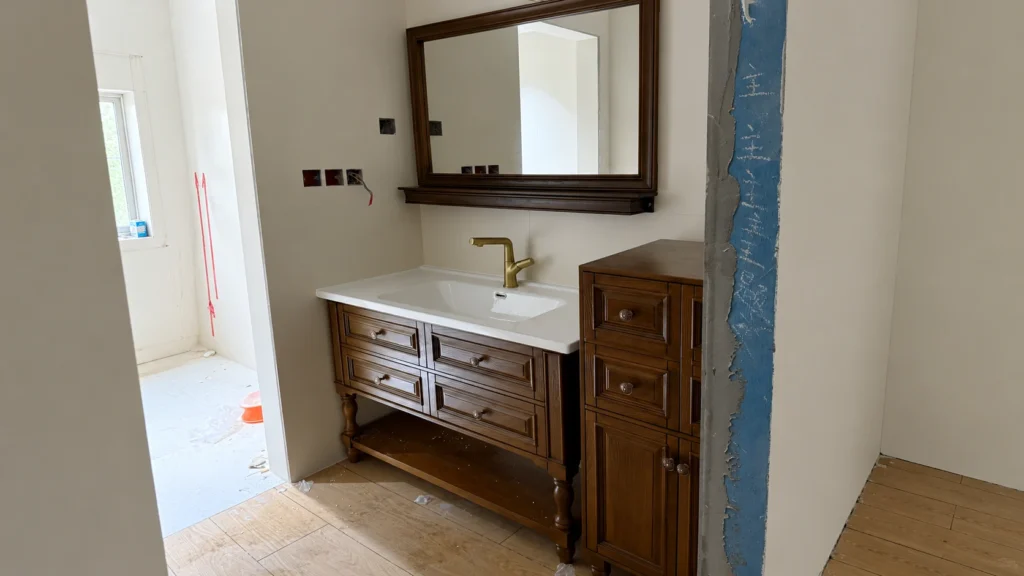
Framed Installation Tolerance
The face frame covers the joint between cabinet and wall on the front side. Small gaps, uneven walls, and minor level differences are easier to manage. Door gaps can be adjusted with standard hinge adjustments. For large hotel projects where wall flatness varies room to room, this tolerance is a real advantage.
Frameless Installation Precision
Frameless cabinets show every misalignment. Uneven walls cause visible panel gaps. Door gaps are harder to correct after installation because there is no frame to compensate. Site teams need better training and more precise tools. For projects in buildings with inconsistent wall finish quality, frameless requires more site supervision.
Project Scale Impact
For a single high-end villa, a skilled installer can manage frameless precision well. For a 200-room hotel project with a tight renovation schedule and a mixed site team, framed vanities reduce the chance of installation rework calls. This directly affects your project handover timeline.
I have seen projects where frameless vanities were specified for cost savings but ended up with more rework hours than framed alternatives would have required. The unit price difference was small. The labor rework cost was not. When I help buyers plan large-scale orders, I always ask about wall condition reports and site team experience before recommending frameless for the full scope.
Project Insight: 150-Room Hotel Renovation
Pain Point: Uneven wall finishes in an old building caused visible gaps in frameless vanity samples, threatening the handover schedule.
Solution: We redesigned a custom 18mm framed structure with integrated scribe moldings to compensate for 15mm wall variances.
Result: Installation speed increased by 40%, zero rework requests from the GC, and a perfect visual fit across all rooms.
Which Vanity Is Easier to Maintain After Handover?
Hotel and apartment vanities need maintenance. Hinges need adjustment. Drawer slides wear out. Door fronts get damaged and need replacing. How easy your chosen vanity type makes these tasks affects your total lifecycle cost.
Framed vanities are generally easier to maintain using standard tools and basic carpentry skills. Frameless vanities require more precise hinge adjustment, compatible replacement hardware, and correct drilling positions. For large projects, spare parts planning and maintenance training differ between the two types.
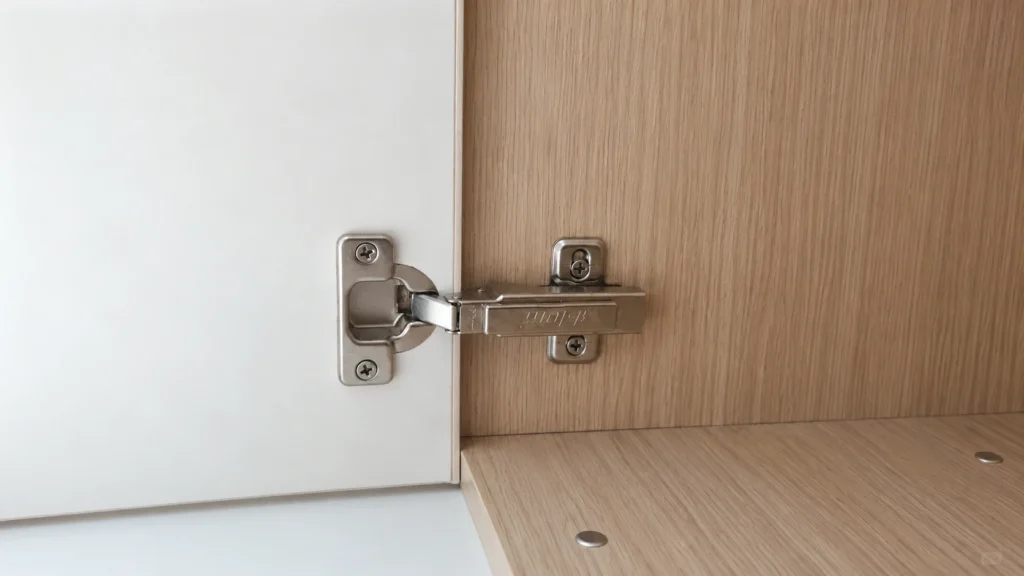
Hinge Adjustment and Replacement
Framed vanities use overlay hinges that mount to the face frame. These are easy to adjust and replace with widely available standard parts. Frameless vanities use European cup hinges mounted directly to the panel. Adjustments are more precise, and replacements must match the original hinge spec exactly.
Drawer Slide Maintenance
Both framed and frameless vanities can use undermount or side-mount drawer slides. Replacement is similar in both cases. The main difference is that frameless drawer openings are wider, so the slide hardware must be rated for the correct span and load without the support of a face frame.
Spare Parts Planning
For B2B projects, spare parts management is important. Framed vanities use simpler hardware with broad market availability. Frameless vanities need hardware from the same series to match finish, function, and drilling pattern. I always recommend buyers request a spare parts package — hinges, slides, and door fronts — when placing the original order.
After handover, the team maintaining your rooms may not be the same team that installed them. Maintenance staff need to adjust doors and replace parts without calling the original supplier every time. Framed vanities make this easier for standard skill levels. Frameless vanities work well when you have a clear maintenance manual, trained staff, and confirmed spare part supply. Without those three things, frameless maintenance becomes a recurring cost problem.
Which Vanity Looks Better for American Bathroom Projects?
Appearance drives first impressions for guests, residents, and property inspectors. But for B2B buyers, the right look is not about personal preference. It is about matching the vanity style to your project positioning and target guest profile.
Framed American vanities suit classic, transitional, and traditional project styles. Frameless vanities suit modern, minimalist, and contemporary designs. Matching the vanity structure to your project concept makes both types look right for their setting.
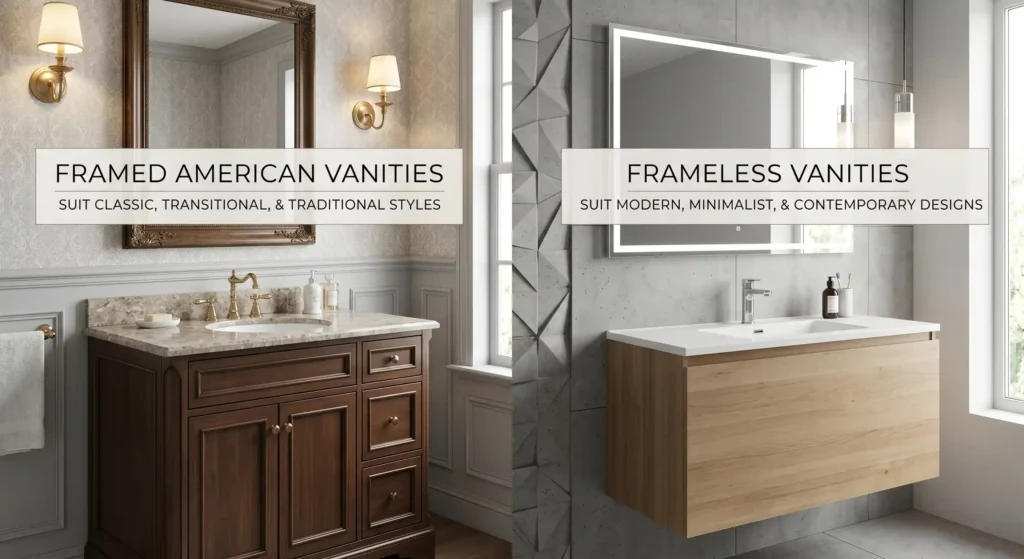
When Framed Looks Better
Framed vanities with shaker door panels or raised-profile fronts match classic hotel bathrooms well. They also work for traditional American apartment projects, transitional resort rooms, and any project that wants a stronger built-in or furniture-like bathroom look. The face frame adds visual depth to the front face.
When Frameless Looks Better
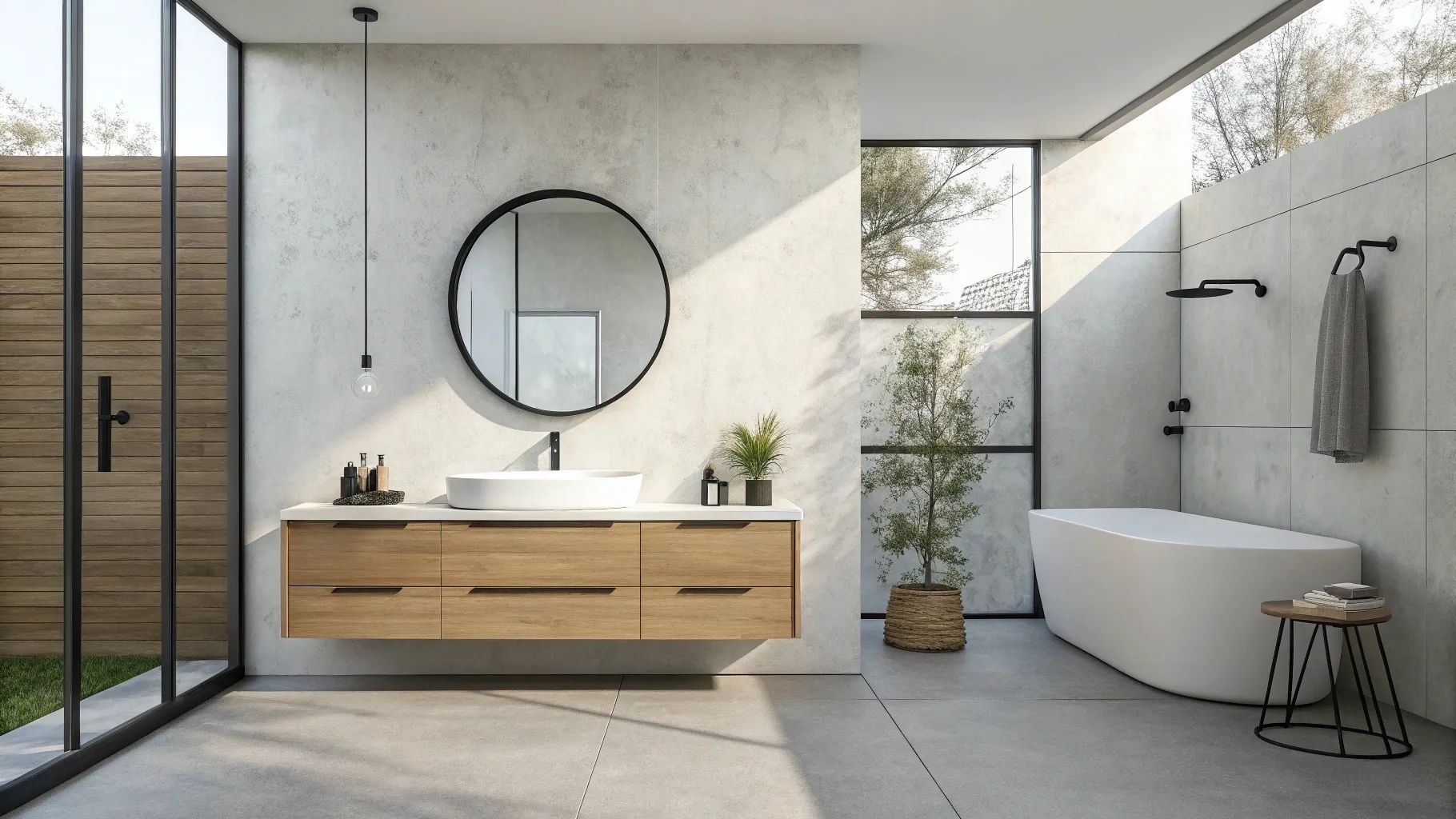
Frameless vanities suit modern hotel bathrooms, serviced apartments, urban residential projects, and clean-line resort rooms. They also work well for floating vanity designs where the cabinet appears to hang off the wall with no visual weight at the base. The flat front face gives a minimalist appearance.
Project Positioning Alignment
A classic hotel brand that uses frameless vanities can look inconsistent with its own design language. A modern serviced apartment brand that uses framed shaker vanities may feel dated to its target residents. The vanity style should match the overall bathroom concept, not just the budget line.
I have reviewed projects where buyers chose frameless vanities because they looked modern in catalog photos, but the rest of the bathroom had traditional tile, classic fixtures, and warm lighting. The vanity felt out of place after installation. Style alignment is a real project risk. When I help buyers review specifications, I always ask them to share the full bathroom render before confirming the vanity front style. This one step has prevented several costly change orders.
Is Framed or Frameless More Expensive?
Many buyers compare unit price only. This gives an incomplete picture. The real cost of a vanity choice includes materials, installation labor, rework risk, long-term maintenance, and spare parts availability across the full project lifecycle.
Frameless vanities often have a higher unit material cost due to thicker boards and European hardware. But framed vanities can cost more overall when you factor in skilled installation labor for trimming, scribing, and face frame alignment in imperfect site conditions.
Material Cost Difference
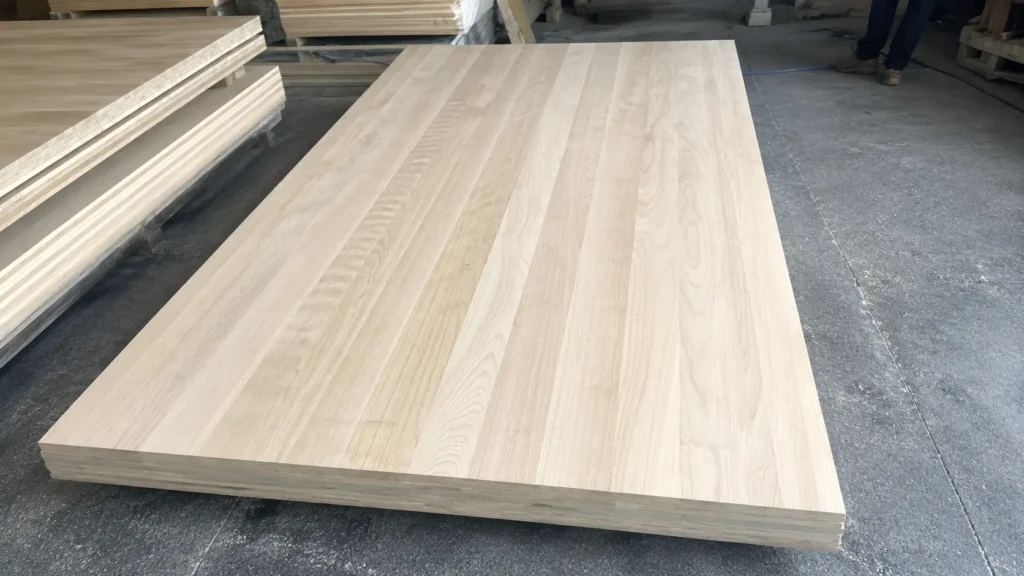
Frameless cabinets need denser, thicker boards to maintain structural integrity without a face frame. This increases the material cost per unit. Framed cabinets use thinner panels supported by the face frame, which can lower board cost. However, the face frame itself adds material and labor at the factory.
Installation Labor Cost
Framed vanities are faster to install in imperfect site conditions. Frameless vanities need more precise prep, leveling, and alignment. If your site team charges by hour and your walls are inconsistent, frameless installation can cost more in labor than the unit price difference suggests. This is a real framed vs frameless cabinets cost factor many buyers miss.
Lifecycle Cost
Maintenance calls, hinge replacements, door front repairs, and hardware restocking all carry costs over five to ten years. Framed vanities generally have lower maintenance labor costs because standard parts fit and standard skills apply. Frameless vanities can accumulate higher maintenance costs if spare part availability is not managed from the start.
I have seen buyers choose frameless to save $15 per unit on a 200-room order, then spend $3,000 in extra installation rework and $1,500 in imported spare hinge sets within the first two years. The $3,000 unit saving disappeared fast. Total project cost is the only number that matters. I always recommend buyers ask their supplier for a full cost breakdown — not just FOB unit price — before making a final structure decision.
Which Vanity Is Better for ADA or Accessible Guest Rooms?
In US hotel and apartment projects, accessible guest rooms must meet ADA requirements. Standard vanity designs do not automatically comply. The choice between framed and frameless is secondary to meeting the dimensional and clearance requirements that ADA sets for lavatory and sink installations.
ADA guidelines for lavatories require specific clear floor space, knee clearance, toe clearance, and a maximum counter height of 34 inches. Neither framed nor frameless vanities comply automatically. Accessible rooms need custom or purpose-designed units built to these exact dimensions.
ADA Dimensional Requirements
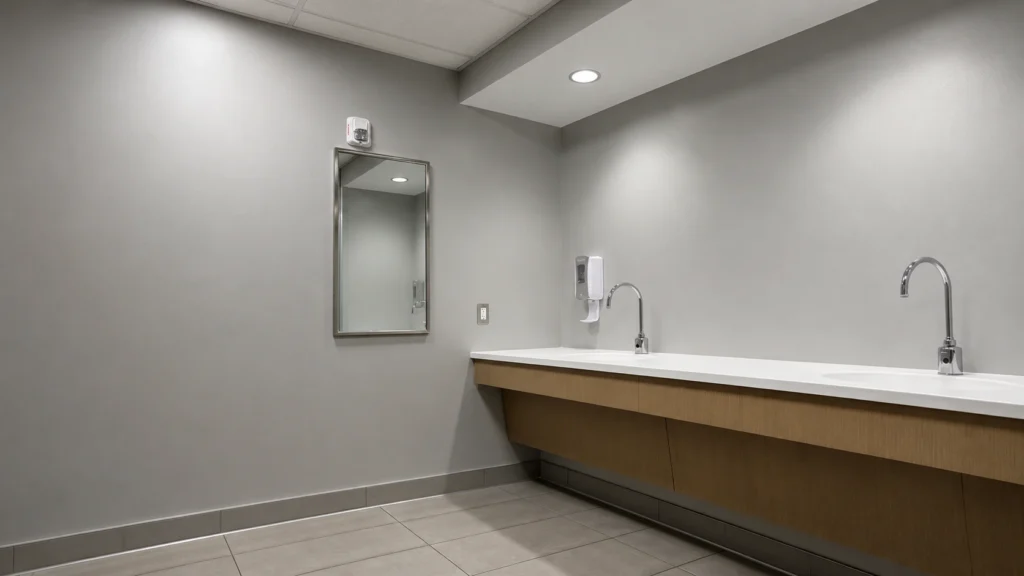
ADA standards for sinks and lavatories require at least 27 inches of knee clearance height, 8 inches of knee clearance depth, and 9 inches of toe clearance. The counter surface height must not exceed 34 inches. Pipe protection is also required to prevent contact injuries under the sink.
Cabinet Structure for Accessible Rooms
For accessible rooms, the vanity cabinet is often open-front or partially open-front to provide knee and toe clearance. A traditional framed or frameless enclosed cabinet under the sink does not provide this clearance unless it is specifically designed as a wall-hung open-base unit. The cabinet structure choice is secondary to the ADA layout design.
Project Planning for Accessible Rooms
Buyers specifying accessible rooms should share ADA layout drawings with their vanity supplier before confirming design. The supplier needs to confirm clear floor space, counter height, knee clearance depth, and pipe insulation specification. This cannot be solved by choosing framed over frameless or the other way around. It requires a dedicated accessible bathroom vanity design.
From my supply experience, accessible room vanities are the most commonly under-specified product in hotel FF&E orders. Buyers often add them to the same order as standard rooms without providing ADA drawings. The factory then produces standard units that fail the site inspection. I always flag accessible rooms as a separate specification item and request the layout drawings before production begins. This step alone prevents expensive last-minute remakes.
How Should Project Buyers Choose Between Framed and Frameless Vanities?
After reviewing structure, durability, storage, installation, maintenance, appearance, cost, and ADA compliance, the decision comes down to matching the right vanity type to your specific project conditions. There is no single correct answer for all projects.
Classic hotel rooms and traditional American apartment projects are safer with framed vanities. Modern serviced apartments and contemporary hotel projects suit frameless better. High-humidity resorts should focus on moisture-resistant board and edge banding regardless of frame type. High-end villas can follow the design concept.
Classic Hotel and Traditional Apartment Projects
For classic hotel rooms with shaker or raised-panel door styles, framed vanities give better installation tolerance, easier maintenance, and a more consistent traditional American look. They also carry lower rework risk when site conditions vary across many rooms.
Modern Hotel and Serviced Apartment Projects
For modern design-forward projects, frameless vanities offer cleaner lines, better interior access, and a more contemporary appearance. They require stricter specification control — board thickness, hinge brand, edge banding standard, and installation training. When these are managed well, frameless works reliably at scale.
High-Humidity Resort Projects
Whether framed or frameless, high-humidity resort bathroom vanities need moisture-resistant or waterproof board, sealed edge banding, and rust-resistant hardware. Waterproof paint for bathroom cabinets or moisture-barrier finishes on the interior surfaces add protection. Frame type is secondary to moisture protection in this context.
What to Compare Beyond Unit Price
When reviewing supplier proposals, compare structural drawings, board specification, hinge brand and series, edge banding method, packing standard, and spare parts availability. Ask for finish samples, not just photos. Request a factory audit report or third-party test certificate if the project is large. The framed vs frameless bathroom mirror and vanity pairing for your project should all be reviewed together as a set, not as individual items.
From my years working in this industry, the buyers who get the best results are the ones who treat vanity specification as a technical decision, not a catalog selection. They bring drawings, ask structural questions, request samples, and confirm spare part supply before signing the order. Whether you choose framed or frameless, that process is what protects your project.
Conclusion
The right choice between a framed and frameless American vanity depends on your project type, site conditions, and long-term maintenance plan — not just appearance or unit price. Contact us at georgebuildshop.com for project-specific guidance.
Ready to Finalize Your Bathroom FF&E Specification?
Choosing between framed and frameless is just step one. Don't let ADA compliance errors, moisture damage, or mismatched hardware inflate your project costs.
- Send us your hotel or resort floor plans.
- Get a comprehensive structural review for your vanities.
- Receive a one-stop quote including vanities, sanitary ware, and shower systems.
Fill out the form below to connect with our B2B project engineering team today. Let's build it right the first time.