
I face a common problem: inconsistent average vanity height in hotel rooms causes guest complaints. Short guests struggle, tall guests complain. I recommend a practical standard to reduce these issues.
On average I set the hotel vanity height at 34 inches. This balances ergonomics and ADA limits. For procurement I recommend 32–34 inches to simplify sourcing, reduce complaints, and meet accessible unit rules without extra custom costs.
Read on to learn codes, comfort heights, floating vanity height options, and operational strategies that make procurement simple. I break down ADA rules, hotel-friendly ranges, and practical installation tips to help buyers choose a standard that cuts cost and guest complaints.
Table of Contents
What Is the Bathroom Vanity Height Code for Hotels and Public Buildings?
I see procurement teams miss bathroom vanity height code details and regularly face costly project delays. Code confusion raises compliance risk. I explain essential rules and clear compliance steps for hotels and public buildings.
Bathroom vanity height code varies by jurisdiction, but accessible units for public buildings commonly require a maximum 34 inches counter height. Hotels often provide at least one accessible room with 34-inch vanities. Confirm local codes and ADA technical guidance for project compliance.
Source:
- https://www.access-board.gov/ada/guides/chapter-6-lavs-sinks/
- https://codes.iccsafe.org/content/IBC2021P1
Jurisdiction variation
Local building codes differ. Some states adopt ICC standards. Others add local amendments. Procurement must check municipal codes early. Verify counter height, knee clearance, piping protection, and local enforcement practices to avoid rework and delays.
ADA and accessible units
ADA sets technical guidance. Accessible vanity counters should not exceed 34 inches. Knee clearance, faucet controls, and clear floor space matter. Use ADA as baseline and confirm with local code for enforceable requirements.
Hotel practice and procurement
Hotels usually include at least one accessible room. For standard rooms they choose 32–34 inches. Choosing 32–34 inches simplifies procurement, maintains guest comfort, and aligns with many accessible unit rules.
| Topic | Typical requirement | Procurement note |
|---|---|---|
| Counter height | ≤34 in (accessible) | Specify 34 in max for accessible rooms |
| Knee clearance | 27 in recommended | Protect piping, verify basins |
| Hotel standard | 32–34 in | Reduces SKUs, eases sourcing |
Codes change. Procurement must start code checks at design stage. I recommend early coordination with architects and local code officers. Record required clearances and accessible unit counts in procurement documents. This prevents field changes, keeps renovation windows, and avoids guest room downtime during installations.
What is a comfort height vanity?
I hear hotel guests complain when vanities feel uncomfortable. Differences change guest impressions. I explain what a comfort height vanity is and why procurement should consider it for guest satisfaction.
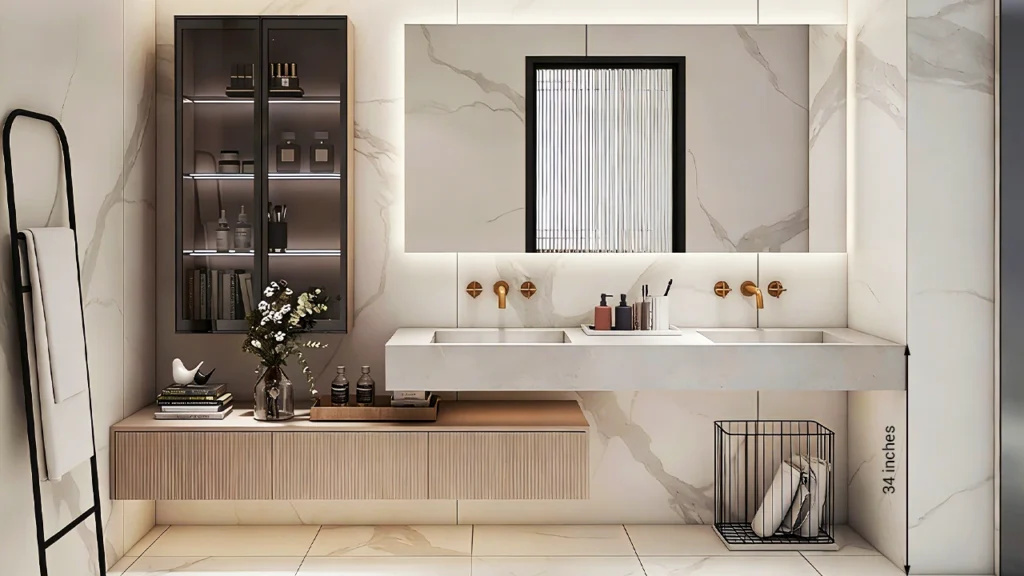
A comfort height vanity usually ranges 34 to 36 inches. It suits taller users and reduces bending. For hotels, 34 inches is compromise comfort while keeping accessibility concerns. Choose comfort height carefully to balance guest ergonomics and ADA constraints.
Source:
Definition and range
Comfort height generally means 34–36 inches. It is taller than traditional 30–32 inch vanities. Many residential vanities use these heights for easier standing tasks like makeup and shaving during daily use. The average makeup vanity height aligns with comfort heights.
Benefits for guests
Comfort height reduces bending and lowers back strain for many adults. Guests report less discomfort during grooming. In hotels this can increase positive reviews and perceived room quality and overall satisfaction.
Procurement trade-offs
Taller vanities can require longer plumbing runs and different mirror heights. They may cost slightly more. Procurement should weigh installation impacts, stock standardization, and guest expectations before choosing comfort heights.
| Aspect | Range | Note |
|---|---|---|
| Comfort height | 34–36 in | Good for taller guests |
| Installation | May need longer runs | Check mirror and faucet placement |
| Guest impact | Better ergonomics | Can lift perceived room quality |
Comfort height affects sink type, faucet reach, and mirror placement. For hotels I prefer 34 inches because it fits most guests and matches ADA accessible maximum. When projects need 36 inches, reserve for suites. Document chosen heights in procurement specs to avoid mismatches at installation.
What is the ADA-compliant vanity height?
I must ensure accessible rooms meet ADA-compliant vanity height. Noncompliance risks fines and room downtime. I explain ADA limits and practical steps procurement needs to follow for compliant hotel vanities.
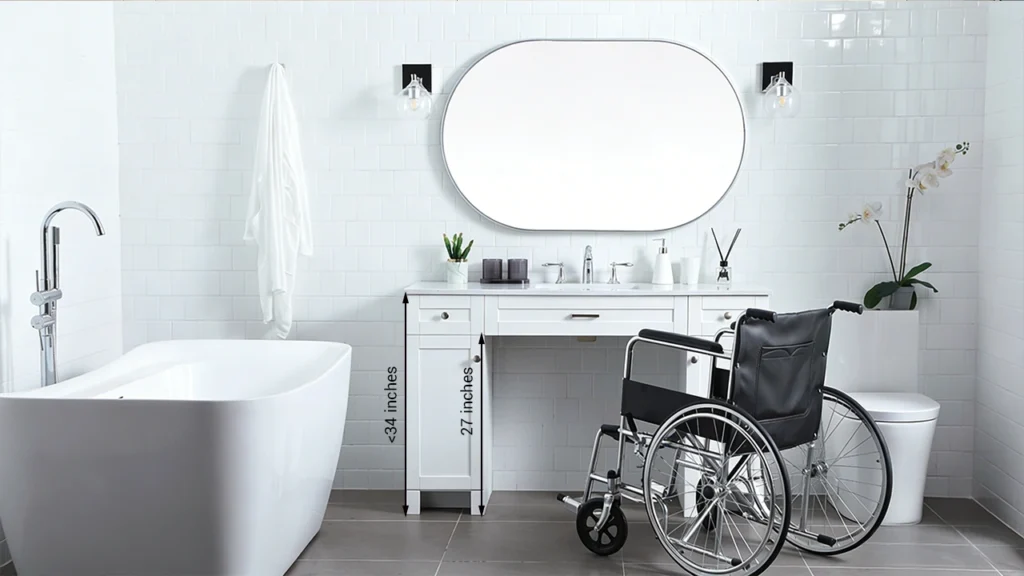
ADA guidance requires clear knee space and a maximum counter height of 34 inches for accessible lavatories in many cases. Some designs need 27-inch knee clearance. Use ADA 2010 Standards and local code interpretations for exact installation requirements.
Height limit
ADA sets a maximum 34-inch counter height for accessible lavatories in many cases. Specify 34 inches max for accessible rooms. This ensures compliance and reduces retrofit risk during inspections and fines.
Knee clearance
ADA requires knee clearance under the sink for wheelchair users. Typical dimensions are 27 inches high and 30 inches wide minimum. Verify piping insulation and shallow basins to protect knee space.
Faucet and controls
Controls should be operable with one hand and not require tight grasping. Lever or sensor faucets help. They reduce barriers and improve guest independence in accessible hotel rooms and satisfaction.
| ADA element | Typical spec |
|---|---|
| Counter height | ≤34 in |
| Knee clearance | 27 in high × 30 in wide |
| Controls | Operable with one hand |
ADA compliance requires documentation. I advise procurement to include ADA specifications in tender documents. Ask suppliers to certify vanity dimensions, knee clearance, and faucet types. Keep shop drawings and field verification notes. This prevents change orders during fit-out and guards project schedules and guest room availability.
What Is the Ideal Floating Vanity Height for Modern Resorts and Apartments?
I am asked about the ideal floating vanity height for resorts and apartments. Designers like clean lines, but guest comfort matters. I describe optimal floating vanity height choices for buyers.
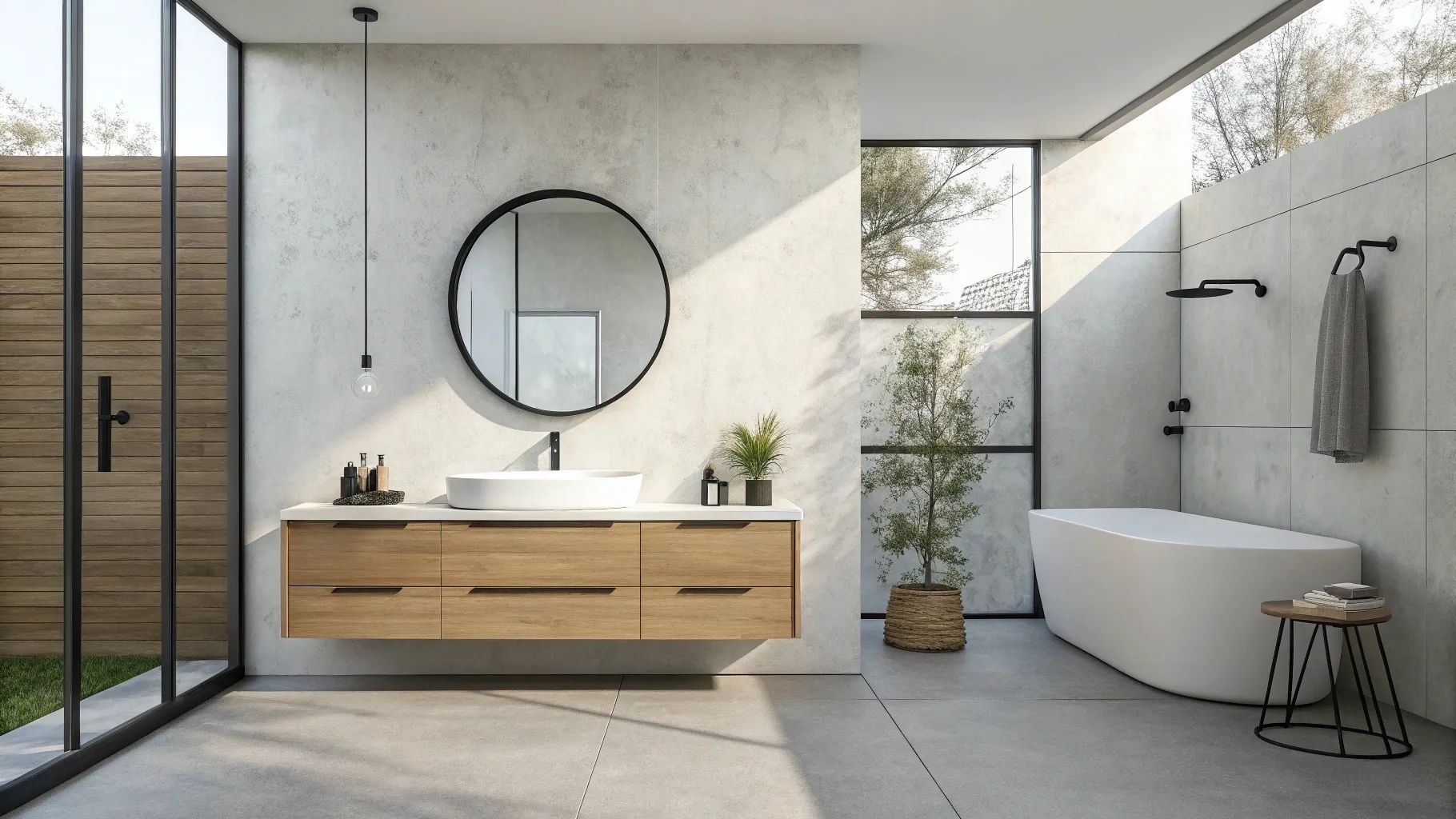
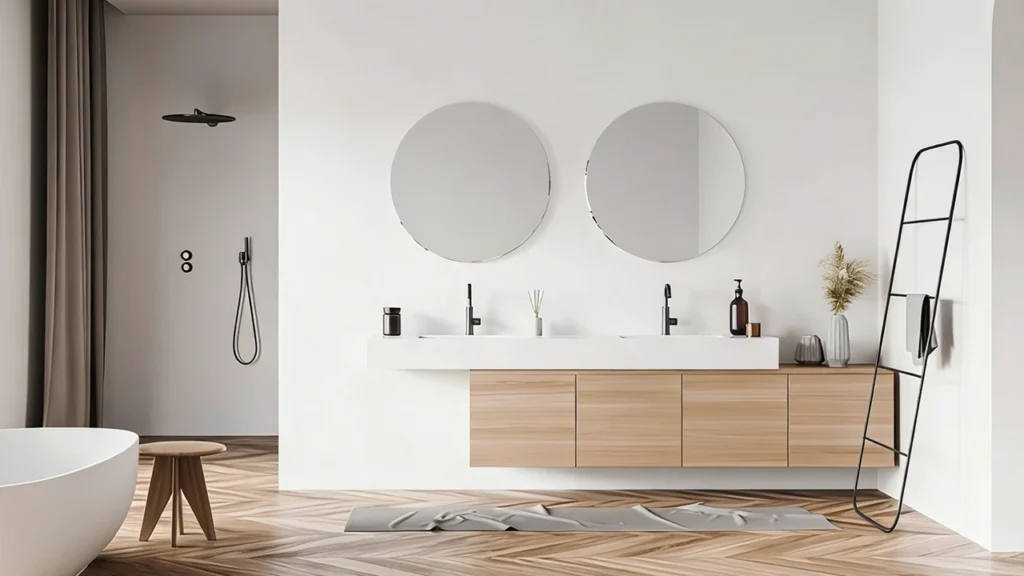
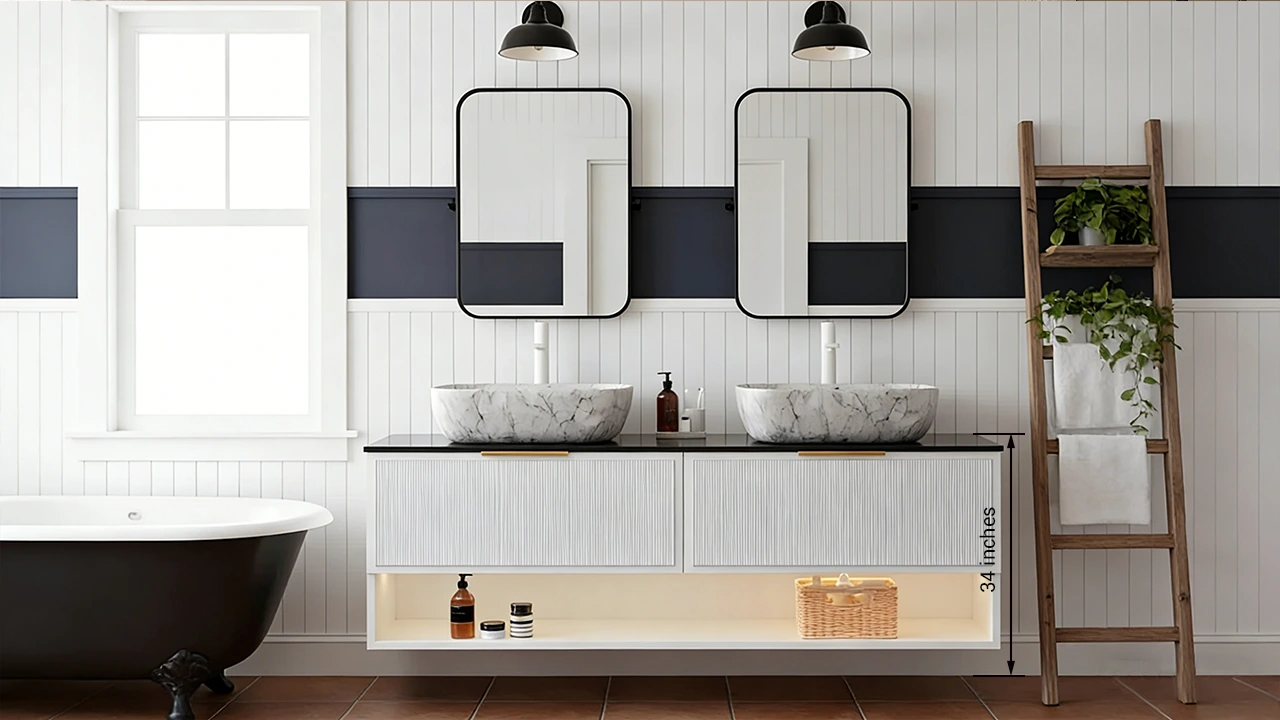
Floating vanity height commonly ranges 32 to 36 inches. For resorts I favor 34 inches to balance comfort and visual lightness. Floating vanities require concealed plumbing and precise installation; procurement must confirm wall structure and mounting brackets before ordering.
Range and aesthetics
Floating vanities offer a modern look. Heights between 32 and 36 inches are common. Choose 34 inches for balance. Consider mirror placement and lighting to maintain ergonomic sightlines for guests.
Structural requirements
Floating units need solid backing or reinforced studs. Mounting brackets carry full sink load. Confirm wall depth, blocking, and tile finish. Procurement must include bracket specs and supplier installation guides.
Installation risks and costs
Floating vanities add installation precision. Plumbing offsets and incorrect brackets cause rework. They may slightly raise costs but improve guest perception. Plan lead times and on-site verification to avoid delays.
| Floating vanity | Height | Procurement focus |
|---|---|---|
| Standard | 32–36 in | Structural backing, brackets |
| Preferred resort | 34 in | Concealed plumbing, mirror height |
| Cost impact | Moderate | Avoid rework via checks |
Floating vanities affect maintenance and housekeeping. They expose undersides to cleaning and require accessible plumbing panels. I recommend specifying removable access panels and durable finishes. For resorts use solid-core construction and anti-sag brackets. Include these in procurement checklists to ensure long-term performance and simple servicing.
🏨 Micro Case Study: Resort Vanity Upgrade
Pain: A boutique resort faced costly rework and delays due to complex plumbing offsets and weak wall backing in their floating vanity design.
Solution: We designed a custom, one-stop bathroom package featuring integrated anti-sag brackets and pre-measured plumbing channels to match their exact floor plan.
Result: Zero installation delays, seamless room turnover, and a streamlined procurement process with just one supplier contact.
Is 36 too high for a bathroom vanity?
I get the question: is 36 too high for a bathroom vanity? I explain when 36 inches works, when it causes issues, and procurement decisions to prevent guest dissatisfaction.
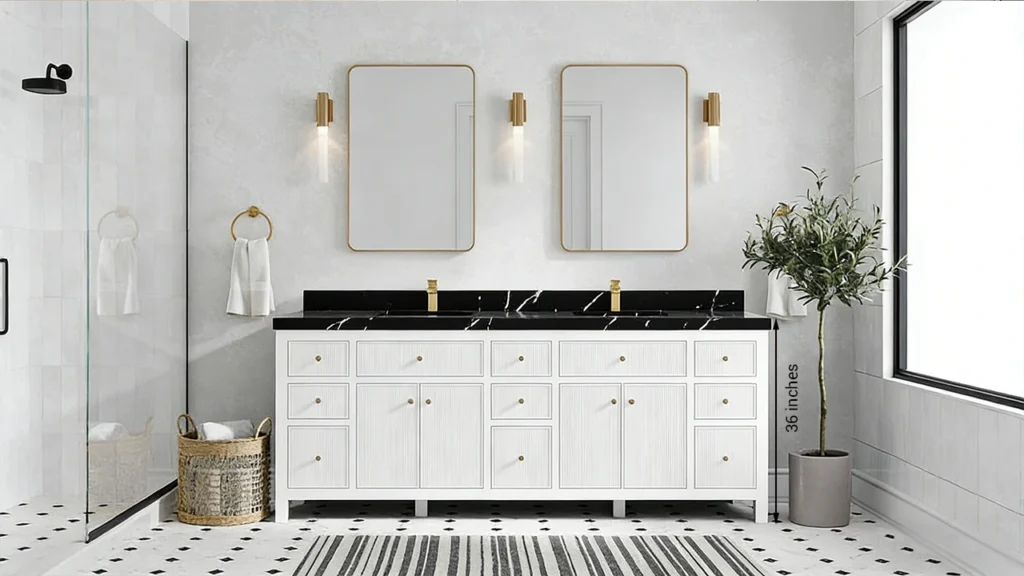
Thirty-six inches can be too high for shorter guests and makeup tasks. It exceeds ADA accessible maximum of 34 inches, so avoid 36 inches in accessible rooms. Use 36 inches in suites or where brand design warrants, after weighing guest demographics.
Guest demographics
If a property serves taller travelers, 36 inches may improve comfort. For mixed markets, select 32–34 inches to suit more guests. Procurement should analyze guest profiles before standardizing vanity heights.
Accessibility constraints
Never make accessible vanities 36 inches. ADA and many local codes limit accessible counters to 34 inches. Keep at least one compliant room per code to avoid legal and operational risks.
Design intent
For signature suites, 36-inch vanities convey luxury and reduce bending for tall guests. Still, coordinate faucets, mirrors, and housekeeping needs. Make 36 inches an optional upgrade, not a standard in all rooms.
| Height | Use case | Note |
|---|---|---|
| 32–34 in | Standard rooms | Best compromise |
| 34 in | Accessible rooms | ADA ceiling |
| 36 in | Suites only | Optional upgrade |
Choosing 36 inches affects accessories. Mirrors may need higher mounting and vanity lighting repositioning. Housekeeping and maintenance must access faucets easily. If choosing 36 inches for suites, include clear procurement notes about mirror centers, towel bar heights, and trap insulation to avoid surprises during installation.
What Is the Safest Height Strategy for Mixed Hotel Projects?
I advise procurement teams on safest vanity height strategy for mixed hotel projects. Portfolios need balance between accessibility, guest comfort, and logistics. I outline a pragmatic plan to reduce costs.
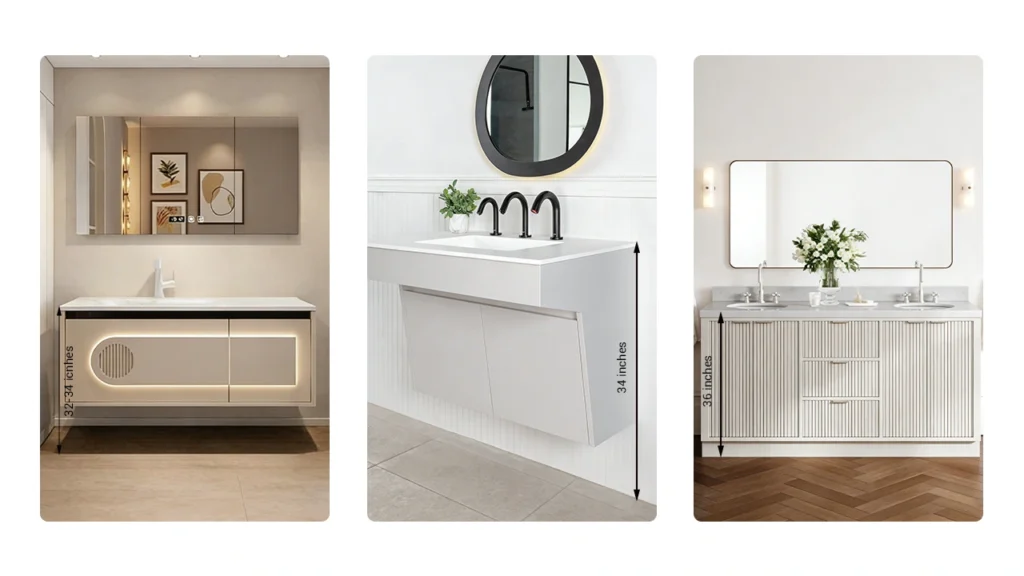
My safest strategy sets an average vanity height of 32–34 inches as project standard, keeps at least one accessible 34-inch room per code, and reserves 36-inch as a suite upgrade. This simplifies procurement, stock, and on-site installation by standardizing parts and reducing change orders.
Project standard
Set a standard vanity height and depth guideline of 32–34 inches for most rooms. This range satisfies many guests and simplifies ordering. It reduces SKU count and accelerates replacement parts procurement across properties for consistency.
Accessible reserve
Reserve at least one accessible room per floor or per code requirement with 34-inch vanities. Track counts in procurement documents to ensure compliance and avoid last-minute retrofits and costly fines.
Suite options
Offer 36-inch vanities as suite upgrades. Document mirror and faucet changes. Use upgrade SKUs so standard rooms remain consistent while offering premium ergonomics in higher-tier accommodations and simplified ordering processes.
| Strategy | Action |
|---|---|
| Standardize | 32–34 in across standard rooms |
| Compliance | 34 in accessible rooms per code |
| Upsell | 36 in suites as optional upgrade |
For mixed projects I create a spec matrix listing room types, vanity heights, mirror centers, faucet types, and SKU codes. I include accessible unit counts and suite upgrade options. This matrix becomes part of RFQs and supplier confirmations. It cuts errors, aligns deliveries, and protects renovation schedules.
Conclusion
I recommend 32–34 inches as the practical hotel standard. This average vanity height balances comfort, compliance, and procurement. Contact us for tailored specs, procurement documents, and supplier matching to fit your project today.
Ready to Standardize Your Hotel Bathrooms?
Managing SKUs across standard rooms, accessible units, and luxury suites is a logistical headache. Let us handle the heavy lifting. From comprehensive bathroom space design to custom manufacturing and one-stop purchasing for all your sanitary ware, we guarantee a seamless procurement process that fits your budget and timeline. Share your project details with us below to get a tailored spec matrix and a free, comprehensive quote today.