
Short answer: In 2026, hotel bathtub design focuses on durable materials, simplified forms, and experience-driven features that reduce maintenance while improving guest satisfaction.
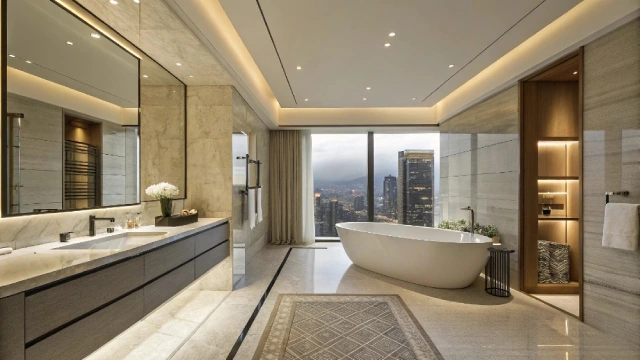
Hello, I’m Helen. I’ve spent the last ten years working closely with hotel developers on bathtub design decisions that affect durability, maintenance, and the guest experience.
In hotel projects, bathtub design is not just about appearance—it defines durability, maintenance efficiency, and long-term guest satisfaction. In commercial hotel projects, bathtub design specifically refers to how form, material, structure, and installation work together to ensure reliable operational performance. This definition forms the foundation of modern hotel bathtub design decisions in 2026.
As we look toward the future, the core bathtub design trends for hotels focus on three priorities: durable materials, simplified forms, and experience upgrades that support long-term operations. These trends reflect a shift from purely decorative choices toward performance-led decision-making.
Table of Contents
What Are the Key Bathtub Design Trends for Hotels in 2026?
The main bathtub design trends for hotels in 2026 include material upgrades focused on durability, simplified forms that reduce maintenance, and layouts that improve usability and long-term performance. These trends define how modern bathtub design supports long-term hotel performance rather than short-term visual appeal.
This shift reflects how modern bathtub design is becoming a strategic decision in commercial hotel bathroom design, rather than a purely aesthetic one. Designers are no longer just looking for a “wow” factor; they are looking for products that justify their footprint through lower lifecycle costs. Together, these trends redefine how bathtub design supports hotel performance rather than decoration alone.
Trend 1 – What materials are trending in hotel bathtub design for 2026?
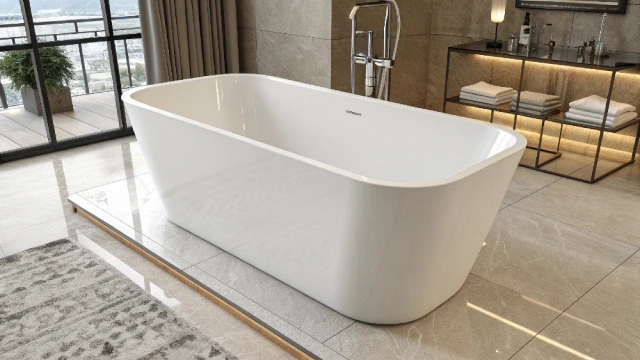
In 2026, hotel bathtub design increasingly relies on engineered materials that balance durability, consistency, and ease of maintenance. Material selection has become a core pillar of modern bathtub design strategy.
Early in my career, I saw developers opt for natural stone tubs because they looked premium. Fast forward two years, and those same developers were calling me about staining. From a commercial hotel bathroom design perspective, material selection directly affects lifecycle cost, downtime, and long-term asset value.
Engineered Solid Surfaces: In modern bathtub design, modified acrylics and stone resin are the leaders. They provide the high-end look of stone but are non-porous and resistant to harsh hotel cleaning chemicals.
Batch Consistency: For a 500-room project, you need every tub to match. Engineered materials ensure the modern bathtub design remains consistent across the entire property.
On-site Repairability: If a guest chips a high-quality solid surface tub, it can often be sanded and polished back to new without removing it. This is essential for maintaining commercial hotel bathroom design standards without room downtime.
For this reason, material choice has become the foundation of any long-term bathtub design strategy in hotels.
Source: 2026 Bath Design Trends: Serenity, Sustainability, and Smart Comfort
Trend 2 – How is bathtub design evolving in terms of form and geometry?
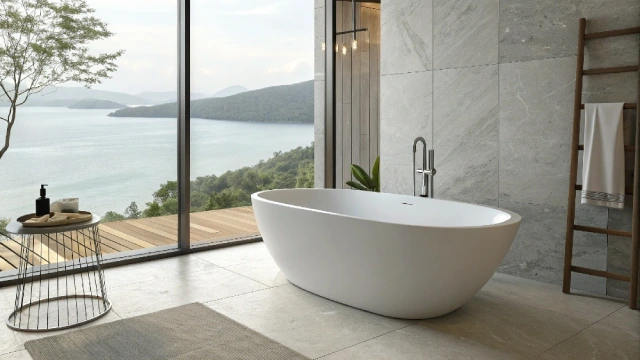
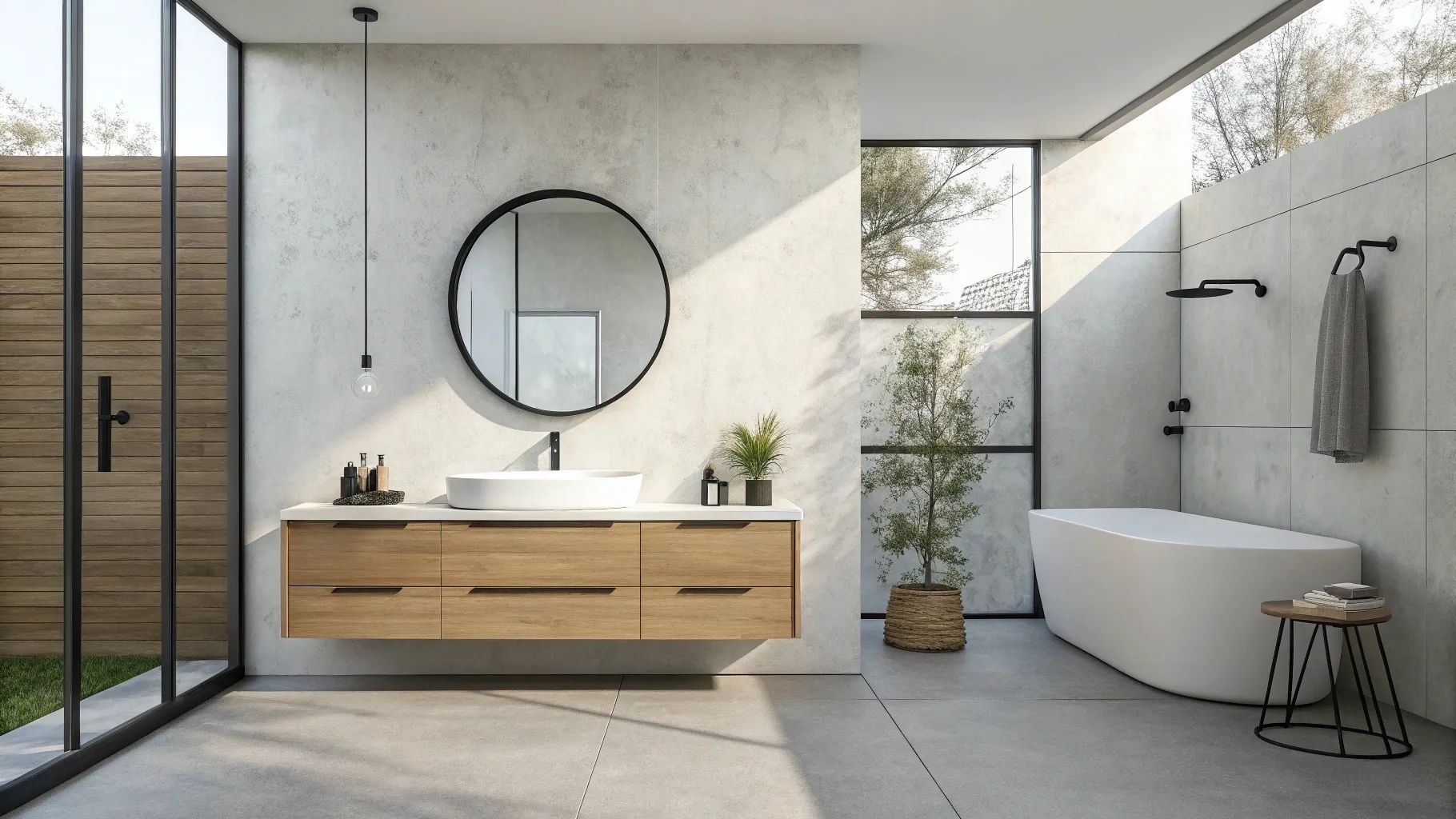
In 2026, modern bathtub design favors simplified geometry that reduces cleaning time, maintenance risk, and long-term wear. As a result, minimalist bathtub design has become a functional decision rather than a stylistic one.
In my experience, the more complex a tub’s shape, the more “hidden” maintenance it requires. For 2026, we are seeing a move toward simple forms and functional shapes.
Thin-Rimmed Ovals: These provide a larger internal soaking area while maintaining a compact external footprint, a hallmark of modern bathtub design.
Zero-Clearance Bases: Design is moving toward tubs that sit flush with the floor. This eliminates “dead space” behind the tub where moisture and dust accumulate—a major pain point in commercial hotel bathroom design.
Integrated Ergonomics: Rather than adding breakable accessories, the bathtub design itself now incorporates sloped lumbar support directly into the mold for better hotel bathtub design longevity.
Trend 3 – Are freestanding bathtubs still relevant in modern hotel bathtub design?
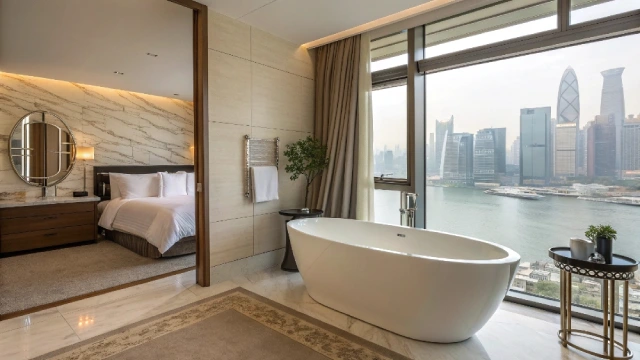
In contemporary hotel bathtub design, freestanding tubs remain relevant in 2026, but primarily as accent features rather than default solutions.
While a freestanding modern bathtub design looks stunning, it isn’t always practical for high-occupancy rooms. In 2026, we see them used strategically:
Suite Differentiation: Using a freestanding tub to justify a higher room rate.
The Hybrid Solution: We are seeing a rise in “Back-to-Wall” freestanding tubs. These look like a freestanding modern bathtub design from the front but seal against the wall. This hybrid approach reflects how bathtub design now balances visual appeal with long-term waterproof reliability.
Important Note: Without proper clearance and waterproof detailing, freestanding tubs can significantly increase maintenance risk in high-occupancy hotels.
Source: globalgrowthinsights.com
Trend 4 – How does space efficiency shape bathtub design for hotels?
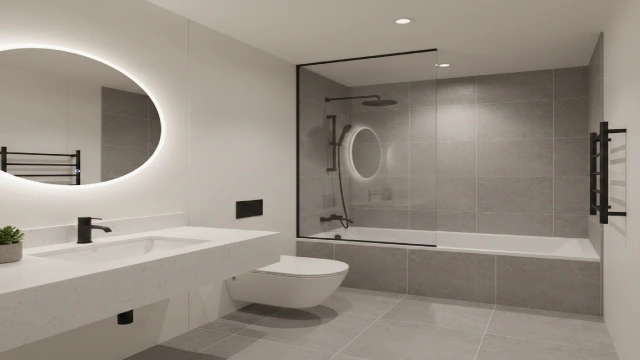
Space efficiency is a defining factor in effective bathtub design for hotels, especially in dense urban developments. This reflects a broader shift in modern bathtub design toward compact, high-efficiency solutions.
As construction costs rise, every inch of the bathroom must perform. This approach represents a core principle of efficient bathtub design in urban hotel projects.
The “Deep Soak” Approach: We are moving away from long, shallow tubs toward shorter, deeper models. This provides a superior soaking experience while freeing up floor space.
Integrated Wet Zones: Many 2026 hotel bathroom design trends show the tub and shower sharing the same waterproofed “wet zone” to simplify plumbing.
Standardized Sizing: Standardizing your hotel bathtub design allows for “plug-and-play” replacement in the future, lowering long-term costs.
Trend 5 – How does guest experience influence modern bathtub design?
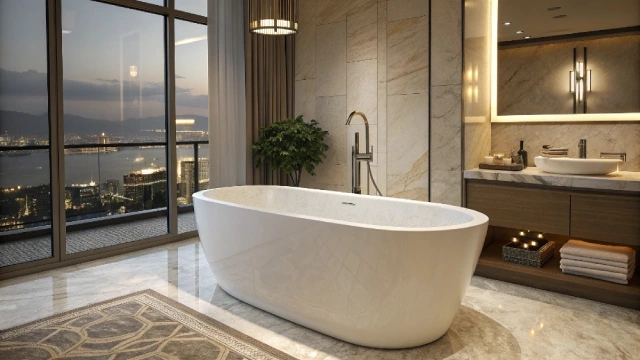
In 2026, successful bathtub design prioritizes usability, comfort, and operational consistency over decoration alone. Guest experience is now a measurable outcome of good bathtub design rather than a subjective impression.
Thermal Retention: Materials used in hotel bathtub design are being selected for their ability to keep water warm longer, reducing water waste.
Acoustic Engineering: High-end modern bathtub design now considers the “sound” of the tub. Solid materials dampen noise, contributing to a serene atmosphere.
Intuitive Controls: If a guest cannot figure out the drain within ten seconds, the bathroom tub design has failed. Simple “click-clack” waste systems are making a major comeback.
Source: Smart Fixtures, Bigger Showers, and Personalized Layouts Lead 2026 Bath Trends
How can developers apply bathtub design trends in real hotel projects?
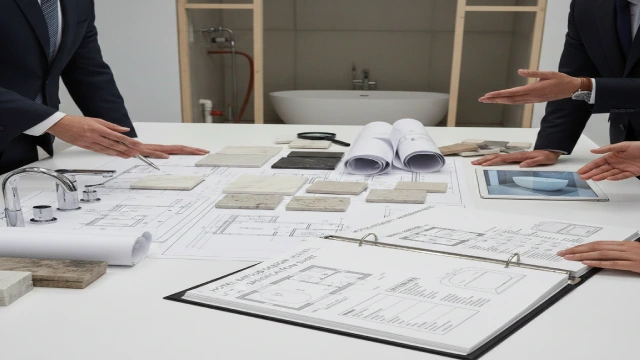
Based on my experience working on commercial hotel bathroom design projects, the following checklist helps translate bathtub design trends into practical decisions:
Prioritize Material Over Style: A beautiful tub that stains is a liability. Ensure your bathtub design meets high chemical resistance standards.
Optimize for Housekeeping: Choose simple forms that can be deep-cleaned in under three minutes.
Standardize Your Specs: Limit the variety of tubs across the property to simplify inventory.
The “Mock-up” Test: Always install a prototype of your chosen hotel bathtub design to test drainage and comfort before mass ordering.
Verify Long-Term Supply: Ensure your manufacturer can provide identical replacements 10 years from now.
These steps help ensure that bathtub design decisions remain viable throughout the hotel’s lifecycle.
Conclusion
The 2026 bathtub design trends highlight a clear shift toward durability, usability, and long-term performance in hotel projects. For hotel developers, successful bathtub design is no longer about visual impact alone, but about how well a product performs after years of daily use.
By aligning modern bathtub design decisions with operational realities, hotels can achieve stronger guest satisfaction and more sustainable long-term returns.
If you’re preparing a hotel project for 2026 or beyond, our team can help you build a clear bathtub specification framework to compare materials, structures, and lifecycle performance before tendering. Shall we start by reviewing your current material standards?
One-Stop Bathroom Solutions for Commercial Projects
We provide integrated one-stop bathroom solutions for hotel and commercial projects, supporting coordinated specifications and project execution.
▼ Submit the form below to connect with our team and explore project cooperation. ▼